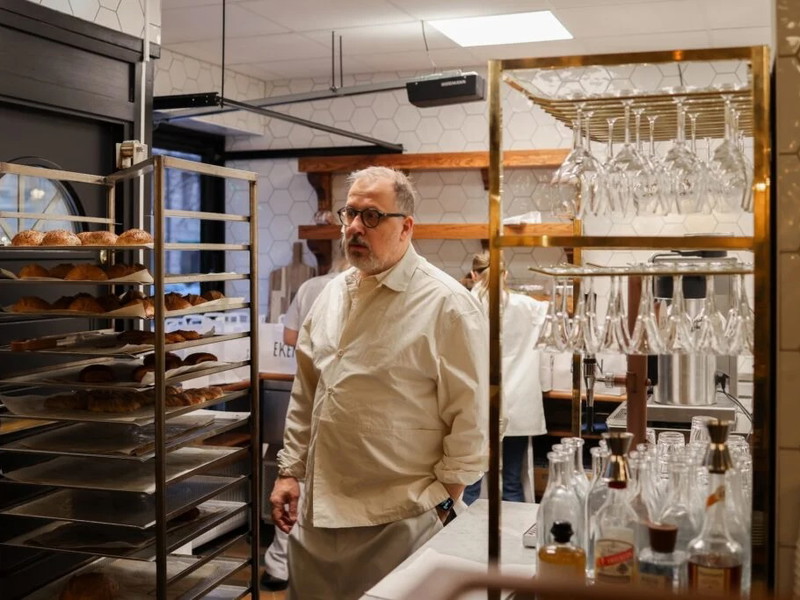
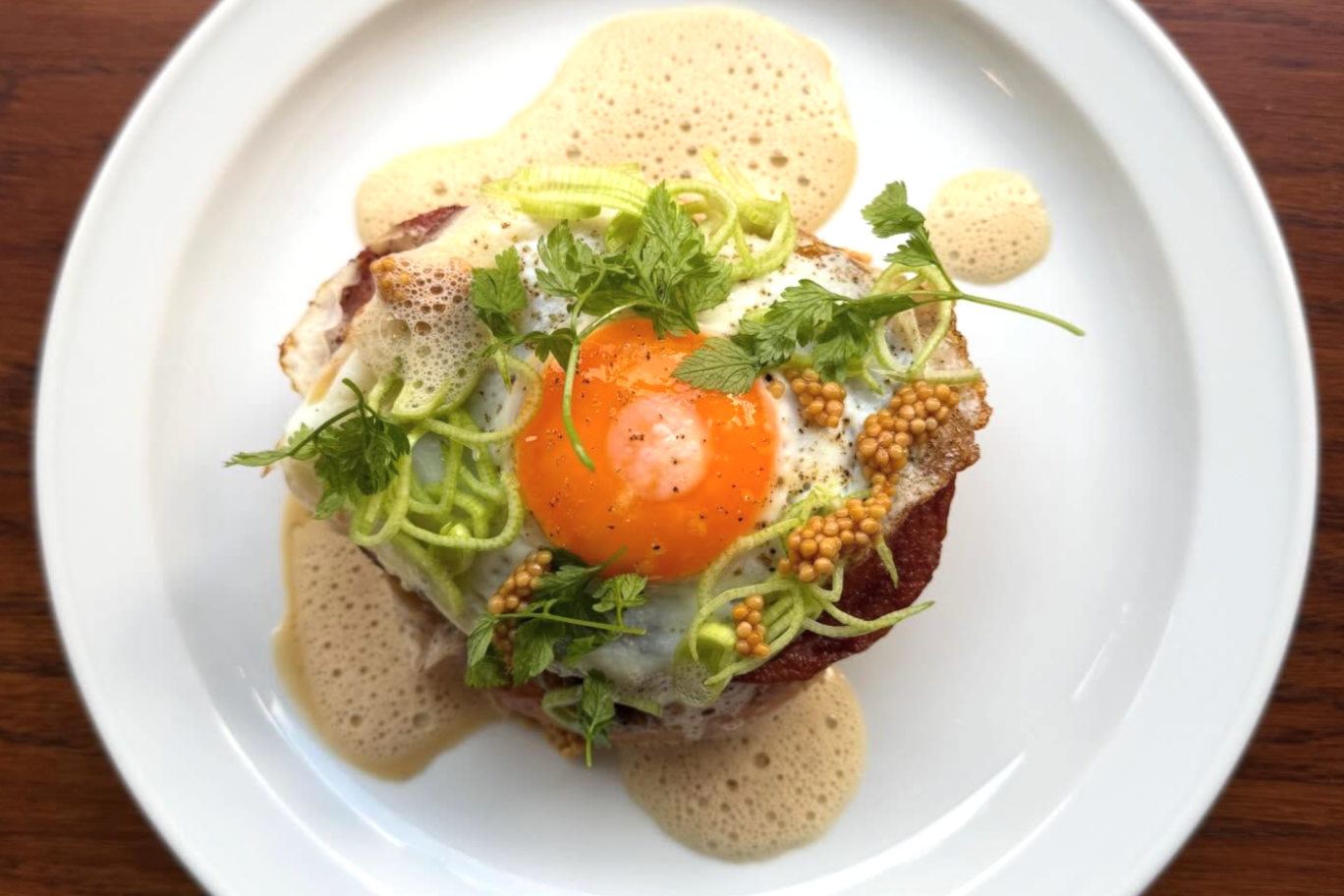
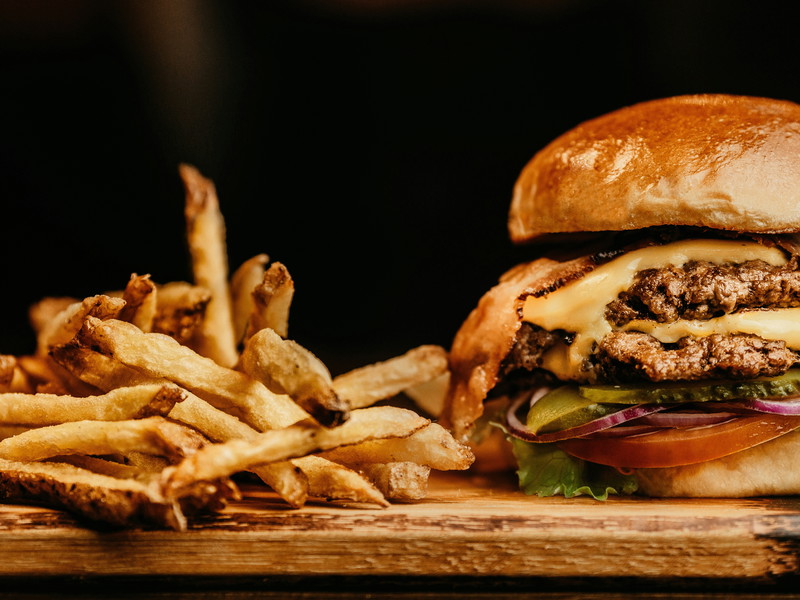
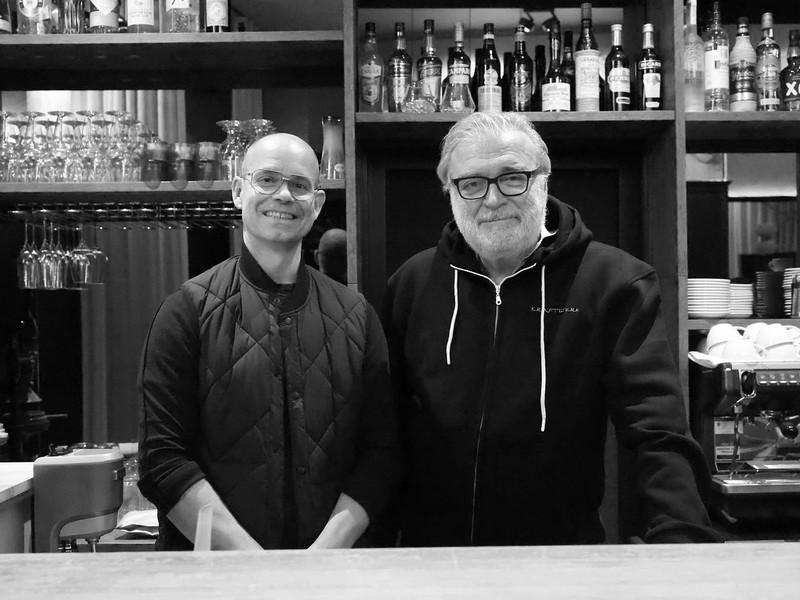
This whole “warm sauce with a sandwich” idea is deliberate. Ekengren likes the way it makes the meal feel more dynamic—and more Swedish, in its own blunt, generous way. “We’re not doing smørrebrød here,” he says with a laugh. “What we do is a bit more brutal.” In practice, that means café food that’s cooked, assembled, and treated like a dish. Bread should also be “seasoned” like a dish, Ekengren points out, with flavors pushed with a chef’s sensibility.
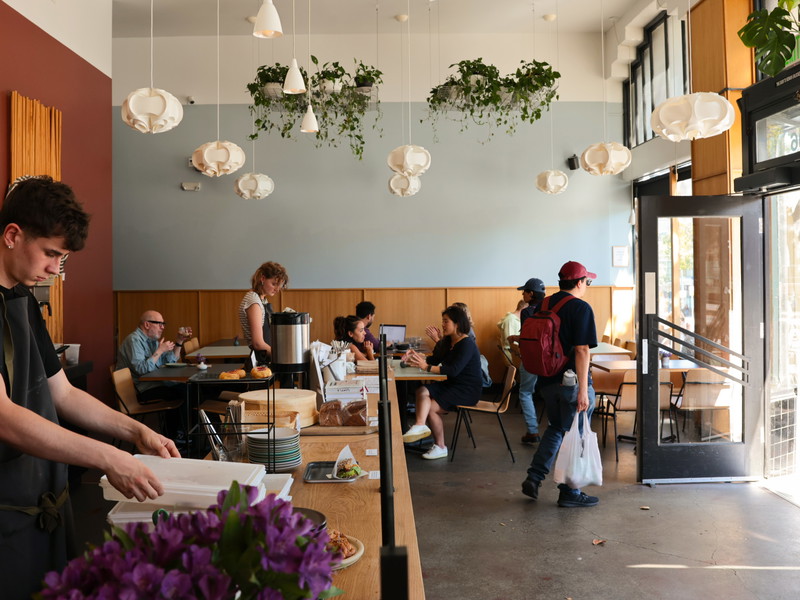
Beyond sandwiches, on offer is a more flexible format Ekengren calls “smörgåsmat”. These smaller plates are designed to be assembled with bread, cultured butter, cheese, pickled herring, cured salmon, and liver pâté—a sort of miniature, everyday smörgåsbord built around whatever guests feel like eating. This points to one of the most important reference points, which is social, not just culinary. “When I was growing up, I used to hang out at a now closed beer café in Stockholm,” Ekengren remembers as he notes how these old beer cafés were reminiscent of the café culture that is very much alive in cities like Vienna, Prague, and Budapest. Places where savory café food sits naturally alongside coffee and baking, and where an ice-cold lager or a glass of wine can be part of the same everyday rhythm. “I’m very inspired by the atmosphere of these old beer cafés. There’s room to reinvent that in Stockholm—and that’s what we’re trying to do.”
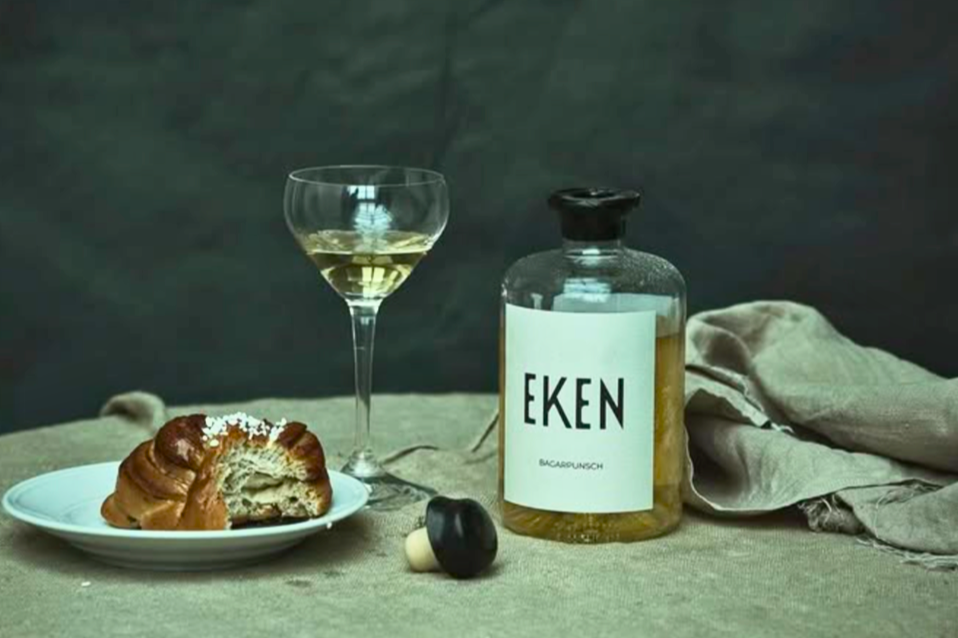
In EKEN’s case, one of the clearest expressions of that mood is actually liquid: the café’s own punsch. Not to be confused with English punch, punsch is the Swedish spiced liqueur built around arrack, with deep roots in Swedish drinking culture. Its history dates back to the 18th century and, as Ekengren points out, “there used to be a special punsch for various guilds and activities.” All the way from circus punsch to automobile punsch. “Consequently, we decided to create our very own signature ‘Bagarpunsch’ (baker’s punsch), made with delicious cardamom and vanilla flavors.”
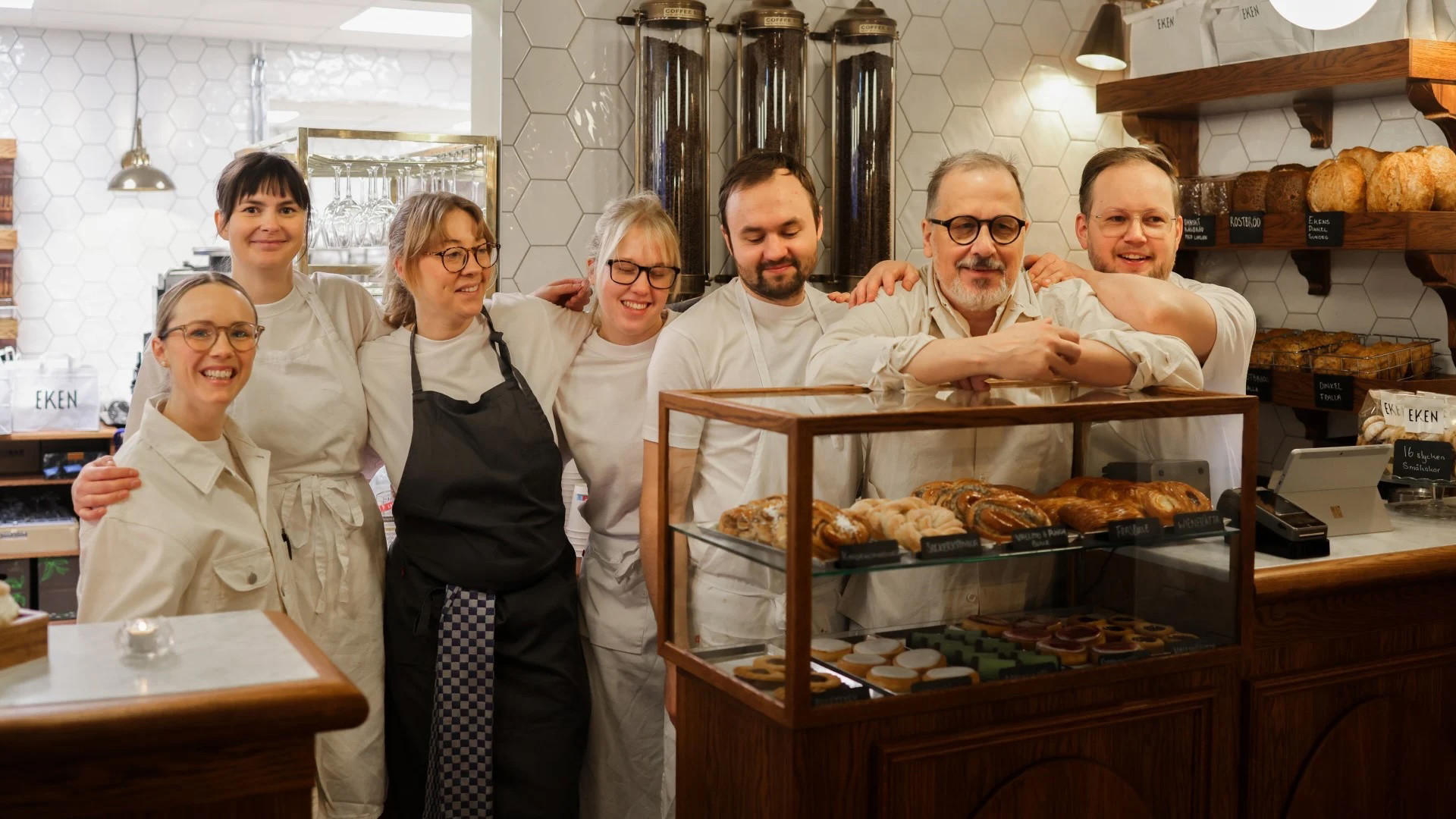
What the future holds for EKEN remains to be seen. But on opening day, Ekengren says the response has been steady, with a constant flow of curious guests. “So far, it’s been amazing.”