Skip to content

“We Teach People How Not To Ruin Their Coffee”: Inside Musangas Coffee Roasters

Coffee
Lithuania
Café

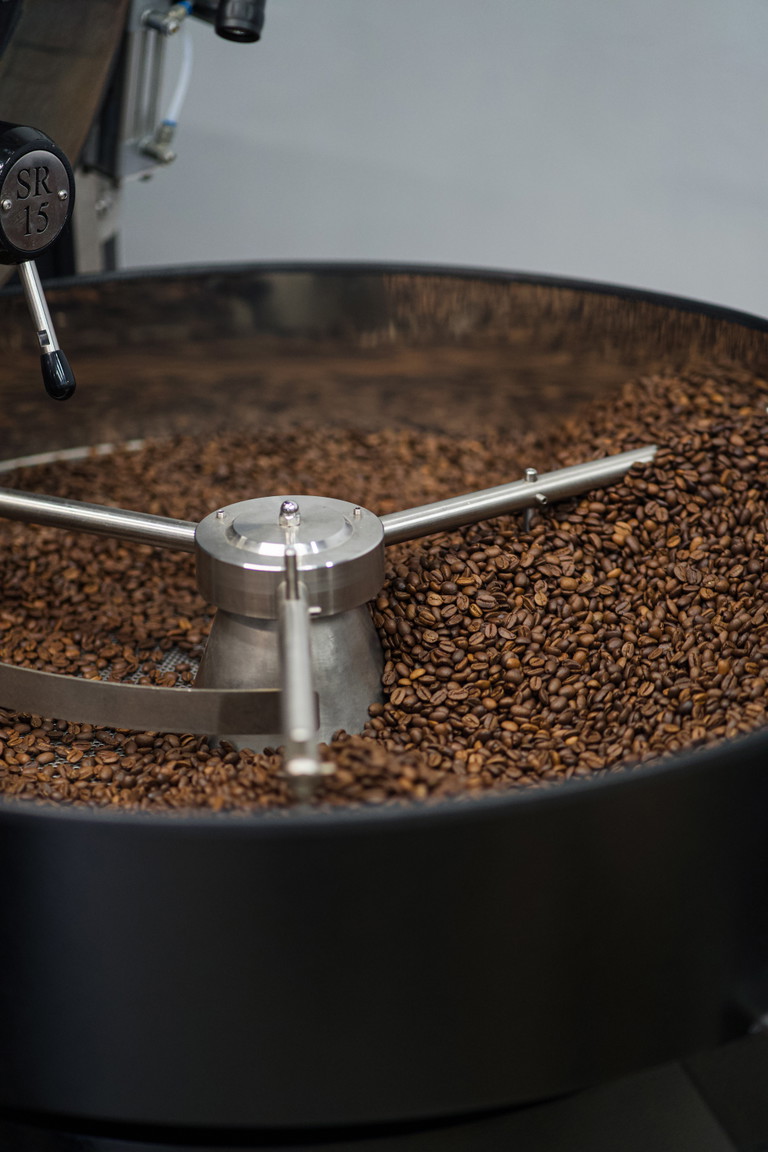
In Klaipėda, on the Lithuanian seaside, Musangas Coffee Roasters are based in a modern loft space away from the city center, where the roastery and café sit under the same roof. It’s a place where people can not only enjoy coffee, but also see how it’s made, smell the beans, and take a closer look at the process.

We spoke with founder Mindaugas Gedvilas about how he found his way into coffee roasting himself, what it takes to truly understand a coffee bean, and why today he focuses not only on quality, but also on introducing people to new and unexpected flavors—while keeping the experience simple and approachable.

Can you share the story of how Musangas began and what inspired you to become the first coffee roasters in Klaipėda?

I grew tired of monotonous work. I had other businesses before, but decided to try working with coffee. Food and gastronomy have always been close to me—I love cooking. Coffee is such an interesting product; you can create so much with it, experiment, discover new things.

It offers endless possibilities—different flavor notes, different personalities. The ability to showcase the true nature of a coffee bean, to understand what it should become, feels like an art to me.

Roasting alone isn’t enough. You need to release every flavor hidden inside the bean so it expresses exactly what its natural characteristics allow. It took many years to truly learn how to do that. 

Where did you learn the craft?

When we started, there was almost no information about coffee roasting—neither online nor elsewhere. It was around 2012, when everything was just beginning. Even the bigger coffee chains were only starting to emerge. 

We learned in Germany from an experienced roaster who had been running his own roastery for many years. The knowledge and experience we gained were invaluable. You could call it an internship—it gives you the fundamentals, the essential understanding. After that, it’s all about practice. Equipment differs, coffee beans differ—you need to learn how to work with each combination.

It’s similar to cooking: some people measure everything precisely, while others rely on intuition. I’ve always trusted my instincts—I never weigh ingredients, I go by feel.

How long does it take to learn roasting?

It took about a year just to really get comfortable with the equipment and begin understanding coffee beans—their types, their differences. We realized that even beans from the same farm and supplier can be completely different. There are no templates. You can’t predict how much sun or rain a region had that season—there are countless variables.

Coffee goes through many stages before reaching the final customer, and at every step, something can go wrong. It has to be grown, processed, roasted, and then the barista must grind and extract it properly. Every stage requires a hand of the specialist.

How do you select the green coffee beans you roast? What are some of the unique or most interesting coffees you’ve introduced to Klaipėda drinkers?

Over the years, we’ve built relationships with suppliers who guarantee the quality of their beans. We’ve visited their warehouses and seen how the coffee is stored. We don’t grow our own coffee yet—we’re still too small for that—but it’s not impossible. In the future we could have coffee grown specifically for us.

We offer a wide range of drinks. In our café alone, you can taste around 15 different varieties, not including blends. Right now, I’m focused on introducing coffees you won’t find anywhere else in Lithuania. We’re currently experimenting with fermented coffees—they’re still quite new here. These coffees are fermented in barrels, which gives them richer, more complex flavors—notes of plum, citrus, and more.

What’s important is that everything is natural. There’s a lot of experimentation happening with infused coffees, fermentation with fruits or juices. It’s a natural way to develop new flavor profiles, not artificial flavoring added after roasting.

We travel, taste, and constantly look for new ideas. Curiosity drives everything—seeing innovations elsewhere inspires us to create.

Mindaugas Gedvilas

Founder of Musangas Coffee Roasters

Mindaugas Gedvilas

Founder of Musangas Coffee Roasters

Where do you find inspiration?

We travel, taste, and constantly look for new ideas. Curiosity drives everything—seeing innovations elsewhere inspires us to create. We receive magazines from around the world, follow trends, and learn about new coffee varieties. Suppliers also share ideas, and we stay in touch with other roasters globally. People exchange knowledge, advice, even challenges. This constant flow of information pushes us to try something new all the time. It’s a personal challenge.

What matters most is that customers are willing to explore—to taste and not be afraid of new things. I try to introduce them to what I personally enjoy. That said, people’s taste in Klaipėda is a bit more conservative. People tend to prefer less fruity coffees. Even when they try something new and like it, they often return to their regular choices. Many people find “their” coffee and stick to it.

But this is slowly changing. More customers are becoming more interested in coffee—they do research, grind beans at home, experiment, ask questions, and look for advice.

How long does it take to develop a new roast or blend?

If we’re working on a special order—for a hotel, restaurant, or another client—we start with extensive tasting. Only then do we move to production. Finding the right flavor, aligning it with the client’s expectations, and at the same time expressing our own style takes time.

When we receive a new seasonal coffee or a new variety, we spend at least a day experimenting—roasting it in different ways to understand what suits the bean best. My goal is always to reveal the bean’s natural character. Usually, you already have an idea of what to expect—flavor notes, tones—and I try to bring those out. You adjust the temperature, timing… It takes time, but within a day or two you can understand the direction. Then comes tasting. The coffee needs to rest for a couple of days, so the full process can take up to a week.

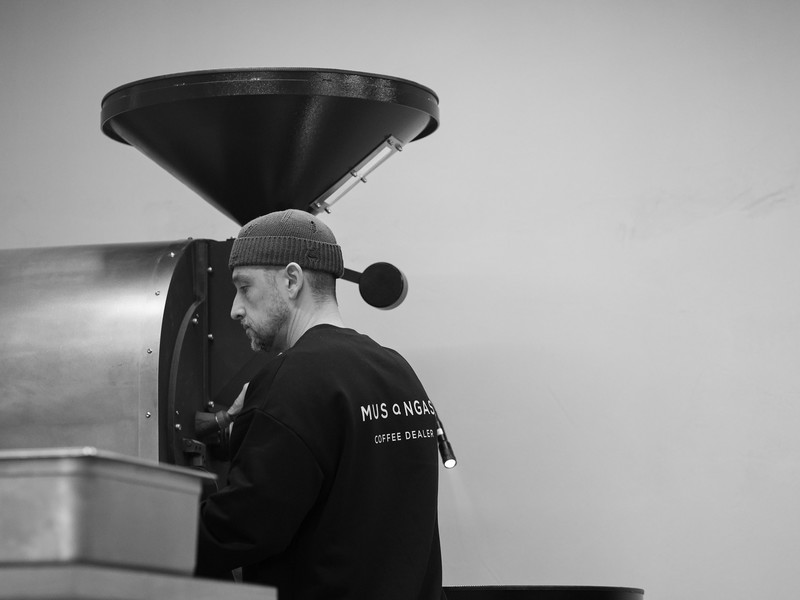
As for roasting itself—I handle all production personally. Unless there’s a special order, a single roasting batch takes about 10 to 15 minutes. With more powerful equipment, the process is faster—but whether you roast 5 kg or 50 kg, the principle remains the same.

I understand customers can observe the roasting process — how has that transparency shaped your relationship with the community?

We used to be in the center of Klaipėda, but we moved away from it. This location has worked out very well for us. We originally came here looking for a warehouse, but it turned into a stylish, trendy coffee space. It brought us a whole new audience—people who had never heard of us before.

We also have great neighbors—business owners who really care about what they do. You can feel it. For example, the pastries on our shelves are baked by our neighbors, and customers love them with coffee. 

People enjoy being in a space where they can see the production process. They want to touch the raw beans, smell them, and experience everything themselves. We also host small educational sessions and tastings here. Everything happens in this space.

How do you help customers learn about the differences between coffee varieties or roast profiles?

If someone is just starting their coffee journey, we focus on the basics. We give them essential knowledge to help them continue exploring, if their interest grows. We don’t go too deep into chemistry or technical processes right away. Instead, we explain where coffee comes from, how it’s processed, and how to prepare it at home—even without expensive equipment. 

Most importantly, we teach people how not to ruin their coffee—that’s the most common mistake.

So, how do you avoid ruining coffee?

First of all, use freshly roasted coffee. Soft water is important. Don’t pour boiling water over it—you’ll burn it. Use simple brewing methods like V60, AeroPress, Chemex, or even a French press—they’re easy to get and use.

And remember: the simplest things are often the best. At home, I don’t even use a filter anymore—just coffee and water. When the coffee is fresh, you can experience an incredible range of flavors.


Find out more
1 / 12