The salmon migration in Canada
Fog lies over the fjord of Knight Inlet, the mountains towering into the sky like ancient...
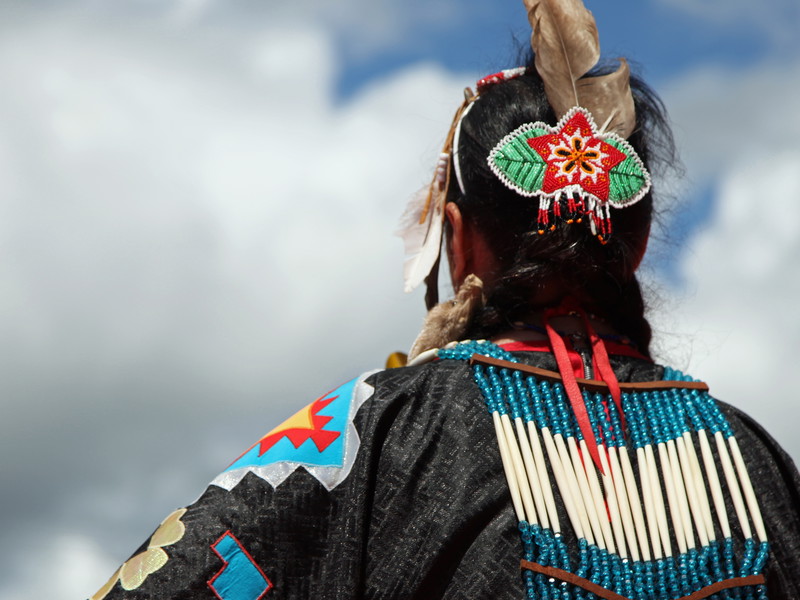
From wild-caught salmon to bannock bread - Inez Cook and Joseph Shawana tell the stories of their ancestors on the plate. Tradition, culture and sustainability merge here to create an indigenous culinary experience that goes far beyond taste.
When Inez Cook talks about her 24-hour braised beef, her eyes light up. The sauce - deep, smoky, umami - is so good, she says, "you could drink it out of a wine glass." The menu at her indigenous restaurant "Salmon n' Bannock" in Vancouver also includes salmon in all its variations: smoked, grilled, in tacos or in creamy soup - always wild-caught, never farmed. She also serves bannock, the indigenous bread, sometimes in a classic, sometimes in a modern interpretation. But anyone who thinks it's just about the food is mistaken: every ingredient, every bite also carries a story - of loss, uprooting and reclamation.
Cook was taken from her family during the so-called Sixties Scoop, when indigenous children were systematically removed from their communities. Years later, she found her way back to her roots - to the Nuxalk Nation from Bella Coola, British Columbia, and to the cuisine of her ancestors. Today, she celebrates her traditions in her restaurant in the center of Vancouver and a second one at the airport. Their "Three Sisters" soup and salad will soon be served in the Maple Leaf Lounge and the Air Canada Cafe. The "Three Sisters" - corn, beans and pumpkin - are traditionally grown together, strengthen each other and protect the soil.
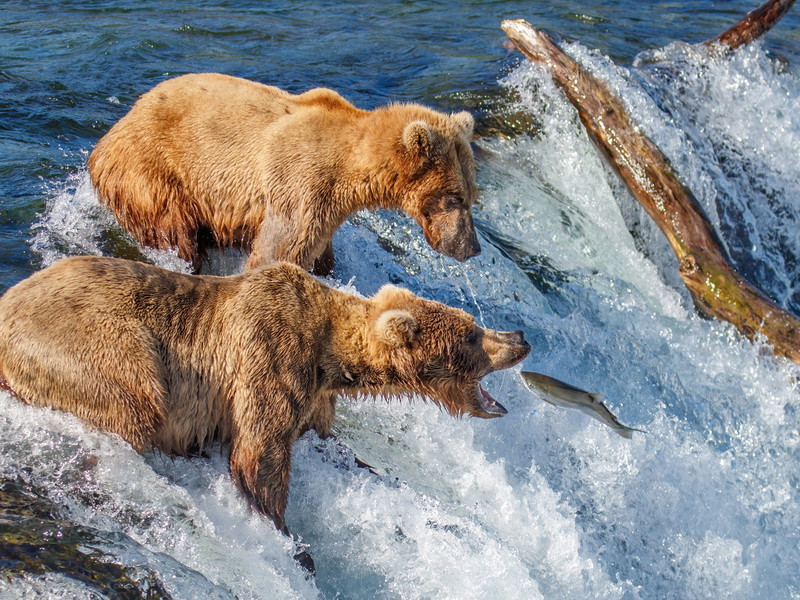
The star of her kitchen is sockeye salmon. It is also a symbol of food sovereignty. "Salmon has always been part of indigenous cuisine. People practically followed the bears' diet: lettuce, berries, salmon," Cook explains.
"For many First Nations in British Columbia, salmon are much more than food - they are the foundation of our cultures, economies and systems of governance," says Stu Barnes, Director of the First Nations Fisheries Council of British Columbia. Traditional fishing is very different from commercial fishing: respectful, seasonal and communal.
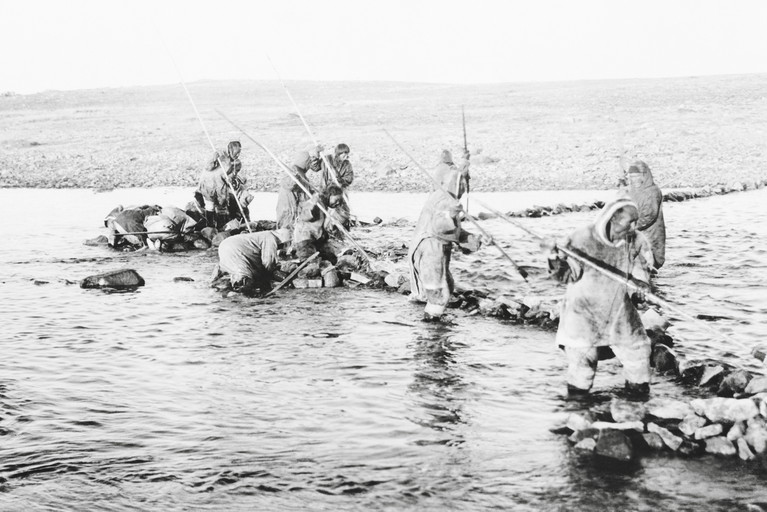
"Salmon are part of the same cycles that we depend on. Before colonization, indigenous communities worked together. Those who lived downstream knew when they were allowed to catch salmon and when they had to let them migrate upstream. At the spawning grounds, people made sure that enough salmon could return home before they took any themselves."
Commercial fishing, on the other hand, is driven by competition. "We are currently managing to extinction," one council member sums it up.
For chef Joseph Shawana, passing on knowledge is a life's work. He is one of Canada's most renowned chefs and grew up in the Wiikwemkoong Unceded Territory in northeastern Ontario. Until the pandemic, he ran the restaurant "Kū-Kŭm" (grandmother), which combined indigenous flavors with French cooking techniques. The menu included moose, caribou, goose and even seal.
Today he is a professor and culinary consultant at Centennial College in Toronto, where he teaches, among other things, how to properly cure salmon, prepare bannock and handle game meat.
For Shawana, cooking is more than just preparing food - it is history, culture and storytelling on a plate. Each dish becomes a little journey - a moment in which you not only taste the ingredients, but also experience the story behind the flavor.
His famous spruce needle sorbet came about by chance: "One of my chefs put too much maple syrup in spruce tip tea. We put it in the freezer - the next morning it was a sorbet that brought back childhood memories."
Shawana also worked with Via Rail, developing meals for train passengers and strengthening indigenous businesses along the route. A step towards cultural reconciliation: "Many of our traditional foods have been taken away from us. Due to the forced relocation to reservations, we had to accept a food system that was not really suited to our biology. Today - with growing awareness - we have the chance to bring our history to life when non-Indigenous people taste our food," explains Shawana.
Bannock also tells a story: the name comes from Scottish settlers (Gaelic: Bannach, "bite"). Due to resettlement and state rations, bread on reservations became a necessity - and at the same time a symbol of survival, adaptation and creative preservation of indigenous culture.
Around 1.8 million people in Canada identify as Indigenous, which corresponds to five percent of the total population. They are made up of First Nations, Métis and Inuit and are the fastest growing and youngest population group in the country.
Today, the Canadian government recognizes the right of indigenous peoples to self-determination. But Inez Cook still feels the dislike of many Canadians when she receives negative postings about her restaurant at the airport, for example. Not because someone didn't like something, but because it is indigenous. Her wish: "One of the most important things is that people understand that we are not Disneyland," says Cook. "We are neither a freak show nor a circus, we show our culture and cuisine authentically."
Salmon n' Bannock Bistro
Owner Inez Cook serves salmon using traditional methods, creative bannock variations and "Three Sisters" dishes. A culinary offering that combines past and present - including a location at Vancouver Airport ("Salmon n' Bannock On The Fly").
1128 W Broadway #7, Vancouver, T: +1 604 568 8971
salmonandbannock.net
and: "On The Fly" at Vancouver Airport after the security check (next to Gate 71)
Feast Café Bistro
Christa Bruneau-Guenther combines indigenous home cooking with community service. Here, bison chili, bannock pizza and wild rice meet a lively bistro with
social added value and strong regional roots.
587 Ellice Ave, Winnipeg, T: +1 204 691 5979
feastcafebistro.com
Thunderbird Café
On the lower level of the Squamish-Lil'wat Cultural Center, right next to the museum store, the "Thunderbird Café" serves modern First Nations cuisine at a fair price. Specialties such as bannock tacos with venison chili, smoked salmon panini and cedar plank salmon chowder reflect the Culinary culture.
Squamish-Lil'wat Cultural Centre, 4584 Blackcomb Way, Whistler, T: +1 604 964 0990
slcc.ca
Naagan
A small, fine-dining 17-seat restaurant in the heart of Ontario from Chef Zach Keeshig that showcases Indigenous ingredients like sweetgrass ice cream, nettle sauce and fresh-caught fish with a 12-course foraging menu. An intimate but powerful culinary experience that redefines modern Canadian cuisine. Foraging is the traditional gathering of wild food such as plants, mushrooms, berries or nuts in nature.
279 10th St E, Owen Sound, T: +1 226 668 6947
naagan.ca
The Bear, The Fish, The Root & The Berry
Chef Murray McDonald reinterprets the culinary traditions of the Syilx First Nation and combines them with ingredients from the Okanagan Valley.
Spirit Ridge Resort, 1200 Rancher Creek Rd, Osoyoos, BC, T: +1 250 495 4660
bearfishrootberry.com