

Johann Lafer’s Potato and Celery Soup
This aromatic soup from the cookbook »Das Beste« is refined with shaved truffle.
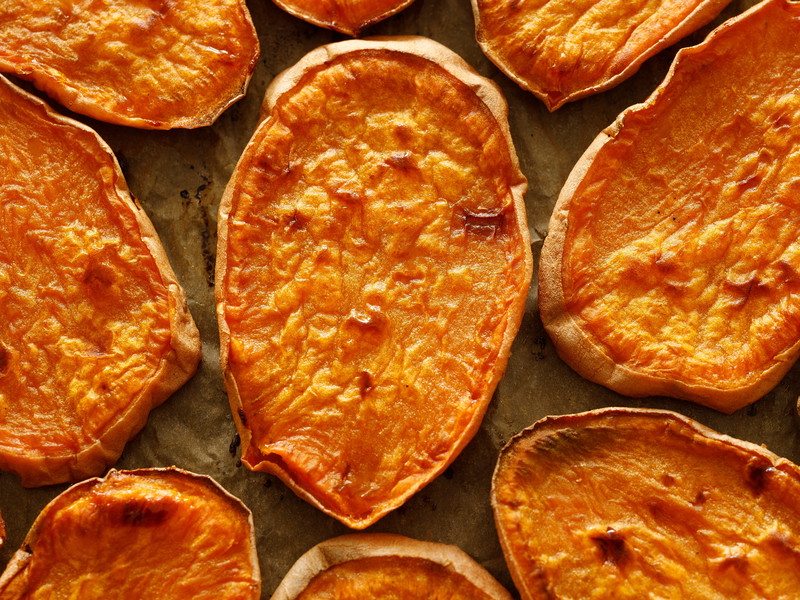
They look similar and are used in much the same way—but sweet potatoes are not actually related to regular potatoes. A closer look at what sets them apart.
At first glance, it seems obvious that a sweet potato must simply be another type of potato. All the more surprising, then, is the fact that the two have very little in common beyond their origin.
Despite its name, the sweet potato is not a true potato from a botanical point of view. While the common potato belongs to the nightshade family—like tomatoes and peppers—the sweet potato is part of the bindweed family. In tropical regions, it often grows as a climbing plant or vine and requires warm conditions to thrive. The classic potato, on the other hand, is far less sensitive to cooler climates. Although both originate from South America, they are only distantly related.
Sweet potatoes have a mild sweetness with a slightly nutty note, and their flesh can range from orange and yellow to purple or pink. Compared to regular potatoes, their texture is softer, making them ideal for purées, fries, casseroles, curries or even sweet dishes.
Nutritionally, both are valuable. Sweet potatoes, however, contain significantly more beta-carotene and vitamin A, while their levels of minerals such as potassium, zinc and calcium are similar to those of regular potatoes. They also provide more natural sugars and fibre, which can help keep you feeling full for longer.
In the kitchen, they are just as versatile. Sweet potatoes can be boiled, baked, roasted or mashed. They can even be eaten raw—grated into salads—and do not necessarily need to be peeled. Thanks to their low fat content and high levels of beneficial plant compounds, including antioxidants and anti-inflammatory substances, they make a healthy and versatile side dish.
Historically, the sweet potato is a true globetrotter. It originated in South America, where it had been cultivated by indigenous communities for centuries. In the 16th century, Portuguese explorers began spreading it beyond the continent, first to Africa, then to Asia and eventually to Europe. Over time, it has established itself around the world—and today, it has become a staple in many modern kitchens.


