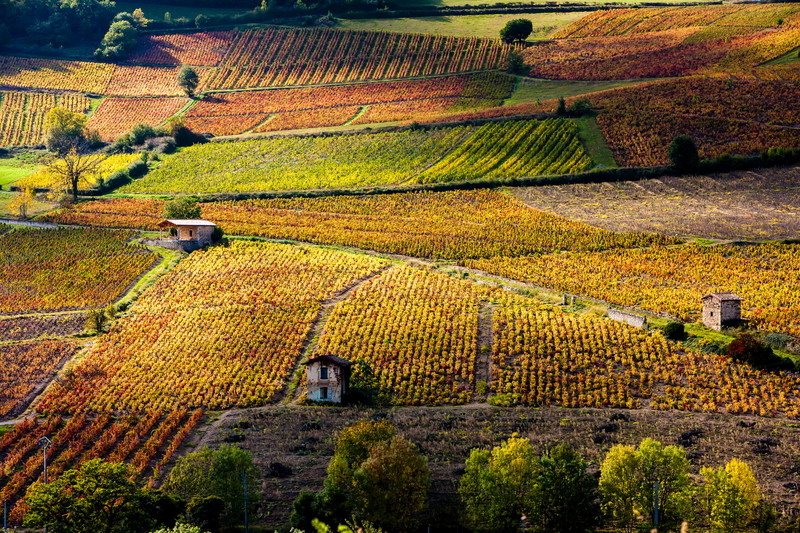
Beaujolais, located to the directly south and adjacent to Burgundy, administratively it also belongs to Burgundy, but is nevertheless a completely individual region with a different climate, grape varieties and above all, different soils. While the climate in Burgundy is rather cool and the soils there consist mainly of limestone, the climate in Beaujolais is already influenced by the Mediterranean, and due to the predominant granite soils, one variety in particular grows here - Gamay. The total vineyard area is about 20,000 hectares. The region was named after the small town of Beaujeu, which was founded around the 10th century AD and is located in the mountainous area in the west of the region. With the improvement of transportation routes in the 20th century, especially to Paris, Beaujolais became increasingly popular in France. By the early 1970s, these wines were in such demand that they were released shortly after harvest and fermentation as Beaujolais Primeur or Beaujolais Nouveau. Unfortunately, this was very detrimental to quality, as the wines were produced using the carbonic maceration method, which produces wines that are drinkable early, fruity and very short-lived. No wonder, then, that wines from Beaujolais fell into disrepute, at least among more demanding wine lovers. Yet the region certainly has a lot to offer. Especially grapes with the provenance Beaujolais Villages and those from the so-called "Crus" in the ten municipalities of Morgon, Juliénas, Fleurie, Saint-Amour, Chénas, Moulin à Vent, Chiroubles, Brouilly, Côte de Brouilly and Régnié are produced and vinified according to classical methods from much smaller quantities. They bring a soft, velvety, full-fruited and appealing wine to the glass, which may be allowed a few years of ageing potential. A small proportion of production is accounted for by white wines based on Chardonnay and Aligoté.
The best wines from Beaujolais
France

-
TastingNews on the wine market 202601.01.2026, Falstaff Online 2026, Peter Moser, Benjamin Herzog & Dominik Vombach, Ulrich Sautter, Roland Graf (Spirits)
-
-
TastingThe best holiday wines of 2022Im zehnten und letzten Falstaff Magazin des Jahres 2022 haben wir Ihnen eine bunte Palette von 100 Weinen aus aller Welt präsentiert, die pr...
-
TastingNew to the wine market 202201.01.2022, Falstaff Online Austria 2022, Peter Moser, Ulrich Sautter
-
TastingFalstaff International 2020 Vintage Burgundy En Primeur01.01.2022, Falstaff Online International 2022, Anne Krebiehl
-
TastingBest Wines for Game & VenisonDurch die passende Weinbegleitung wird Wildbret zum kulinarischen Erlebnis! Notizen von Peter Moser, Benjamin Herzog, Othmar Kiem, Ulrich Sa...
-
TastingShortlist Switzerland 04/2020Die Falstaff-Weinredaktion bekommt regelmäßig Flaschenpost von Händlern, die neue Weine aus aller Welt präsentiere...
-
TastingShortlist Germany 2/19 - Wines from Around the World Currently on Shop ShelvesWoche für Woche bekommt die Falstaff-Weinredaktion Flaschenpost von Weinhändlern, die neue Produkte aus aller Welt vorstellen m&ou...
-
TastingSummerwine and the living is easyLaue Nächte und sommerliche Temperaturen verlangen nach passenden Weinen. Falstaff hat für Sie die besten Gewächse für d...
-
TastingFalstaff Shortlist Germany 04/17 – Wines from Around the World Currently on Shop ShelvesWoche für Woche bekommt die Falstaff-Weinredaktion Flaschenpost von Weinhändlern, die neue Produkte aus aller Welt vorstellen...
-
TastingTwilight of the Gods in BeaujolaisBeaujolais gibt es wie Sand am Meer – so sollte man meinen. Doch bei der Suche nach den Spitzenweinen stellten wir fest, dass der Beau...


Best wines from this region
153 entries
sort by
2023 Morgon "Les Impénitents"
Louis Claude Desvignes
Beaujolais,
France
Red Wine
Gamay

97
2023 Château du Moulin-à-Vent, La Rochelle
Château Moulin à Vent
Moulin-à-Vent,
Beaujolais,
France
Red Wine
Gamay
13%

96
2021 Côte de Brouilly "Cuvée Zaccharie"
Château Thivin
Beaujolais,
France
Red Wine
Gamay
95
2020 Fleurie Le Clos des Bachelards Monopole
Château des Bachelards
Beaujolais,
France
Red Wine
Gamay
95
2019 Fleurie "La Dot"
Clos de Mez
Beaujolais,
France
Red Wine
Gamay
95
2022 Morgon "Les Impénitents" Côte du Py
Louis Claude Desvignes
Beaujolais,
France
Red Wine
Gamay
94+
2021 Côte de Brouilly "La Chapelle"
Château Thivin
Beaujolais,
France
Red Wine
Gamay
94+
2019 Côte de Brouilly
Domaine Lafarge-Vial
Beaujolais,
France
Red Wine
Gamay
94+
2013 Moulin-à-Vent "Les Michelons"
Jules Desjourneys
Beaujolais,
France
Red Wine
Gamay
94+
2023 Fleurie AOP
Julien Sunier
Fleurie,
Beaujolais,
France
Red Wine
Gamay
12%
94
2022 Morgon Roche du Py "Camille"
M. Lapierre
Beaujolais,
France
Red Wine
Gamay
94
2021 Moulin-à-Vent "Clos des Thorins"
Château des Jacques
Beaujolais,
France
Red Wine
Gamay
94
2020 Morgon "Vieilles Vignes"
Georges Descombes
Beaujolais,
France
Red Wine
Gamay
94
2019 Fleurie "Clos Vernay"
Domaine Lafarge-Vial
Beaujolais,
France
Red Wine
Gamay
94
2015 Chénas Chassignol AOC
Domaine Thillardon
Beaujolais,
France
Red Wine
Gamay
13,7%

94
2014 »Le Clos« Fleurie
Château des Bachelards
Fleurie,
Beaujolais,
France
Red Wine
Tintorera
12,15%

94
2013 »Les Impénitents« Morgon Côte du Py
Louis Claude Desvignes
Morgon,
Beaujolais,
France
Red Wine
Tintorera
13%

94
2021 Côte de Brouilly "Les Griottes de Brulhié"
Château Thivin
Beaujolais,
France
Red Wine
Gamay
93+
2021 Fleurie "Grille Midi"
Domaine des Terres Dorées
Beaujolais,
France
Red Wine
Gamay
93+
2021 Fleurie "Les Moriers"
Domaine Anita
Beaujolais,
France
Red Wine
Gamay
93+
Wine-News
-
 InterviewThe Godfather of RoséSacha Lichine shaped the world of rosé wine like no other winemaker. After purchasing Château...
 -
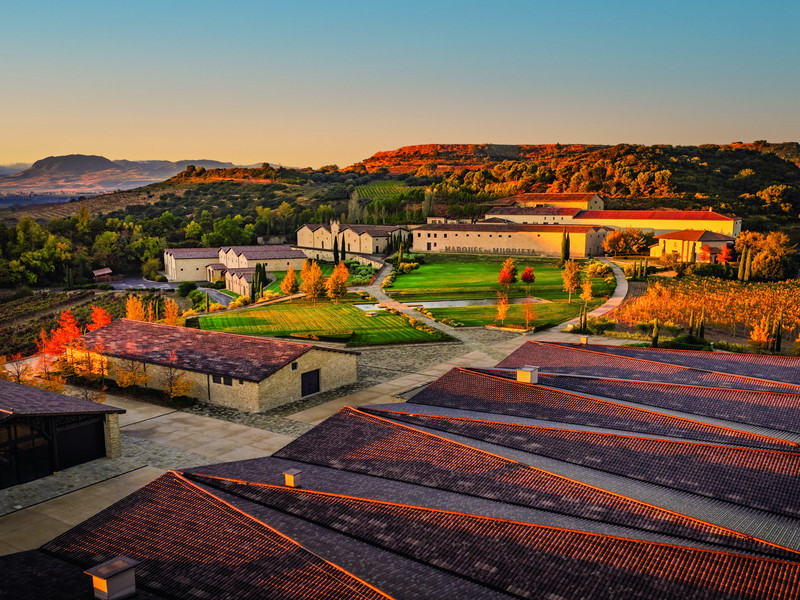 RiojaHard to find and incredibly exciting: Rioja shows its white sideAnyone who has only known Rioja as a region for red wine has been missing out. White wines and...
 -
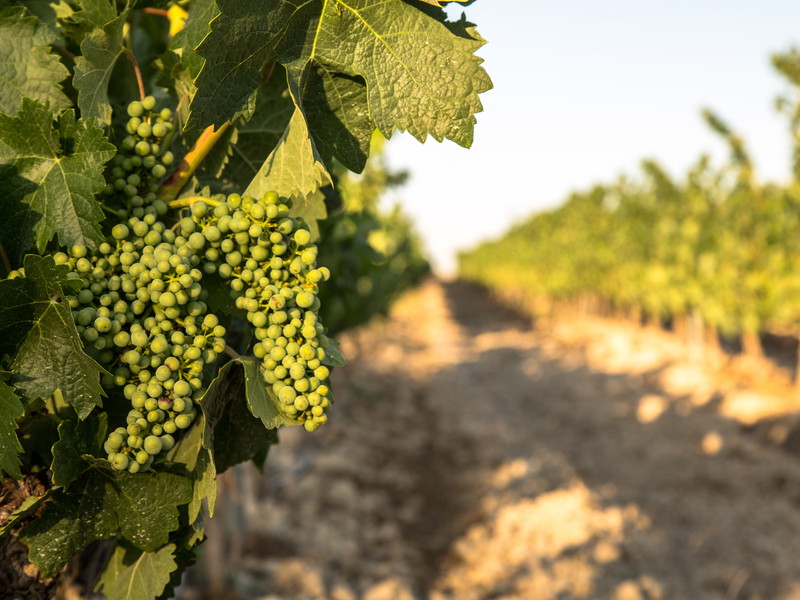 TastingThe Best of White Rioja: Our HighlightsWhite Rioja demonstrates just how complex, full of character, and surprising the famous Spanish...
 -
 WineGuests Trust People More Than AI When Choosing WineA new study shows that while digital channels are becoming increasingly important in wine...
 -
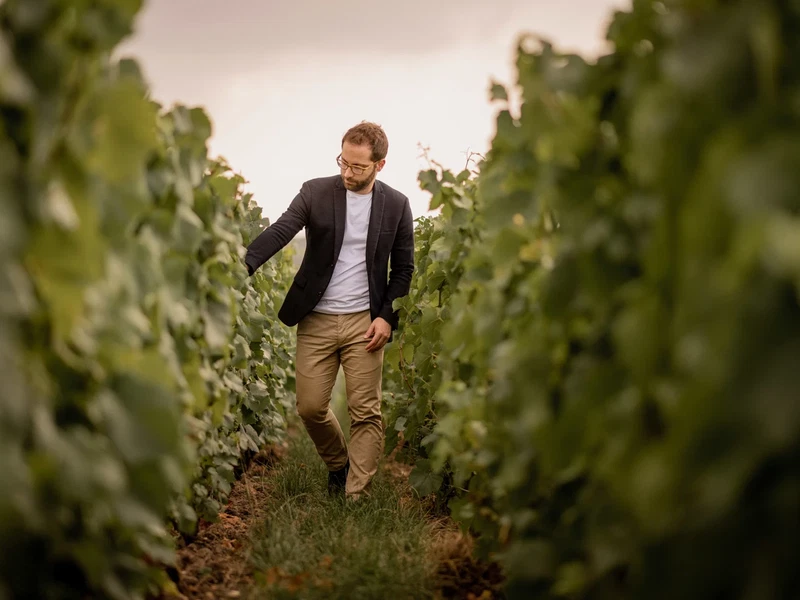 ChampagneBollinger Appoints Émilien Boutillat as New Cellar MasterÉmilien Boutillat has been appointed as the new Cellar Master of the Champagne house Bollinger. He...
 -
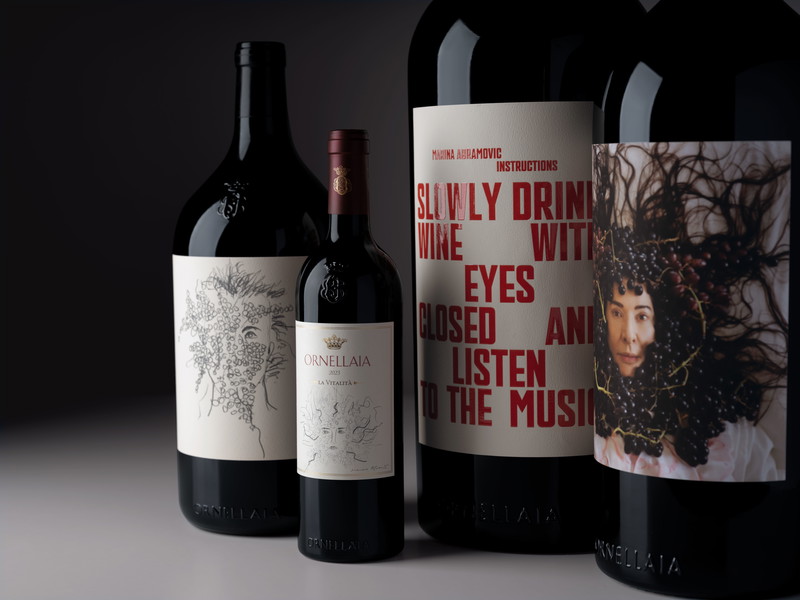 WineMarina Abramović Interprets Ornellaia 2023 “La Vitalità”Marina Abramović interprets Ornellaia 2023 La Vitalità through a striking series of artist labels...
 -
 LithuaniaLe Rosé at Monte Pacis: A Celebration of Rosé Culture by the Kaunas LagoonAs rosé continues to gain recognition as one of the most versatile styles of wine, dedicated...
 -
 SwedenFive Swedish Vineyards Made for a Summer StayGuided tours among the vines, tastings, al fresco meals and no need to nominate a designated...
 -
 VilniusWhy Should Cider Lovers Head to Vilnius This June?Cider is having a quiet boom across the Baltics, and this June Vilnius is marking that moment with...
 -
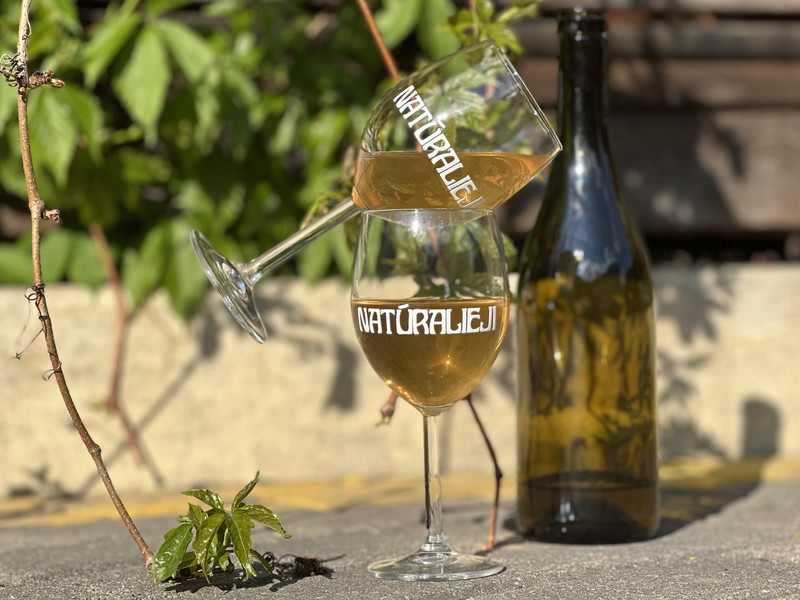 LithuaniaNatural Wine Takes the Stage in Vilnius This MayOn May 23, Vilnius will host The Naturals - a new wine fair bringing together 11 local...
 -
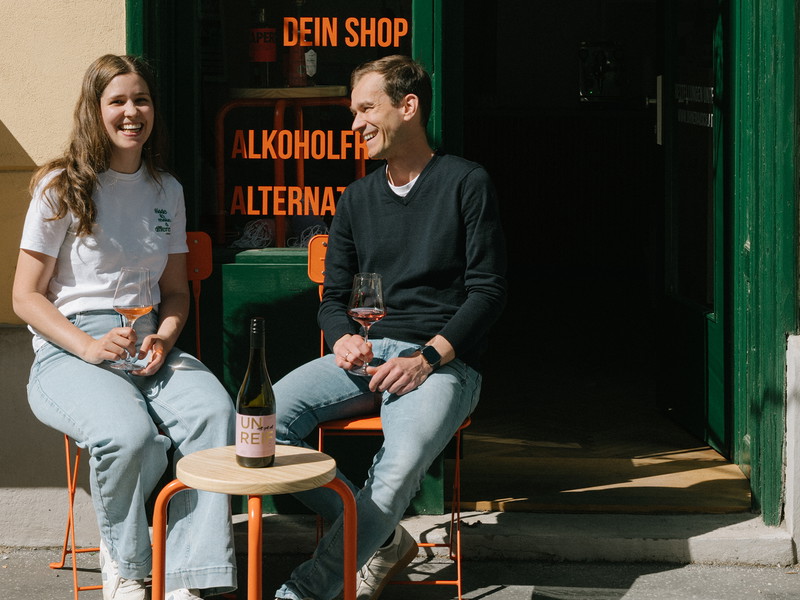 Alcohol-free"Ohnerausch" opens first store with non-alcoholic drinks in ViennaLisa and Philipp Smula open their first store for non-alcoholic drinks – from bitters and proxies...
 -
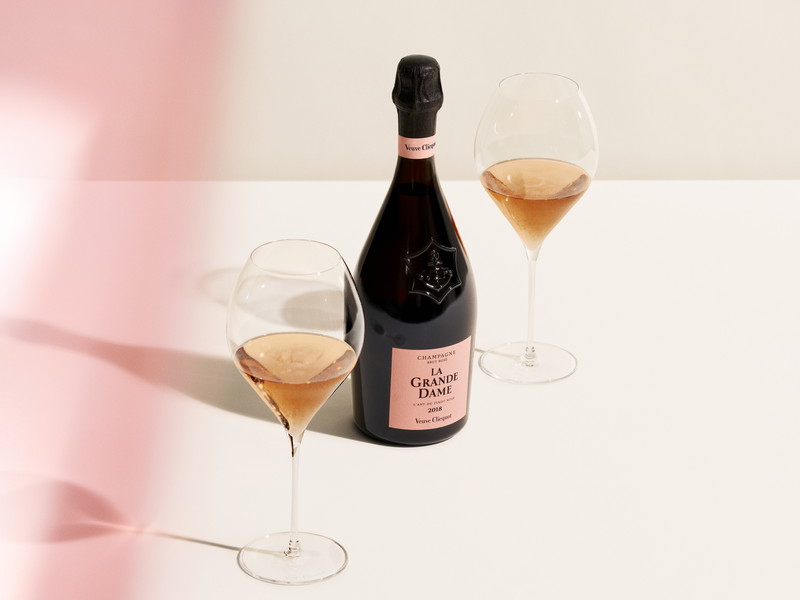 RoséVeuve Clicquot Unveils La Grande Dame Rosé 2018With Veuve Clicquot’s new “La Grande Dame Rosé 2018,” the Champagne house celebrates 200...