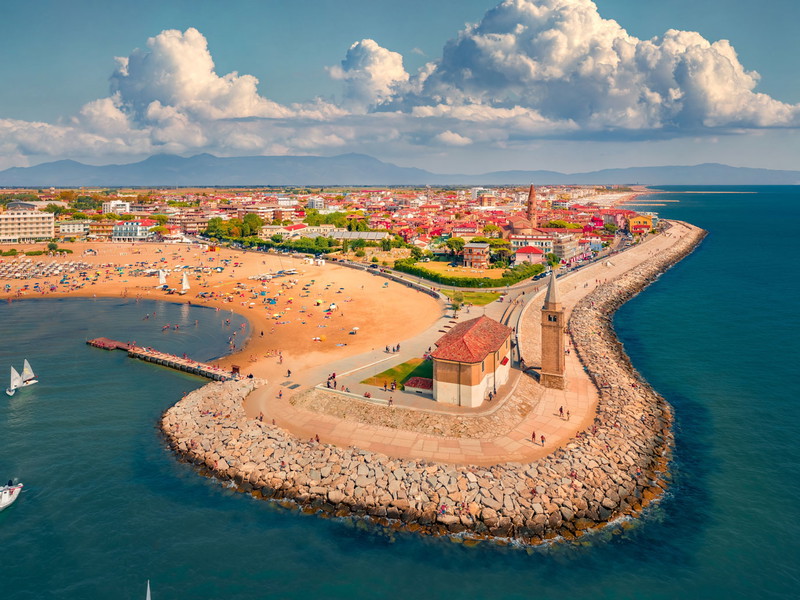
Kulinarik in Caorle: Es tut sich was in Klein-Venedig
Die besten Adressen am beliebten Ferienort an der Mündung der Livenza.
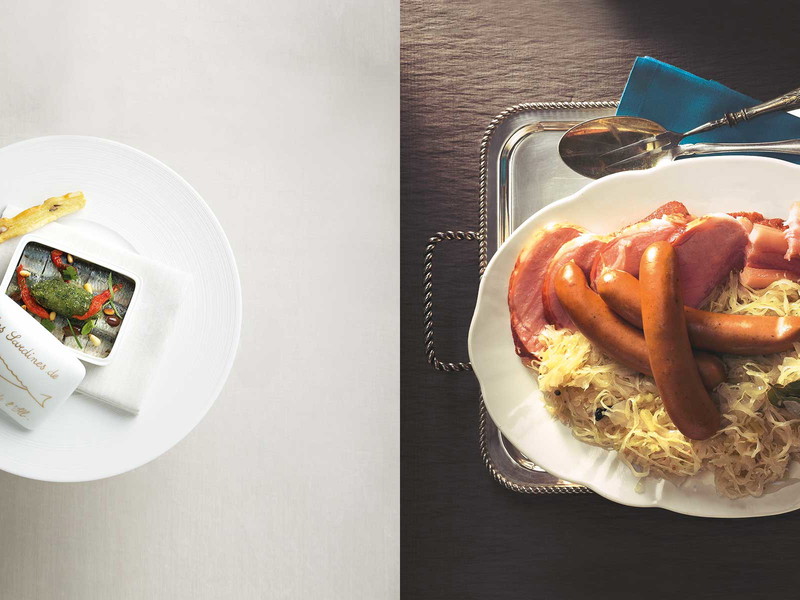
When you think of Alsace, you almost automatically think of small villages, storks, foie gras - and the Alsatian national dish choucroute garnie. But the region now offers much more.
Even from a distance you can see the Statue of Liberty. No, not the original on Liberty Island, but a small copy that stands in a traffic circle on the Colmar entrance road and is meant to remind us of the real statue made by the sculptor Frédéric-Auguste Bartholdi, who was born there. The city is proud of its famous son and has established a museum in his honor in the house where he was born.
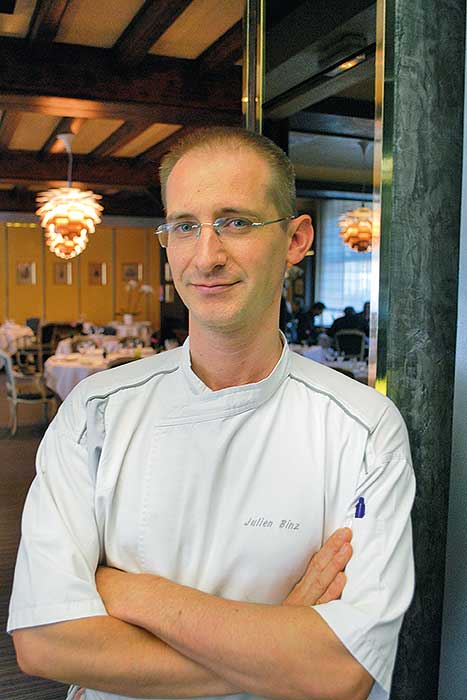
In addition to culture, the third largest city in Alsace also has a lot to offer in terms of cuisine. At "Le Rendez-vous de Chasse" in the Grand Hotel Bristol across from the train station, chef Julien Binz brings a carefully modernized cuisine to the plate, such as frothy chestnut soup with foie gras and truffles or a skin-roasted fillet of fished perch with asparagus chartreuse and sauce maltaise, a blood orange-flavored hollandaise.
Jean-Yves Schillinger, whose restaurant "JYS" is located in a historic 17th-century half-timbered house in Petite Venice on the Ill River, cooks completely differently. Schillinger, who looks like a cross between Gordon Ramsey and Stefan Effenberg, learned from the legendary Joël Robuchon, among others. In his modern fusion cuisine, he combines scallops with black pudding ravioli and pumpkin in the form of puree and espuma; he serves red mullet in an emulsion of coconut and kaffir lime leaves along with goat cheese gnocchi and gyoza, Japanese dumplings that he fills with vegetables.
A little further on, the village of Niedermorschwihr is home to Christine Ferber, the queen of jams. The village corresponds to all the clichés associated with Alsace. In the inconspicuous village bakery, which her parents already ran, Ferber makes wonderful jams in addition to tartlets and chocolates; her customers include Alain Ducasse and the Parisian star pastry chef Pierre Hermé. She buys the fruit in the region when possible, but the secret is in the small quantity. "I never cook more than four kilos at a time," she explains. Her jams consist only of fruit, sugar, lemon juice and, depending on the variety, pectin, which she makes herself from apples. They have over 50 varieties on offer and are always looking for new creations: This year's bestsellers are apricot-rhubarb and strawberry-sour cherry.
On the country road we continue to the culinary institution in Alsace, the "L'Auberge de l'Ill" in Illhaeusern. The ensemble of the little river Ill, the weeping willows and the barge moored on the bank, which can be seen from the glassed-in dining room, has postcard quality. Probably no other restaurant has had such an influence on culinary socialization in the German-speaking world, as the culinary spark jumped from there in the early 1960s.
Eckart Witzigmann also learned about haute cuisine here with Paul Haeberlin. Paul died a few years ago, but his brother Jean-Pierre still checks in on him from time to time. Paul's son Marc, who has been the chef for years, has wisely left a few of his father's classics on the menu, such as the foie gras terrine, souffled salmon and frog mousseline, but otherwise it clearly bears his signature. His style is classic without appearing dusty, the reference to the region is important to him. "I also try to offer down-to-earth dishes sometimes," he says. From his high-tech Gaggenau kitchen come dishes like pink-roasted suckling pig loin with a pretzel crust, to which he serves Sarriette-spiced broad bean ragout with a crispy crust, or a light and airy mirabelle soufflé, under which warm compote and almond sponge cake are hidden.
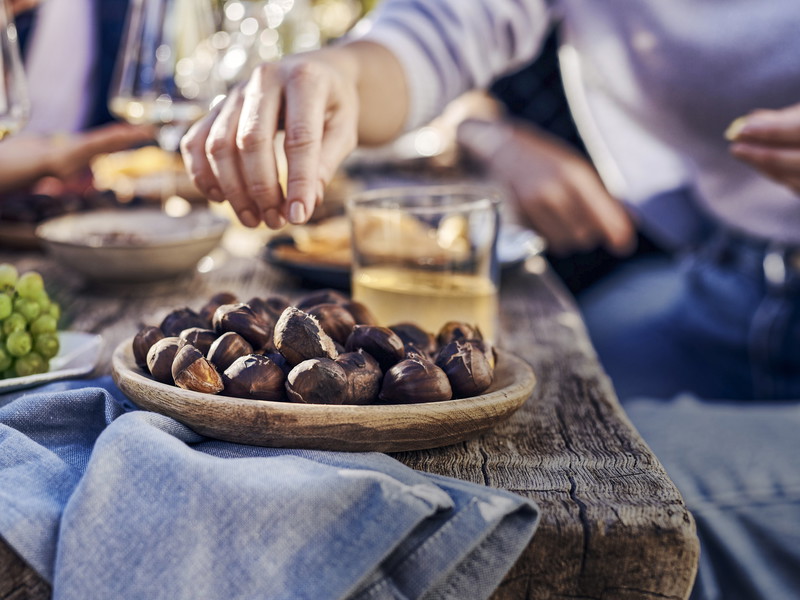
If you drive from Illhaeusern to Strasbourg, you will find the village of Obernai on the way, which offers a lot of Alsatian folklore as well as good restaurants. Well known beyond the borders of the region is "La Fourchette des Ducs", decorated with two Michelin stars. Less well known is "Le Bistro des Saveurs" by Thierry Schwartz. The pub looks a bit like a medieval tavern, with a fire crackling in a massive open kitchen fireplace at the front and people eating on bare chestnut tables.
The dishes focus on the product, which actually tastes of itself, as can be seen in the tender kid, smoked at the last moment with beech wood in a cast-iron pot, accompanied by a deep sauce and a few beetroot varieties. But it can also be more refined, such as the signature dish "Œuf dans l'œuf." What's behind it? "Very simple," says sommelier Cyril Kocher. "It's a kind of open-faced raviolo, but made with cooked egg whites instead of pasta, and filled with a runny egg yolk and mushroom cream." It's not simple by any means.
We continue on the E 25 to Strasbourg. A special feature there are the "winstubs," quaint pubs that are usually cramped and cozy. Many of them can be found around the cathedral, but beware, there are many tourist traps among them. Reliable addresses are "Le Tire-Bouchon" or institutions like "S'Burjerstuewel," which everyone calls "Chez Yvonne" after the legendary former landlady. It is no longer there, but its charm remains. The celebrity factor is still high, photos in the staircase to the upper floor testify to this. Even Gerhard Schröder enjoyed the sauerkraut here with Jacques Chirac. Strasbourg is not just about hearty cuisine, however; there are fine restaurants as well.
At "Au Crocodile," where Emile Jung used to cook, Philippe Bohrer is now at the stove, having studied under Bocuse and Loiseau, among others. The interior has remained essentially unchanged, the large stuffed crocodile still hangs in the entrance hall, and the huge mural is still there, only the apricot walls are now in shades of cream. The cuisine, however, has turned 180 degrees; instead of flawless classic, there is now Cuisine Moderne with foams and jellies, such as goat cheese foam with truffle oil or asparagus jelly with marinated green asparagus, truffle tapenade and a caper-lemon cream. Mostly, though, it tastes better when Bohrer gets back to basics, serving, say, duck breast lacquered with thyme honey and accompanied by a raviolo stuffed with club ragout, poached vineyard peach and expressive sauce.
The other of the two former three-star restaurants is the "Buerehiesel" in the Orangerie Park, a former farmhouse from the 17th century that has been faithfully rebuilt. Until a few years ago, Antoine Westermann cooked, but today his son Eric does so. He serves contemporary simple dishes that focus entirely on the product. "I want to showcase it," he says.
Anyone who has eaten his grilled lobster with tomato jelly, tomato tartar subtly seasoned with fresh coriander and marinated ox heart tomato, or the crispy fried sweetbreads with a variation of steamed artichokes, artichoke puree and slightly acidic marinated raw artichokes, knows that these are no platitudes. Those who remember Westermann senior can still reminisce here today, as the son has left a few of dad's dishes on the menu, such as the chervil-fried frog legs with Schniederspaetle, a type of Alsatian ravioli stuffed with sauerkraut. So even in restaurants like this, you ultimately end up back with the sauerkraut.
From Falstaff Magazine No. 07/2013