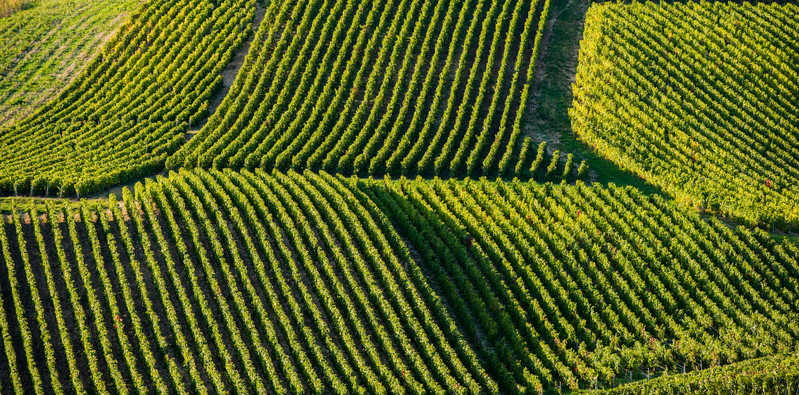
The first reference to the Gros Manseng can be found in an old Occidental text in 1562 in Jurancon, where it still plays a significant role today. However, it is not clear from the writing whether it refers to the Gros Manseng or to the Petit Manseng, to which it is closely related. Basically, Gros Manseng is a descendant of Petit Manseng and a grandson of Savagnin from Savoie. With its very thick berry skins, it is well-equipped to resist rot, but requires the winemaker to handle it carefully and conscientiously in the cellar if the wine is not to taste astringent and bitter. However, the variety is susceptible to downy mildew. It brings generous yields, which should, however, be limited restrictively to ensure good quality. In southwest France, around 1,000 hectares are planted with Gros Manseng, but the trend is declining because, due to the growing interest in noble sweet wines from the Jurancon, it has to give way to Petit Manseng, which plays a larger role with its special wine style. The wines of Gros Manseng are fruity and smell of stone fruit and tropical fruits, but outside of Jurancon it is usually blended with Ugni Blanc, Colombard or Sauvignon Blanc. It has not made it beyond the regional borders of southwest France, even though it is found in homeopathic quantities in Spain, Uruguay and Brazil.
This grape variety is also known by the name of:
Manseng gros blanc, Gros Mansenc blanc, Gros manseng blanc, Ichiriota zuria handia, Ichirioa zuriahandla