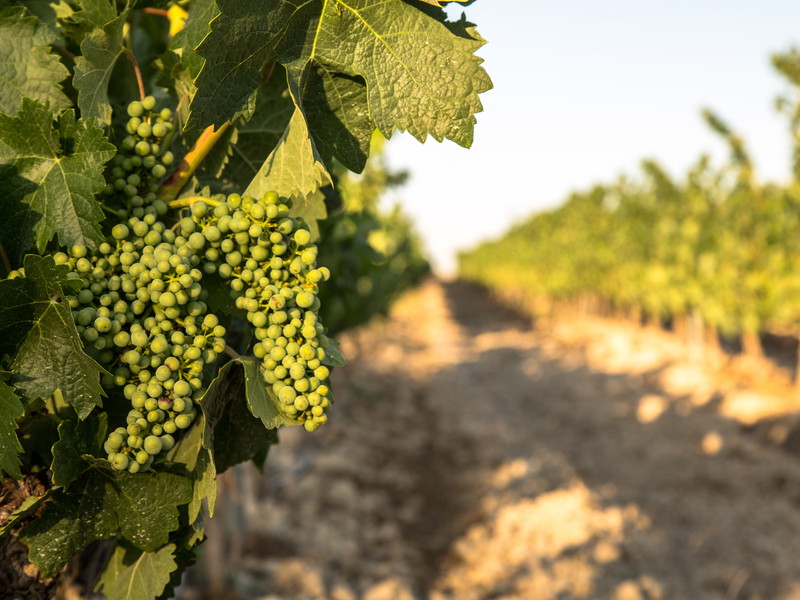
The Harslevelü, also called “linden leaf” in reference to its aroma, is one of Hungary's long-established grape varieties, which was mentioned by name as early as 1740. He was identified as a descendant of Furmint, a native of Tokaj. The variety is quite sensitive and reacts negatively to excessive heat as well as to a climate that is too humid and requires a good choice of location. It is also susceptible to powdery mildew. On the other hand, it is vigorous and produces good results on warmer, volcanic soils. Harslevelü ripens late after a medium-long shoot. In good years, its thin grape skins also allow the noble rot Botrytis cinerea to attack, which is why it is also added in small quantities to Hungary's special sweet wine specialty, Tokaji. Around 1,600 helktars are produced in Hungary, including in Eger, Villany and Somlo. In neighboring Austria, a handful of winegrowers also take care of Harslevelü, and there are also small plantings in Slovakia and Romania. At least the Harslevelü has made the jump to South Africa, where it is allowed to occupy 75 hectares.
This grape variety is also known by the name of:
Budai Goher, Harchlevelu, Lindener, Feuille de Tilleul, Lipolist Biyali, Lipovina, Lämmerschwanz, Frunza de Tei, Frunze de Tei, Gorsh Levelyu, Kerekes, Kereklevelü, Lipolist, Hars Levelu, Musztafer, Lidenblättriger, Harst Leveliu, Hachat Lovelin, Harslevele, Lindenblätrige, Harch Levelu, Lindenblättrige, Lindenblütrige, Gars Levelyu, Hosszunyelü Feher, Garsh Levelyu, Garsz Levelju, Garsleveliu, Hars Levelyu, Harzevelu, Nöthab, Tokai, Vörös, Tarpai