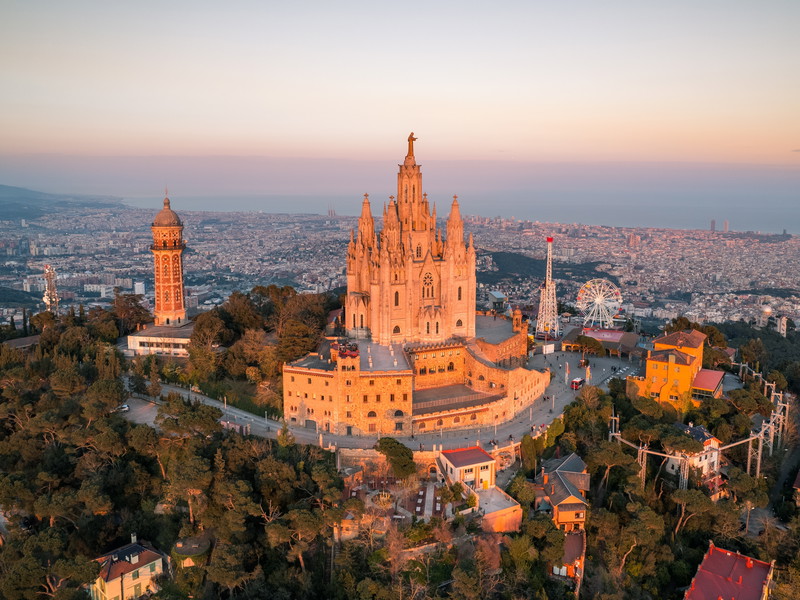
The Catalan parliament has decided to increase the tourism tax. From April 1, 2026, visitors to Barcelona will pay twice as much tourism tax as before, as well as an increased city tax. Taxes are also gradually increasing in the rest of Catalonia - by 2027, they are set to be twice as high as before in the entire region.
In Barcelona, guests will now pay a total tax of up to twelve euros per person per night from April 1, 2026 - previously the maximum rate was 7.50 euros.
Noticeable additional costs depending on the accommodation
The rate in the Catalan capital is calculated on the one hand from the increased tourism tax, which applies to all accommodation - including hotels, guesthouses, vacation apartments, hostels, campsites and youth hostels.
Anyone staying in a vacation apartment in Barcelona, for example, will have to pay 4.50 euros per night (instead of 2.25 euros previously) in tourism tax, while five-star hotels will have to pay 7 euros (instead of 3.50 euros previously).
Cruise passengers will also be asked to pay more: Those staying longer than twelve hours will pay 4 euros per night instead of the previous 2 euros, and even 6 euros for shorter stays.
Municipal surcharges increase
In addition to the regional tourism tax, cities levy their own surcharges. In Barcelona, it will be 5 euros per night from April 1 instead of the previous 4 euros. An annual increase of a further euro is also planned - up to an upper limit of 8 euros per night in 2029.
Pressure from mass tourism
The new regulation is the region's response to increasing tensions surrounding mass tourism. In Barcelona in particular, the high number of visitors has been a source of discussion and protests for years. The rising taxes are part of a strategy to better manage visitor flows and reduce the burden on locals.