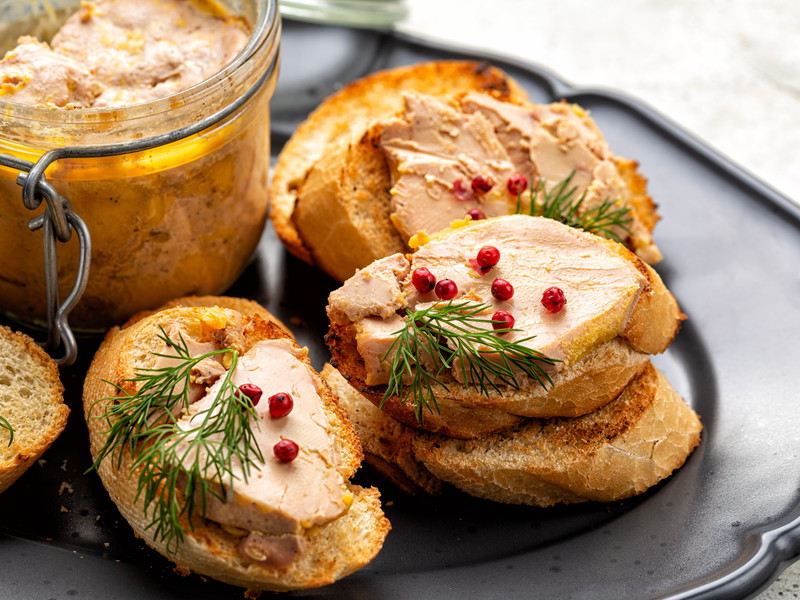
Foie gras – a culinary delight to some, the epitome of animal cruelty to others. Traditionally, the delicacy is produced by force feeding geese or ducks for weeks on end. A tube is inserted into the animal's stomach to allow high-calorie food to be pumped in, causing the liver to swell to unnatural sizes. In many countries, including Germany and Switzerland, this practice is now banned, but it remains legal in some regions. Most notably France, where foie gras is considered national cultural heritage.
However, a German-Danish research team at the Max Planck Institute for Polymer Research in Mainz has now developed a method that allows the taste and texture of traditional foie gras to be replicated – without harming a single animal.
A matter of taste
The team worked for years to develop a foie gras-like pâté that is equal to the original in terms of taste and mouthfeel. "What we have now is practically indistinguishable from traditional foie gras," Dr. Thomas Vilgis, head of the study, assured the German Press Agency. A physicist and amateur chef himself, Vilgis considers his study not just a scientific success, but also the start of a new era in the production of animal delicacies.
First, the team analyzed traditionally-made foie gras and examined its base components: Fat content, collagen content and texture. Then, they developed a gel made from collagen-rich tissue mixed with the fat and liver from geese or ducks. But the real breakthrough came from utilizing lipases – enzymes that play a central role in the digestion of ducks and geese. These enzymes ensure that the fatty acids are broken down properly, and are responsible for the typical consistency of foie gras. By adding these enzymes, it became possible to form the fat aggregates that are crucial for the characteristic consistency of foie gras.
A high-tech alternative
The result is a foie gras that not only tastes great, but is also ethically defensible. The method could offer a way forward for countries where force feeding is prohibited by law. This could also be the solution for gourmets who appreciate the taste but don't want to compromise on animal welfare.