Skip to content

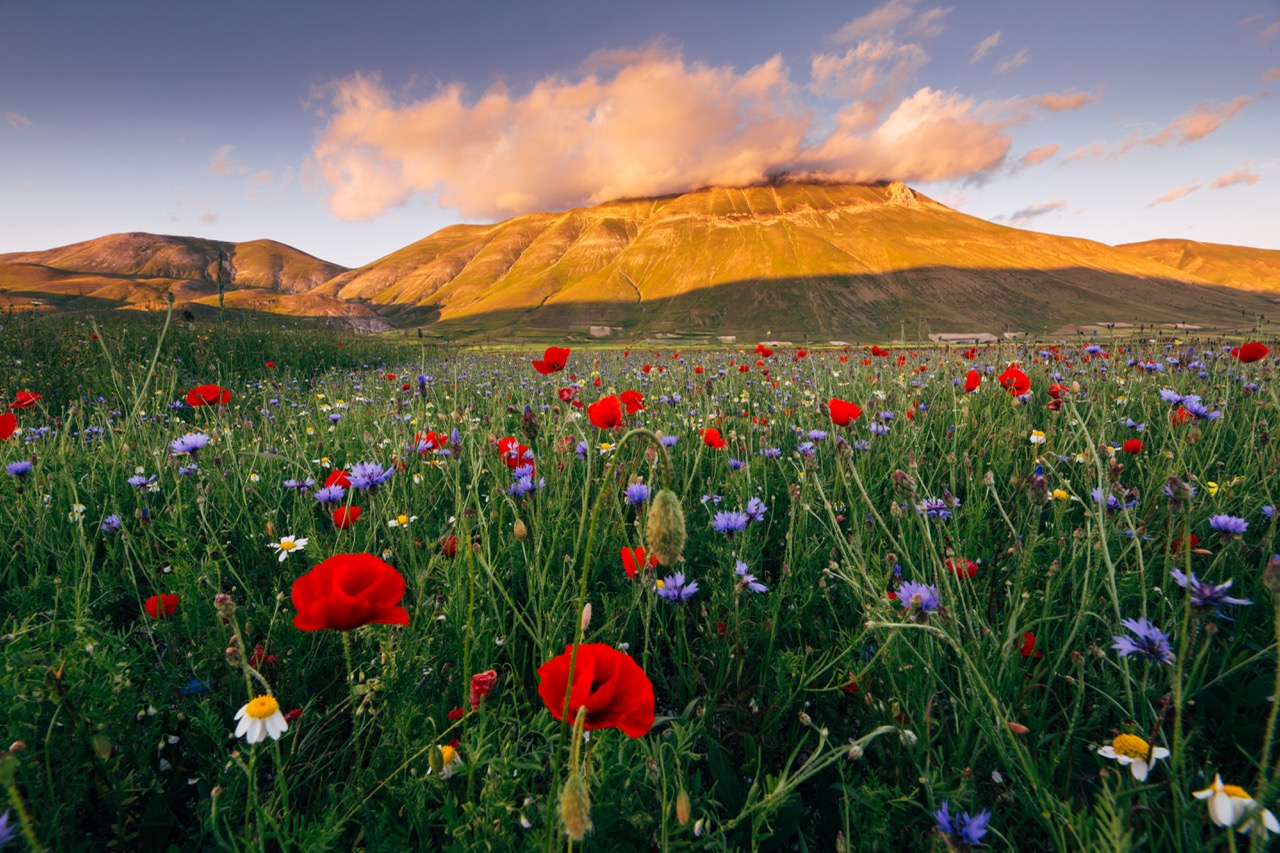
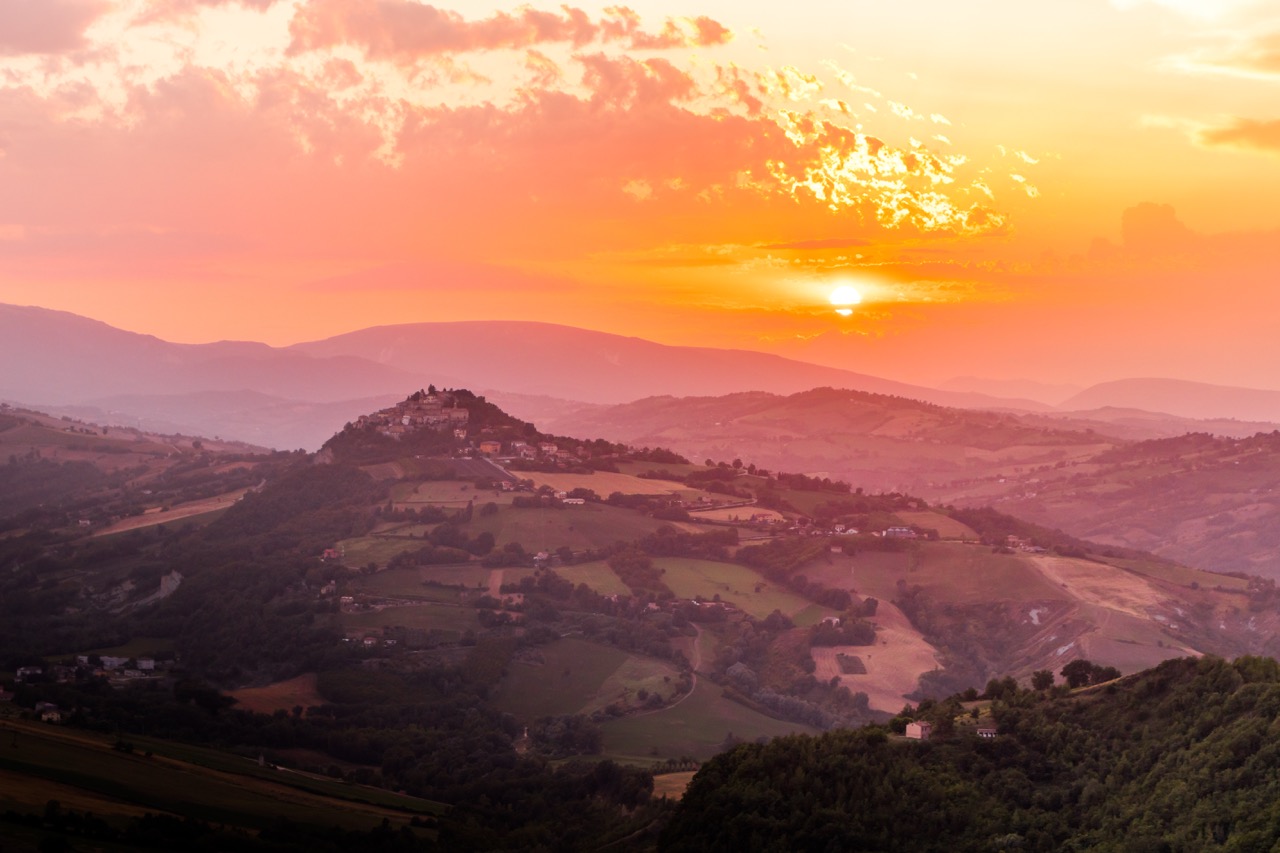
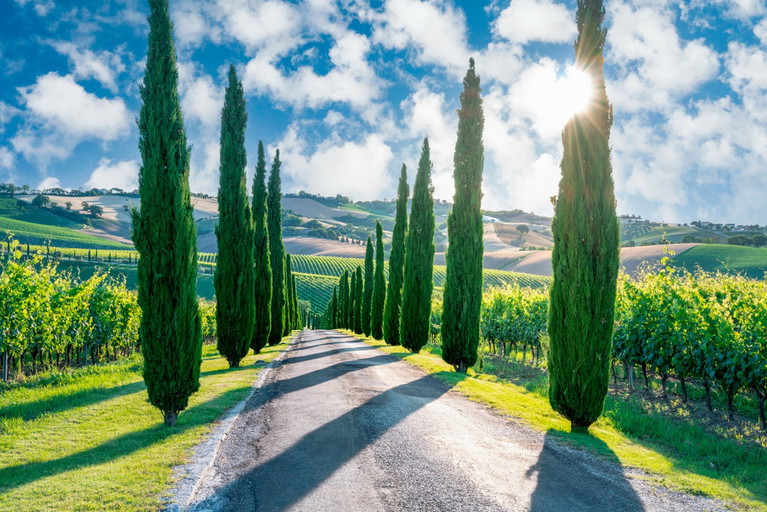
The meditative beauty of the Marche is a destination that should be discovered, especially for leisure cyclists.

The meditative beauty of the Marche is a destination that should be discovered, especially for leisure cyclists.
© Shutterstock

Marche: the most beautiful side road in Italy

Reise
Landschaft
Natur
Italien

Tuscany's often overlooked sister region is home to beautiful coastlines, rolling hills, and as a reward, excellent wines. Between the vines and Renaissance art, there are numerous routes for cyclists; from challenging to light as a feather.

Cycle through the whole of Italy - in one vacation! No problem in Le Marche, because many say that this region is like Italy in miniature. Geographically, Le Marche is located in the middle of the Italian east coast - on the calf of the boot, so to speak.

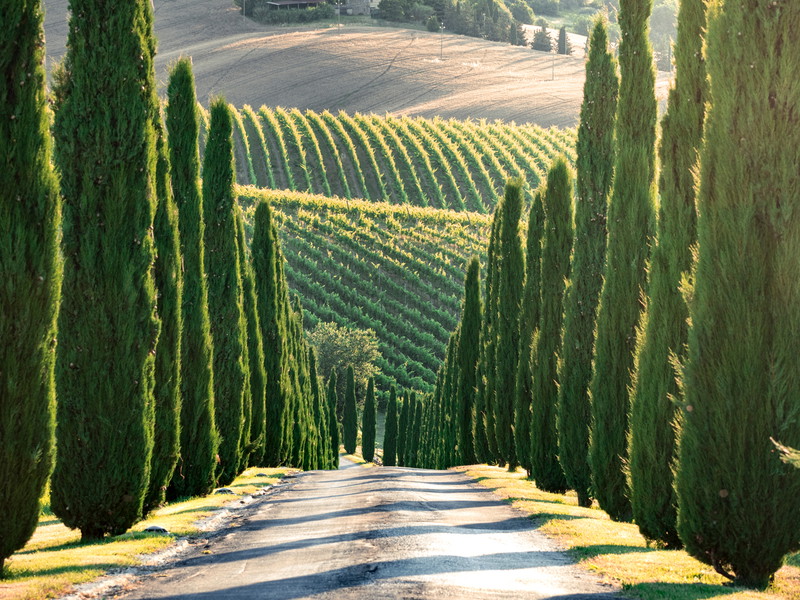
You need strong calves if you want to cycle here. In the west, the mountains rise to well over 2,000 meters, while in the east the Adriatic coast beckons with café-lined promenades and white beaches. In between are rolling hills dotted with cypress trees, medieval villages, vineyards and olive groves.

So it's up and down by bike, but it's worth it, because spectacular views, hospitality and culinary delights await. The Marche region has a well-developed cycle network. Many agencies offer guided tours, some lasting several days. You can also simply rent a room in one of the many agriturismi and explore the area with its many cultural and natural treasures on your own.

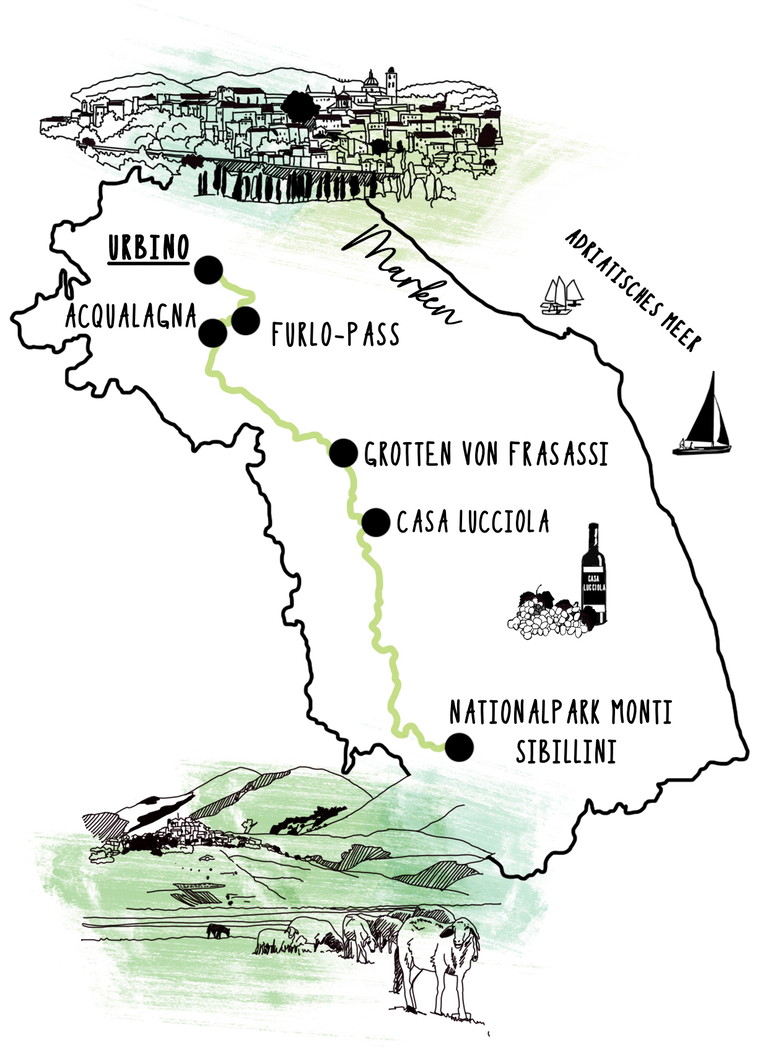
Among the most famous attractions are the Frasassi Caves, which wind their way over 30 kilometers through the interior of the mountain and are among the most spectacular stalactite caves in Europe. The first hall alone is so huge that it could easily accommodate Milan Cathedral.

The Monti Sibillini National Park stretches to the southwest with its peaks over 2,000 meters high; a majestic mountain world around 70 kilometers from the Frasassi caves. To the north, just two hours away by bike, lies the spectacular Furlo Gorge; a wild and romantic gorge that is known as the "Grand Canyon of Italy".

And in between, like a culinary promise, is the small town of Acqualagna: Italy's unknown truffle capital, where tubers are dug up, traded and brought fresh to the plates all year round - just 45 kilometers away and easily accessible via gently rolling hill routes.

Raphael's home

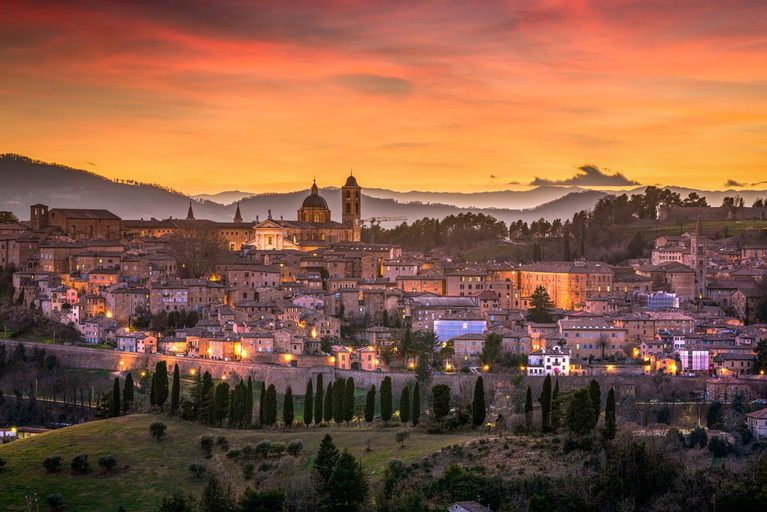
Cultural treasures can be discovered in Urbino, the birthplace of the Renaissance painter Raphael; creator of such immortal masterpieces as the "Sistine Madonna" or the "School of Athens". In the elegant palazzi of the city, you can still sense the spirit of the High Renaissance, when Urbino became a center of humanists and painters under the art-loving Duke Federico da Montefeltro.

A UNESCO-protected Renaissance jewel with magnificently preserved buildings and museums, nestled in the rolling hills. The basilica of Loreto, which is considered the most important pilgrimage site in Europe alongside Lourdes, is situated on a prominent hill. The high density of historic theatres is striking; there are around 70 in the entire region. Magnificent gems designed by great architects, hidden in the narrow streets of quiet villages.

For many, Le Marche is still a blind spot on the otherwise well-developed map of Italy, and things are correspondingly quiet here. "The Marchigiani don't make a big fuss about themselves," says Barbara Cruciani, who runs the Casa Lucciola winery together with her husband Luca. A cycle path has also recently been added there; a 30-kilometer circular route through the vineyards around Matelica.

Urbino, Teil des UNESCO-Weltkulturerbes, ist Anziehungspunkt für Reisen-de mit Faible für Kunst und Kultur.
© Shutterstock
Urbino, Teil des UNESCO-Weltkulturerbes, ist Anziehungspunkt für Reisen-de mit Faible für Kunst und Kultur.
Wer in den Marken radelt, fährt nicht nur durch eine herrliche Landschaft, sondern findet auch zahlreiche Kulturschätze.
© Katjana Lacatena / carolineseidler
Wer in den Marken radelt, fährt nicht nur durch eine herrliche Landschaft, sondern findet auch zahlreiche Kulturschätze.

Wine craftsmanship with heart

The Marche wine landscape is as diverse as the region itself. Eleven DOP-protected wines are produced here; the deep red Lacrima di Morro d'Alba smells of flowers and red berries. In the south, the straw-yellow, spicy Pecorino and the fruity Rosso Piceno are produced. But the best known is Verdicchio, which also grows at the Cruciani couple's home.

Your Casa Lucciola is one of 17 independent wineries that work according to traditional methods and joined forces two years ago to form Vignaioli delle Marche. The aim: to make the region and its (undiscovered) treasures better known internationally. Luca Lucciola inherited the land from his parents. Almost ten years ago, the family man, who previously had nothing to do with viticulture, planted his first vines; not a rational decision, as he says, but one that he made "with his heart".

It's a story you often hear in the Marche region: L'amore per il territorio. Small businesses, run with passion and heart and soul. Federico Pesaresi, whose vines grow on Monte Conero with a view of the turquoise blue sea, invites guests to dinner and music in his vineyards high above the white cliffs in summer.

Winemaker Massimo Palmieri, a native Pugliesi who first fell in love with the wine trade and then with the Marche region, welcomes his guests with such calm and passion that you immediately want to do the same; buy a dilapidated country estate and set up as a winemaker. At his "Tenuta San Marcello", which he runs together with his wife, you can relax your tired cycling legs by the pool with a view and fill your hungry stomach with regional slow food cuisine.

© Shutterstock

Velvet beach

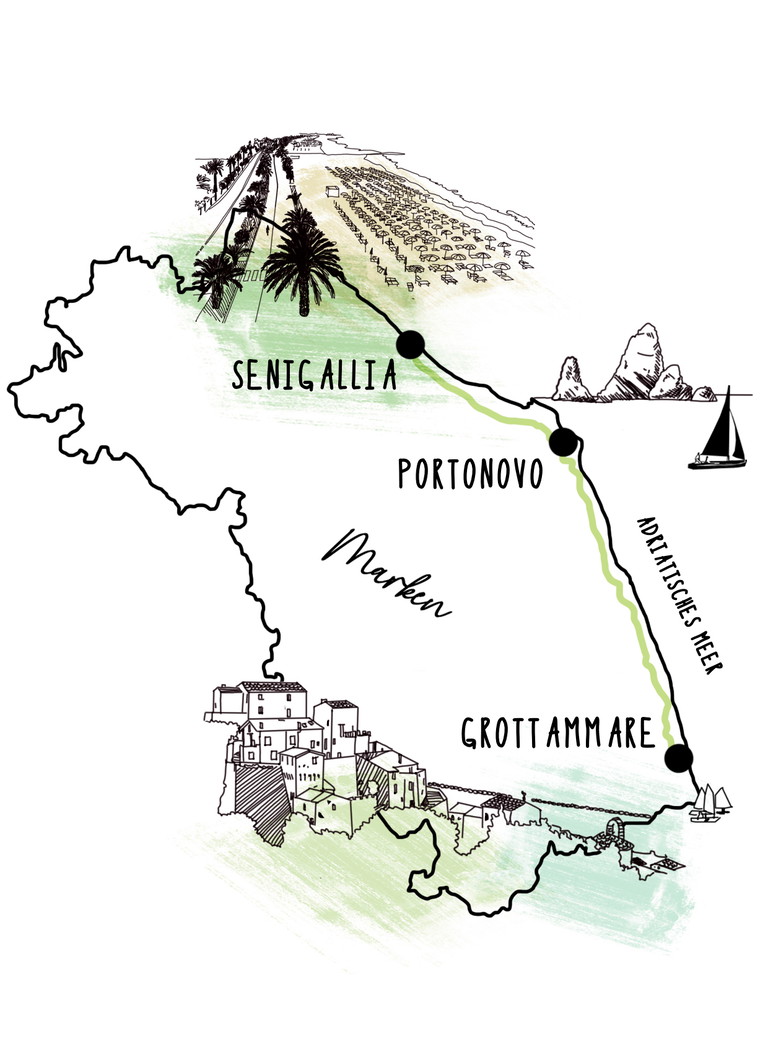
If the hills in the hinterland are too sporty for you, stick to the coast, where the "Strade di Marca" circular route is almost 800 kilometers long. To the south lies Grottammare with its elegant Art Nouveau villas and lively beach promenade. In the middle of the nature reserve on Monte Conero, the seaside resort of Portonovo is surrounded by crystal-clear water and wild nature.

To the north is Ancona, the capital and port city of the Marche region; a place full of art and history: Romanesque churches, ancient excavations, Venetian palazzi and an archaeological museum dating back to Piceno times.

An hour and a half's cycle ride away is Senigallia, which became a popular seaside resort in the mid-19th century. The local, 13-kilometre-long Spiaggia di Velluto - the "velvet beach" - owes its name to the particularly fine sand, which feels as soft as fabric underfoot. Senigallia is also a proud culinary destination; the town,  with less than 50,000 inhabitants, can boast five Michelin stars.

Rustic delights can be found throughout the region. One of the most famous dishes is the "Olive all'ascolana": olives stuffed with meat or fish, breaded and deep-fried. Addictive potential: high. Perfect for hungry cyclists.

Entlang der Küste führt dieser Rundweg zu lebendigen Badeorten und geschichtsreichen Hafenstädten.
© Katjana Lacatena / carolineseidler
Entlang der Küste führt dieser Rundweg zu lebendigen Badeorten und geschichtsreichen Hafenstädten.

Verena Carola Mayer
Find out more
1 / 12