Skip to content
© Getty Images

New Orleans: a paradise for jazz lovers and fusion cuisine foodies

City Guides
Food for the soul
Travel

New Orleans isn’t just a city you visit – it’s a city you feel. Between jazz, voodoo, Creole cuisine, and colonial architecture, it offers a way of life that’s unlike anywhere else in the U.S.

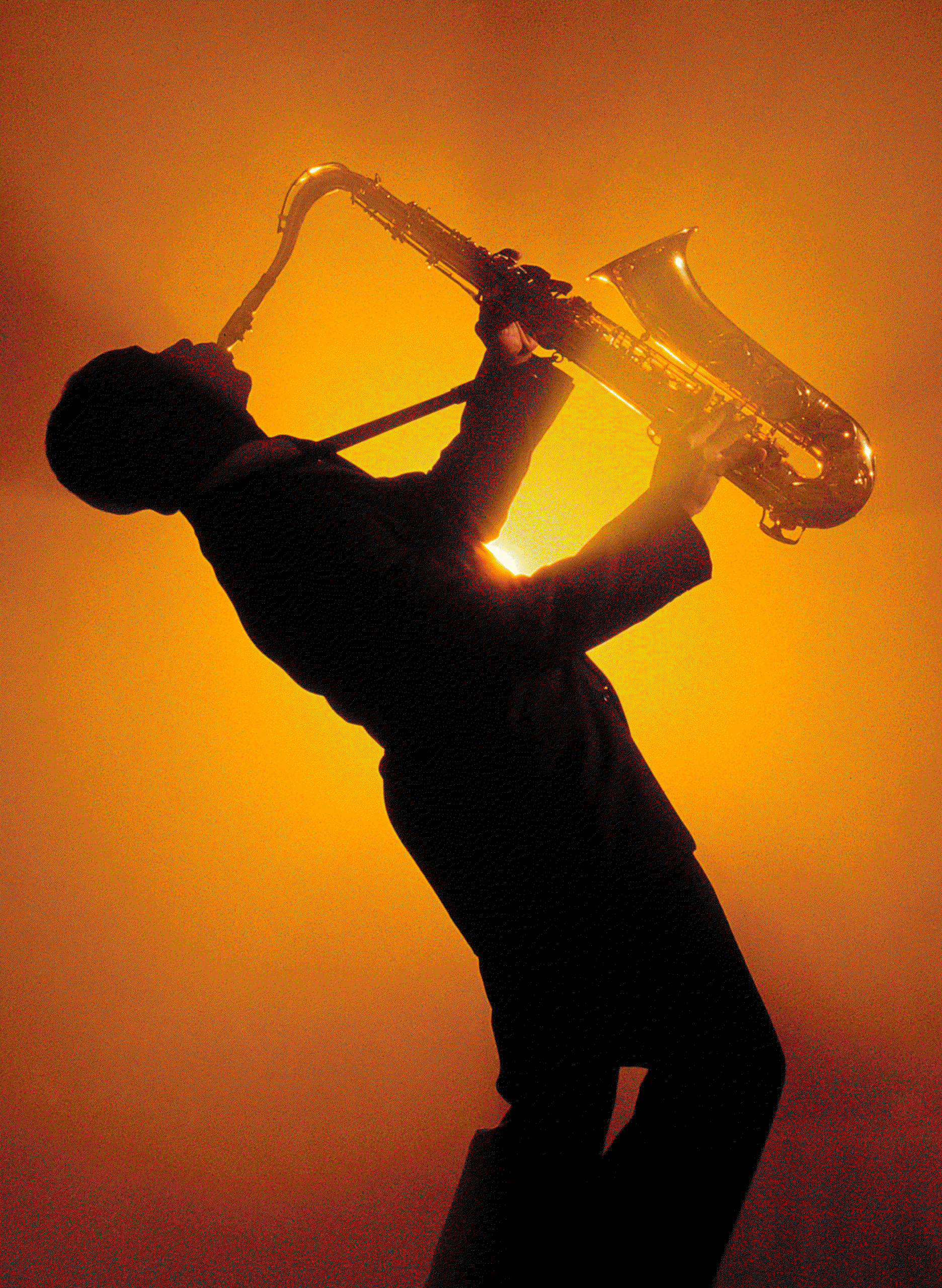
The most beautiful declaration of love to New Orleans comes from Louis Armstrong"Every time I close my eyes and blow my trumpet, I look straight into the heart of good old New Orleans. It has given me something to live for." The world-famous jazz musician and his hometown - it's impossible to imagine one without the other. Armstrong gave New Orleans his voice, New Orleans gave him the rhythm of his life. The airport bears this close connection in its name: Louis Armstrong New Orleans International Airport. Anyone arriving here can feel it immediately: this unique sound, this warmth, this sensual promise that is in the air. Live jazz in the terminal, the first chord even before the baggage carousel; the smell of freshly baked beignets from Café du Monde: Welcome to New Orleans - where everything is music.

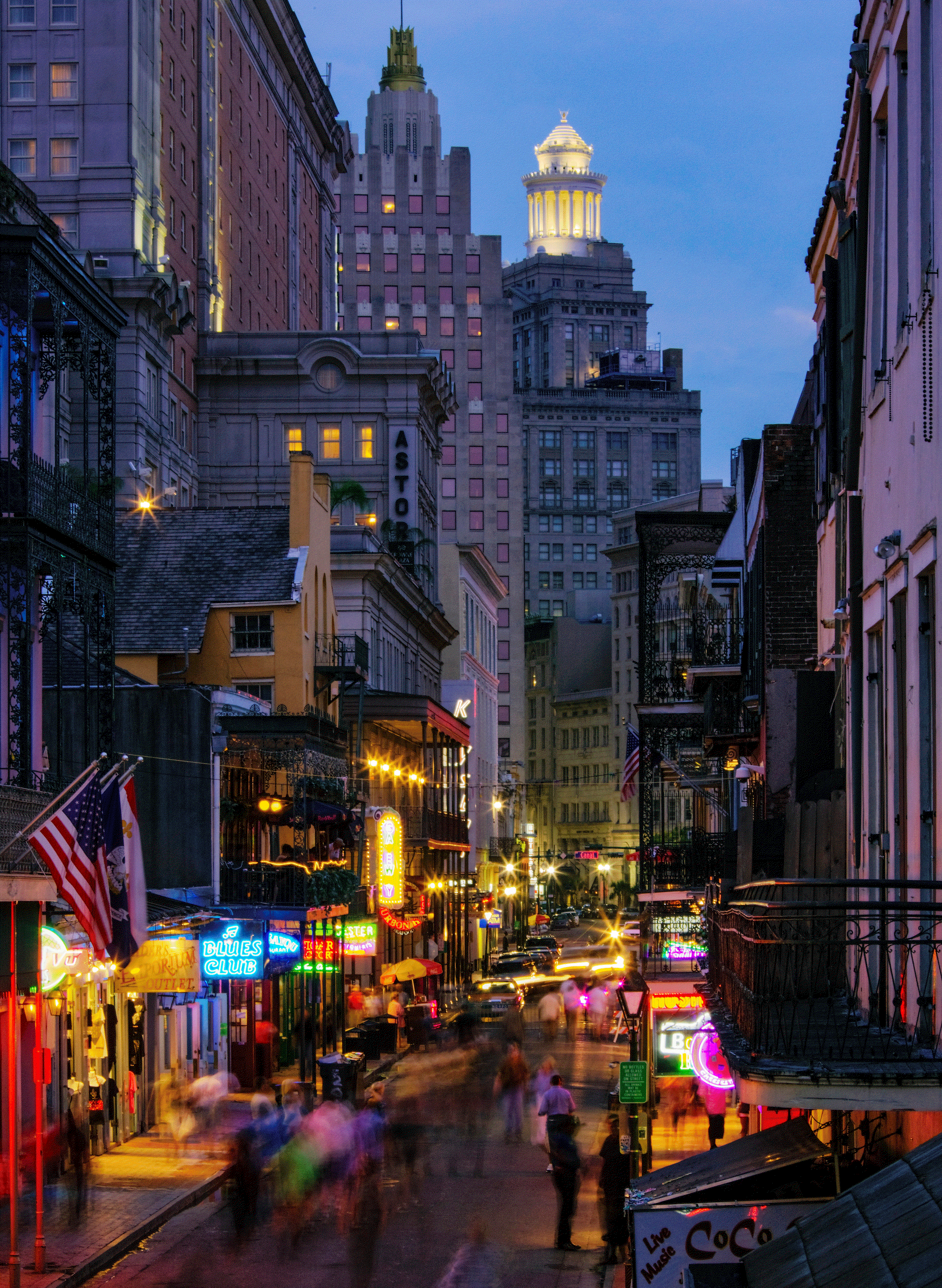
The historic district—known as the French Quarter—with its picturesque colonial architecture is the heart of the city and draws hundreds of thousands of visitors each year. Among the historic facades and mysterious courtyards, French elegance, Spanish flair, and Caribbean zest for life blend into a unique cultural melange.

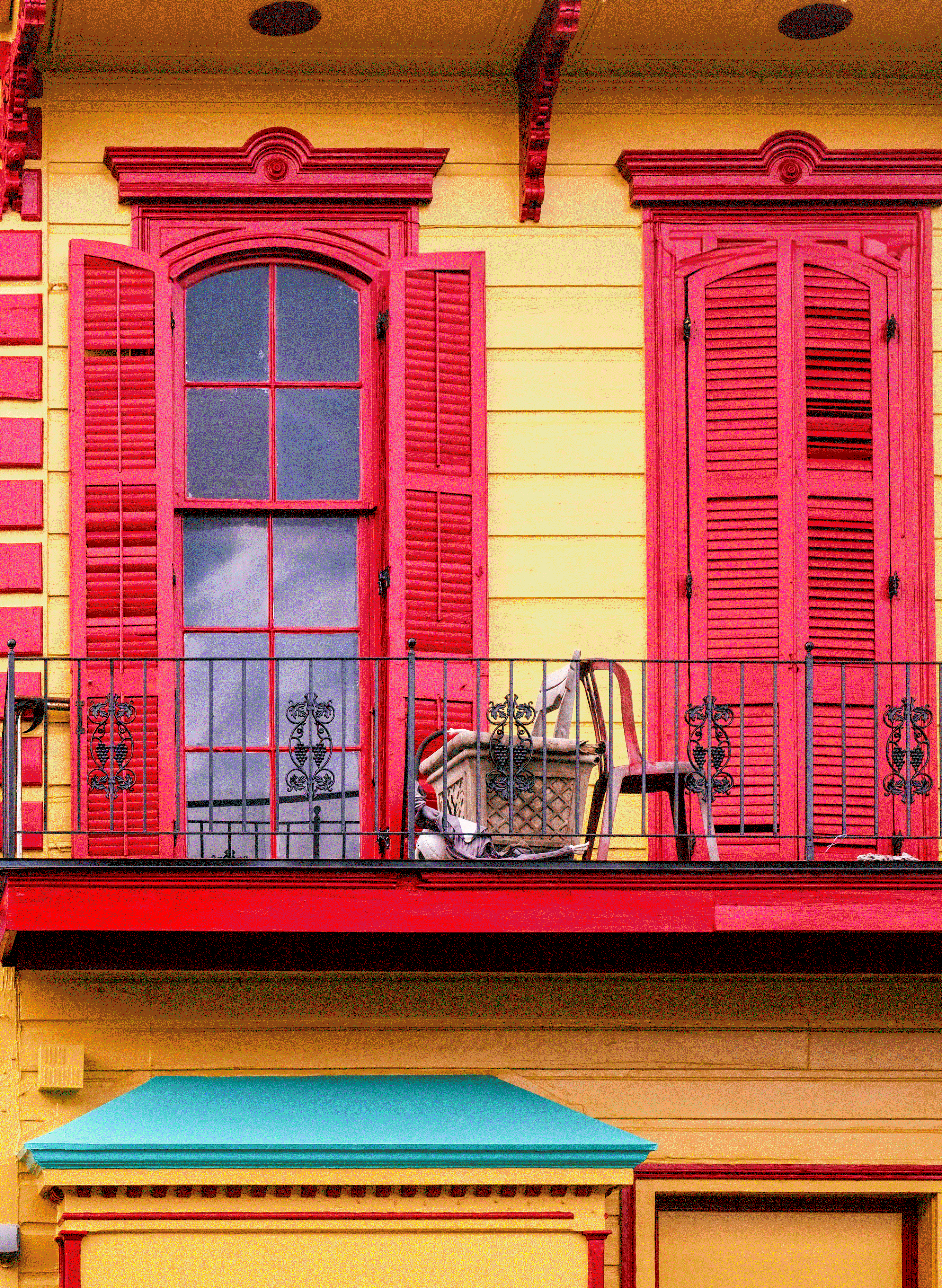
Unlike many major American cities, New Orleans hasn’t torn down its historic buildings—it has preserved them. Today, well over half of the city is under historical protection. Ferns spill skyward from the wrought-iron balconies of the French Quarter. In the past, these balconies served as refuges during floods—when heavy rain turned the streets into ankle-deep rivers, life simply moved one floor up. “In New Orleans, you need three things,” locals say: “good shoes, an umbrella—and patience.”

Culture for all the senses

New Orleans’ museum scene is as diverse as the city itself. Take the National WWII Museum, for example—one of the most visited museums in the United States. Especially striking is the soft, shifting floor in the Pacific theater section, which gives visitors the sensation of standing deep in the jungle. Art lovers will feel at home at the New Orleans Museum of Art (NOMA), while those looking to dive deeper into local culture should check out the Backstreet Cultural Museum and the Historic Voodoo Museum.

New Orleans is considered the center of the voodoo cult: palmistry, card reading and protective talismans - there's probably no other place in the United States where the density of such services is as high as in the French Quarter of Louisiana's capital. The slave trade brought these occult practices from West Africa to the south of the USA.

And then, of course, there is the New Orleans Jazz Museum - nowhere else can you experience the soul of this musical genre so directly. "In Storyville, the part of New Orleans where I grew up, there were music bars on every street corner. There was usually a piano player, sometimes bands. To attract people, the musicians also played outside in front of the store. We children then stood on the other side of the street, listened and danced. I was always particularly thrilled when I could listen to Joe Oliver - when he played at one of the street parades, I was constantly running alongside him so as not to miss a note." In his memoirs, Louis Armstrong recalls the place that many consider to be the birthplace of jazz: Storyville, the city's former red light district.

In 1897, city councilman Sidney Story established Storyville as an official—and therefore legal—red-light district in order to regulate prostitution in the port city. The district covered 38 city blocks, and it wasn’t just about physical pleasures: in the brothels, house pianists—known as professors—provided musical entertainment. These venues gave musicians the freedom to experiment in ways that would’ve been unthinkable elsewhere. The audiences were more open-minded and generous than anywhere else—and that environment became the driving force behind a new musical genre: jazz.

Storyville was shut down on November 12, 1917. Although the district was a major source of income for the city, its association with crime made it increasingly controversial. After four soldiers were killed in shootouts, the Departments of War and the Navy—against the mayor’s wishes—declared that no brothels could operate within five miles of a naval base. But jazz remained. And more than that—it went on to conquer the world.

© Shutterstock

Voices of the present

Kevin Blanq, born in New Orleans, is a trumpeter, bandleader, and music educator who embodies the deep connection between music and the city like few others. Both of his parents were musicians, and like them, he’s deeply rooted in the soundscape of the American South. Early on, Blanq met his greatest role model: the late jazz pianist Ellis Marsalis, who passed away in 2020. A key figure in the New Orleans School of Music and father of world-renowned trumpeter Wynton Marsalis, Ellis left a lasting impression. “He taught us what jazz is really supposed to sound like—not through long lectures, but by just jumping in and playing with us,” Blanq recalls of his lessons with Marsalis.

As celebrated as New Orleans is today as the cradle of jazz, the history of this music is also one marked by exclusion and inequality. Blanq speaks openly about the darker chapters of the past: “Ellis and my father couldn’t play in the same band back in the 1960s because of segregation laws. At the Playboy Club, white and Black musicians were even placed on separate floors. It was a divided stage—literally.”

With the rise of the US civil rights movement, jazz suddenly became political: many musicians who had previously seen themselves as apolitical shaped the resistance with their songs - they gave the protest rhythm, soul and contagious power.

New Orleans is not only a paradise for music fans, but also for gourmets. Whether it's gumbo (a spicy stew of meat or seafood, vegetables and dark roux), the spicy rice pan jambalaya or the legendary po' boy: in this city, food is culture, history and identity at the same time.

The po' boy, traditionally served in a crispy baguette and filled with deep-fried shrimps, oysters or roast beef, is "dressed" - i.e. lovingly topped with lettuce, tomatoes, mayonnaise and gherkins. And of course: fritters! The deep-fried square pieces of pastry with a cloud of powdered sugar are cult, especially in the famous Café du Monde. A well-intentioned tip: don't wear anything black - the powdered sugar takes no prisoners.

"There was fusion cuisine here before the term even existed," says chef Amy Cyrex Sins from the Langlois cooking school. And indeed: Creole cuisine, strongly influenced by French cuisine, has constantly evolved over the centuries - through Spanish colonial rulers, African slaves, German immigrants, Italian traders and Caribbean neighbors. All of these influences blended and merged with local ingredients and customs - and became the basis for one of the most diverse regional cuisines in the United States.

The river that connects everything

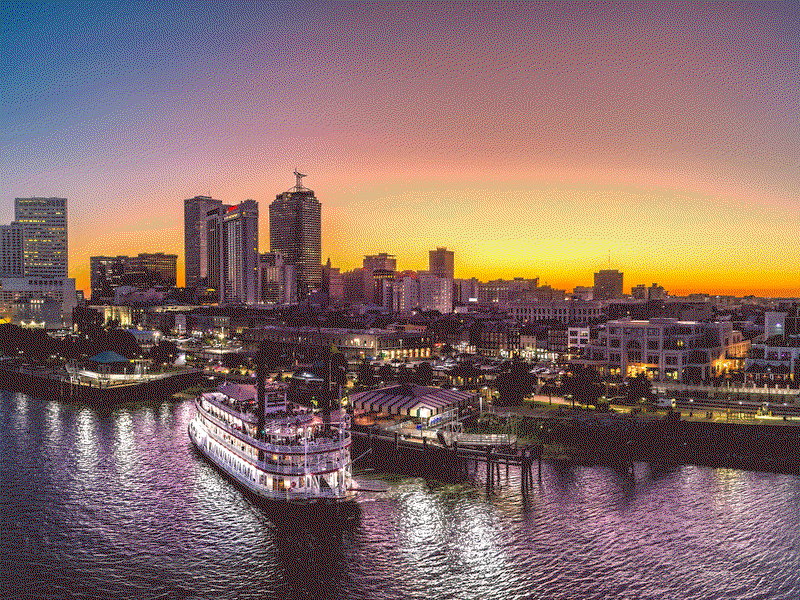
The lifeline of New Orleans—economically, historically, and culturally—has always been the Mississippi River. A stroll along the riverfront brings the steady thump of paddlewheel steamers: their deep hum and the rhythmic clatter of their wheels sound like echoes from a bygone era. In between, cargo ships pass by—not as romantic, perhaps, but all the more vital to the region’s trade. New Orleans has always been a gateway to the world—a hub for goods, people, and ideas.

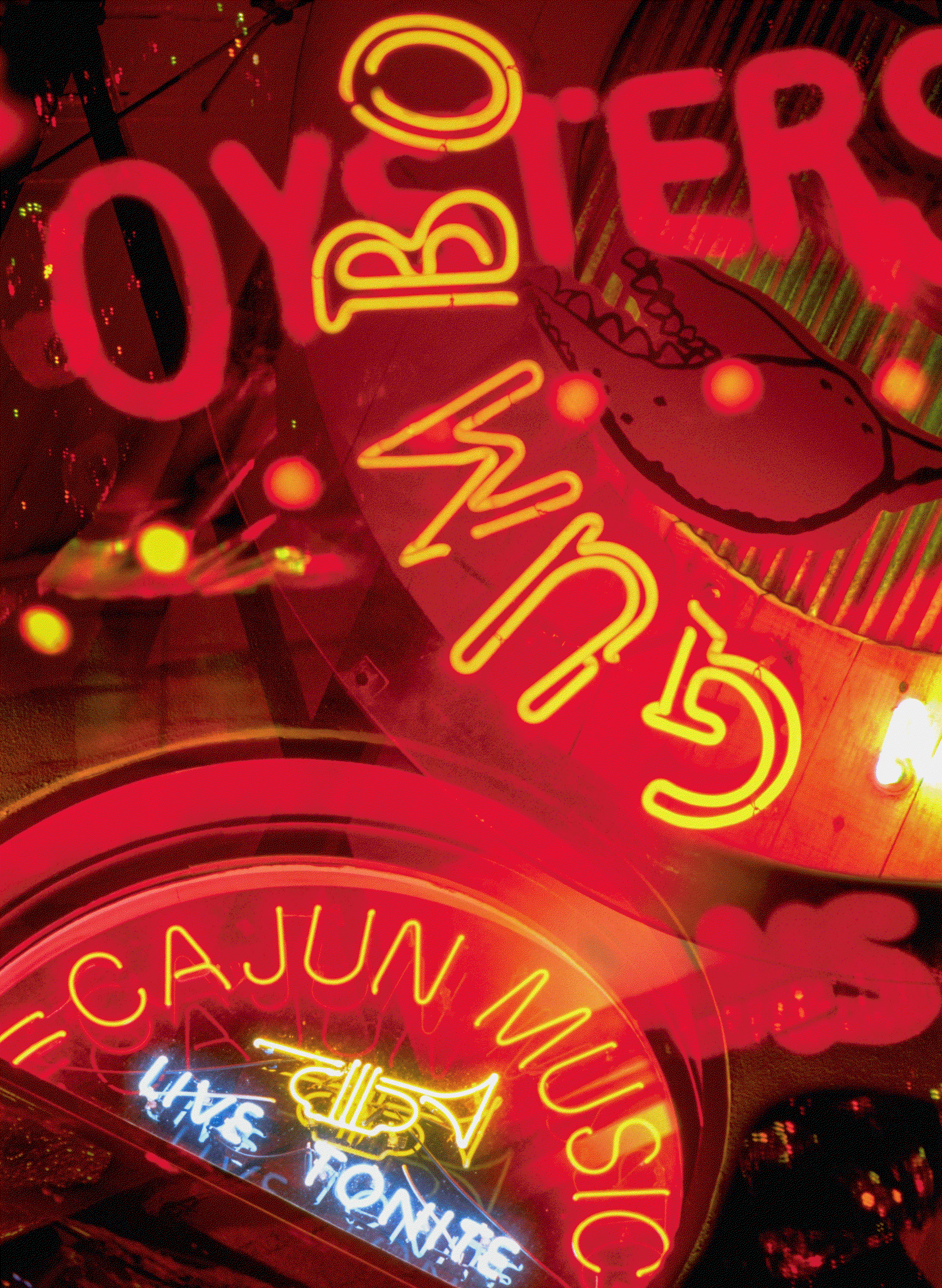
To this day, the port is one of the most important logistical distribution centers in the USA - especially for agricultural exports. In addition to wheat, cocoa, coffee, soybeans and corn are shipped here. And the culinary pulse of the harbor also beats right into the city's kitchens: seafood from the Gulf of Mexico - prawns, oysters, crabs - land freshly caught on plates from here. The queue in front of the legendary Acme Oyster House speaks volumes. If you come in the afternoon, you'll have to wait a little longer - but it's always worth it.

Last but not least, death is also part of city life: The historic cemeteries with their artistically designed above-ground graves are among the city's most popular sights. And often the last journey is not made in silence, but with music: brass bands play, slowly at first, solemnly, plaintively. But as soon as the deceased is laid to rest, the mood changes: there is dancing, laughter and celebration - New Orleans does not say goodbye in silence, but to the rhythm of life.

Restaurants

1403 Washington Avenue
70130 New Orleans
United States
713 Saint Louis Street
70130 New Orleans
United States
813 Rue Bienville
70112 New Orleans
United States
Angelika Ahrens
Angelika Ahrens
Author
Find out more
1 / 12