HOW SOCIAL MEDIA HACKS OUR SENSES
A chocolate bar from Dubai, a viral video — and suddenly the world is queuing. The hype surrounding Dubai chocolate perfectly illustrates how social media not only accelerates food trends but also shapes expectations, desire and even our perception of taste.
In December 2023, @mariavehera257 sits perfectly styled in her car and takes a generous bite of a chocolate bar. This is something the food influencer regularly does for her roughly three million followers. A dry, crisp crack can be heard; inside the bar, delicate golden strands stretch apart and a thick, glossy green filling begins to ooze out beneath them. Anyone watching can almost feel what it must be like: crunchy, creamy, rich, sweet — all at once. Maria Vehera, visibly overwhelmed by the experience, devours the bar bite by bite with evident pleasure.
This short video clip, barely 30 seconds long and posted on the platform TikTok, was viewed more than 120 million times within a very short period and shared millions of times. What went viral here was not just a product, but an entire sensory experience — a hype that swept across the world like a storm.
Angel Hair and Shortages
The chocolate comes from Dubai, where Vehera lives. It was created by Sarah Hamouda, founder of Fix Dessert Chocolatier. The idea did not arise from market research or trend reports, but from a deeply personal craving Hamouda experienced during her second pregnancy.
“I was searching for something unique and satisfying that I couldn’t find in typical desserts. I wanted to create chocolate bars that combine different textures and flavours. That led to the idea of the chaotically extra-filled chocolate,” Hamouda explains.
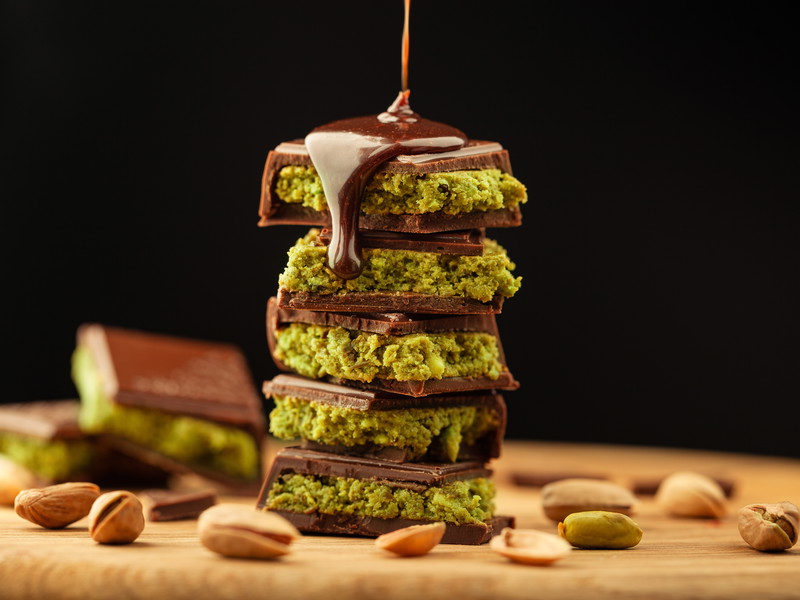
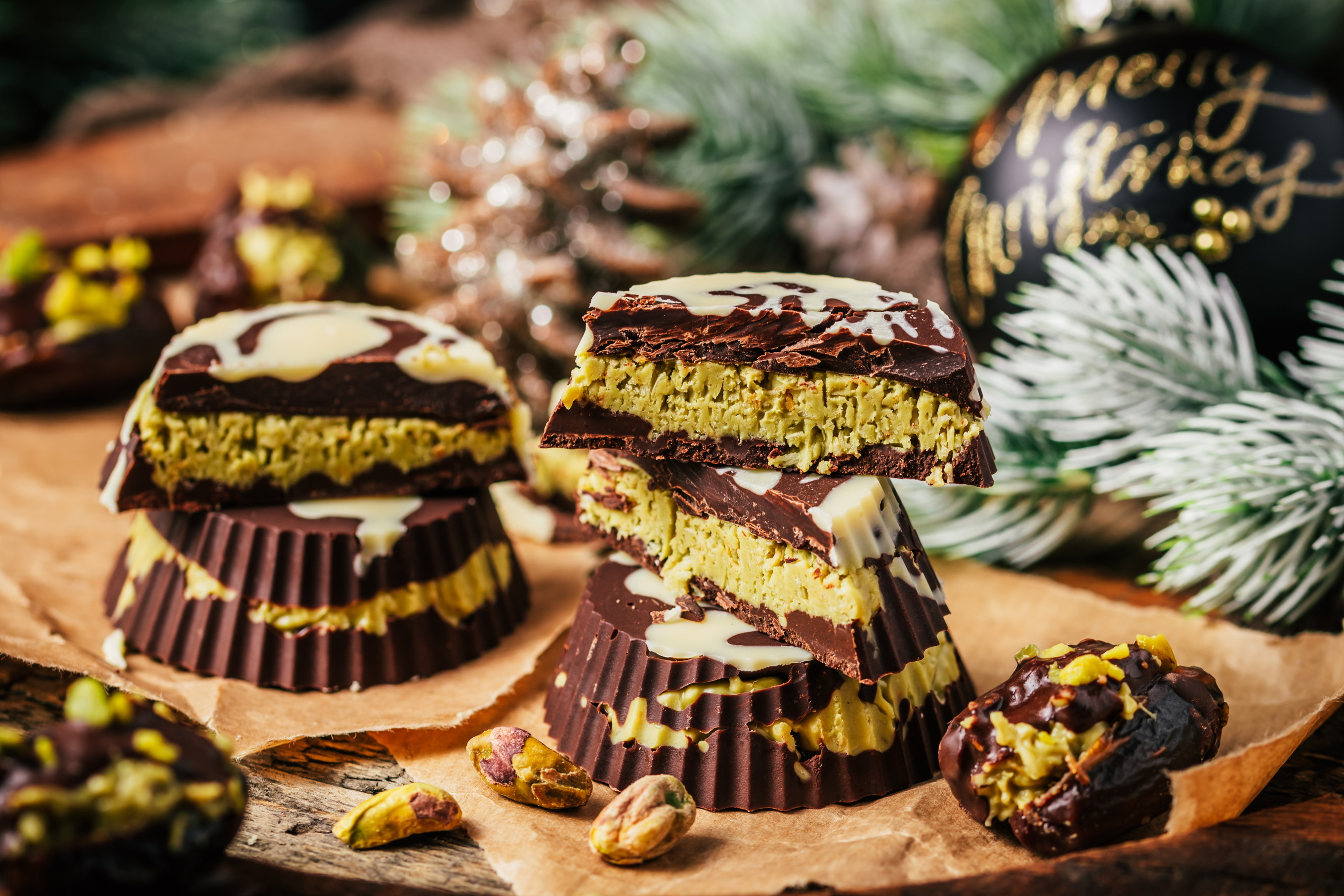
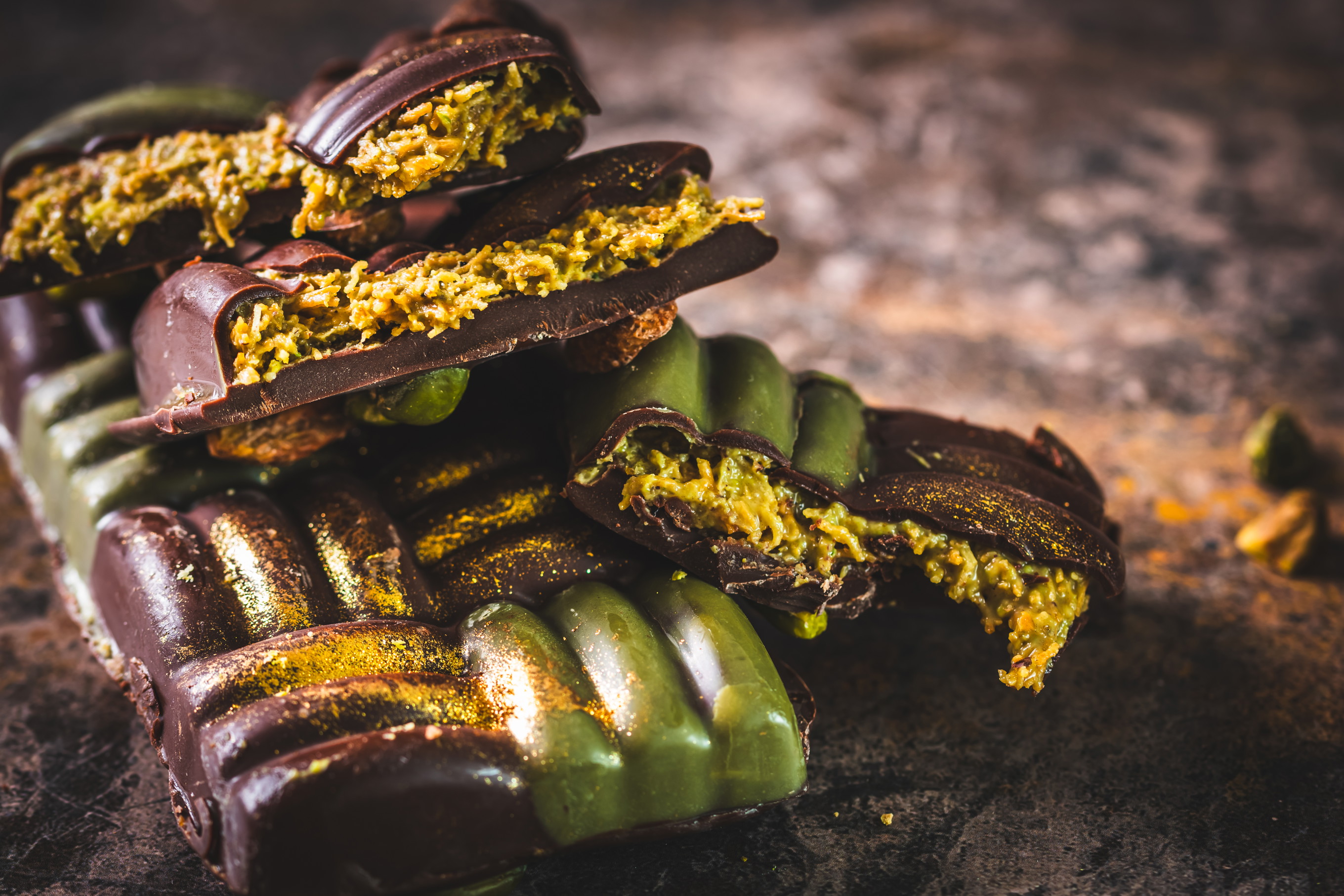
The ingredients themselves are not particularly unusual — yet their combination certainly is: milk chocolate filled with pistachio cream, a touch of tahini and kadaif, also known as angel hair pastry, which provides the distinctive crunch. It is precisely the interplay between melting chocolate, creamy filling and brittle crunch that creates the sensory appeal — one that can be communicated so effectively through visual and acoustic cues in a video.
After Maria Vehera’s clip went viral, Hamouda received tens of thousands of orders within a very short time. Far too many for the small, artisanal company to handle. From that point on, the chocolate was only available during strictly limited sales windows and regularly sold out within minutes. Scarcity was not planned, but simply the result of the social-media hype. At the same time, it intensified the phenomenon: what is difficult to obtain inevitably becomes even more desirable.
It is a mechanism familiar from many other industries — whether the handbags of luxury brand Hermès, the wines of Domaine de la Romanée-Conti or the merchandise drops of rapper Travis Scott. Scarcity has become part of the cultural spirit of time.

“I was searching for something unique and satisfying that I couldn’t find in typical desserts. I wanted to create chocolate bars that combine different textures and flavours. That led to the idea of the chaotically extra-filled chocolate.”
Sarah Hamouda
Founder of Fix Dessert Chocolatier
Sarah Hamouda
Founder of Fix Dessert Chocolatier
The Psychology of Desire
The phenomenon behind the Dubai chocolate hype is no coincidence. It rests on psychological mechanisms that social media platforms have learned to masterfully exploit. At the centre stands FOMO — the fear of missing out. From a neurobiological perspective, FOMO represents a combination of reward and stress reactions. When people see others participating in a desirable experience or enjoying a coveted product, the brain’s reward system is activated. Dopamine signals anticipation, relevance and potential pleasure. If access remains out of reach — for instance because a product is sold out or difficult to obtain — this anticipation quickly turns into stress. A dynamic that is further amplified by the constant comparisons inherent to social media.
Platforms such as TikTok actively leverage this mechanism. Their algorithms prioritise content that makes desire and scarcity visible. Millions of likes effectively replace personal evaluation: social proof becomes a form of pre-tasting. The desire to try Dubai chocolate therefore arises less from hunger than from the wish to be part of the collective.
Similar effects have long been visible in gastronomy. Today, chefs increasingly design dishes with the camera in mind. This does not mean flavour has become secondary — but the visual dimension has clearly gained importance. Food must now perform visually as well. Guests no longer dine out solely to satisfy hunger, but also to document and present themselves. The shared image becomes a form of social calling card. Social media does not dictate taste — but it profoundly shapes how taste is told.
The Power of the senses in the Social Media age
In the case of Dubai chocolate — as with many other social-media food trends — another amplifier comes into play alongside FOMO: ASMR, the Autonomous Sensory Meridian Response. This term describes the pleasant tingling or feeling of well-being triggered by certain auditory and visual stimulation. The audible snap when the chocolate breaks, the rustling of the kadaif strands and the thick, flowing pistachio filling speak directly to this level of sensory perception.
A similar principle is employed by Cédric Grolet, the pastry chef of the Hôtel Le Meurice in Paris, who became world-famous for his hyper-realistic fruit desserts. They look exactly like real fruit and only reveal their interior when cut open — a perfect moment for social media. Queues regularly form outside his boutiques, with waiting times of more than an hour not uncommon. Yet the wait is worth it: like Dubai chocolate, Grolet’s pastries are also a genuine sensory experience. Grolet has played a major role in shaping the way desserts are conceived today — visually first, not only in fine dining but everywhere.
From Dubai to the world
The success of Dubai chocolate did not go unnoticed. Manufacturers around the world began developing their own versions. One of the first was the Swiss chocolate giant Lindt & Sprüngli. Stefan Bruderer, Lindt Maître Chocolatier, recalls:
“I first heard about the hype through my daughter, who had been following it on TikTok.” Things became particularly interesting when he tasted the original chocolate from Dubai.
“I had to say — wow, this is something special. The interplay of textures, the sensory contrasts, it’s really a fantastic recipe.”Normally, developing a new product at Lindt takes twelve to eighteen months. For Lindt Dubai Style Chocolate, as the company calls it, things had to move much faster. “For me, it was a real game changer in terms of process,” Bruderer explains.
At first, the bars were produced entirely by hand. Around eight people worked simultaneously — tempering chocolate, weighing ingredients and preparing the fillings. Several weeks passed before industrial production could begin. Record time for the traditional Swiss company. In 2025, Lindt & Sprüngli recorded record sales — driven in part by the success of the Dubai Style chocolate. “It’s the most successful product launch we’ve had in a long time,” Bruderer confirms.
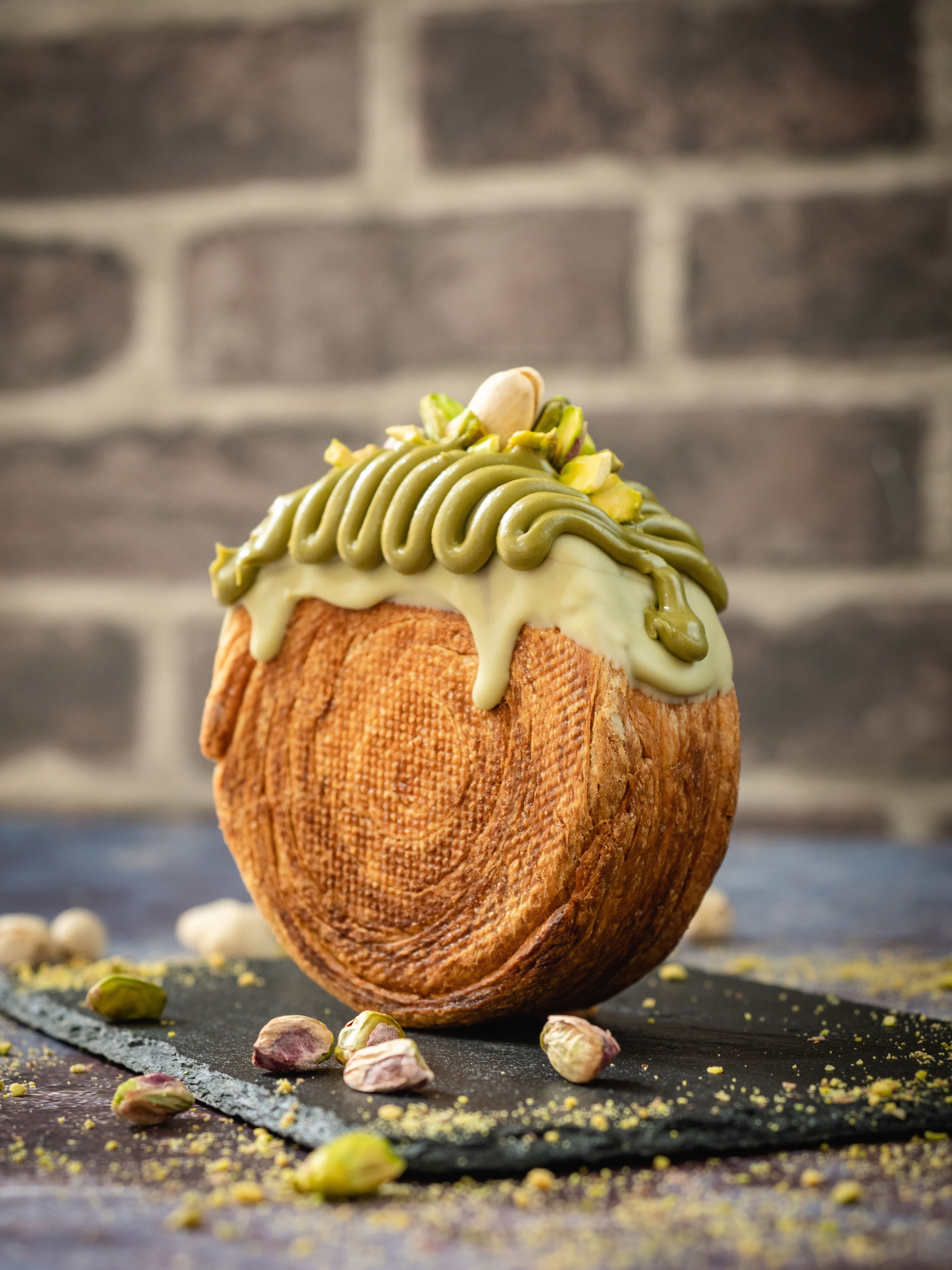
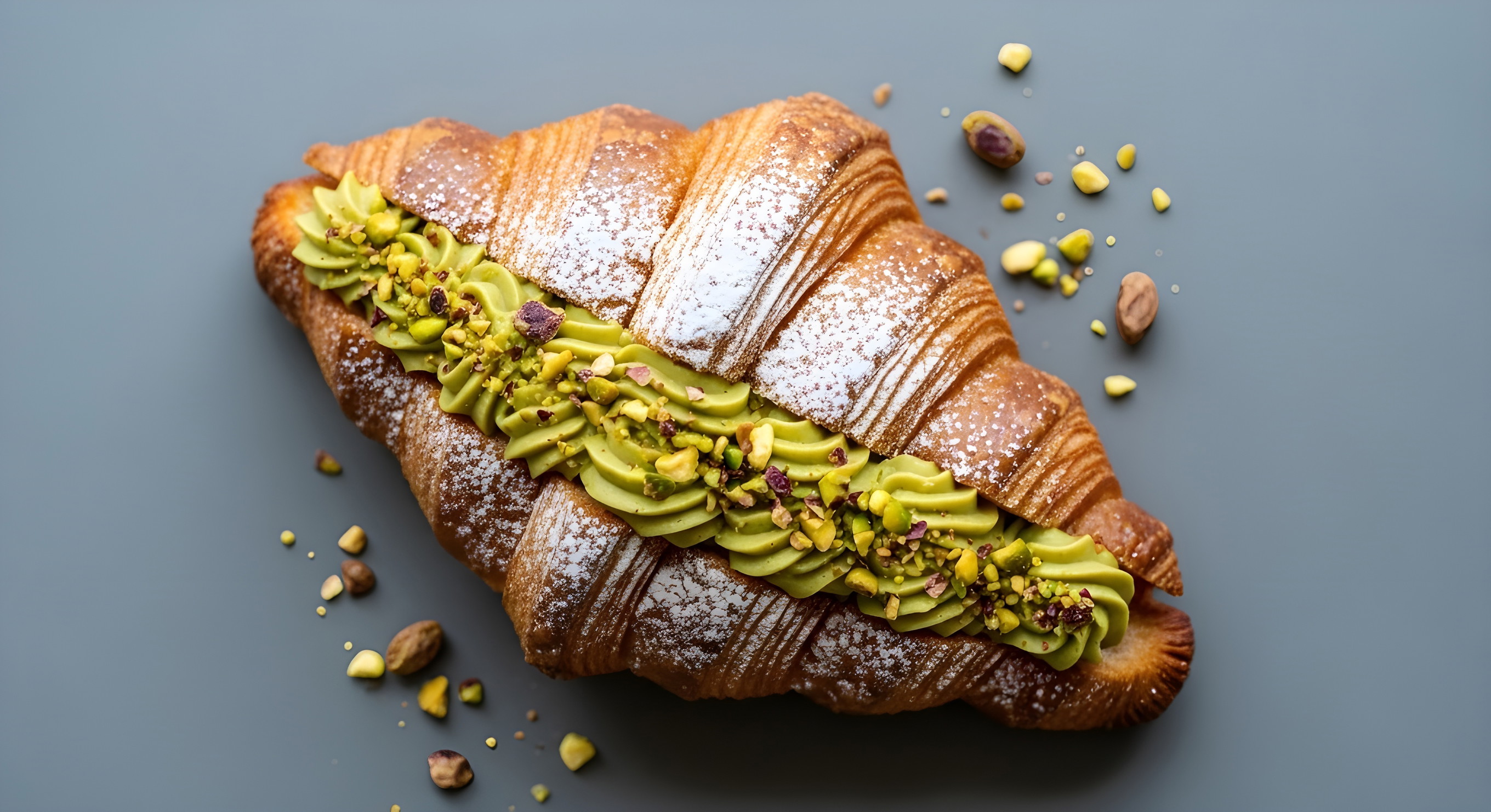
From discount retailers to local pastry shops, everyone began offering their own versions. Restaurants incorporated Dubai chocolate into desserts, cafés created pistachio croissants. Demand for pistachios exploded to such an extent that in 2025 a global shortage emerged.
When trends shape taste
What will this hype ultimately do to our long-term taste preferences? Bruderer does not believe it will fundamentally change them. “I think the basic taste of chocolate will remain the same. My favourite chocolate is milk chocolate with hazelnuts. Honestly, it couldn’t be more boring for a Maître Chocolatier.”
At the same time, he sees an important development: “I do believe these hypes help people become more curious and try new things. That has definitely changed.” Research confirms this observation. Social media shapes taste preferences by linking certain foods to social recognition. Those who eat — and share — the “right” things belong.
This helps explain why pistachio was declared the flavour of the year in 2025, largely driven by the Dubai chocolate trend.For product development, this represents a paradigm shift. Lindt & Sprüngli maintains a dedicated department that observes and evaluates emerging trends. “We won’t jump on every TikTok trend,” Bruderer explains. “But if something is sensorically so interesting that it feels like the only thing missing is Lindt chocolate — then we’ll certainly examine the possibility of developing a product.”
After the Dubai Style chocolate, Lindt introduced a Tokyo Style chocolate with matcha and strawberry. “I think the trick is combining something familiar, like strawberry, with something new, like matcha.” In the end, the Dubai chocolate hype reveals one key insight: today, flavour no longer emerges solely in the mouth. It arises from the interplay of perception, expectation and social resonance.
Social media accelerates these processes — making them more visible and more powerful than ever before.