How to prepare octopus
Octopus is very much an aquired taste – and a challenge: aside from winning the hearts of animal lovers, they are considered tricky to prepare. But with a few tricks and a little time, anyone can serve perfectly cooked octopus.
They come from the deep, are considered gross by some and have a reputation in cookery for being difficult to prepare. What's more, the octopus has gained numerous fans following the success of the 2020 documentary "My Octopus Teacher".
The eight-armed creatures are very intelligent and can open screw-top jars, solve tasks and remember faces. But that's not all: octopuses can change color to adapt to their surroundings, spray ink to confuse predators and squeeze through the smallest openings.
Despite these impressive facts, octopuses are considered a delicacy in many places, aided by its low fat and high protein content. As they are found in every ocean, they are popular worldwide. In Europe, they are a staple particularly in the Mediterranean: whether Tunisia, Italy, Croatia or Greece, each country has its own traditional octopus recipes.
Sourcing matters
Whether you want to eat these intelligent animals is a matter of personal choice – but you can soothe your guilty conscience by being mindful of your octopus' origin when shopping. Because octopuses are generally loners, it is difficult to estimate their total population. However, they appear to be stable in most places. Like many other marine animals, they are often caught by large fishing boats with large dragnets. This is bad for the environment, as this practice destroys the seabed while capturing countless other species as bycatch. According to the WWF fish guide, it is therefore best to buy octopuses that have been caught using the traditional method of setting baited traps on the seabed, which reduces the potential by-catch to a minimum.
Octopus is best bought from a trusted fishmonger. It is usually sold ready for use, i.e. already cleaned and gutted. It is best to process it on the same day.
Another issue is how to harvest octupuses humanely, as there is evidence that they feel both psychological and physical pain. Nevertheless, many octopuses are still killed today by smashing them several times hard against a hard object – such as rocks or the edge of a boat.
Smaller fishing companies today sometimes use painless killing methods such as stunning in ice water or the Japanese ikejime method, where an octopus' central nervous system is instantaneously destroyed by a targeted knife thrust between the eyes. Because octopuses are intelligent, sensitive and territorial –they need a lot of space and often fight against each other – they are unsuitable for breeding in captivity. Although there are some octopus farming projects today, these are under fire by animal welfare organizations.
You can buy whole, raw octopus ready to eat from fishmongers. If you buy it freshly caught or even catch it yourself, you have to prepare it: Use a knife to remove the beak-like mouthparts, which are located in the center of the body between the tentacles. Then reach into the slit-like opening in the head and remove the innards. You can also simply turn the head out and wash it briefly. All other parts are edible.
Cooking with leisure
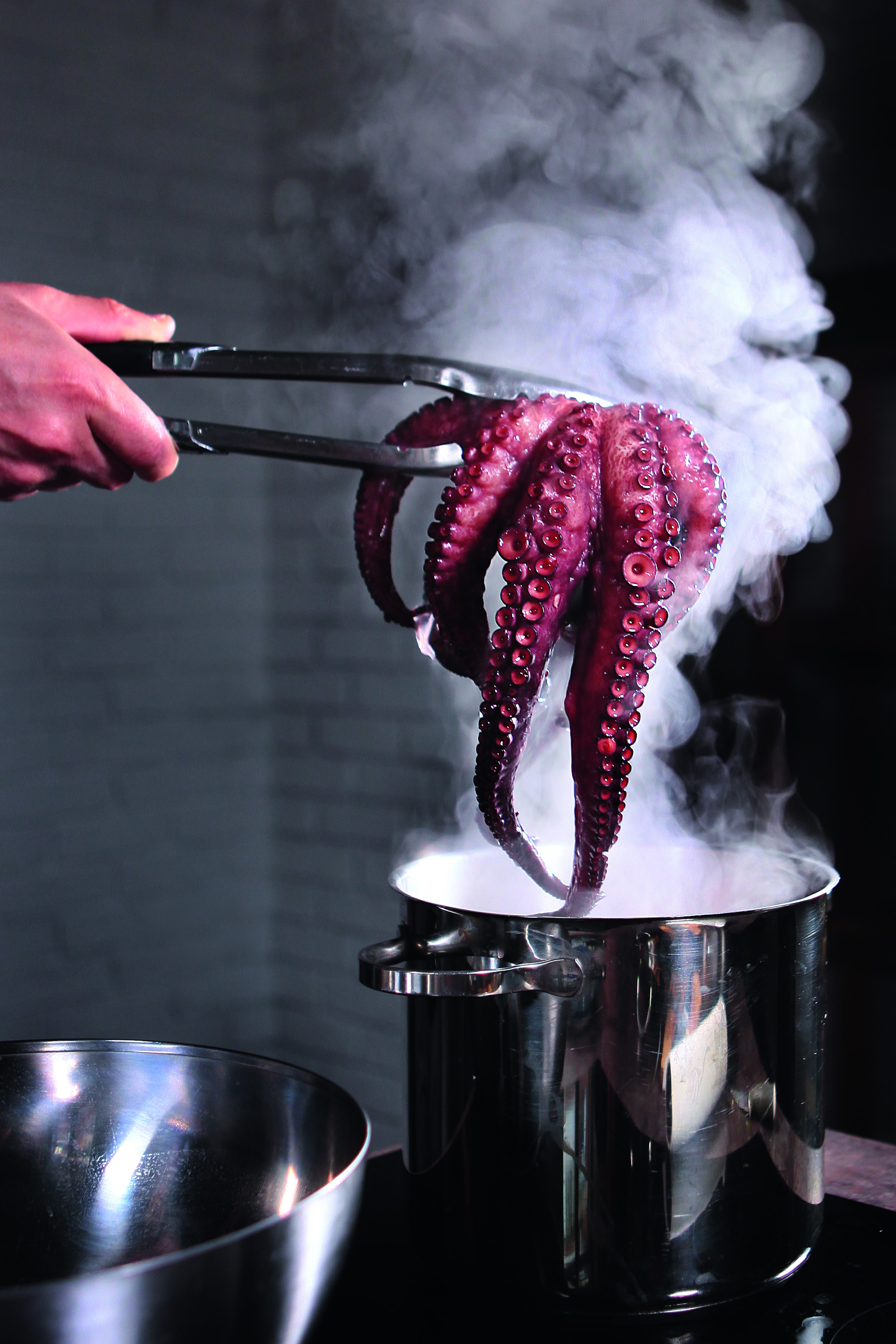
You can also use frozen octopus – the freezing process actually makes the meat even more tender. In Japan, Korea, and southern Italy, raw octopus is considered a delicacy, but it is usually eaten cooked. Octopuses have a high collagen content, which makes them somewhat tough. In Greece, freshly caught animals are therefore often sun-dried; elsewhere, they are beaten against rocks until tender. However, the easiest way to cook them is simply to boil them in unsalted water. After about an hour, the meat should be nice and soft, but not mushy.

Do experiment when cooking. Octopus, for example, tastes great braised.
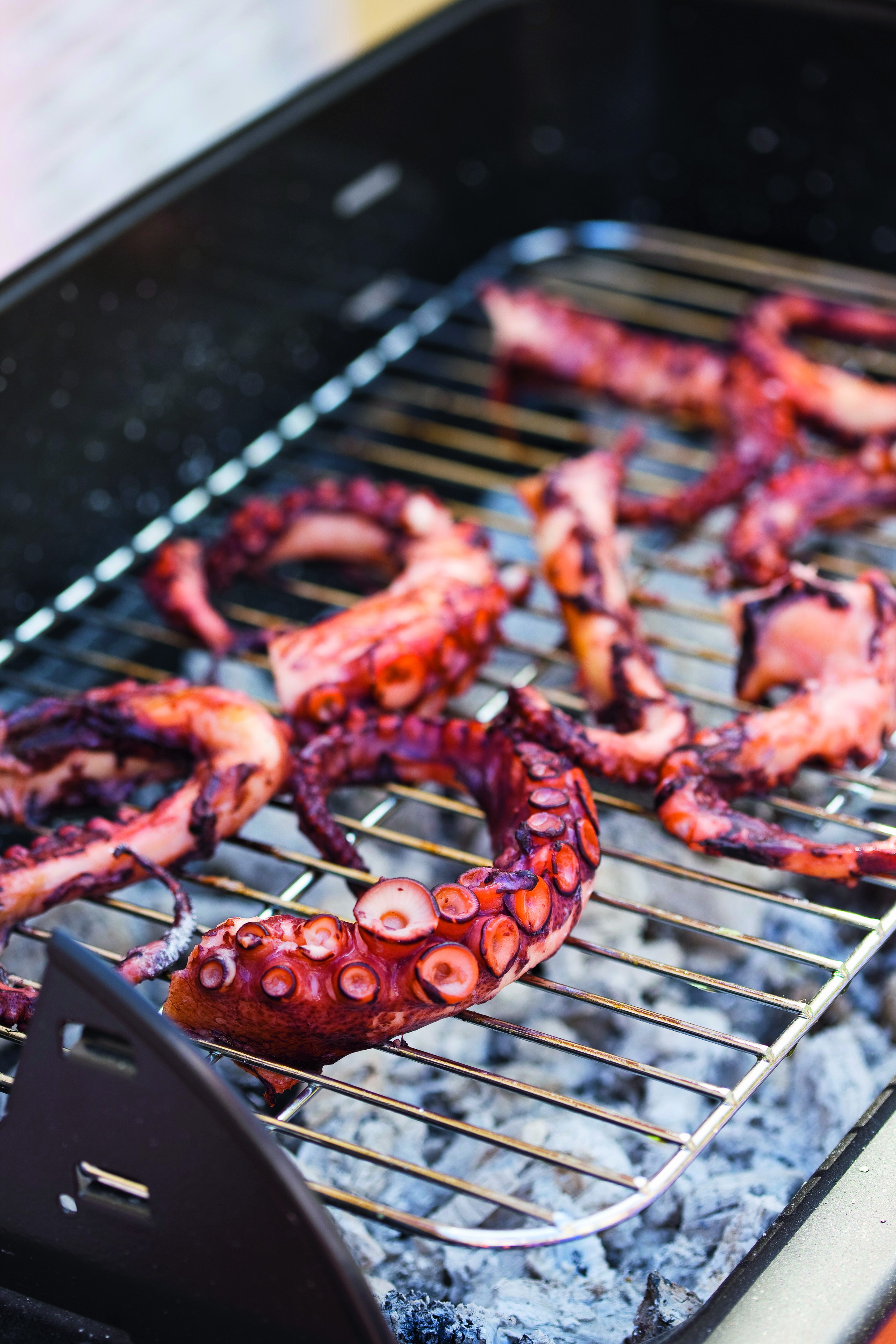
If you're short on time, you can also use a pressure cooker: On the highest setting, your octopus will be ready in around 15 minutes, but you have less control over the end result. Cooling the tentacles sous-vide at low temperature is also popular: It takes around five hours at 80 degrees until tender. If you want to finish it on a charcoal grill, let it cool before searing so the skin sets and becomes crispy. There are many other supposed tricks for tender octopus, such as cooking it with a cork or pounding it with a meat tenderizer. These are of little use – best to skip.
Perfectly cooked octopus tastes excellent: tender, mild, slightly sweet. It is delicious in salads, stews - or straight off the grill!