Kimchi is no longer niche. What was once mostly found in Korean restaurants is now part of everyday food culture—from natural wine bars to casual cafés. Its appeal lies in both flavour and versatility: bold, complex, and adaptable.
In Korea, kimchi is served as banchan, a vegetable side dish that accompanies almost every meal. It is deeply embedded in daily life—on average, around 37 kilograms are consumed per person each year. Many households even have dedicated refrigerators for storing it.
Beyond Korea, kimchi appears in a wide range of contexts. Its spicy, fermented brine adds depth and umami to dishes, balances rich foods like pork, and brings freshness and heat to everything from rice bowls to grilled cheese sandwiches.
What exactly is kimchi?
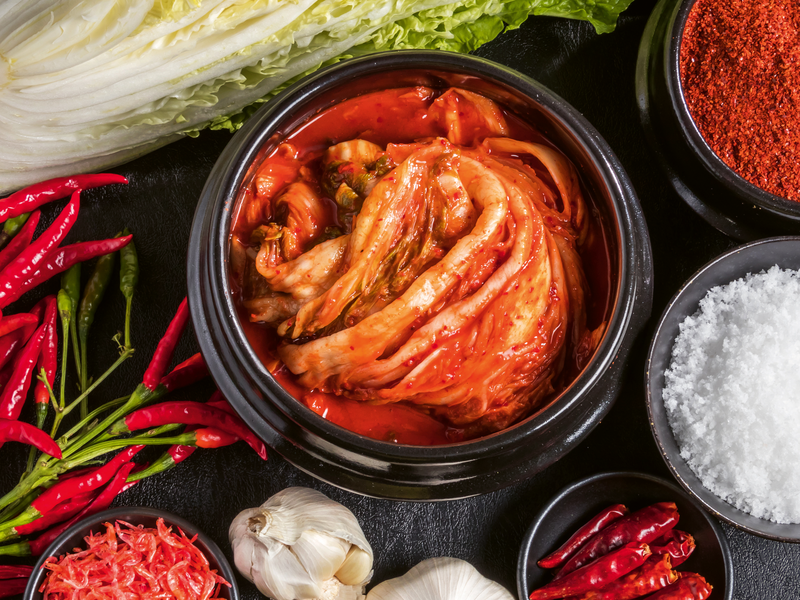
At its core, kimchi is lactic acid–fermented vegetables, similar in principle to sauerkraut. While napa cabbage is the most familiar base, it can also be made with cucumber, radish, pak choi, or spring onions.
The vegetables are preserved with salt and a seasoning paste typically made from gochugaru (Korean chilli flakes), garlic, ginger, and other aromatics. Depending on the recipe, seafood or fermented fish may also be added. To support fermentation, ingredients such as rice porridge, sugar, or puréed fruit are sometimes included.
There is no single version. Recipes vary by region and household, with vegan variations and milder, non-spicy styles such as white kimchi also widely known.
A living tradition
Kimchi’s cultural significance runs deep. Fermented vegetables have existed in East Asia for over 2,000 years, and early forms of kimchi were made primarily with radish. Traditionally, fermentation took place in earthenware vessels known as onggi, often buried in the ground during colder months to protect them from freezing.
Fermentation not only preserves the vegetables but also enhances their nutritional value. Vitamins develop during the process, and kimchi is widely associated with digestive health.
The now-iconic red, spicy version developed much later. Chilli peppers reached East Asia in the 17th century, and by the 19th century, gochugaru had become a defining ingredient.
Kimjang: food and community
Kimchi is traditionally prepared in large quantities once a year. In late autumn, families, neighbours, and communities gather to make it together—a ritual known as Kimjang. Recognised by UNESCO as intangible cultural heritage, it is as much about community as it is about food.
The process encourages sharing, both of labour and of the finished product. Kimchi is often distributed to those who cannot prepare it themselves, and recipes are passed down through generations.