Skip to content
© Bocus d'Or Lithuania

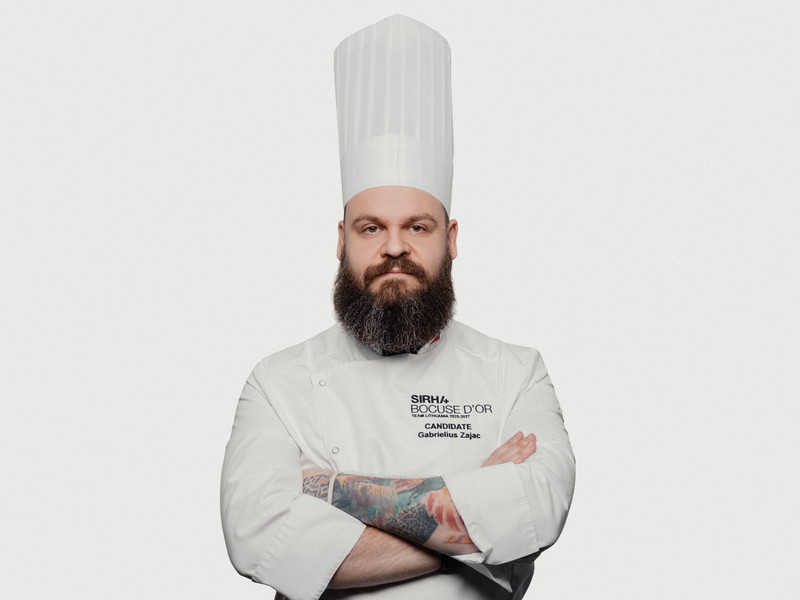
Meet Gabrielius Zajac, Lithuania’s Contender for Bocuse d’Or Europe 2026

Bocus d'Or
Lithuania
Fine Dining

Meet Gabrielius Zajac, the chef selected to represent the country at Bocuse d’Or Europe 2026. In this interview, we talked about the competition menu, collaboration with leading chefs, the creative process behind the dishes, and what it means to present Lithuania’s culinary voice at the highest level.

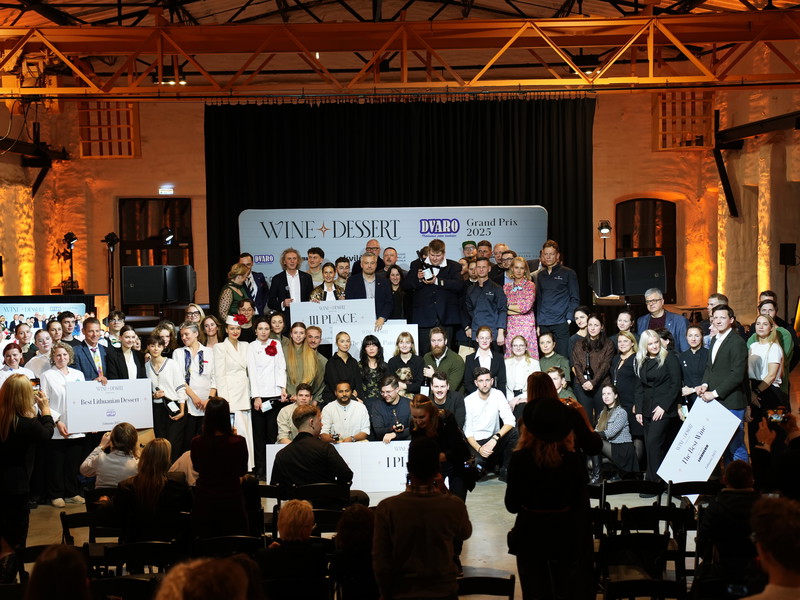
When Lithuania held its national Bocuse d’Or selection at Vilnius’ Dūmų Fabrikas this spring, Gabrielius Zajac was chosen to represent the country at the Bocuse d’Or Europe 2026 competition, scheduled for March 15 and 16, 2026, in Marseille, France. This marks the first time Lithuania is sending a chef to the European selection, which brings together 20 national teams from across the continent.

In our conversation with Gabrielius, we talk about his preparation, the menu creation process, help from other chefs, and working together with the team toward a shared goal for Lithuania’s first Bocuse d’Or Europe entry.

Falstaff: Looking back to the national Bocuse d’Or selection, what was your mindset going into that first historic competition in Vilnius?

Gabrielius Zajac: Going into the competition was never about the very specific goal of having to win. Life was happening around me, my restaurant was reopening, everything was unfolding in parallel. Winning wasn’t the point—the reason for participating was. When the registration was announced, I felt I needed a challenge, a push in life. That’s what hooked me. Not the idea of winning first place.

There was stress, there were clashes, but the night before I fell asleep within an hour—very quickly. You invest so much time preparing, so much focus, effort, energy. So before going to bed you feel that everything that could be done has been done. And now, heading to Marseille, the final nights will be calm too. Months of preparation have lead to this—all that’s left is to enjoy the show.

Can you describe the moment you heard your name announced as Lithuania’s Bocuse d’Or winner? How did it feel compared to your expectations leading up to it?

When you join Bocuse d’Or at the international level, the pressure increases and becomes more complex. But at the same time, it becomes easier—many people take care of different matters. In the national selection, you feel like an athlete without sponsors. You’re responsible for everything: the food, the platter, uniforms, logistics. It was a challenge, but we handled it well.

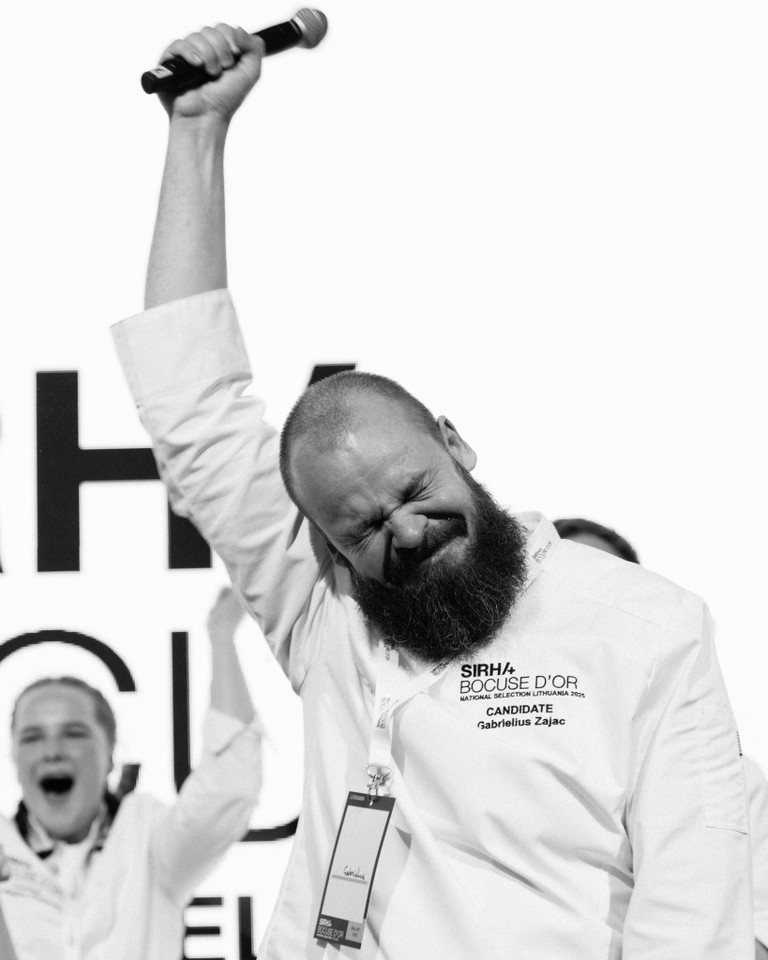
When I won, it simply felt good—like a vacation. Like before a driving exam: You show up tense with nerves, they tell you you passed, and a weight is lifted off your chest. The next day I was already back in my restaurant kitchen.

© Bocus d'Or Lithuania

The dishes were judged by an international panel, including Bocuse d’Or bronze medalist Gustav Leonhardt. What was going through your mind presenting your creations?

I’ve never really thought about it. Both at work and in competitions I value the vibe, the atmosphere. During competitions, no matter how high-level the judge or jury member is, I try to communicate and behave as an equal. Not equal in experience, but without tension.

You’re both seeing each other for the first time. You know who they are. They probably don’t know much about you. You see them, but it’s important to keep your head high, not feel constrained. To maintain the connection and the energy, to show yourself. That’s when you win the extra half-point.

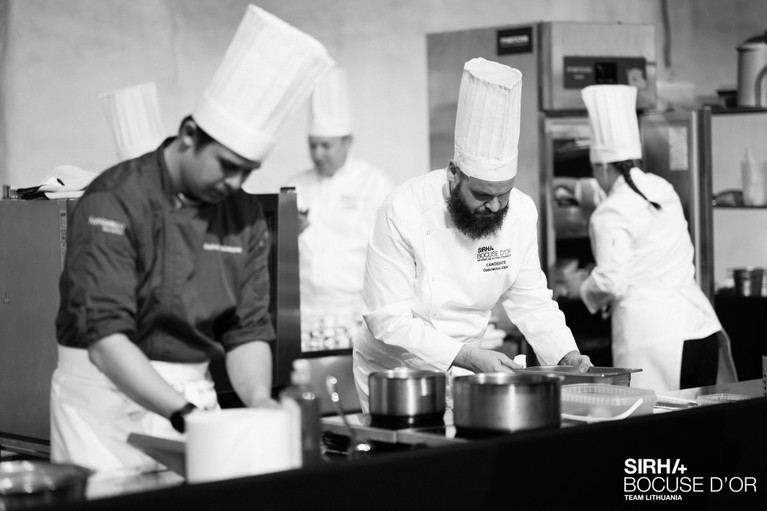
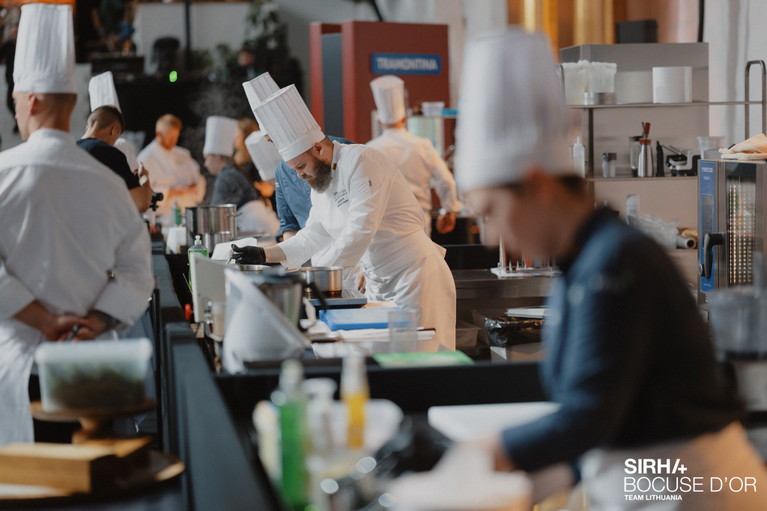
The Bocuse d’Or demands both a cold starter and a plated dish in just over five hours. How did you choose the structure and flavor profile for your competition menu?

It’s been an interesting and complicated journey, because it’s the first time. So many question marks needed answers. It’s not just food—it’s logistics, timing, everything. Yesterday, I told my colleagues that maybe I still don’t fully understand how food is created. A bistro menu, a restaurant menu, and a competition menu are completely different things.

This time, I think we worked partly through experimentation and partly by following good examples. The rules of creating food here are different. The framework is different. We were guided carefully, but it’s like reading a book: You read, observe, consult, and then the next day you try.

In a restaurant, I already have my style and guidelines for how I make magic happen. Here, I don’t yet have that formula. And because it’s the first time, the creative preparation, getting the dishes into place, felt incredibly long. Maybe it only feels that way to me. Maybe everyone takes this long. But it truly took a long time. Most of it was experimentation, hands-on work.

Which ingredient challenged you most in terms of creativity or execution?

Among the mandatory ingredients, there were some I had never handled before—cuttlefish, for example. We’re used to it being white, beautiful, clean in its package. But this time, you open the box, and everything is black. It was as fresh as it gets—alive just 24 hours earlier. And what do you do? Again, trial and error. You experiment and reach out to people who know.

We worked closely with Airis Zapašnikas. He came to Lithuania, and we held a masterclass here. Had I filleted fish before? Sure, I had, and I thought I knew how it worked. But after learning from him, it became more of a ritual. A sushi master of that level brings calmness and respect for the ingredient itself.

© Bocus d'Or Lithuania

How many people participated in the menu creation process?

About ten people contributed to the menu creation process: the whole team and our mentors. They rotate; whenever they see a gap or a challenge, they step in to help. Everything really works through experimentation.

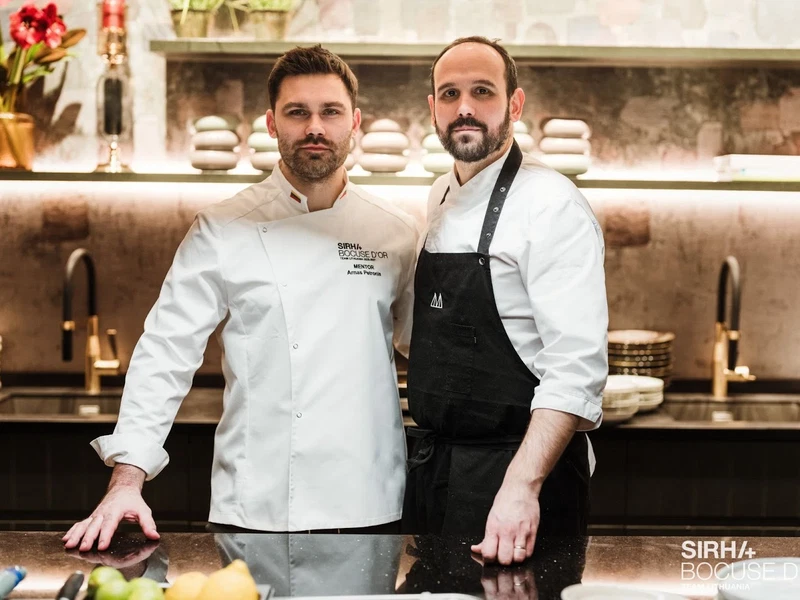
There’s one main mentor who’s often there—he becomes part of the team, like one of us, pushing through the challenges alongside us. When a new person joins, they bring fresh energy, inspiration returns, and another wow moment happens. It unfolds beautifully. It’s incredible that everyone gathers to work toward one goal, for each other.

There’s one moment I really want to share. A few weeks ago, we were stuck on a garnish and invited five of Lithuania’s best chefs. They all came—not because of me, but because of the mission. There was a problem, and it needed to be solved.

There’s a lot of emphasis on representing not just your skills, but your country’s culinary identity. How do you see Lithuanian flavors and traditions informing your approach?

There were a couple of ideas from the start—one visual concept I had mentioned from the very beginning. We wanted to go all out, to completely blow people’s minds. But later, we decided to play by the rules of the game, because we also need to introduce who we are. It’s our first time.

The concept is paganism, expressed through visuals. We worked with a well-known Lithuanian sculptor who helped us reflect the chosen symbols on the platter and created the entire plating concept—even the platter itself. Pagan symbolism became the foundation.

As for the food, the competition requires dishes to include a national twist, which came naturally. For the hot dish, we chose sour cream, and for the appetizer we’re deciding between mead and real Lithuanian vinegar.

Many chefs describe Boccuse d’Or as the Olympics of gastronomy. What does this competition represent to you personally?

I feel partly like Son Goku on his little cloud. Friends and colleagues noticed it too. They say that once I started competing, I completely changed. The change comes from a simple formula: The more you do, the more you accomplish.

When all the work, tension, and anxiety began, life sped up five times. Not just life—everything sped up five times. You get tired five times faster, but you also grow five times faster. Life can be comfortable—you come home in the evening, drink tea, and stop improving. But here it’s constant—day after day, week after week, you read, solve problems, push yourself. A year has passed, but at this pace it feels like five years of progress. It’s hard, but you feel alive. Life isn’t standing still.

I needed a challenge. I felt stagnation creeping into my life. After COVID, there were problems, debts, and a moment when I almost stopped enjoying my work. You’re good at it, but… meh. Thanks to the competition, the love for my work, for my profession, for my restaurants came back. The more you do, the more you accomplish.

© Bocus d'Or Lithuania

How do you prepare mentally and physically for this level of endurance?

Last year, when I won the national selection, I felt great. At first, I thought everything was perfect—no need to do anything. Then I realized: Maybe it’s exactly when everything is going well that you should act. That summer, I focused on building a strong foundation for my own well-being and growth. I can feel this foundation now.

I read books. I force myself to pause. No one says you have to take a whole week off—even five minutes in the morning can make a difference. I’m learning not to react to every trigger. I have both a weakness and a strength: I accelerate like I’m skiing downhill and can’t stop until I crash. But with awareness, effort, and self-care, I’ve learned that when things get hard, sometimes just breathing is enough to stop the downhill race.

What advice would you give to young chefs aspiring to compete in Bocuse d’Or?

I’ve learned to work with people—the team has grown, and so have the challenges. Once, someone asked me what I fear, what I expect. I’m not afraid of cooking or the creative process—that’s my job, and I can do it with my eyes closed. We’ll manage.

What I fear more is working with people. There are so many of them, and they’re all different. You need to understand and listen to each one—that’s the hard part. Everything happens five times faster than before, and over this year, my communication and listening skills have grown a lot. I’ve learned to understand without words. Sometimes a gentle push helps your commis; other times, the same push could crush them, because they’re simply exhausted. You have to know the difference.

I think my skills in this area have improved too—and I’d gladly share what I’ve learned with another chef.

Is there a dish you dream of creating that would define you on the world stage?

I don’t think so. Over all these years, especially the last few, something shifted. Maybe you need to grow into it. When I started my career, it was all about chasing Michelin stars—go, do, push—but the skills weren’t there yet. I had to grow.

Over time, I realized that if something doesn’t happen, it simply means you’re not ready yet. It’s the same now—we’re going to Marseille with huge ambitions. But if it doesn’t happen, what can you do? We did everything we could. It just means it’s not the right time yet.

The same goes for the dish. My goal isn’t just the dish—it’s the restaurant itself. I have a vision of how it should function, how it should feel, how it should look. That takes time. A dish is just one detail; the restaurant is the whole picture. The vision is there. It’s still maturing, waiting to be realized.


Ugnė Vedeikaitė
Author
Find out more
1 / 12