Skip to content
© Shutterstock

“Toast Skagen”: A Scandinavian Icon That Turns Simplicity Into Celebration

Traditional Dish
Sweden

Sweden's most celebrated appetizer emerged from a sailboat galley in 1956, when chef Tore Wretman improvised with what he had on hand. Today, the dish appears whenever a menu wants to signal comfort, quality, and a touch of celebration.

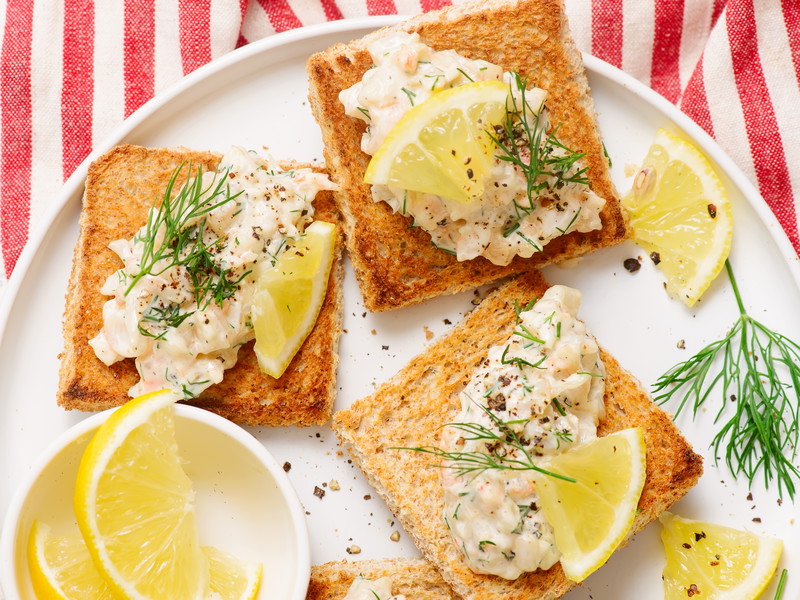
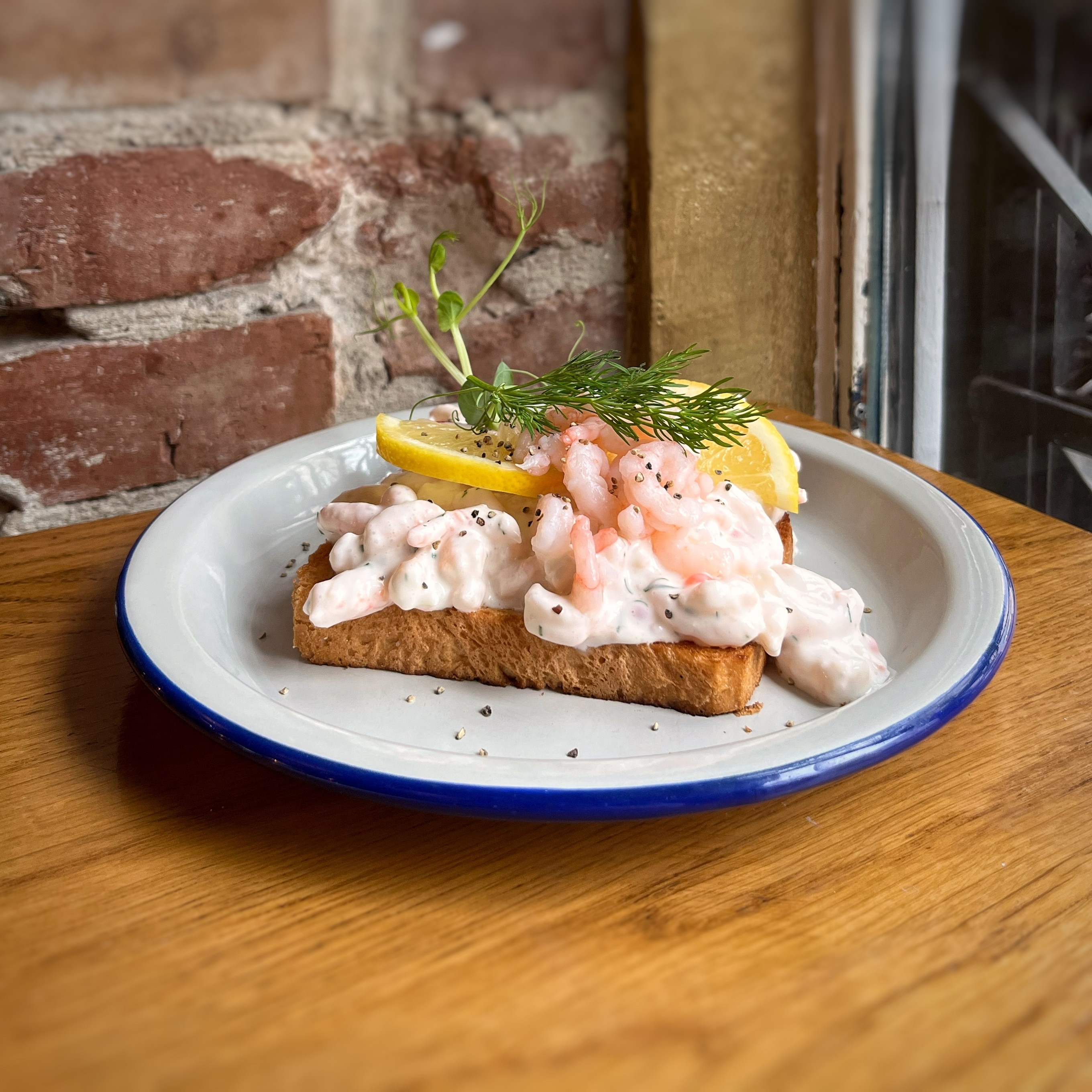
Golden toast crowned with a creamy pile of dill-speckled shrimp may sound simple, but Toast Skagen embodies a quiet Nordic luxury. This beloved Scandinavian dish graces white-tablecloth restaurants as a refined starter and appears just as naturally at casual lunches, museum cafés, and summer cottages. It’s a bite of coastal Scandinavian culture: elegant, comforting, timeless. 

Coastal art: from paintings to prawns

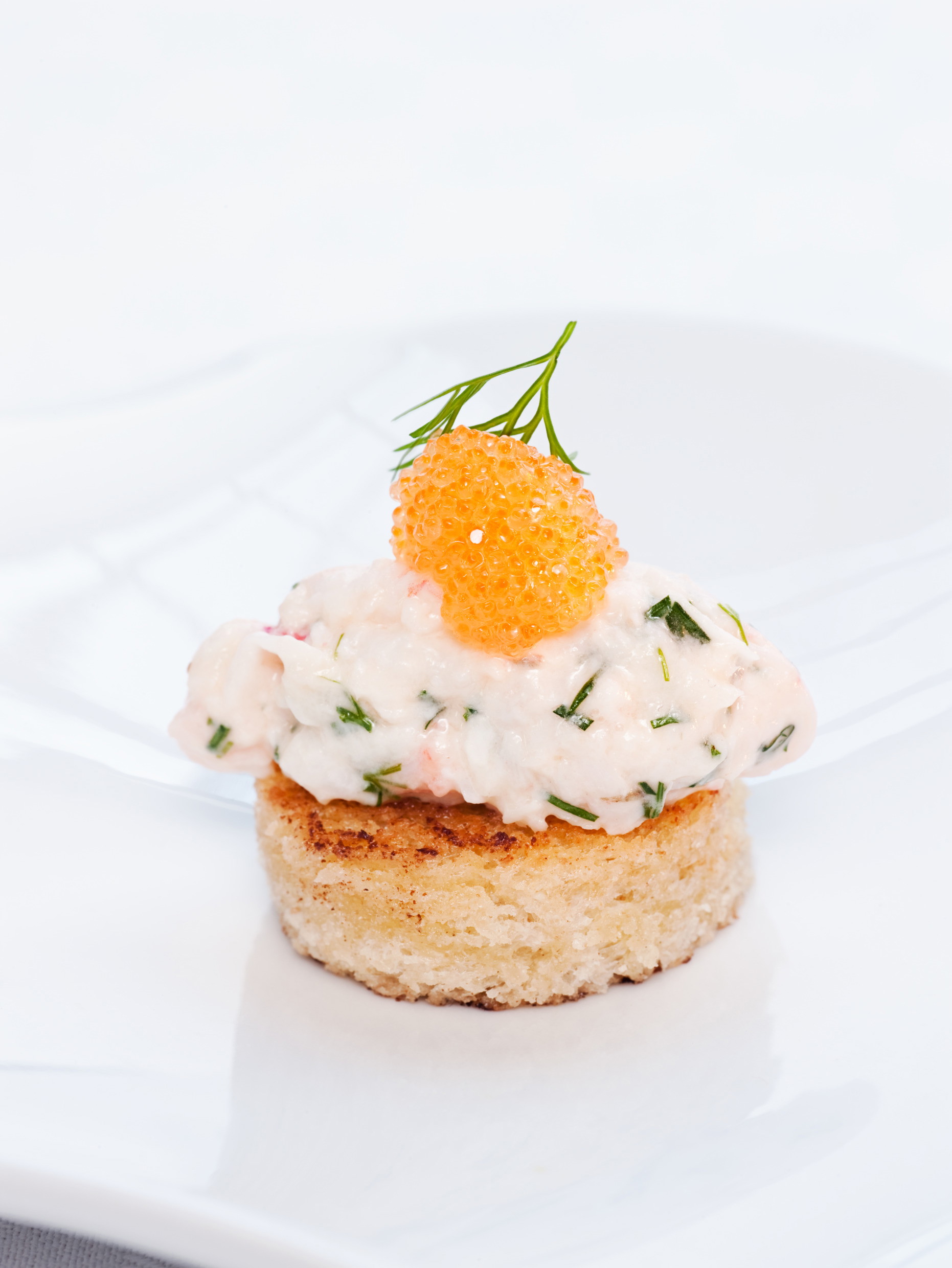
The dish was created by chef Tore Wretman (1916–2003), who was not only a culinary innovator but also an avid sailor. In 1956, he took part in a regatta off Skagen at Denmark’s northern tip. When the wind died down, so did his crew’s hopes of winning. To lift their spirits, Wretman improvised a dish from what the boat’s galley offered: He whipped eggs and oil into mayonnaise, folded in shrimp, and heaped the mixture onto pan-toasted bread, topping it with a spoonful of fish roe. Inspired by the closest point on land, he named the creation “Toast Skagen.” 

The Danish fishing town was once home to a colony of artists. Scandinavian painters like P.S. Krøyer, Michael Ancher, and Christian Krohg gathered there in the late 19th century to capture the peculiar clarity and softness of Nordic light. They depicted quiet coastal scenes and moments of everyday life. In his own medium, Wretman shared their instinct: to turn simple materials, whether prawns or pigments, into a singular expression.  

At the core of Toast Skagen lies the shrimp salad called Skagenröra, literally “Stir of Skagen.” In Sweden’s culinary canon of röror–from gubbröra (the egg-and-anchovy “old man’s mix”) to smoky suovas reindeer spreads–Skagenröra stands apart for its maritime freshness. Besides plump prawns, it requires just a handful of ingredients: creamy mayonnaise (often lightened with a dollop of sour cream or crème fraîche), a squeeze of lemon juice, and a generous scattering of fresh dill. A pinch of salt and white pepper balances the richness, and the mixture is traditionally finished with a topping of fish roe for a pop of briny flavor.  

The crowning ingredient Kalix löjrom carries particular weight. It is harvested from vendace in the Bothnian Bay during a brief autumn season, holds EU Protected Designation of Origin status. These delicate orange pearls have appeared at Nobel Banquets and royal weddings, their subtle flavor elevating Skagenröra from everyday fare to something special. 

Wretman reached cooking almost by accident. Expelled from school as ineducable, he found direction after a relative declared that he should become a cook so he would never starve. By seventeen, he had secured a position at Maxim’s in Paris, working under the legendary Louis Barth. He also worked in London before returning to Sweden in 1943. 

What followed reshaped Swedish food culture. Wretman acquired Restaurant Riche when he was 29 years old, and took over Stallmästaregården and Operakällaren in the following decade. He became a pioneering food communicator, hosting radio programs that taught men to cook at a time when the kitchen was defined as women’s domain. His 1967 cookbook Svensk husmanskost collects more than 300 traditional recipes. The Toast Skagen he introduced at Riche in 1958 embodied his philosophy of simplicity: a quiet revolt against the heavily ornamented, French-influenced plates that had dominated Swedish dining before him.

Everybody’s Darling: Toast Skagen at home and away 

Today, Toast Skagen appears as an appetizer at virtually every significant Stockholm address: Operakällaren, the fish counter Lisa Elmqvist in Östermalm’s market hall, Den Gyldene Freden in Gamla Stan, and the beer halls Pelikan and Kvarnen in Södermalm. The finest contemporary versions show that simplicity invites refinement rather than excluding it. At Bobergs Matsal in Stockholm, Michelin-starred chef Björn Frantzén elevates the dish with lobster and black truffle 

The journey from Operakällaren’s gilded interiors to thousands of Swedish home kitchens accelerated during the 1970s, when women entered the workforce and elaborate Christmas preparations were reconsidered. The dish’s simplicity made it accessible, while its luxurious associations made it suitable for celebration. Today, ready-made Skagenröra is a staple in Swedish supermarket chillers, sold in tubs alongside herring salads and other spreads, bringing the flavor of Toast Skagen within easy reach on any weekday night. It also holds a firm place on festive tables such as the julbord, the traditional Christmas buffet that Wretman helped shape by introducing an eating order in five distinct rounds. 

Nearly seven decades after Wretman looked across the glittering waters toward Jutland and named his improvised creation, Toast Skagen and Skagenröra continue to embody celebration and everyday luxury–and the Scandinavian belief that the most memorable dishes are those that remain true to themselves. 


Lisa Arnold
Find out more
1 / 12