Wild indulgence: why venison is becoming increasingly popular
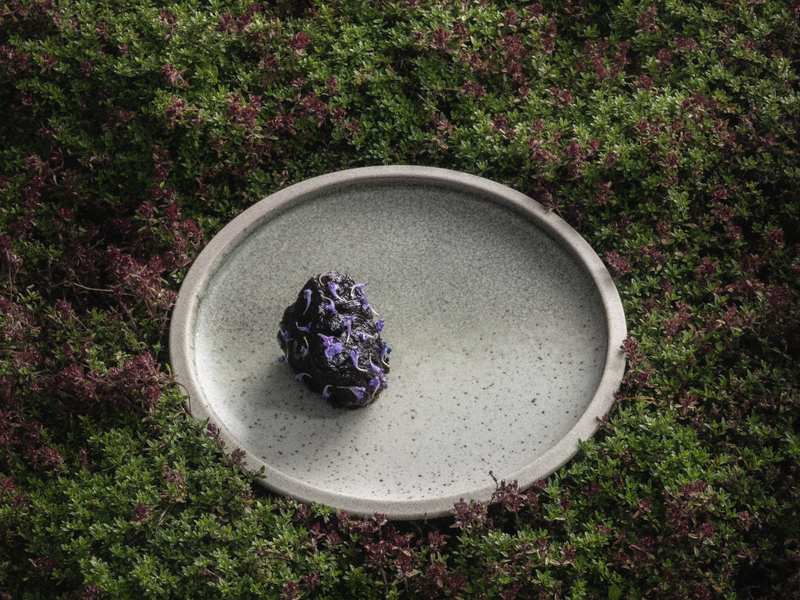
Sustainable, regional, healthy - interest in venison is growing steadily, and for good reason. Even vegans now go hunting, and a fresh breeze is blowing in the kitchen; the menu increasingly includes venison ceviche and venison carpaccio.
When our ancestors became sedentary about 12,000 years ago, they began raising livestock and living increasingly off the yields of their domestic animals. But what are 12,000 years in human history? A blink of an eye! Hunting is in the blood of us humans. For many hundreds of thousands of years, we hunted across meadows and through forests to ensure our survival. You don't forget something like that so quickly ...
Hunting - the status quo
Germans consumed around 30,000 tons of game meat in the 2021/22 hunting season, five percent more than the previous year. In terms of total meat consumption, however, venison accounts for only a vanishingly small proportion - in Switzerland it is about half a kilo of venison per capita per year, in Austria about 0.7 kilos. But the demand is growing. Sustainability, regionality and animal welfare are the food policy buzzwords of the day. And game meets all the criteria: the animals come from native forests, feed on wild plants, live and die in the wild and do not require transport and slaughter stress.
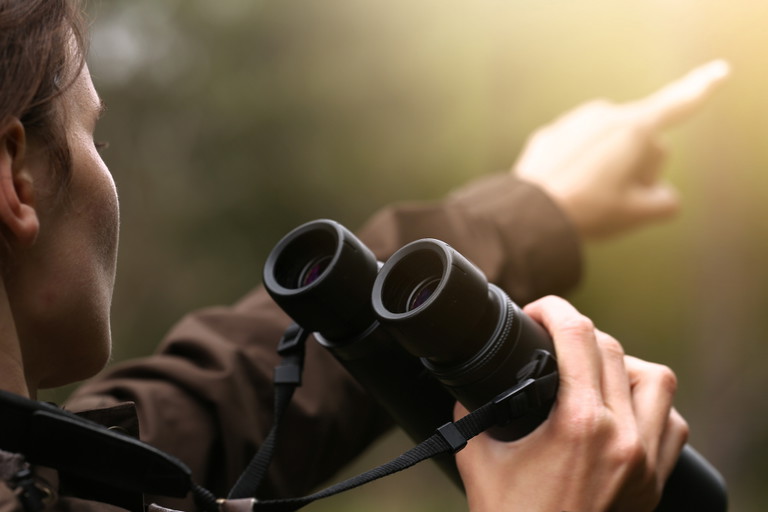
No wonder, then, that interest in hunting has been on the rise for years. And across all age groups and social classes, as Helmut Dammann-Tamke, President of the German Hunting Association, says. More than 407,000 hunters were recorded in the German hunting statistics last year - more than ever before. The number of people with hunting licenses is also rising in Switzerland and Austria. "Among today's graduates, however, there are more and more who previously had no family contact with the subject," explains the 61-year-old. "Rather, people have discovered how exciting nature is." Because hunting is not only about killing animals and enjoying the game. Hunting also means slowing down and experiencing nature, and environmental and climate sustainability.
Living nature conservation
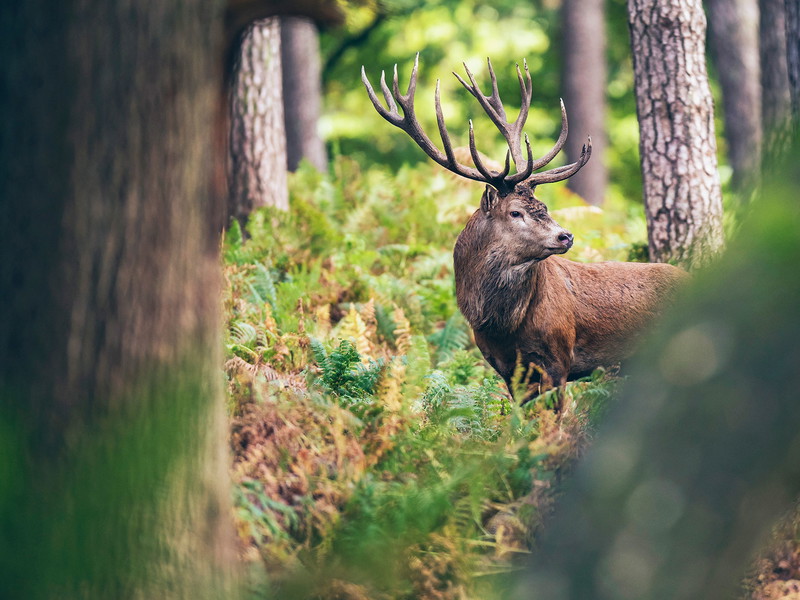
The favourite food of deer etc. includes young shoots and tree bark. If a deer population is too large, however, the forest, which is so important in the fight against climate change, does not stand a chance, being damaged by browsing, and the trees themselves struggle to survive instead of being able to store CO2. Young forests in particular suffer greatly from foraging by game and die before they are strong enough to cope with this stress. Even some Veganer, says Dammann Tamke, can be convinced therefore of the "ethically justifiable" game meat and become "Wildganer".
Healthy meat
In addition, venison is particularly lean and significantly lower in calories than other meat. It is free of hormone and drug residues, but rich in vitamins, minerals and healthy unsaturated fatty acids, in short: game is by far one of the healthiest types of meat.
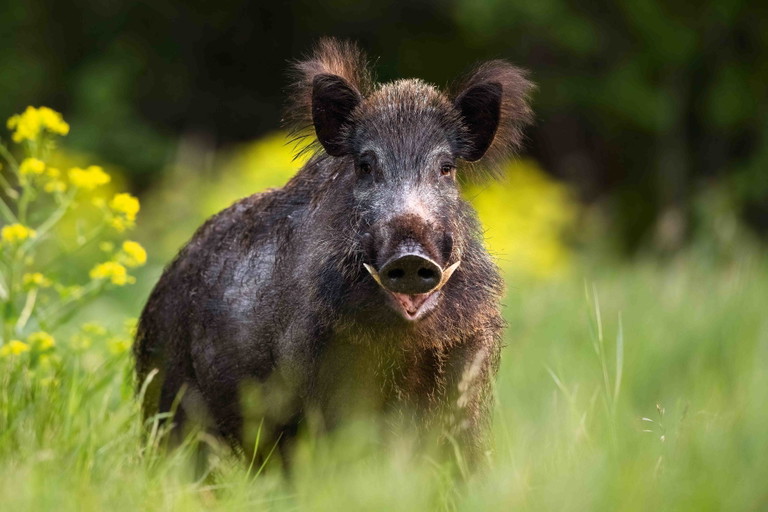
Wild boar is the most common dish in Germany, Austria and Switzerland. The juicy, dark red meat of the animals has a higher fat content compared to other game, but is still leaner than anything that comes from domestic pigs. Partridge, pheasant and rabbit taste much milder and have hardly any of the typical gamey flavor. The deer family includes fallow deer and red deer (most comparable in taste to beef), as well as roe deer. With its tender, very lean meat it is also one of the most commonly consumed game meats in Central Europe.
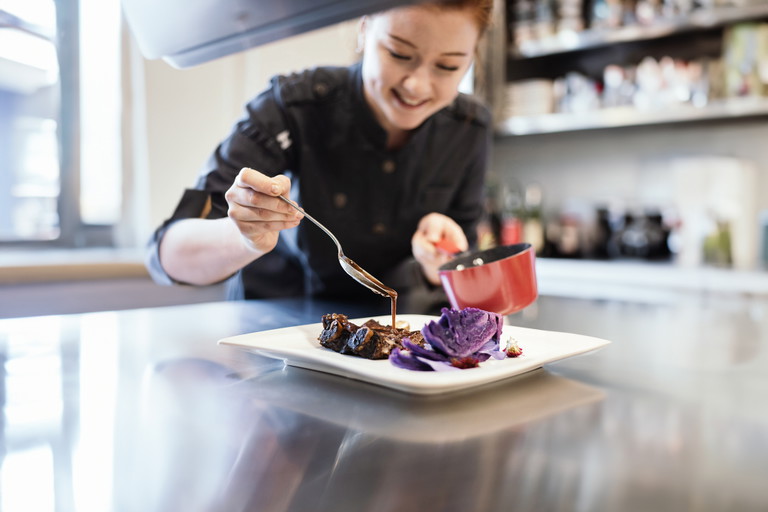
But whether wild boar or roe deer, pheasant or stag, Viktoria Fahringer likes them all. An "absolute superfood" is what the 25-year-old, who is one of Austria's youngest top chefs, calls it. Already in 2019 she took over her parents' business, the "Tiroler Hof" in Kufstein. She loves cooking with game and inspiring others to do so as part of her cooking classes. The animals she cooks with come exclusively from her own seasonal hunting, although it is never certain exactly when one will get which animal for processing, it depends on hunting luck. "Anyone who works with game has to be flexible," says Viktoria Fahringer.

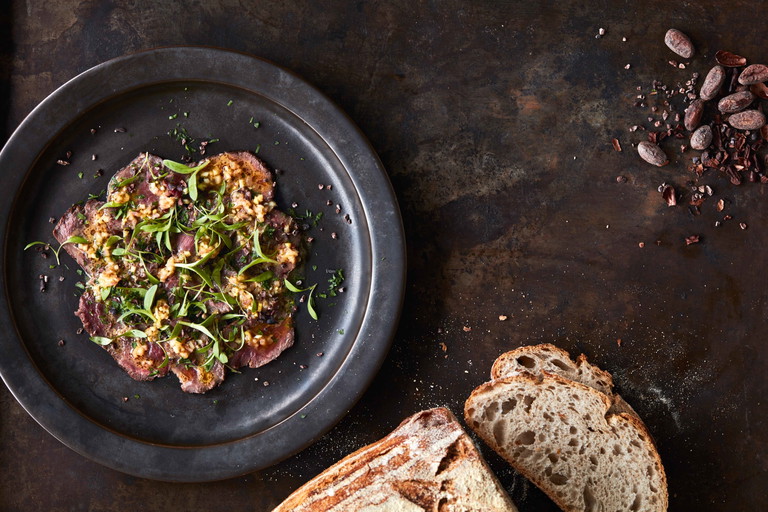
After the hunted animals - depending on their size - have matured for five to 14 days "in the blanket", i.e. together with their fur, Fahringer cuts them up into their individual parts. An evergreen on their menu is carpaccio of venison or venison fillet, served in autumn with porcini mushroom pesto. The old rule that game should always be cooked through is long outdated. Fahringer likes to serve tender pieces of meat from the shoulder roasted pink - with a seasonal crust of pumpkin seeds or chestnuts as a counterpart. Basically, she says, venison also mixes well with sweetness. With goulash, for example, she recommends chocolate-cinnamon sauce.
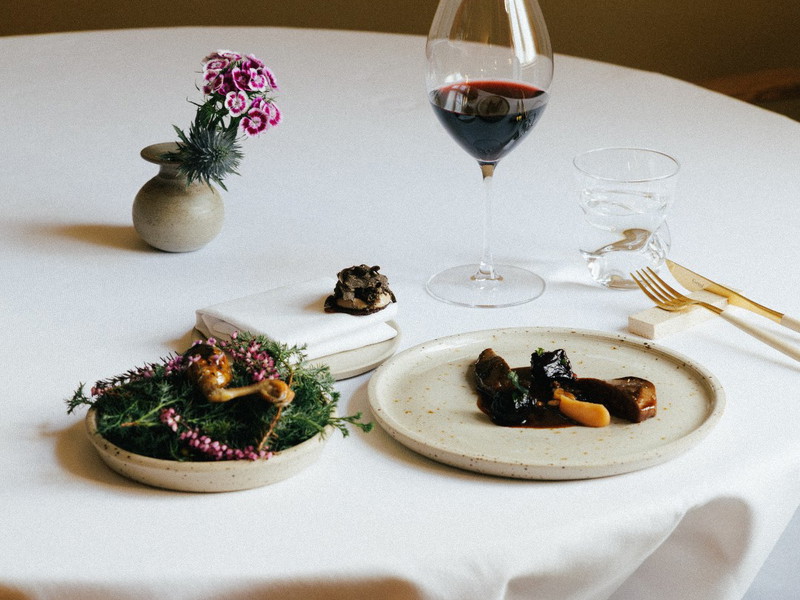
Of course not every restaurant has a hunter in the kitchen team or family circle. And by no means every restaurant processes domestic animals. Around one third of the venison consumed in Germany comes from abroad. In Switzerland, the proportion is similarly high, and in Austria it is even around half. But frozen deer from New Zealand or roe deer from Eastern European gates? For Nicolas Darnauguilhem, chef at the Swiss "La Pinte des Mossettes" in the canton of Fribourg, an absolute no-go. "We have such a huge variety of high-quality game meat here," says the chef, who was awarded a green star by the Guide Michelin last year for his regional cuisine. Many dishes are only available for a few weeks, and some are only available for a few days. Darnauguilhem's cooking style is a tongue-in-cheek homage to French cuisine; "I like to play with classic dishes." From sauce grand veneur - a dark sauce with meat stock and blood often served with game - Darnauguilhem makes a vegetable-based version with poppy seeds and clarified butter. He mixes venison tartare with beet - true to his motto; more vegetables, less meat, but this in the best quality. There's no room for imported game meat, most of which is raised in pens to increase productivity.
Game is near
Another advantage of game; ideally, the animals come from the region, shot in the wild. Also important is that the animal must be eviscerated quickly on the spot. "Otherwise it gets that harsh gamey taste," says Christofer Radic. The 43-year-old hunter supplies Berlin's top restaurants such as the "Nobelhart & Schmutzig". The widespread prejudice towards musty venison comes only from incorrect handling, he explains. Radic got his hunting licence five years ago. In the nine months of training, he learned a lot about hunting - but not how to process the meat. He made up for it elsewhere.
Game is much more than goulash and roasted haunch of venison
He shows what can be made of it in cooking courses, each of which focuses on one animal. And he raves about the lukewarm Filipino venison salad that Robert Burgmeier, executive chef at the British Embassy in Berlin, presented at a cooking class. As a topping there's the belly, diced small and fried in its own fat: "That was terrific, I couldn't stop eating." When Radic shot a deer the other day, there was paper-thin sliced ceviche, tartare and long-braised "pulled venison." What isn't cooked up in classes or professional kitchens, the hunter sells in his Berlin wine shop "Pracht". He is also feeling the increased demand.
Young and modern
Just ten years ago, venison was shoved into the "niche Christmas drawer," says Viktoria Fuchs, chef at the Spielweg restaurant. Today, he said, hunting is young and modern. In the course of this, the joy of experimentation and variety also returned to the plate.
Game has always been on the menu at Fuchs' family business, located in the Black Forest's Münstertal Valley - but not in the form of spring rolls or dim sum. "I didn't feel like putting on the 17th venison stew," says Fuchs, who took over her parents' business with her sister in 2015. "Rather, I wanted a game cuisine that was fun, young and modern." Even as a child, she went stalking with her father and was taught about the cycle of hunting - from respectful killing through targeted shooting to processing without residue in the kitchen. The 33-year-old loves to play with Asian flavours. She fills spring rolls with pheasant or mixes wild boar meat that has been braised for hours with vegetables, packs the spicy mixture into dumplings and serves it in the rustic restaurant in a steam basket. Her tip for home cooking? Quality! "It's best to call your trusted hunter and ask what he has right now."
Hunter-Cook Networks
In order to bring hunters and hobby cooks together, numerous projects have been created in recent years. In 2020, the online platform "Wild Austria" was launched, which lists regional game suppliers, manufactories and catering establishments. The German counterpart "Waldfleisch" started a year later. The desired products can be ordered directly on the cell phone. An interactive map shows hunters in the vicinity, and those who have found their favourite are informed of freshly shot game via push message. Many hunters also try to market the shot animals themselves, because the game trade, says DJV President Helmut Dammann-Tamke, usually does not pay well. The price of venison depends on the season, animal, cut and region. Depending on supply and demand, one would have to pay between 60 and 120 euros for a ready gutted deer of about 15 kilos; ready-to-cook pieces are more expensive. One of the most sought-after and therefore most expensive cuts is saddle of venison, with prices per kilo starting at around 35 euros (including bone). And wild boar usually costs less than venison or deer. Basically, for regional, sustainably produced meat, these prices are still relatively cheap.
Generation Z has also discovered the topic in the meantime; "Wild Meat" is the name of the company that a group of Swiss students recently founded to bring "sustainable game from local hunting" to the people. And Verena Rosenkranz is the founder of the online store "Wildviertel. When all the catering establishments had closed during the Corona period, she began to turn game meat into sausage and sugo. The 32-year-old from the Waldviertel region is a hunter herself and thus represents two trends at once; hunting is becoming younger and younger - and more female. Among young hunters, the proportion of women is now almost 30 percent across all countries. Younger, more feminine, more modern - this applies to hunting as well as to the new game cuisine. Good hunting!