
Falstaff Coffee Guide Nordics 2026: The Best Cafés in Norway
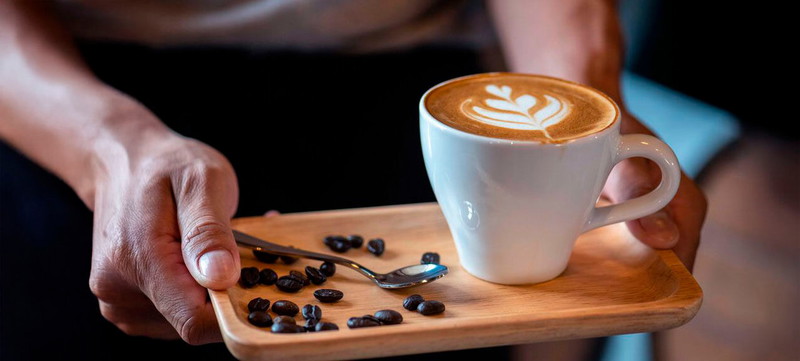
Founder Sandra Kristiansen invited Japanese roaster Ayae Maki Fredheim to launch Hibi Kaffe here in 2024; the bakery followed in 2025. The space is used during the day and becomes an award-winning restaurant in the evening. Sourdough bread, pastries, and hearty baguettes are served alongside espresso drinks.
Every chair, lamp, and table is for sale: designers behind the mid-century Scandinavian interior include Birger Dahl, Fredrik Kayser, and Kaj Franck. House-roasted Nordic coffee by day, cocktails by night. The 1963 coffee institution was relaunched in 2012, the same year it expanded to Tokyo.
Inside a timber house from 1806, three Risø brothers serve hand-brewed coffee and lunch dishes with Arctic ingredients. Co-founder Arne is a two-time Norwegian latte art champion and creates intricate designs in every cup. The buttery cinnamon rolls are usually sold out by noon.
A minimal café in Grünerløkka where the roastery takes centre stage. Co-owner Odd-Steinar Tøllefsen was a newspaper photographer until a trip to Naples sparked a passion for coffee in his forties. He won the World Brewers Cup in 2015 and often brews pour-overs behind the bar himself.
Roasting beans since 2012, this third-wave café helped launch specialty coffee in Trondheim. Founder Tony Jacobsen started in a six-square-metre space behind a hair salon; now he supplies several fine-dining restaurants in the region. The kanelboller and a single-origin filter make for a perfect pairing.
Three floors of natural light, designer furniture, and architecture books: Kokko is a coffee bar with an architecture studio on top. Owner Ole Marius Skjærseth roasts single-origin beans and supplies them even to the award-winning restaurant Re-Naa. Curated lighting and interior objects from around the world are for sale.
Norway’s largest and oldest specialty coffee roastery, founded in 1879, operates this concept store inside the Mathallen food court. Single-origin beans and signature blends are brewed as espresso or filter. A tasting bar lets connoisseurs sample different roasts side by side.
Leather banquettes, bentwood chairs and stucco details give this bakery (opened 1998 as the first of 21 locations across Oslo) a timeless, continental feel. After the dough rests overnight, the crusty loaves are ready to eat in the morning. The sandwiches make the most of the house bread.
Since 1996, Bergen’s oldest and smallest specialty coffee bar has served filter, espresso, and pour-over from a cobbled alley near the Fløibanen funicular. Four students founded it; the cosy atmosphere and Solberg & Hansen beans have kept locals returning for nearly thirty years.
Frédéric Aguerre missed proper French pastry, so in 2018 he opened this crêperie near Majorstuen tram, complete with French tiles and Parisian atmosphere. The galettes are made the strict Breton way with only buckwheat flour, salt, and water. The coffee comes from Lippe Kaffe.
The Italian-style espresso bar, opened in 1997, uses beans from owner Robert Thoresen’s Kaffa roastery. He won the first-ever World Barista Championship in 2000. The architect-designed interior features a large green mosaic behind the counter, contrasting with the many red details on coffee bags and equipment.
Floor-to-ceiling bookshelves line the walls of this former fire station, now home to the House of Literature. The kitchen sources almost everything from the region of Trøndelag and varies between beans from Nordic and international roasters. Named after a character in Knut Hamsun’s novel “Growth of the Soil.”
Australian Talor Brown opened this playful donut shop after training at Tim Wendelboe and honing her craft in Melbourne. The brioche-style dough ferments for 18 hours before frying. Seasonal flavours like cardamom–brown butter and rhubarb–vanilla change weekly, served with house-roasted coffee.
A peculiar yellow house sits beside Kampen church, busy since it opened in January 2021. Built by a baker in 1878, the heritage-listed building is now home to some of Oslo’s finest cardamom buns. Laura Raubaite and Andrea Marambio bake with organic stone-ground flour from Holli Mølle.
Diana Elizondo, formerly head pastry chef at renowned Maaemo, crafts fantastic sweets: caramelised canelés, flaky croissants, apricot and elderflower tarts, and airy cinnamon buns with custard are proof of her fine-dining years. Brasserie and wine bar in the evening.
Inside a former cod liver oil factory and carpentry workshop, two pairs of brothers from Bergen opened this café-bar in 2017. They had stumbled upon the abandoned building on a climbing trip and pooled their savings to buy it. There are hotel rooms for those who cannot get enough of the sea view.
Since 1895, this konditori has graced the historic Kvadraturen quarter with Parisian elegance beneath a glass ceiling and painted frescoes. Pascal Dupuy, the ninth pâtissier to work here, took over in 1995. He is known for his fennel cake among other French classics.
Continuing the success of the coffee shop at Universitetsgata and in Asia, the team opened their own roastery in 2018. It is housed in a converted stable in Gamlebyen, and the star of the space is the petrol Probat roaster once owned by Tim Wendelboe. Stop by to try coffees straight from the source.
Bergen’s only specialty roastery runs a spacious café beside Nygårdsparken, where guests can watch beans turn on a Giesen drum. Owner Carl Johannessen started it as a hobby in 2009, and now he supplies cafés across the city. Every Thursday, an open tasting invites you to explore the flavour spectrum.
A pioneer above the Arctic Circle: this third-wave coffee shop opened in 1998, when Tromsø's coffee scene barely existed. Today, it has four locations. The shelves stock beans from Tim Wendelboe, Solberg & Hansen, and Kaffa. Among the buns, the brioche with berry filling stands out.
On the main street of the Grünerløkka district, roasting happens in full view every Tuesday. The cold brew with lemon is a summer highlight: tea-like, layered, and refreshing. Pastries come from Mendel’s, and the backyard is shared with wine bar Territoriet.
One of Oslo’s oldest coffee houses since 1895, Stockfleths has several locations across the city. This shop serves espresso-based drinks made with beans from Nordic roasters, alongside traditional pastries. Tim Wendelboe trained here from 1998, long before launching his own iconic roastery.
Family-run since 2008, Tiara Kaffebrenneri roasts beans on-site. Their signature TAJ Mocha, a warm blend of espresso with chili, spices, and orange peel, goes along with the vintage-furnished interior. Now in two locations: this original spot and Rådhusgata since 2019.
Named for a merchant who brought coffee to southern Norway in the 1800s, this wood-framed café glows with warm light on the main shopping street. Beans from Tim Wendelboe and Sørlandets Kaffebrenneri, pastries baked each morning, and creamy flat whites keep regulars coming back.
Brothers Ola and Lars Berbusmel (yes, that’s “flour” in the surname) grew up with their mother’s home-baked bread and their grandma's fish gratin before opening this craft bakery in autumn 2018. Local ingredients go into slow-fermented sourdough loaves, famously soft cinnamon buns, and more.
Trained in France under Bruno Moncudiol, British pastry chef Craig Alibone brought classical technique to northern Norway in 2016. Expect flaky croissants, pristine macarons, and handmade chocolate that won multiple international awards. Champagne and wine pairings available.
A chocolate Eiffel Tower greets visitors to Théo Romer’s Parisian-inspired patisserie. He arrived from France at just 19 and opened his own shop five years later, in 2020. The lemon pie and the Oslo rolls (round croissants with rich fillings) are his bestsellers. Coffee from Lippe.
By day, crusty sourdough and buttery croissants crowd the counter; by evening, stone-oven pizza takes over. Former Norwegian baking champion Emanuele Spreafico runs the kitchen at this flagship of three Hevd locations and oversees the laminated pastry and girella panettone.
What started as a small, French-inspired bakery on the waterfront has grown into a regional chain with outposts in Oslo and Bergen. Expect buttery cardamom buns and namesake cinnamon swirls fresh from the oven, legendary brownies, and sandwiches on home-made bread.
Nepalese prayer flags mark the entrance to this gathering spot for climbers, artists, and fishermen. “Klatre” means climb in Norwegian, and the photos, gear, and souvenirs on the walls tell stories of exotic trips. Warm meals, popular burgers, cinnamon buns, and local beer until late. Live music in summer.
Floor-to-ceiling windows frame the pastry display on Oslo’s main boulevard. Founded by Younes El Khomri in 2019, the menu blends French and Norwegian classics. Cinnamon rolls are lined up next to almond macarons. The afternoon tea shows the full range (reservation needed).
Behind Re-Naa restaurant stands Sven Erik Renaa, twice named Chef of the Year. In 2020, he and his wife Torill opened a playful “circus” with now five outlets in the region. It serves pastries and gelato by day and stretches into the late hours with pizza for which the dough is fermented with lievito madre.
Named after the new wharf district, this local bakery moved into a glass-walled corner in 2020. Bakers work in full view, shaping sourdough, croissants, and scones with bringebær. On Saturdays, takeaway starts at 8 a. m., two hours before the café opens. Grab a window seat with views of snow-capped peaks.
Since 2007, Tim Wendelboe has operated this minimal café and training centre in Grünerløkka. The 2004 World Barista Champion roasts single-origin beans sourced directly from farmers. The coffee tasting for two, served side by side, reveals subtle nuances in each cup.
Founded in 2011, Blom brought V60 pour-over to Bergen’s university district. Baristas rotate beans from top Nordic and European roasters, brewing each cup to order. The menu stays focused on the coffee experience: filter and espresso drinks, accompanied by a small selection of cakes.
Since 2007, this specialty coffee bar has shaped Bergen’s third-wave scene, sourcing from roasters like Jacu, Tim Wendelboe, and Solberg & Hansen through regular blind cuppings. Owner Jan Richter Lorentzen won the Norwegian Cup Tasters title; free Saturday tastings are popular.
Norway’s third wave started here in 2001, when Robert W. Thoresen and Trish Rothgeb opened the country's first micro-roastery in this modest Briskeby space. Today, the beans come from their Kaffa roastery at a larger facility, but Mocca still serves them. Specialty coffee enthusiasts order the V60.
The “parrot” brings colour to Tøyen with a 100 % plant-based menu that never feels like compromise. Lattes are made with oat milk, and the affogato with Oatly ice cream is the summer star. Owners Anton Söderman and Adil Khan are former professional dancers who brought their creative energy to coffee.
Since baker Nils-Olav Heggdalsvik’s cube croissants (filled with plum jam and coconut panna cotta) went viral, they usually sell out before lunch. But the pain au chocolat, pain suisse and sourdough sandwiches are just as worth the walk to Aker Brygge. The name? Simply “wheat flour” in Norwegian.
Curved façades and Jugendstil details from Ålesund’s reconstruction after 1904 frame this micro-bakery and coffee bar. Guests find plant-based cakes, spelt bread, and classic cinnamon buns. Outdoor tables appear in summer; Friday brings a breakfast buffet from 7:30 for early risers.
At Oslo’s most family-oriented café, children are (quite literally) part of the picture: They are invited to draw while parents linger over coffee and French pastries. The best artwork ends up in the window or even on the to-go cups. On Mondays, any child who hands in a drawing gets to pick a free bun.
Kuro (Japanese for “black”) opened in 2022 inside the F5 fashion boutique, blending Tokyo minimalism with Grünerløkka edge. The intimate space serves coffee from Kokko and Fuglen, as well as matcha with latte art, alongside pastries from small bakeries like Bakerina and Hernandez.
What started as a pop-up in 2014 has become a permanent brunch spot a decade later, especially for Japanophiles. Shokupan (fluffy milk bread) is joined by cream buns and yuzu cheesecake in the display case. The popular chicken katsu sando (sandwich) fills shoppers after visiting the nearby Storo Mall.
The only listed building in the Bakklandet neighborhood dates to the 18th century. Peasants once rested their horses here to avoid the toll at Gamle Bybro, spending the savings on food and a shot of aquavit. Today, guests enjoy soul food and waffles with brown cheese – and still over 350 aquavits.
Between the botanical garden and the sculpture park at Klosterenga, the French-Italian baker Quentin Coudert pairs specialty coffee with seasonal pastries. The canelé, with a crisp outside and a custardy core, is the bestseller; the macarons hit the sweet spot with their balanced taste. Open weekends only.
Named after a South American bird that eats only the ripest coffee berries, Jacu has built a strong reputation along Norway’s west coast since 2011. The café, housed inside a converted transformer station, opens just three hours a week: Fridays from 10 to 13. Coffee is served directly from the roaster.
Warm colors, quirky furniture, and the smell of freshly baked pastry greet you at this Bergen branch of an award-winning roaster in Trondheim. Dromedar has won Norwegian Coffee Bar of the Year several times; the baristas compete at national level. Blankets wait in baskets for those who sit outside.
Retro furniture, soft colors, and vintage touches set the mood at this coffee bar. The name means “milk bar,” and the lattes deliver: Guests can try the spiced cortado in winter and the cold version in summer. Ice cream from local producers makes the endlessly sunny days even sweeter.
Glass walls frame the street at this award-winning coffee chain with roots in Stavanger and rigorously trained baristas. Hot chocolate arrives with cream; muesli cake pairs nicely with a cortado. Expect oversized cinnamon buns, rich brownies, and gelato that changes with the seasons.
This café serves as base camp for hikers tackling the 1,978 stone steps up the Reinebringen, which were built by Nepalese Sherpas. Coffee, cakes, and pastries recharge nature lovers before or after the climb. The location on the water’s edge faces the dramatic Lofoten coastline.
Koy Ceo and Jørn-Roger are the kind of hosts who ask about your trip. Their café sits inside a 300-year-old wooden building in the UNESCO-listed Bryggen quarter. Excellent coffee and warm waffles with brown cheese make it a cosy refuge in Europe’s rainiest city, with 230 wet days per year.
When Café Opera opened in 1985, it was the first place in Bergen to serve a proper cappuccino. Since then, it has filled the corner building with a restaurant, wine bar, concert venue, and gallery. Opera Bergen was founded just around the corner in 1982; Bergen National Opera followed in 2005.
Colorful hand-dipped candles hang from every wall of the “candle foundry” in Lofoten’s most artistic village. Founded in 2002, it still serves the signature cinnamon and vanilla buns, as well as shrimp sandwiches. The scent of warm wax mingles with coffee throughout the cosy space.
Where caffè latte meets Comté: The “Cheese House East” is part café, part deli. Bread emerges from the in-house ovens while the cheese counter rotates monthly highlights from near and far. Thursday to Saturday evenings, the menu expands to tapas platters and glasses of wine.
The Samson family has baked at Egertorget since 1894, maintaining recipes passed down through five generations. The skolebrød (“school bun,” filled with custard and topped with grated coconut) remains the signature pastry. The historic setting feels timeless, even though it was partly updated.
The first Kaffebrenneriet opened here in 1996, long before specialty coffee was mainstream in Oslo. It has since grown into the city’s largest chain with over 40 locations, but this flagship remains the core of the operation. All beans are roasted in-house and sourced through direct trade.
The name translates as “Grandmother’s Café” and the kitchen honors that spirit: daily baked cakes, hearty lunch dishes, and local produce from Østfold. The setting is special: Northern Europe’s best-preserved fortress town, founded in 1567 to defend against Swedish invasion.
Stepping inside the “butter square” is like entering a Nordic grandmother’s living room: there are old sofas, candlelit tables, and patterned wallpaper. The quirky place blends café with thrift shop, serving strong coffee, open sandwiches, homemade soup, and warming oatmeal porridge.
A red wooden building at the southern tip of Lofoten houses Norway’s oldest bakery. Since 1844, bakers have worked a stone oven that predates electricity, producing fragrant cinnamon buns and rustic bread. Open only in summer, when the drive to Å is half the pleasure.
Since 1921, this old-fashioned konditori has served filter coffee alongside traditional Scandinavian pastries. Founder Albert Petersen brought his recipes from Copenhagen; four generations later, great-grandson Albert Fritz Petersen still runs the place. The Georgine cake remains unchanged.
Expect organic flour, hand-shaped buns, and the city’s iconic skillingsbolle at this yellow house where Norway’s organic bakery movement began in 1995. Multiple Bergen locations now exist, but Vestre Torggaten is the original. Build your own sandwich or grab a bun and filter coffee to go.
Norway’s first Debio-organic bakery started in Bergen and brought its transparent baking philosophy to the trendy Grünerløkka neighborhood in 2002. This Oslo flagship bakes everything on-site: the namesake “good bread” as well as skillingsboller, brownies, and more. Vegan pastries are available.
When Martin Fjeld started in 2012, he delivered 30 loaves a day by foot and bus. He rediscovered ancient grains like Øland wheat, emmer, and spelt, all stone-milled at Holli Mølle. Today, his bakery supplies over 30 Oslo restaurants, and his book “Sourdough” is available in several languages.
After Kveitemjøl, Nils-Olav Heggdalsvik opened his second bakery in 2023, but chose a different name to keep it from feeling like a chain. Mjøl (“flour”) operates with the same craftsmanship, but offers bolder, more playful creations like the best-selling pistachio knot and sourdough pizza.
Since 2002, French partners Sébastien and Bruno have established Oslo’s only French-style chocolaterie. Vibrant macarons fill the counter, alongside single-origin chocolate bars and handcrafted truffles flavored with chili, Champagne, and raspberry. Coffee is served with hints of chocolate.
Stavanger’s most vibrant corner must be Fargegata, the “color street” where rainbow façades line a narrow alley. Here sits the café called “books and booze,” which has offered secondhand and new paperbacks, board games, and brown-cheese croissants since 2006. Fair-trade espresso is served by day and craft beer in the evening.
In 1979, a 15-year-old boy stood outside a konditori window in Nordre gate, fascinated by the cakes and the atmosphere inside. Soon, he was an apprentice in that same basement. Four decades on, he opened his own bakery at City Lade mall, which has since grown to six locations across the region.
Since 1893, this traditional bakery-café has served Bergen from inside the UNESCO-listed Bryggen wharf. Founder Ferdinand Brun trained in Copenhagen and Dresden before returning home. The skillingbolle remains the highlight: Bergen’s signature cinnamon bun that once cost a “shilling.”
Bodø Bakeri has supplied the Salten region since 2009, baking everything from scratch. After eleven years on the main street, the team launched their newest location at the Glasshuset mall. The name refers to the “shifting” menu: café by day, pizza and tapas by evening.
Give us this “daily bread”: Paul Grønseth’s neighbourhood bakery earns its name with honest sourdough inspired by his mother’s recipes and a baking challenge while on paternity leave. His wife and children now work alongside him and sell popular cream buns with inventive toppings. Pizza in the evening.
Owner Issa Borr creates all the recipes himself, drawing inspiration from travels and baking traditions around the globe. His “World Bakery” features pastries from Turkey, Denmark, France and beyond. The colourful burger buns are sold to restaurants across Oslo.
Norway’s oldest bakery in continuous operation was founded in 1861 by master baker Arnt Hansen. His son Haakon introduced kneippbrød in 1895, licensing the whole-wheat recipe from German priest and naturopath Sebastian Kneipp. Some thirty outlets now span the Oslo region.
A certified craft bakery since 1908, now in the hands of the fifth generation. The ovens start at 3 a. m., and by morning fresh loaves and buns have made their way to eleven locations across Oslo. Sourdough, cinnamon buns, layer cakes: all are made from recipes passed down through the Nordby family.
Ole Fredriksen founded this konditori in 1933; his son Per and granddaughter Linda run it today. When Per took over in 1978, he and his wife Sissel travelled to Austria for inspiration and hired a Viennese-trained konditor. The hand-shaped Grislebrød, baked on beech chips, remains the signature.