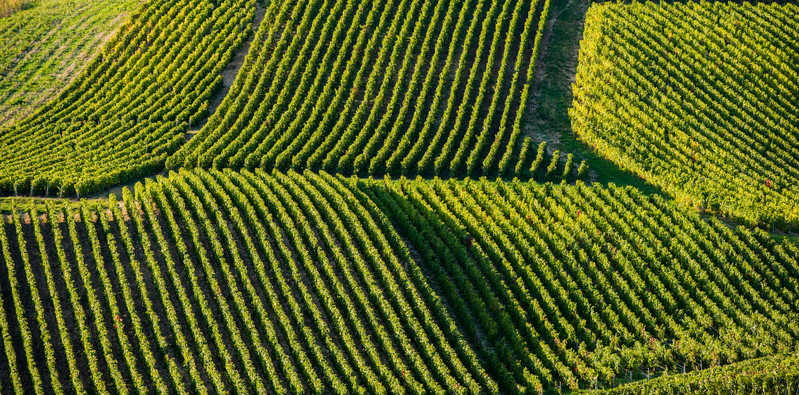
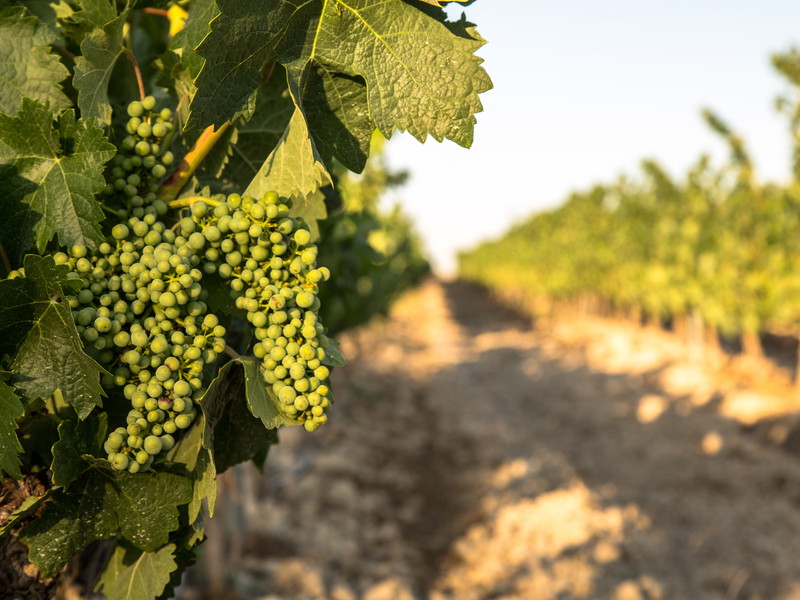
In northern Spain, Macabeo is the most widespread white wine variety, with centers in Penedès/Catalonia and Rioja, where it is also called Viura as in Rueda. Its origin is believed to be in Vialafrance in the Penedès, where it was first mentioned in 1617, with the note that “they have to be harvested very ripe”. From the Penedès, the variety not only spread across large parts of Spain, but also made its way across the Pyrenees to France in the Roussillon region, where it still plays an important role today, although here it is spelled Maccabeo. The Macabeo, which sprouts late and ripens just as late, prefers dry locations; damp or fog-affected locations are its downfall. It is also threatened by downy mildew and the bacterial disease necrosis. Stronger winds can cause shoots to be torn off. With high yields, the variety produces a rather inconsequential wine, often with an unpleasant bitter tone. Low yields, on the other hand, result in a more neutral, fruity wine with fresh acidity. This makes it best suited to producing sparkling wines, which is why Macabeo is used in Spain's top sparkling wine, Cava. The Rioja region has proven that, if the Macabeo is of very high quality, it can also be aged in barriques over a long period of time, which can produce very interesting, exciting and original wines.
This grape variety is also known by the name of:
Alcañol, Alcañón, Blanca de Daroca, Charas Blanc, Forcalla, Makabe bijeli, Gredelín, Macabeu, Maccabeau, Macabeu bijeli, Maccabéo, Maccabeu, Rossan, Vuera, Subirat, Viura, Viuna