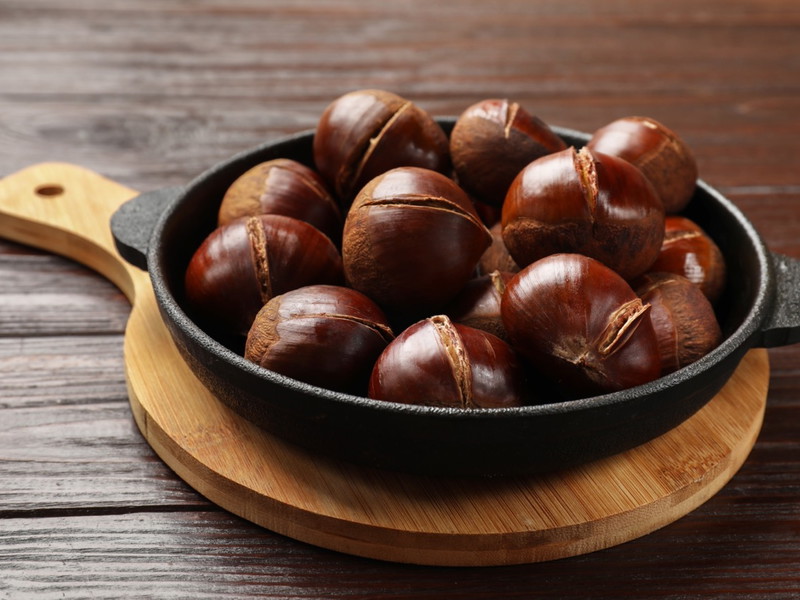
Autumn brings colorful leaves, cozy evenings by the fireplace and – for many – the desire for freshly roasted chestnuts. But be careful: not all chestnuts are edible! While the fruits of the sweet chestnut are a delicious autumn delicacy, those of the horse chestnut are poisonous to humans. If you want to collect chestnuts yourself, it is therefore essential to know how to distinguish between the two types in order to avoid health risks.
How to make the right distinction
At first glance, sweet chestnuts and horse chestnuts look similar, which can easily lead to confusion. But with a few simple pointers, the two species can be clearly distinguished from one another:
- Location: Sweet chestnuts are often found in forests or on mountain slopes, while horse chestnuts are often found in parks or along roads.
- Fruit husk: Chestnuts are surrounded by a brown, very prickly husk, which usually contains several fruits. The horse chestnut's skin is green, with widely spaced, shorter spines and usually only contains one fruit.
- Shape of the fruit: The edible chestnut has a flat side and a pointed shape, while horse chestnuts are round.
- Leaves: Sweet chestnut leaves are narrow and toothed, whereas horse chestnut leaves are larger and palmate.
Nevertheless, you should always stay on the safe side. Horse chestnut poisoning can lead to gastrointestinal complaints, vomiting and even serious health problems. If in doubt, it is advisable to have the chestnuts checked by a specialist or to buy them from a reputable store.
Tips and tricks for preparation
Roasted chestnuts are particularly popular and can not only be prepared over an open flame but also in the oven. Chestnuts are not only delicious, but also healthy. They contain a lot of iron, phosphorus, omega–3 and omega–6 fatty acids and vitamins of the B group. Thanks to their high fiber content, they also aid digestion and provide long-lasting energy. A recommended portion is around 40 grams of peeled chestnuts per person.
Step by step to perfect oven chestnuts:
- Prepare the chestnuts: Before roasting, the chestnuts should be washed and scored on the bulbous side. This step prevents them from exploding in the oven.
- The soaking: Some people swear by soaking the chestnuts in water for two hours before putting them in the oven. This should make them softer. Others, however, prefer to let the chestnuts air dry to achieve a crunchier result.
- Roasting: Place the carved chestnuts on a baking tray and roast in a preheated oven at around 220 °C for 20 to 35 minutes, depending on their size. As soon as the skin has burst open and the chestnuts are lightly browned, they are ready.
- After roasting: After roasting, place the hot chestnuts in a cloth and leave them to rest briefly. This makes them easier to peel. They taste best served warm.
If there are any chestnuts left over, they can easily be stored for a few days. To do this, they should be peeled and cooled completely before being stored in an airtight container or freezer bag.
Top recipes
Don't miss out!
Sign up now for our .