

Vegan pho with tofu
In its native Vietnam, this, perhaps the best of all noodle soups, is usually cooked with beef. We...
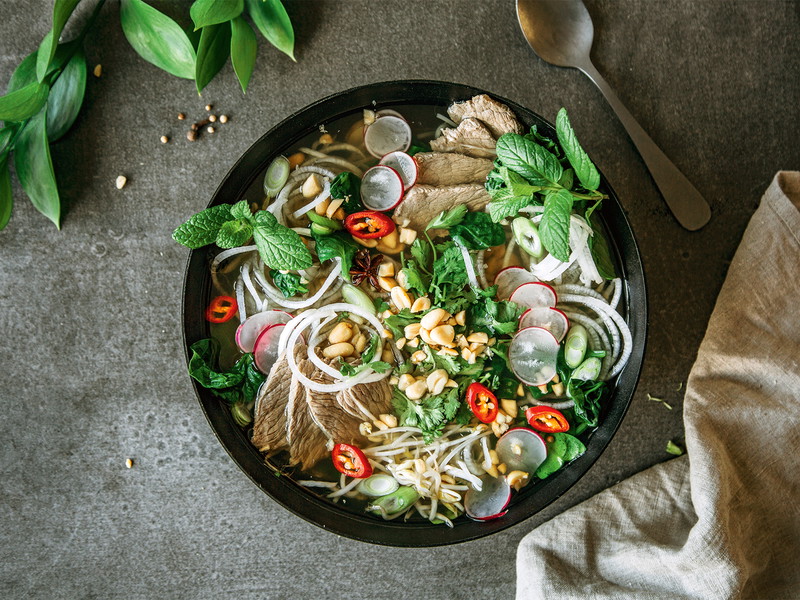
Blending Chinese ginger with French baguettes, Vietnam’s cuisine is a true global potpourri of flavors. Yet fresh pho stands apart—it tells the story of Vietnam itself like no other dish.
Two souls live in the culinary bosom of Vietnam. Thousands of years of occupation by China have left their mark on the cuisine of North Vietnam. The generous use of ginger, black cardamom, and fermented soybeans is just as Chinese in origin as the steaming and stir-frying. Other occupiers have contributed other elements and customs. Coffee and baguettes (Vietnam is actually the only country in Southeast Asia with a respectable baguette) date back to the French and their century-long colonial episode. And with the fall of Saigon and the withdrawal of the Americans, nothing stood in the way of the triumphal march of Vietnam's primordial soup around the world. The art of war? Sunzi? Not at all. The art of soup follows a peaceful path.
Vietnamese cuisine is characterized by lightness and harmony. And a freshness that is the basis of both. A good example of this is pho. The day begins and ends with it. It is the alpha and the omega of Vietnamese cuisine. It tells the story of the country, and no other dish reflects the differences between the north and south of Vietnam more clearly and distinctly than this noodle soup.
What’s certain is that pho first appeared on the streets of Saigon around the turn of the 20th century, during the French colonial period. In the dim hours before sunrise, street vendors would roam the city, offering steaming bowls of pho to early workers heading to the factories and to night owls finding comfort in its fragrant warmth. For some, it was a hearty breakfast that fortified them for the day ahead; for others, it was a soothing way to fade the night’s memories into the morning mist.
Strictly speaking, “phở” refers to the noodles themselves—rice noodles, to be precise. In some villages, or if you’re lucky (and a bit adventurous), in small workshops tucked away in garages or courtyards far from urban bustle, you can still watch women make them by hand. Softened rice is ground into a fine paste and steamed to a thick, smooth mass. The water is pressed out through cloth, the dough rolled, cut into ribbons, boiled once more, and finally dried—continuing a tradition as delicate and skillful as the dish it defines.
The aforementioned difference between North and South Vietnam is also reflected in the different recipes. Although these differences have natural, mainly climatic reasons, they have a far-reaching impact on society. The mountainous Yunnan highlands in the north of the country have a subtropical climate with differentiated seasons, and pho there is much thinner than in the south with its tropical abundance.
The standard version that you get in the morning in a pho (even the places that serve it bear the soup's name) is pho bo, i.e. with beef. The immovable constants of the preparation are: beef soup, rice noodles, and beef. The remainder is improvised, typically mirroring the cook’s culinary formation, the history of the family or simply what is available on the market: star anise, garlic, ginger, black cardamom, fish sauce, fresh coriander, basil or mint leaves. It (almost) always works. In his book Die Nudel, describing the cultural history of the noodle, Christoph Neidhart writes the following about pho: “A successful pho is cheerfulness turned into breakfast. A harmony of salty, sweet, sour, and spicy.”
Which brings us to another essential cornerstone of Vietnamese cuisine: fresh herbs. Few culinary traditions in the world use fresh coriander, ginger, or lemongrass as generously as the Vietnamese do. These aromatic accents don’t just create an extraordinary range of flavors—they also define the signature freshness that makes this cuisine so distinctive.
You’ll find them everywhere: in bánh cuốn, the delicate rice rolls filled with minced meat or mushrooms; in bún chả, Hanoi’s beloved street-food classic of grilled pork, caramelized belly, rice noodles, and a dipping sauce so irresistible it makes your pulse quicken—fish sauce, papaya, sugar, garlic, fresh lime juice, and of course, chili. Add only as much of the latter as your courage allows.
And while you’re in Hanoi or its surroundings, don’t miss cà phê trứng—rich Vietnamese coffee whisked with egg yolk and sweetened condensed milk. It may sound extravagant, but its velvety texture and bold flavor win over even the most skeptical palates. Consider it the perfect first step beyond your culinary comfort zone. After all, even the Vietnamese don’t live on pho alone.


