

Lake trout with potato risotto
After spectacular culinary journeys across the world’s oceans, Lukas Nagl has found his home port...

Christmas like the Bridgertons? This recipe adds a touch of Regency elegance to your festive dining table.
Tradition calls for preparations to begin on “Stir-up Sunday,” the last Sunday before Advent, when families traditionally make their Christmas pudding. On this day, the younger Bridgertons take turns stirring the pudding mixture — each one making a wish and slipping in tiny trinkets meant to bring luck to whoever discovers them at the dinner table. Lady Violet cherishes this ritual and the joyful chaos that comes with it, as the kitchen briefly becomes the children’s domain.
When made this early, the pudding has ample time to mature, allowing its flavors to deepen beautifully. Thanks to more modern habits, however, a perfectly delicious version can also be prepared in just 24 hours. The combination of tallow and alcohol acts as a natural preservative, producing a dark, sticky pudding with rich, concentrated fruity notes.
| Ingredients (10 servings) | ||
|---|---|---|
| 80 | g | Dried currants or currants |
| 80 | g | Dried peaches, finely chopped |
| 80 | g | Raisins, finely chopped |
| 5 | Large pitted Medjool dates, finely chopped | |
| Zest and juice of 1 organic orange (navel) | ||
| 100 | ml | Brandy or cognac, plus more for drizzling |
| 30 | g | Ground beef tallow, room temperature |
| 55 | g | Butter, room temperature, plus more for greasing |
| 110 | g | Muscovado sugar |
| 1/2 | teaspoon(s) | Ground cinnamon |
| 1/4 | teaspoon(s) | Ground cloves |
| 1/4 | teaspoon(s) | Ground ginger |
| 1/4 | teaspoon(s) | Ground allspice |
| 1/4 | teaspoon(s) | Freshly grated nutmeg |
| 1/4 | teaspoon(s) | Mace |
| Salt | ||
| 2 | Eggs (size L) | |
| 65 | g | Flour (type 550), sieved |
| 60 | g | Light breadcrumbs |
| 40 | g | Candied pineapple, finely chopped |
| 40 | g | Candied orange peel, finely chopped |
| 60 | g | Grated apple (e.g. Honeycrunch or Fuji) |
| Ingredients (10 servings) | ||
|---|---|---|
| 240 | g | Confectioner's cream (35 % fat) |
| 120 | ml | Milk |
| 2 | Bay leaves | |
| 4 | Egg yolk (size L) | |
| 3 | tablespoon(s) | Sugar |
In a separate bowl, whisk the egg yolks and sugar for 2–3 minutes, until the mixture thickens and becomes fluffy (beat it until soft peaks emerge). Slowly pour the warmed up cream into the yolk mixture, whisking constantly. Return everything to the saucepan and cook over medium-low heat. Stir continuously for 2–5 minutes, until the sauce thickens and coats the back of a spoon (the thermometer should read 76-82 °C). Strain the sauce immediately and discard the bay leaves.
| Ingredients (10 servings) | ||
|---|---|---|
| Ceramic pudding dish (approx. 1 l capacity), microwave-safe | ||
From today's perspective, beef tallow may seem like a strange ingredient, but until the invention of baking powder in the middle of the 19th century, bakeries used tallow - beef fat rendered from kidneys - instead of butter when preparing puddings. When heated, air holes form in the sebum, which create a sponge-like texture and take away the heaviness. This is why tallow is used here. Ask for fresh tallow in the butcher's shop and grate it or buy already grated tallow as a ready-made product. If you cannot find this ingredient, use 55 g of butter for a similar result.
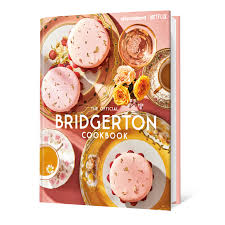
The Official Bridgerton Cookbook
Regula Ysewijn
Random House Worlds, 2024
256 Seiten
14,88 Euro
ISBN 9780593725573


