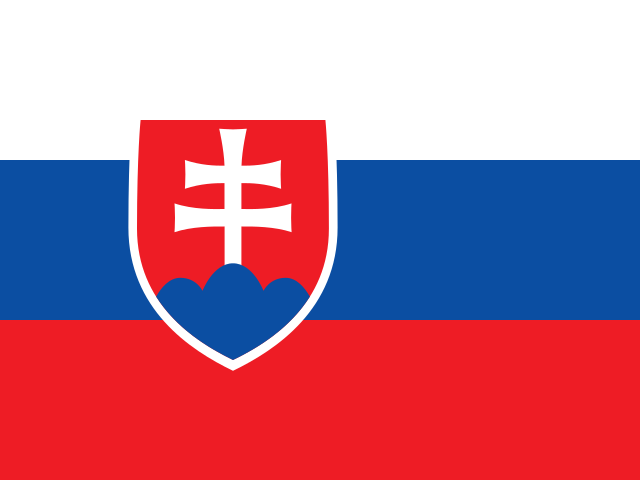
Viticulture in the country formerly known as Czechoslovakia dates back to the time of the Celts. Most of the vineyards are on the Slovak side, so after the separation of the two countries into the present states of the Czech Republic and Slovakia, Slovakia accounts for about 25,000 hectares. Most of these regions lie on the border with Austria and Hungary, with vineyards of the famous Tokaji region stretching into the far east. Wines from this area of about 170 hectares are even allowed to bear the Tokaij designated origin label, but they can barely reach the high quality of the Hungarian variety. In almost all regions, the Danube and its tributaries play a decisive role, as the flowing waters mitigate the continental climate with hot summers and cold winters that prevail here. Well-known grape varieties from Austria and Germany are cultivated, above all, Grüner Veltliner, Welschriesling and Müller Thurgau for white wine, Blaufränkisch and St. Laurent for red wine. However, Riesling and Cabernet Sauvignon are cultivated to a lesser extent. Winegrowing in Slovakia has always been considered to have excellent potential, but to this day, it is hardly exploited; the great leap in quality has failed to materialise.
On the other hand, production is so small that only a few bottles cross the borders to Western Europe. Most of the wine is drunk domestically, and a small amount is exported to the Czech Republic. Based on varying qualities from Kabinett to Trockenbeerenauslese, the legal predicate system is reminiscent of the German wine law.