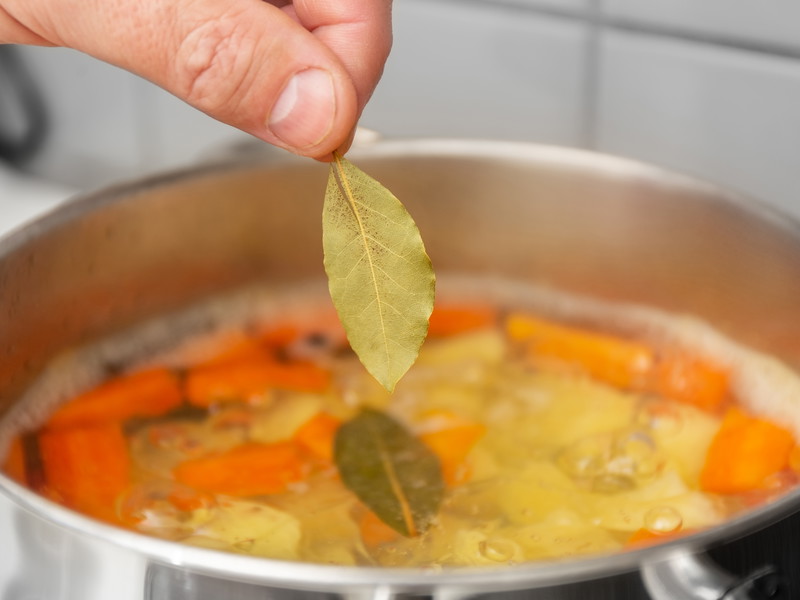
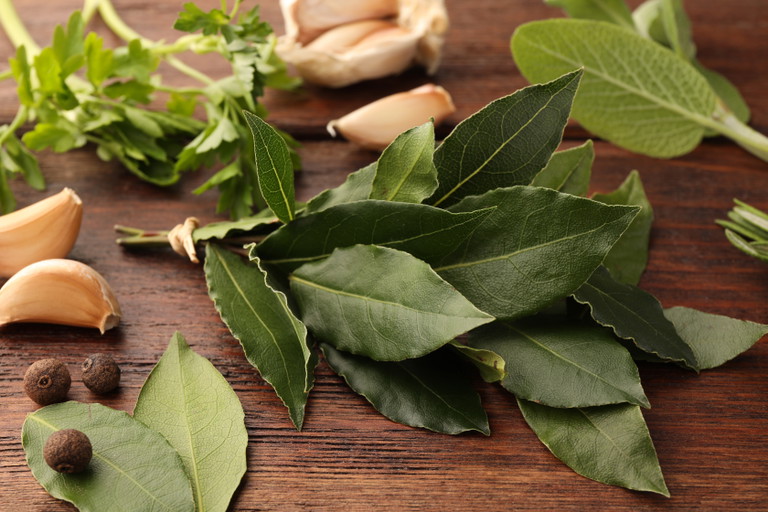
Back in the day, not a single soup or goulash was served without a bay leaf. Today, we often ask ourselves: Do we even still need them? For Roman Artner, head chef at Pichlmaiers Zum Herkner, bay leaves remain fundamental—just like salt and pepper. "A dried bay leaf provides the dish with a slightly earthy taste, whereas fresh leaves add a touch of bitterness," he explains in an interview with Falstaff. "But they are like salt and pepper—it’s hard to imagine sauces and ragouts without them."
How does it develop its flavor during cooking? Roman Artner has the answer: "It brings a subtle earthy note to the dish, without any additional vegetables. In sauces like a classic beurre blanc, leaves can even be blended in, creating a delicate, unique flavor. Difficult to describe, but clearly noticeable."
Leave them in or take them out?
There is no “magic moment” when it's best to remove bay leaves before they turn bitter—and usually, there’s no need, as the leaves rarely become bitter during cooking. For Artner, quantity is key: "One or two leaves in three liters of liquid are enough to add flavor. Bitterness only develops if too many leaves are used or if they’re roasted for too long, causing the essential oils to evaporate. The leaves themselves are not eaten. Usually, they are removed after cooking—in exceptional cases like beurre blanc, they are separated by means of a sieve. Powdered or chopped leaves are not used; bay leaves primarily serves as carrier of subtle flavor."
Bay Leaves are omnipresent
Perhaps this is why bay leaves can be found in almost every cuisine. They’re particularly common where stews, braised dishes, and thick sauces are staples—in Italy, France, and German-speaking countries like Austria, Germany, and Switzerland. They’re also popular in many Asian cuisines.
"Bay leaves are simply part of everyday cooking almost everywhere. Even with side dishes, bay leaves are a must," says Artner.
When asked about unconventional flavor pairings with bay leaves, Artner admits they are rare. Drinks typically feature juniper berries, with bay leaves being used less frequently. But he sees potential for innovation: "I could imagine bay leaf ice cream turning out quite interesting. I’m even considering letting a few leaves steep in vanilla paste in the patisserie to see how the aroma develops."