Skip to content
©JOHN Chef's Hall

JOHN Chef’s Hall: Behind the Scenes of a Michelin-Starred Restaurant Rooted in Latvian Ingredients

Gourmet
Fine Dining
Chef

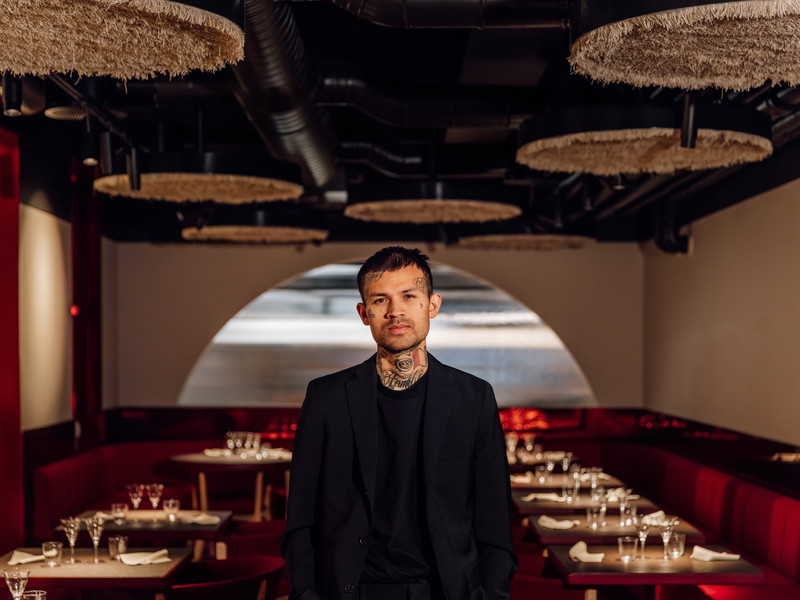
Seven tables. Twenty-four seats. One Michelin star. At JOHN Chef’s Hall in Riga, chef Kristaps Sīlis crafts an intimate tasting experience built entirely on Latvian ingredients, where every dish is served and explained by the chefs themselves.

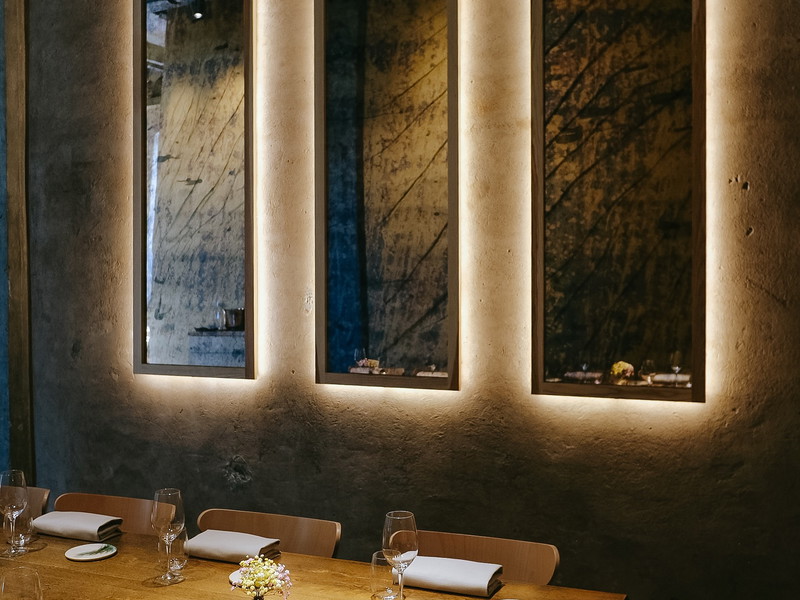
In a quiet corner of Riga, behind just seven tables and 24 seats, one of the Baltic region’s most uncompromising culinary experiences is being created. At JOHN Chef’s Hall, there is no separation between kitchen and dining room, no polished distance between chef and guest. Every dish is presented by the hands that created it. Every ingredient tells a story rooted firmly in Latvian soil. At the center of it all stands Kristaps Sīlis — chef, visionary, perfectionist, and a soul behind one of Latvia’s two Michelin-starred restaurants. His philosophy is simple but demanding: take the harder road, work only with local products, and improve every single day. In this conversation, Kristaps Sīlis reflects on discipline, nostalgia, creative limits, and what it truly means to build a fine dining identity in a country still searching for its place on the global gastronomic map.

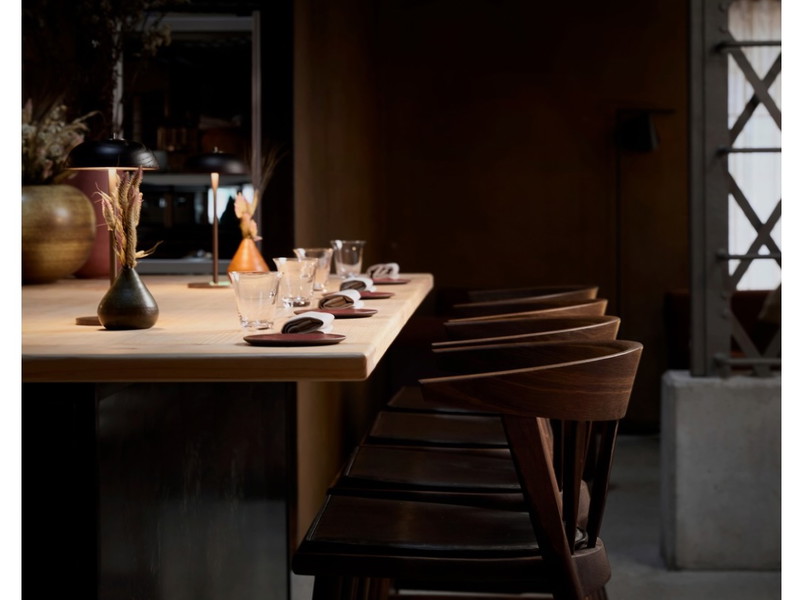
JOHN Chef’s Hall is an intimate space — just seven tables and 24 seats. What defines the concept behind it?

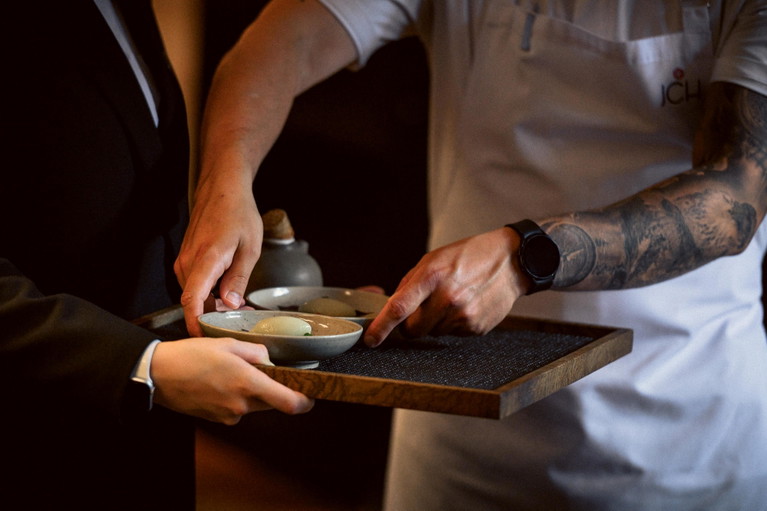
Seven tables. Twenty-four seats. That’s it. The name JOHN Chef’s Hall comes directly from the kitchen. Every dish is served by the chefs themselves. We do not simply cook — we tell
stories about the food to our guests. We present every single dish personally, and that is the main element that differentiates us from other restaurants. As a chef, I know exactly what happens in the kitchen and what ends up on the plate. A waiter can try to understand and retell that story, but it will never be the same. Chefs can communicate it in a completely different way — with precision, emotion, and confidence — because we created it. We opened the JOHN Chef’s Hall one and a half years ago, and this vision was clear from the very beginning. The first goal was to use only local products. In Latvia, especially in fine dining, there were no restaurants working exclusively with Latvian ingredients. Most places rely heavily on imported products. I wanted to take the harder road — to build a menu based solely on local ingredients. The second idea was that chefs themselves should bring the food to  the table. That personal connection is essential to us.

Growing up in the small town of Latvia, how did your early environment shape your relationship with local ingredients and flavours?

Not directly. Experience shaped it more than childhood. In previous restaurants where I worked, I already tried to focus on local ingredients. But it is extremely difficult to build an à la carte fine dining menu using only Latvian products. We have excellent grains and vegetables, but when it comes to fish and meat, the selection is limited. In fine dining, you need variety, and in Latvia we have only a few types of fish suitable for that level. For a long time, this was my biggest challenge. John Chef’s Hall is the first place where we have finally  managed to make it work fully. I also founded the Young Chefs Movement in Latvia about five or six years ago. Our goal is to strengthen connections between restaurants and local  producers. The restaurant industry here has traditionally relied on imported goods, while local producers often export their best products abroad. It is surprisingly difficult to obtain high-quality local ingredients for your own kitchen. We are working to change that system.

As a chef, I know exactly what happens in the kitchen and what ends up on the plate. A waiter can try to understand and retell that story, but it will never be the same. Chefs can communicate it in a completely different way — with precision, emotion, and confidence — because we created it.

Kristaps Sīlis

Chef, JOHN Chef’s Hall

Kristaps Sīlis

Chef, JOHN Chef’s Hall

How do you overcome the challenges of sourcing only local ingredients?

It requires an enormous amount of effort. Sometimes it feels crazy. There are countless small obstacles. If even one detail fails — for example, if a supplier cannot deliver — we may not receive a crucial product. I have personally driven to farms to pick up ingredients myself. Sometimes it comes down to tiny details. If it’s raining and we need raspberries, a farmer may call and say, “Today we’re not picking berries.” That’s it — no raspberries. Fortunately, we have Riga Central Market, which is an incredible backup option. In emergencies, we can usually find vegetables, fish, or meat there. But overall, it’s a constant struggle — and we accept it.

Do guests appreciate the fact that you work exclusively with local ingredients — and the effort behind it?

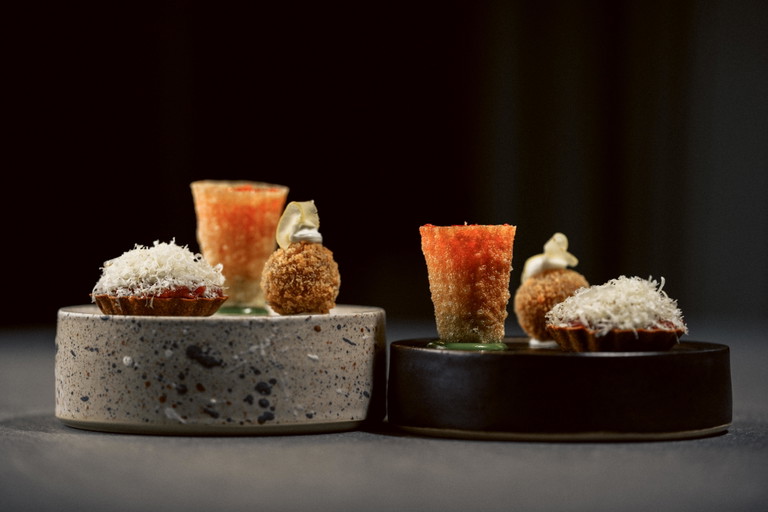
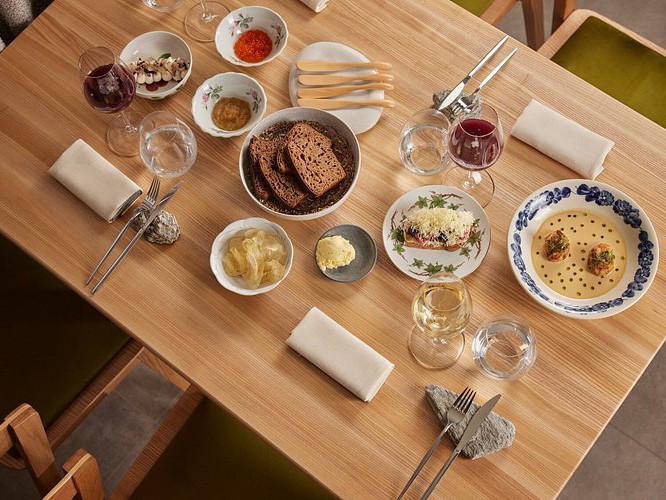
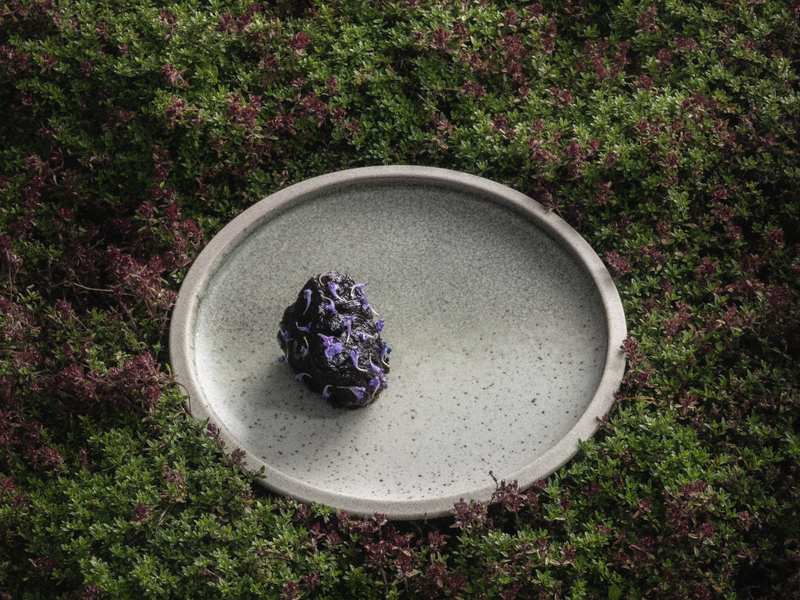
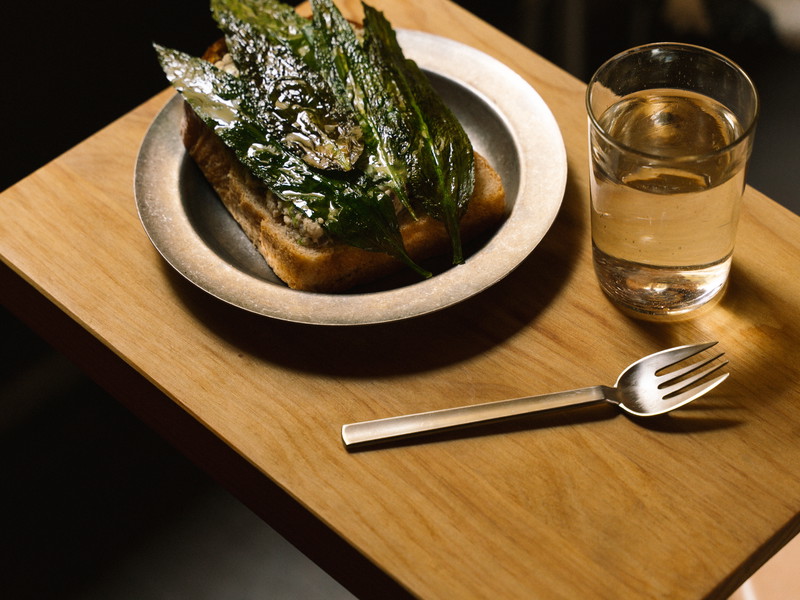
Most guests do not think about the struggle behind the scenes. Latvians are very excited about what we do because these are the flavors they grew up with. It’s a shared taste memory. Take potatoes, for example — we all know how a proper Latvian potato should taste. We work with those familiar flavors but reinterpret them through new textures and techniques. Guests love rediscovering something they thought they already knew. We also revisit flavors from my own childhood — pinecone syrup, tomato in jelly. These are things people recognize instantly, but we transform them into something unexpected. For example, we serve tomatoes in jelly with green strawberry sorbet. It sounds crazy, but the core flavor is familiar to everyone. Foreign guests are equally excited. If I travel to Italy, I want the best Italian cuisine possible. The same applies here. If someone visits Latvia, why would they want to eat mediocre pizza? They should experience the best of Latvian products and identity.

Nostalgia clearly plays a role in your menu. How do you structure your tasting experience?

When we opened the JOHN Chef’s Hall, my initial idea was a traditional tasting menu — each course built around completely different ingredients. But as a guest, that can feel overwhelming. Too many flavors, too many products — it becomes difficult to remember the experience as a whole. So I decided to build the menu around two or three main ingredients. Currently, we focus on trout, venison, and tomatoes. Every dish is connected to one of these core products, and everything else supports them. Each menu begins with identifying those key Latvian ingredients. In some ways, it’s easy — Latvia doesn’t offer endless options. If you need a new fish, you might have two or three choices. That simplifies things. But it’s also difficult because you must find something truly interesting within that limited selection. That’s where creativity becomes essential. Then we explore them deeply and creatively. The limitation actually creates freedom — it forces us to think differently.

Each menu begins with identifying those key Latvian ingredients. In some ways, it’s easy — Latvia doesn’t offer endless options. If you need a new fish, you might have two or three choices. That simplifies things. But it’s also difficult because you must find something truly interesting within that limited selection. That’s where creativity becomes essential.

Kristaps Sīlis

Chef, JOHN Chef’s Hall

Kristaps Sīlis

Chef, JOHN Chef’s Hall

What does your menu creation process look like? How do you transform simple local ingredients into something extraordinary?

It takes time — a lot of time. Once I choose the three main products, I place them on the table and start writing down every possible idea. Not just the obvious techniques, but also the crazy ones. Then I gather my team, and we experiment. We test multiple techniques — salting, pickling, fermenting, aging — sometimes trying five or six methods. We taste, discuss, rethink, repeat. If something shows potential, we refine it again and again. Only once the flavor is perfect do we start thinking about plating and presentation. Developing a new menu can take anywhere from three months to a year. To reduce dependence on seasonality, we plan far ahead. For example, asparagus season is short, but we ferment or preserve it to use later in the year. In my office, I keep a list of products currently fermenting — right next to sketches of the next menu. Interning in Michelin-starred kitchens abroad must have been formative.

What did those experiences teach you? 

For many years, I was absolutely convinced that the Baltics would never receive Michelin stars. We are small countries — it seemed impossible. When I worked abroad, I believed that would be my only opportunity to experience Michelin-level kitchens. I wanted to see how they operate, how they manage staff, how discipline works at that level. Fifty chefs in one kitchen, each responsible for a specific task. In our countries, we often have two chefs doing everything. It’s incredibly difficult to reach the same precision with such limited manpower. But at the same time, this reality made us strong. We learned to work hard and to do everything ourselves.

How did you feel when Michelin finally came to the Baltics — and when you received a star?

Honestly — nothing changed in my mindset. My goal was never to receive a Michelin star. My goal is to become better every day. To improve service, to refine details, to grow as a
team. Even if service feels perfect, I will still find something to improve. In this industry, perfection does not exist — there are too many human factors. I was shocked when we received the star. JOHN Chef’s Hall had been open only about a month and a half. Suddenly we were fully booked three months ahead. We even had to close for a few weeks because we didn’t know how to handle the volume of reservations. It was overwhelming.

You manage almost everything yourself — chef, manager, marketer. Why take on so many roles?

First of all, because I can (laughs). But more seriously, it’s very difficult to find someone who sees things exactly the way I do. I am very principled. I have a clear vision of how  everything should function. Of course, there are different ways to achieve the same result — but for me, precision matters. There is also a financial reality. Fine dining is a fragile business. If I hired a separate manager, marketing specialist, and technical staff, the restaurant might not survive. So I take responsibility for it all. This is the price of having full creative freedom.

And do not forget discipline. Even if you love cooking, it doesn’t mean you wake up every morning full of excitement. It’s like going to the gym at 5 a.m. No one wants to go. But there are two types of people: those who stay in bed, and those who get up and go. The difference is discipline.

Kristaps Sīlis

Chef, JOHN Chef’s Hall

Kristaps Sīlis

Chef, JOHN Chef’s Hall

At JOHN Chef’s Hall, guests can watch dishes prepared and sometimes finished tableside. Why is this interaction important to you?

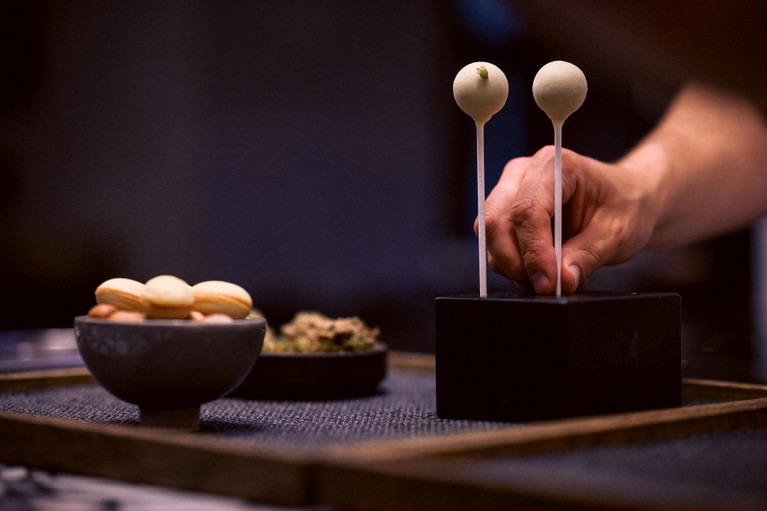
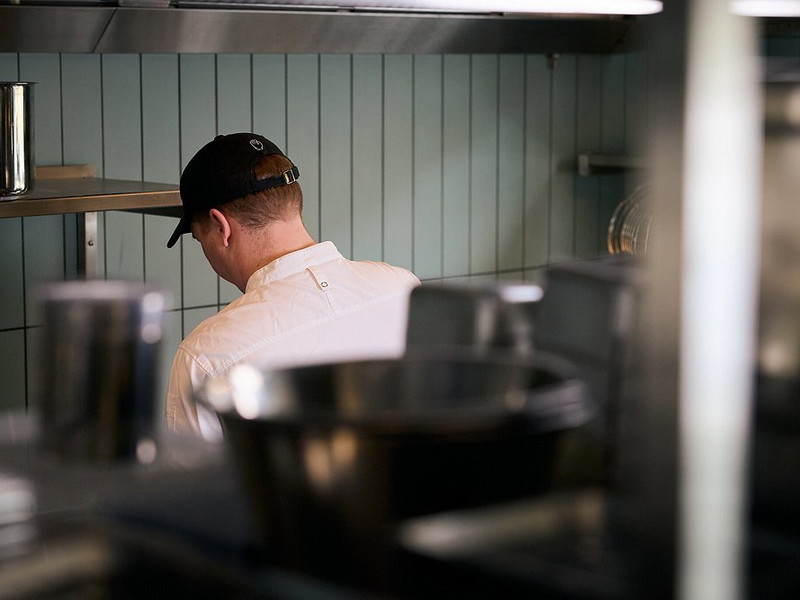
We have a completely open kitchen. Nothing is hidden. Guests see every detail. In every menu, I include at least one dish that we finish directly at the table. This extends the story. It
allows us to explain the ingredients, the techniques, and the idea behind the dish. Historically, chefs worked hidden away in basements with no contact with guests. For us, it’s
challenging — speaking to guests requires energy and confidence — but it is absolutely worth it. Even if it’s difficult, I know it is the right thing to do. I gradually encourage chefs to
interact with guests. In the beginning, it’s uncomfortable. But once they experience guests’ reactions, it becomes motivating. It gives emotional energy — more than money does.

What advice would you give someone just starting their culinary journey?

The most important thing is to understand your place. Ten years ago, every restaurant wanted to be fine dining. It was fashionable. But trends change. Not everyone belongs in fine dining — and that’s perfectly fine. Young chefs should explore different environments: fine dining, casual restaurants, cafés, street food. Discover where you truly belong — not just where you fit, but where you genuinely want to be. And do not forget discipline. Even if you love cooking, it doesn’t mean you wake up every morning full of excitement. It’s like going to the gym at 5 a.m. No one wants to go. But there are two types of people: those who stay in bed, and those who get up and go. The difference is discipline.

Find out more
1 / 12