The UK’s Peak District National Park – the first (and perhaps the best)
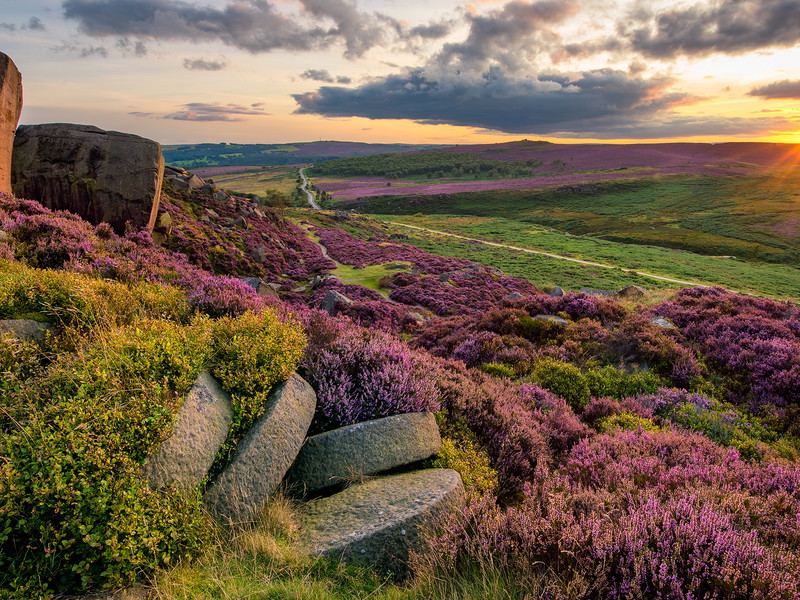
Covering an area the same size as Greater London, this national park is famous for its nature, trails and wild beauty. Falstaff tells you everything you need to know.
Located in central England, touching five counties – Cheshire, Derbyshire, Greater Manchester, Yorkshire and Staffordshire – and roughly the size of Greater London (some 1,440 sq. km or 555sq. miles), the Peak District National Park was designated as the first national park in England and Wales, way back on April 17, 1951. This not only signified the importance that then Prime Minister Clement Attlee placed on the area, but it also paved the way for the establishment of a further 14 national parks in the UK throughout the subsequent years.
Its central location at the southern end of the Pennines (referred to many as the backbone of England) lies between Stoke on Trent to the South West, Derby to the South East, Sheffield and Chesterfield (the only non-city) to the East, Wakefield to the North East and Manchester in the North West, all reachable within an hour or less by car or train.
One of the most defining aspects of the Peak District is that it marks the boundary of where many northern and southern UK species “collide”. For example, southern globe flowers and mountain hares are at their most northern UK limit here, while the northern stemless thistle is at its most southerly. Not only that, but some fifty species of herb and wildflower can be found per square metre of parkland. The uplands are typified by being grit-stone, sandstone and shale throughout, with the exception of the central and southern regions, which are carboniferous limestone.
Buxton: surrounded by, but not in, the National Park
If you are spending any length of time in the Peak District, the famous Derbyshire spa town of Buxton makes a convenient base. It sits in the “crook of the neck” of the national park, surrounded on three sides, but not actually part of it. On a technical level, at 300 metres above sea level, it is England´s highest market town. You’ll find plenty of information available in Buxton to help with your visit to the national park itself.
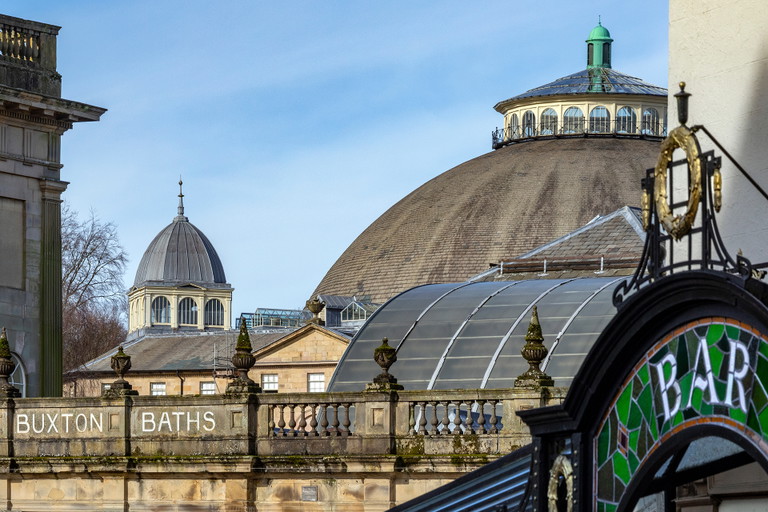
The spa waters of Buxton are perhaps most famous for providing one of Britain’s favourite bottled waters. The equally, if not perhaps more famous natural baths, stand on the site of the original Roman Baths and have been visited for thousands of years. However, people also visit Buxton for its magnificent Georgian and Victorian architecture, which many say was initiated by the 5th Duke of Devonshire attempting to create his own northern version of the city of Bath.

Buxton is also famous for its Grade II listed Edwardian Opera House, the Devonshire Dome, (which has a wider diameter than that of St Paul's Cathedral) and the renovated Grade I listed 5-star Buxton Crescent Hotel. Also worth a mention is the Old Hall Hotel, said to be one of the oldest in England (Mary Queen of Scots was held captive here in the 16th Century). After such an injection of history, those requiring some retail therapy will be very content with the shopping in Buxton.
Advantages
One of the greatest advantages of Peak District National Park is that having been formally established over 70 years ago, it is possible to make your visit either as organised or as informal as you require, without compromising your enjoyment. Unlike many modern-day theme parks, it doesn't get tired, go out of fashion or become repetitive.
All interests relating to nature and the great outdoors are amply catered for, regardless of age or ability. There are also plenty of family-orientated activities. Since it is generally aimed at those already accustomed to the great outdoors, a little preparation in advance for the notoriously unpredictable British weather will go a long way.
Ranger-guided walks
For those requiring something more formal, which can be useful for families, there is an annual programme of guided walks, training and other events organised by trained “rangers”. The programme covers almost every conceivable outdoor activity and you can rest assured that safety, physical ability, and age-suitability are all taken care of for you. It also means you can explore the landscapes, flora, fauna and even heritage in this magnificent area of England while also knowing exactly where to go.
The activities, which are suitable for all, include walking, cycling, horse riding, climbing, caving, fell running, fishing, air and water sports and camping, all supported by ranger events for both adults and juniors.
Path network
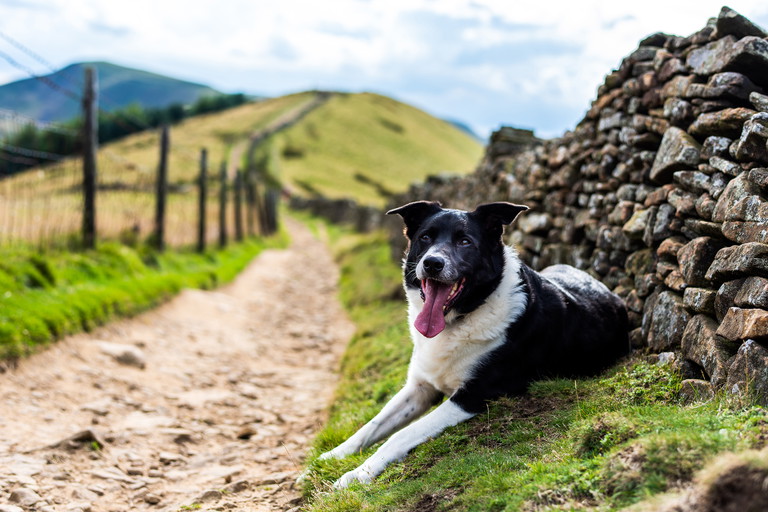
As one would expect, there is plenty of open access land throughout the national park, with paths and trails along the way. The village trails taking in Stoney Middleton, Hartington (passing Pilsbury Castle), Longnor and Hathersage (the Jane Eyre Trail) are worth considering.
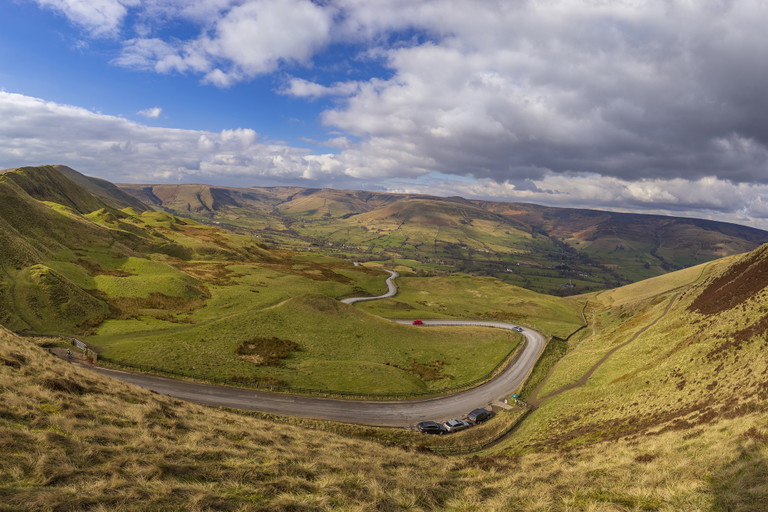
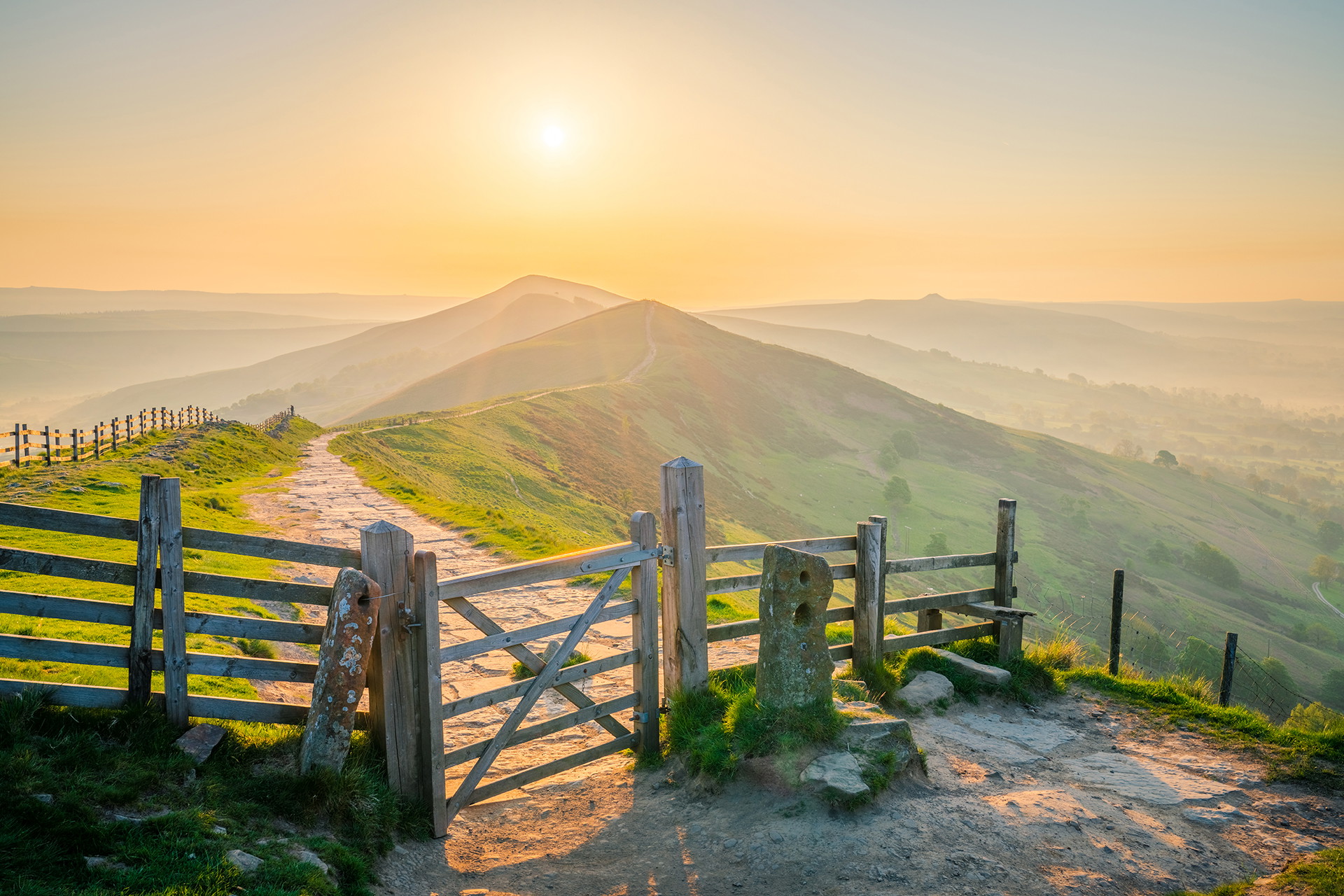
However, for one of the most famous walks and a rewarding view, head to Mam Tor (“Mother Hill”) near the village of Castleton, for a must-see on your visit to the Peak District.
A bit of biking
The Peak District is well known for being cycle-friendly (note, however, that while e-bikes are welcome, non-mobility, two-wheeled electric scooters are not welcome in the national park). If you don’t have your own bicycle, you can rent one at Ashbourne, Derwent, Manifold and Parsley Hay.
Former railway trails
There are four main (termed “recreational”) trails that follow the route of former railway lines.
- Tissington Trail – the longest trail at 21km (13 miles)
- High Peak Trail – stretching 16km (10 miles) with a secondary 11km trail (7 miles). The latter is a public bridleway owned by Derbyshire County Council
- Monsal Trail – 13.5km (8.5 miles)
- Thornhill Trail – the shortest at 3.2km (2 miles)
You can find out further information about these wonderful trails either via the official website (address at the end of this article) or via the visitor and information centres.
Easy access
Some of the most lauded trails are the national park’s “Miles without Stiles” routes. There are some 20 formal routes through the national park, where the abilities required to traverse them are outlined clearly. All are easily accessed and have no unexpected gradients or stairs, making many of them suitable for all ages and abilities, including those with pushchairs, wheelchairs, the visually impaired and visitors with mobility issues.
Getting there
It goes without saying that travelling by car is the most convenient option, as this enables you to reach most destinations within the Peak District. However, it is also easy to reach the Peak District by train or bus, as there are regular and reliable services, and the major cities surrounding the national park all offer rail services to the most popular destinations. For a comprehensive list of options, see the official public transport guide.
For all other queries, information and tips, these Peak District’s websites offers a wealth of knowledge: