

Asparagus: SPRING’S DELICATE GIFT
Asparagus impresses not just with its delicate taste but also with its nutritional value,...
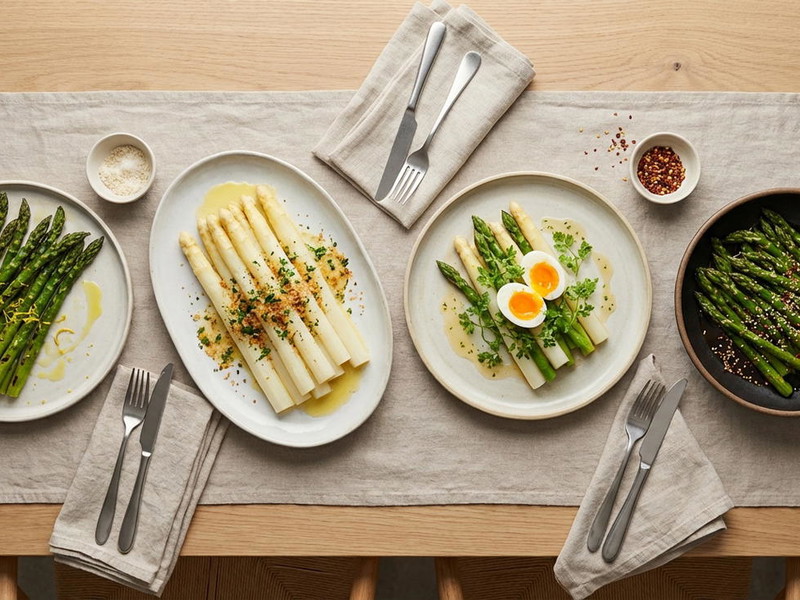
Asparagus marks the arrival of spring—yet how it is prepared and enjoyed varies widely around the world.
Asparagus is one of spring’s most anticipated ingredients, but its place on the table differs from country to country. Sometimes it is treated with restraint, sometimes folded into everyday cooking, and elsewhere shaped by preservation or long-standing traditions. What unites these approaches is a shared sense of seasonality and a respect for the ingredient itself.
With a history reaching back to antiquity, asparagus has long been valued across cultures. In the Roman Empire, it was considered a delicacy, while in parts of Asia it was appreciated for its medicinal qualities. Today, its role is defined less by status than by versatility—moving easily between minimal preparations and more layered dishes.
In Greece, asparagus is prepared with a light touch - steamed and finished with olive oil and lemon. The flavours remain clear and direct, shaped by a Mediterranean preference for simplicity and balance.
In France, asparagus is often served without much ceremony. Slender spears, sometimes tinged with violet, are paired with vinaigrette or butter and egg. It is less about presentation than about timing - eating it at its peak.
Italian cuisine rarely isolates asparagus. Instead, it is folded into risottos, pasta, or egg dishes. Brief cooking keeps its structure intact, while parmesan, olive oil, or pancetta add depth. It complements rather than dominates.
In Spain, particularly in Navarra, white asparagus has a long agricultural tradition—but is often enjoyed preserved. Served simply with olive oil or mayonnaise, it reflects a culture that extends the life of seasonal produce.
In Denmark, asparagus moves easily between everyday cooking and special occasions. It may appear in savoury pastries or alongside poultry, but just as often it is served simply, as a seasonal side. The approach is practical and understated.
In Germany, asparagus is typically served with potatoes, butter or sauce hollandaise, and sometimes ham. The preparation is straightforward, built around familiar pairings.
In the United States, asparagus is most commonly roasted, grilled, or used in soups. High heat brings out caramelised notes, giving it a deeper, more robust flavour profile.
In countries such as Uruguay and Argentina, asparagus arrived through European influence and has since become part of contemporary cuisine. It appears alongside seafood, in pasta, or in modern vegetable dishes shaped by local habits.
In Poland, asparagus is often served with butter, breadcrumbs, and chopped egg. The combination is simple but characteristic, frequently accompanied by potatoes or fresh salad.
Across Asia, asparagus has evolved from medicinal plant to versatile kitchen ingredient. Thinner green varieties are quickly cooked in woks, curries, or stir-fries—remaining crisp while absorbing bold flavours like soy sauce and spices.


