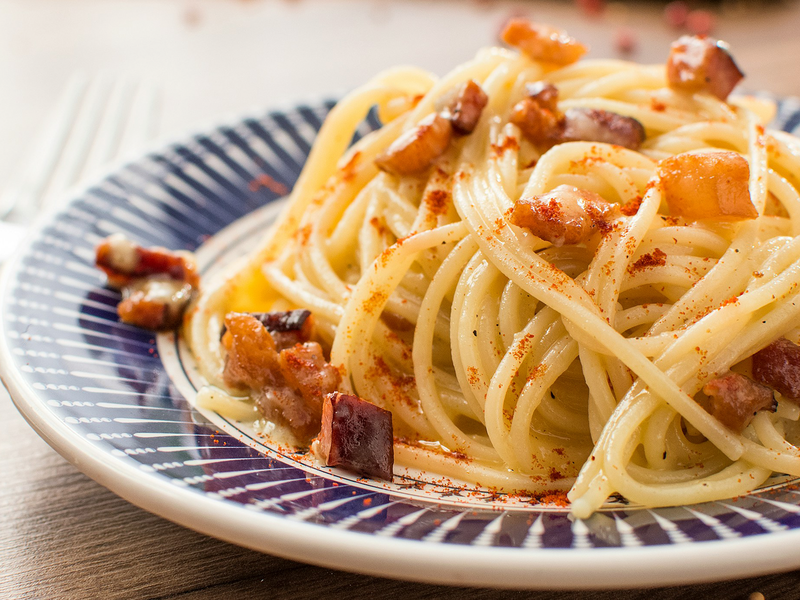
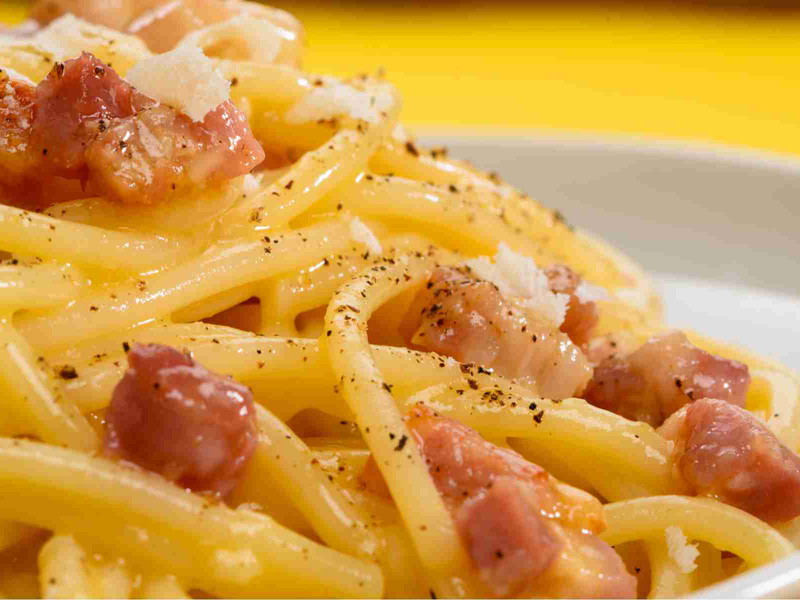
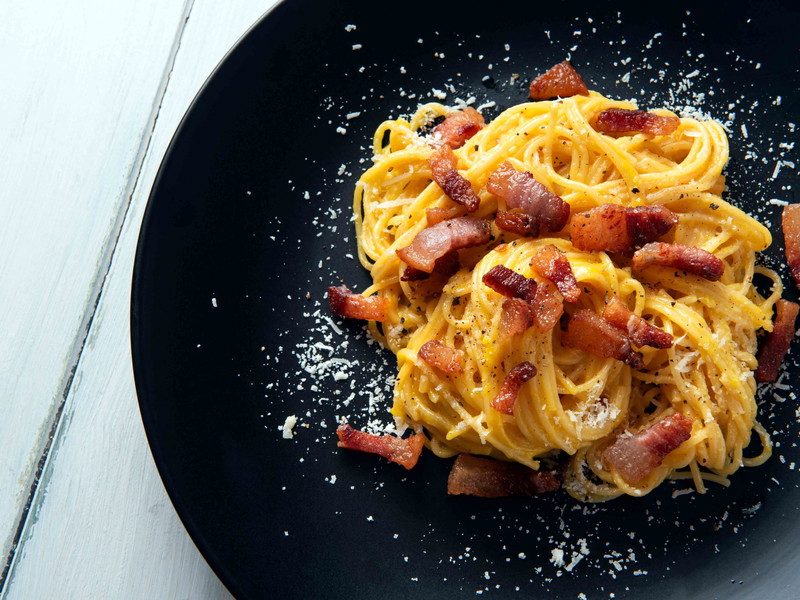
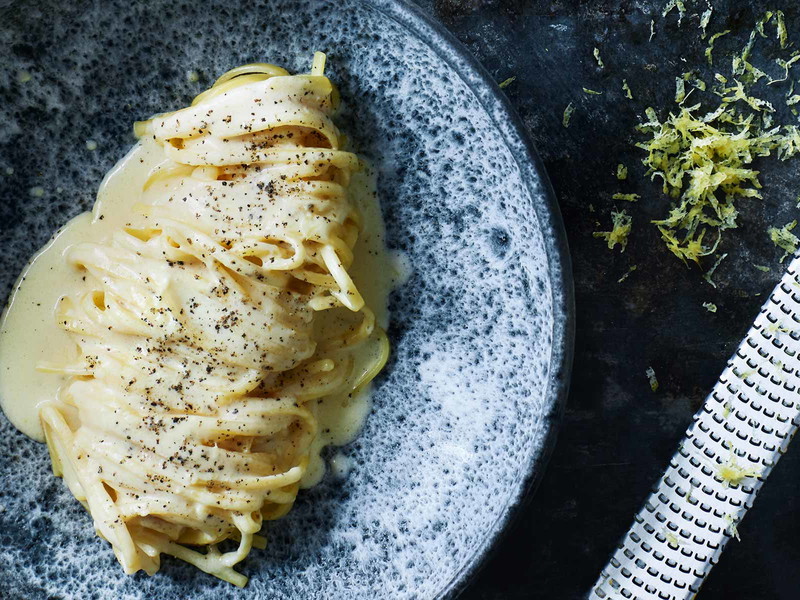
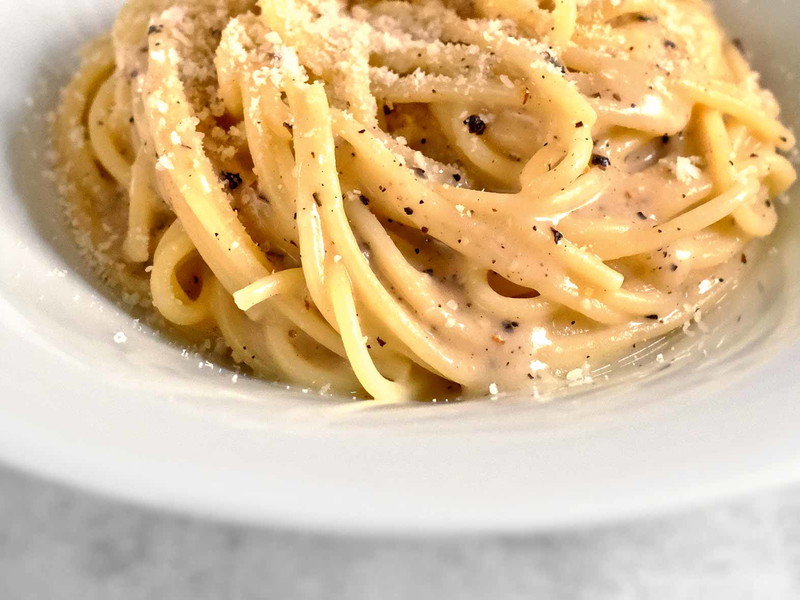
Preparing carbonara takes less than 15 minutes and requires only a handful of ingredients: ideally guanciale from pork cheek, eggs, grated cheese, and freshly ground pepper. Fry the guanciale to a crisp, whisk the eggs with cheese, then pour everything over hot pasta, and add a splash of pasta water to create a silky sauce. Easy to make—yet far more complicated when it comes to its history.
Because according to one controversial theory, carbonara may not be purely Italian after all. Instead, its roots could lie in the United States. The argument goes that at the end of the Second World War, American soldiers arrived in Italy carrying bacon and powdered eggs—ingredients that were later merged with local pasta traditions. Cultural historian Alberto Grandi, professor at the University of Parma, supports this view: “This is clearly an American dish—a typical American breakfast with pasta added.”
Indeed, the first printed recipe appeared not in Italy but in Chicago in 1952, in a restaurant guide covering the city’s North Side. Two years later, the dish surfaced in Italy in La Cucina Italiana, which even suggested using Swiss Gruyère.
Italian After All?
For many Italians, such claims strike at the heart of national culinary pride. Yet an unexpected counterargument comes from the Netherlands. Journalist Janneke Vreugdenhil uncovered a 1939 newspaper column—years before American troops would arrive in Italy—mentioning spaghetti alla carbonara. The Dutch paper De Koerier described a dispute between two innkeepers from the Italian neighborhood Trastevere: one serving prawn risotto, the other charcoal-burner style spaghetti—now known as carbonara.
The name itself derives from carbonaro, meaning “coal merchant” or “charcoal burner.” Some believe the dish was favored by coal workers needing a hearty, quick meal after long shifts; others suggest the crispy bacon resembled flecks of coal or soot.
Whatever its true birthplace, carbonara remains proof that even the simplest dishes can carry a surprisingly tangled history.