When people hear the word omakase, most immediately think of sushi: a curated menu in which the chef chooses the dishes. The Japanese term translates loosely as “I leave it up to you.” In dining, it reflects a simple idea—guests place their trust in the chef and allow themselves to be guided by experience and expertise. That philosophy now appears to be finding a new stage in the world of coffee. Coffee omakase applies the concept to specialty coffee, inviting guests to follow baristas on a multi-course sensory journey—without having to choose a single drink themselves.
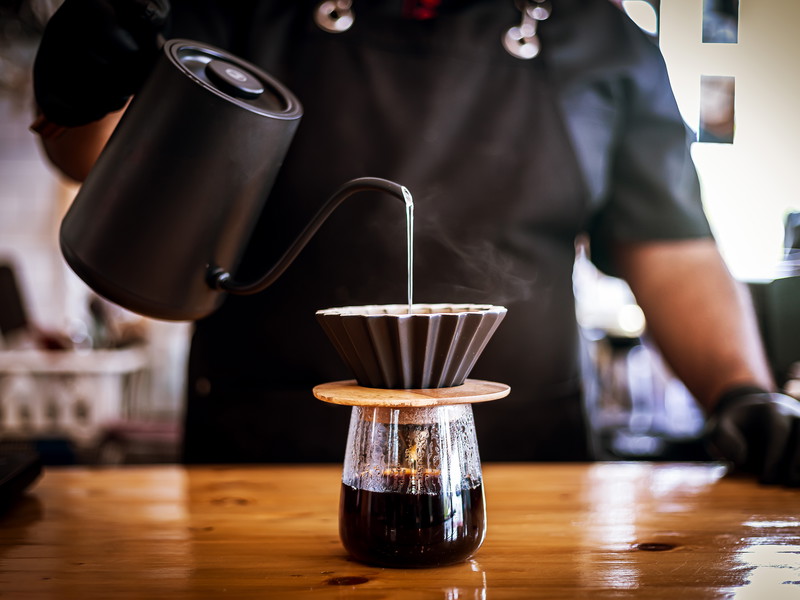
The idea began in Japan, where cafés started applying the omakase principle to coffee. Baristas select the beans, brewing methods, temperatures, and the order of each course to create a carefully choreographed tasting experience. Institutions such as Koffee Mameya Kakeru in Tokyo are considered early pioneers. In the United States, pop-ups like Komakase in San Francisco present five- to nine-course menus featuring black coffee, creative specialty preparations, and small bites. Cafés in Taipei and São Paulo also demonstrate how coffee omakase can become a deliberate, curated experience that blends craftsmanship, creativity, and sensory exploration.
The format has already gained traction internationally—from Japan and the United States to Taipei and São Paulo. In the German-speaking world, however, coffee omakase remains in its infancy. Austria has yet to see a dedicated offering. In Germany, Munich’s Kanso Coffee Lab is among the few places experimenting with the format, while in Switzerland, Zurich’s Commercial – The Project follows a similar approach. In both cafés, guests can leave the selection entirely to the barista—true to the Japanese omakase philosophy—who prepares either individually tailored coffees or a curated, multi-course tasting where both the selection and the sequence are part of the experience.