Shrove Tuesday, But Make It Swedish: It is Semla Season
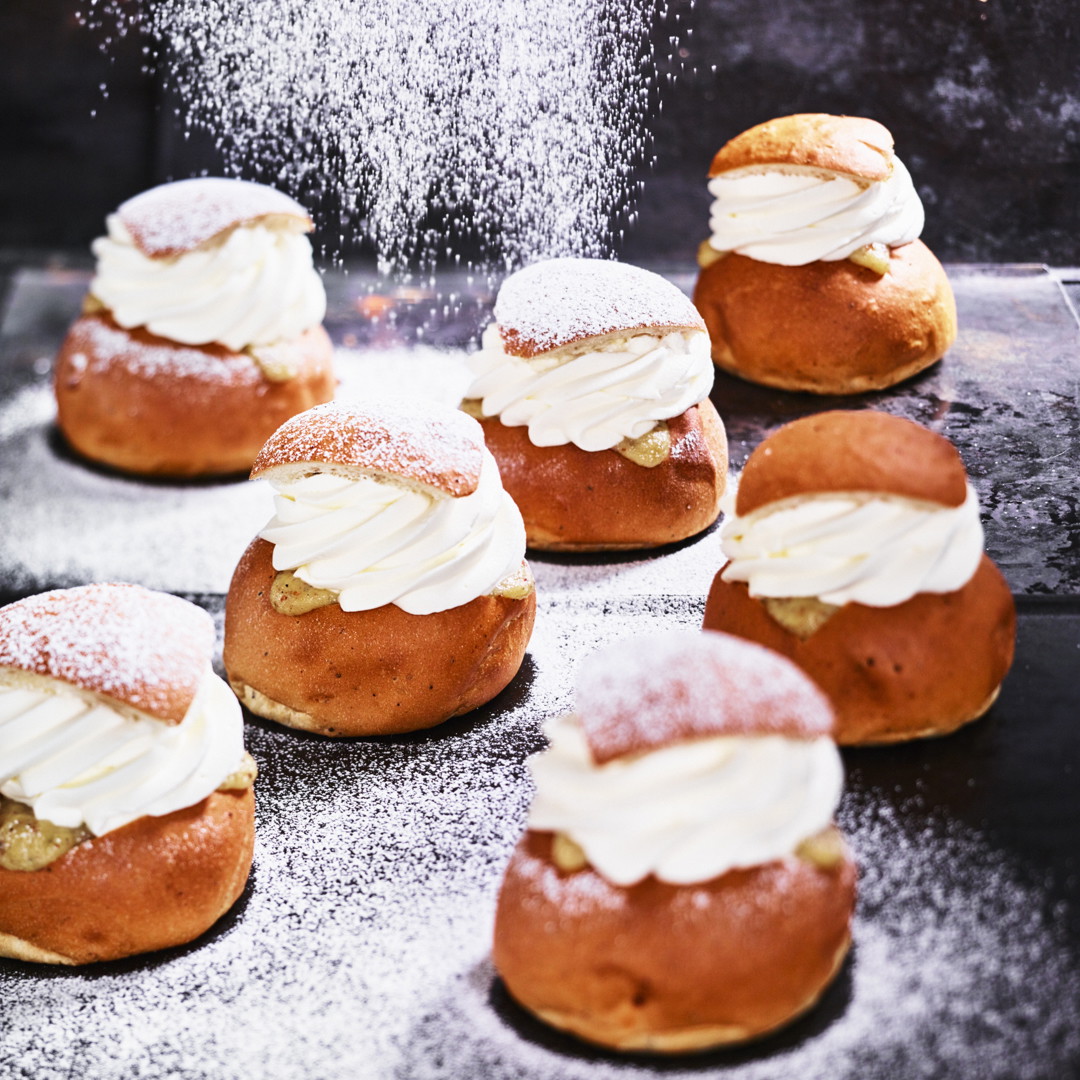
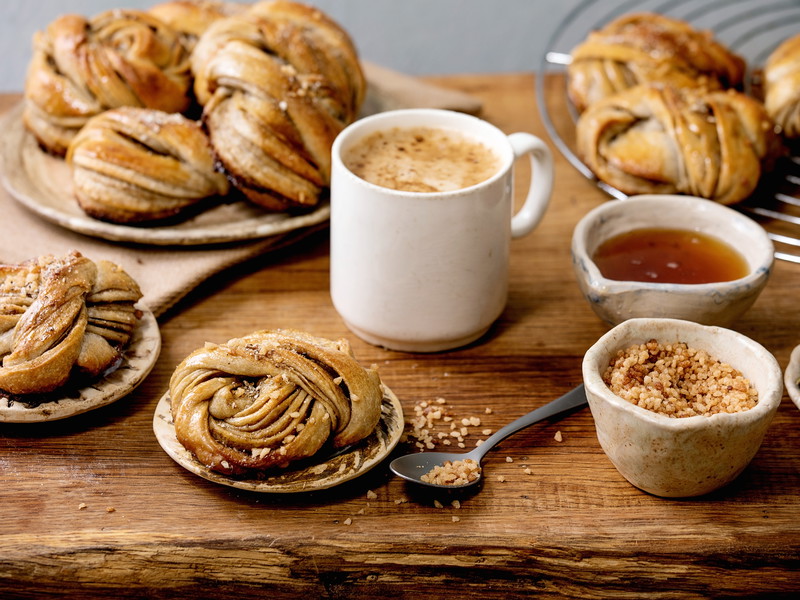
Sweden treats one pastry as a national event. The semla is a cardamom-spiced Shrove Tuesday bun with almond paste and whipped cream—and it rewards immediate enthusiasm. In Sweden it’s not just a day but a season: an estimated 8–10 million semlor are eaten each year, while bakeries keep upping the ante, from croissant versions to the viral semmelwrap that helped push an old tradition into a new era.
Phones were ringing off the hook. Journalists called. Colleagues called. Outside Stockholm’s renowned bakery Tössebageriet, a queue curled down the street. Owner Mattias Ljungberg was in Lyon, deep in the Coupe du Monde de la Pâtisserie (World Pastry Cup), and had no idea his brand-new creation—the semmelwrap—had taken off. What Ljungberg had done to the much-loved Swedish semla bun was disarmingly simple: He rolled it out and folded it like a sandwich, making it easier to eat on the go. “This was back when Instagram was still in its infancy; anything you posted seemed to go viral. I didn’t realize it at the time, but the timing was perfect,” Ljungberg says, remembering the launch eleven years ago.
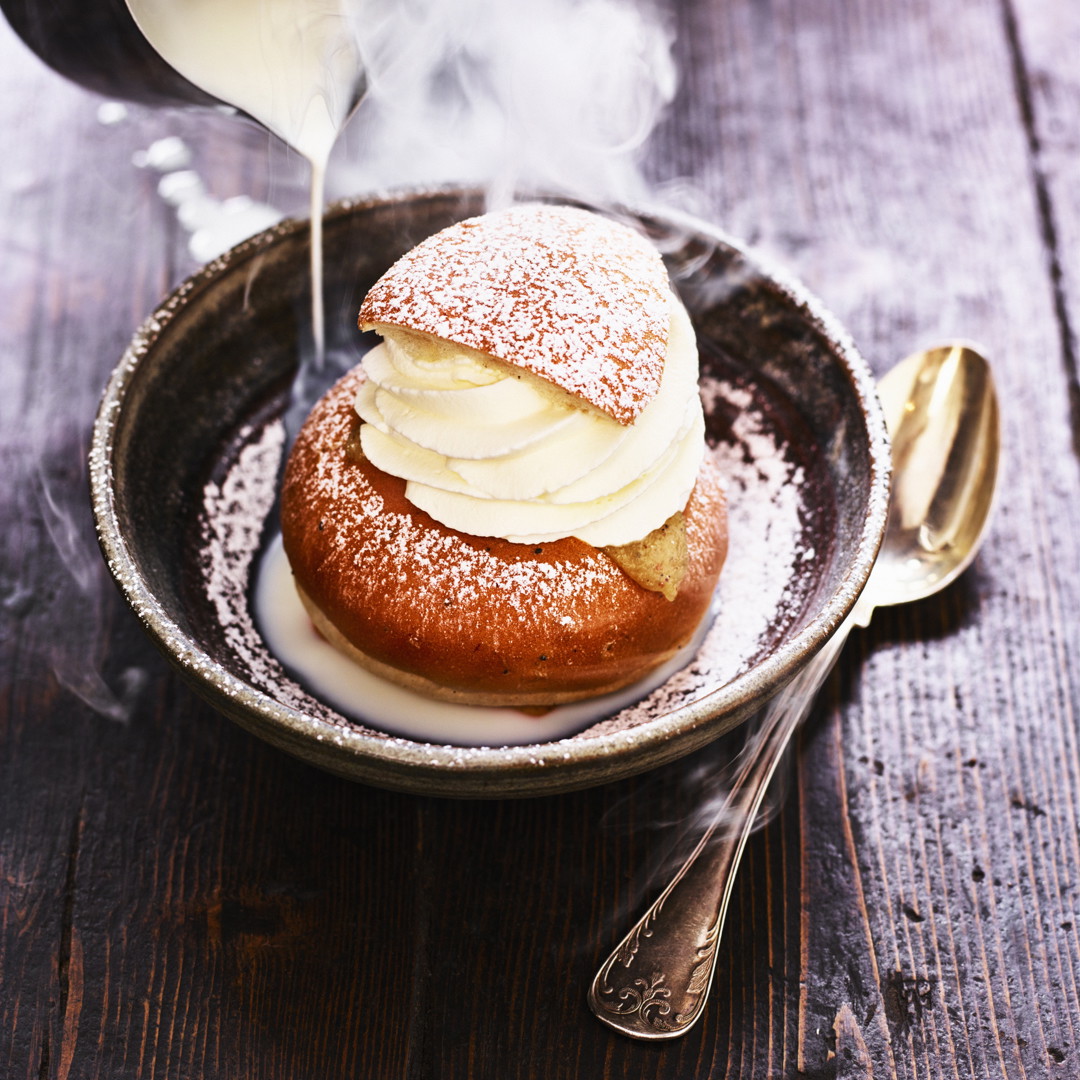
With its long history, the semla—Sweden’s own Shrove Tuesday bun, gently spiced with cardamom and traditionally filled with almond paste and whipped cream—was suddenly entering a new era. But to see how we got here; we need to rewind a little. In the 18th century, Sweden’s urban upper classes ate what was called hetvägg: a wheat bun with almond paste served in a bowl of warm milk. The name was an onomatopoeic rendering of the German heisse wecke (“hot wedges”). In rural Sweden, luxuries such as white flour, sugar and whipped cream were hard to come by. Shrove Tuesday—“Fettisdagen” in Swedish, the last of the three days of Shrovetide with Catholic roots, which in 2026 falls on February 17—was less about pastry and more about eating one’s fill of pork and bread soaked in stock before Lent began. During the 19th century, however, this particular bun began to spread, then under names such as fettisdagsbulle or fastlagsbulle.
It was only in the 20th century, as Sweden stepped into the modern era, that the semla became what Swedes recognize today. The word—rooted in the German semel and the Latin simila (fine wheat flour)—entered common use. At the same time, the milk largely disappeared. The lid took on its now-iconic triangular shape, and the almond paste was paired with a cloud of whipped cream. What had once been an indulgence for the few became a pleasure for everyone, and Shrove Tuesday shifted from religious marker to national treat day.
As Swedish bakeries began mass-producing the fluffy, cardamom-spiced semla, an annual hunt for “the best one” took hold. Today, it is more or less expected that the media—and consumers—will dissect everything from the quality of the cream to the proportion of bun to filling.
In recent years, Svedjan by Zinkensdamm in Stockholm and Lillebrors in Sundbyberg (just outside the capital) have placed highly in leading morning newspapers’ taste tests. Tössebageriet, too, is frequently among the stand-outs. “We don’t win every year—and that’s what makes it enjoyable. Come semla season, every pastry chef is trying to outdo the next, and it matters commercially too: you can see what the newspaper taste tests do. A poor score might not change much, but if you top the list, you’d better put on extra staff the next day,” says Ljungberg.
Precise sales data are not readily available. Martin Lundell, CEO of the trade association Sveriges bagare och konditorer, estimates that around 60 per cent of Swedes eat at least one semla on Shrove Tuesday itself. Many don’t stop at one, and with semla season now stretching beyond Shrove Tuesday, the annual total is estimated at eight to ten million semlor nationwide—tonnes of almond paste, cream and cardamom.
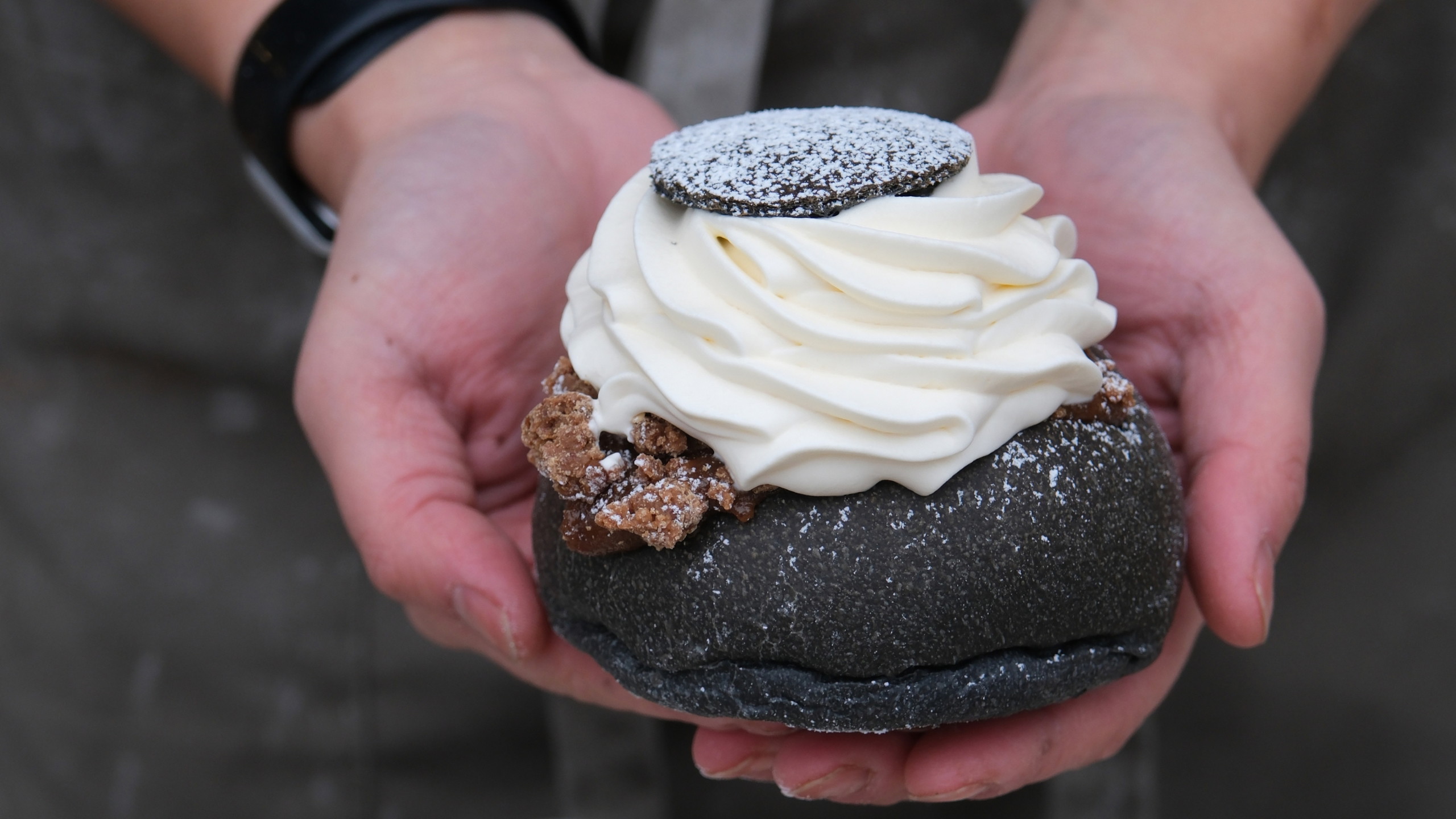
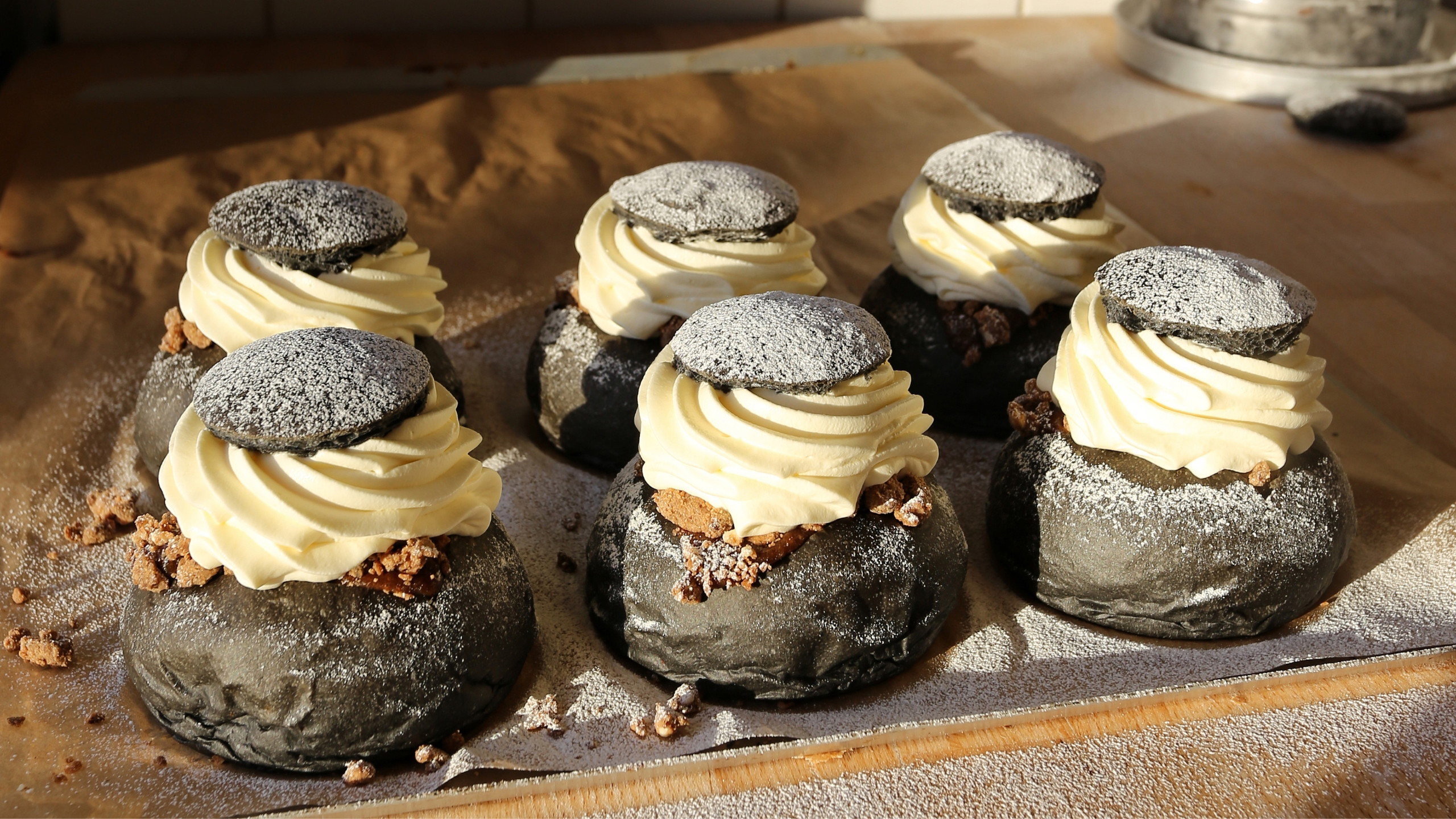
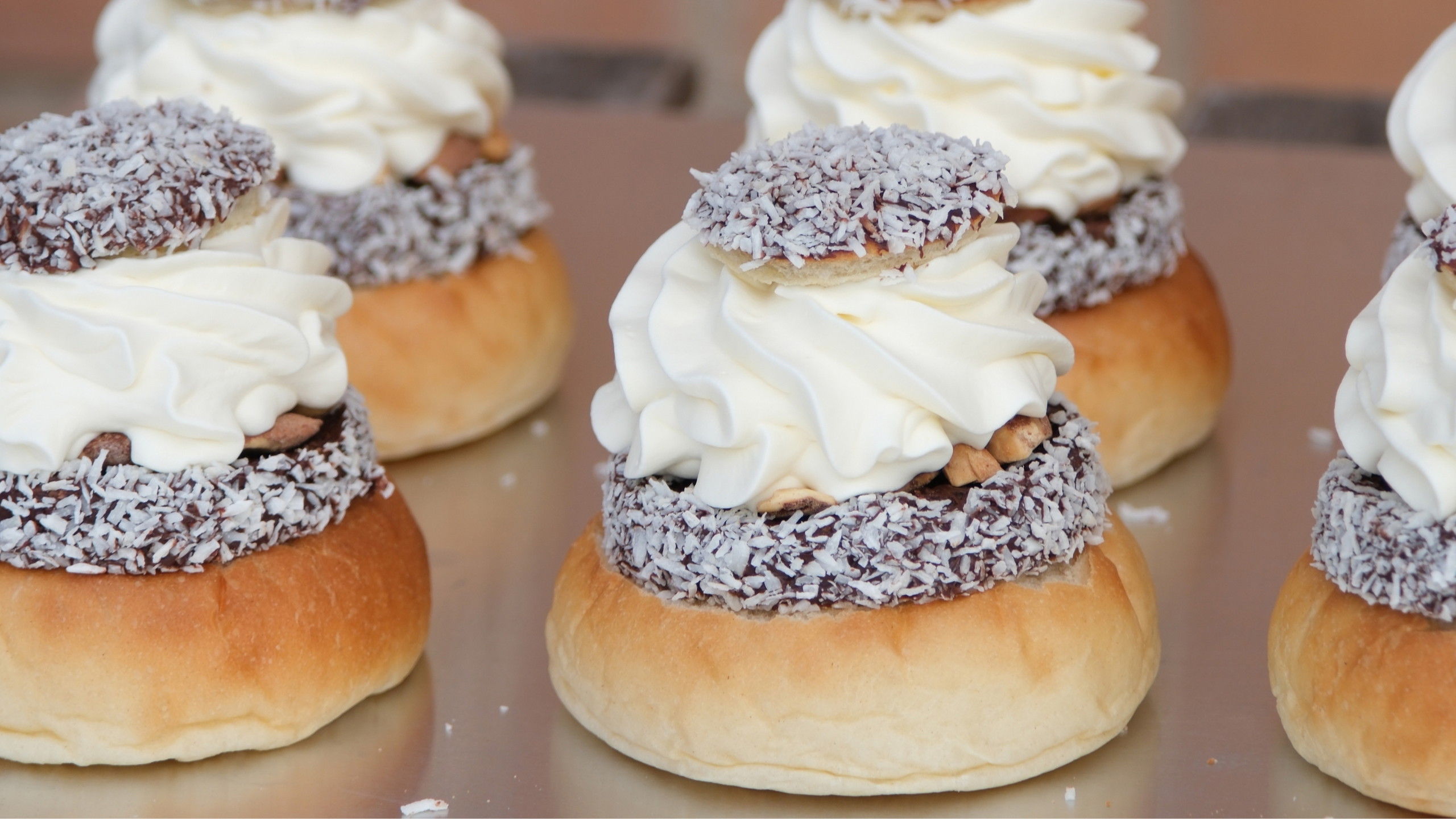
Even so, the semla’s unwritten rules have loosened. Today it turns up in countless variations: baked into cinnamon buns, flavored with lemon or liquorice—there are even semla smoothies. Much of that experimentation gathered momentum with the arrival of the semmelwrap in 2015, which Fredrik Ekman of Stockholm’s Skeppsbro Bageri also sees as a turning point. “It became more of a media phenomenon than a pastry. Suddenly, bakers felt they had permission to experiment,” Ekman says.
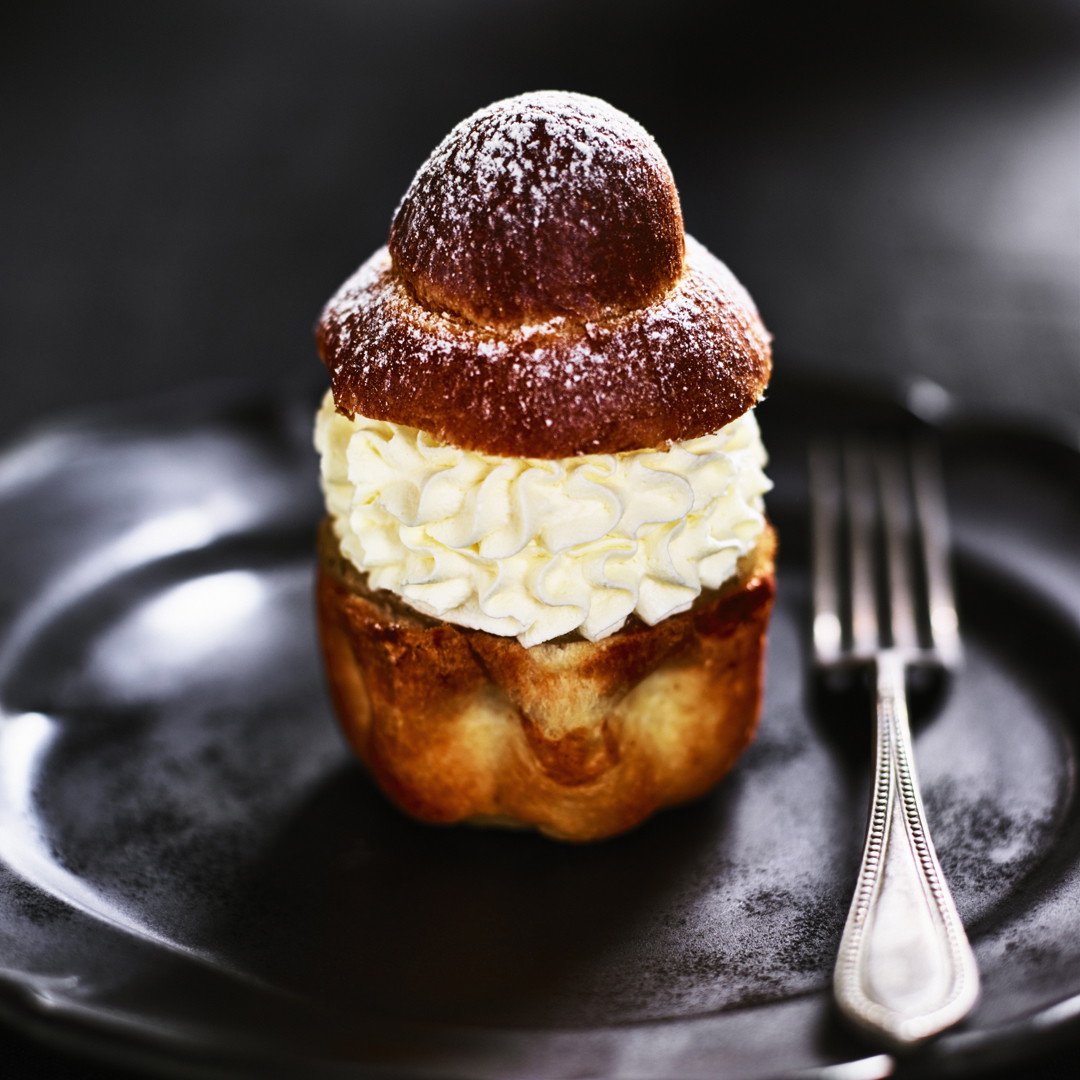
At Skeppsbro Bageri, the house variation is the croissant semla. In 2014, Ekman’s former colleague Håkan Johansson was recognized for his croissant at the Coupe du Monde de la Boulangerie. Before long, they started using it as the base for a semla. “I think Skeppsbro Bageri makes the best croissants in the world, so of course we had to turn one into a semla,” Ekman says. The result—crisp, flaky pastry bursting with cream and almond paste—draws plenty of people in, even if Ekman still reckons the classic semla is the one to beat. “You do get very full from a croissant semla,” he adds.
At Ritorno, a pastry shop and café in Stockholm’s Vasastan district, Simon Lindgren and his team have taken the semla in a more playful direction. Each season—running from the New Year to Easter—staff are encouraged to come up with their own version. The line-up has included everything from a pistachio semla to their recurring tiramisu semla: a chocolate bun with amaretto filling, chocolate crisps and an espresso-spiked mascarpone mousse. Most of these specials are made for weekends, often on specific dates, and once they sell out, that’s it. “It began as a bit of fun—something to give everyone room to be creative—but customers are genuinely curious,” Lindgren says.
That willingness to play with the format now feels widespread. Mattias Ljungberg cites a survey suggesting that more than half of Swedish consumers welcome new takes on the semla. “There’s always debate, but people clearly respond to something new,” he says. Counter-intuitively, the innovations seem to have boosted the classic rather than undermined it. “We sell more of the original semla today than we did before the semmelwrap,” Ljungberg notes.
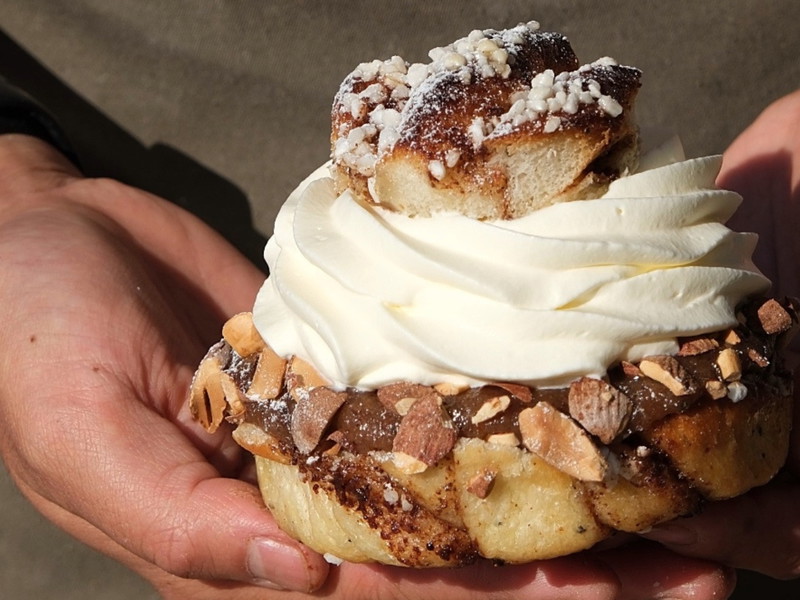
Fredrik Ekman agrees, though he thinks the baseline has shifted. “You can tell people want more than a plain bun with almond paste and cream,” he says. One of the strongest currents right now isn’t reinvention so much as refinement: small upgrades to the familiar. Some bakeries fold bergamot into the almond paste, or add coarsely chopped almonds for texture; others replace it altogether with toscasmet, the crunchy caramelized almond topping used on Swedish Tosca cake.
And yet, for all the variations, the people making them share the same respect for the original. “A semla is simple,” Mattias Ljungberg says. “But its simplicity makes it hard to get right.” Simon Lindgren puts it similarly: “It’s the kind of pastry where the baker sets their own level of difficulty.
Making a semla is easy—but making a perfect one is an art form.
Whether you prefer yours as a wrap, made in a croissant, or served the very old-fashioned way in warm milk is beside the point. The semla stirs emotion—and tests a baker’s skill. For most Swedes, the appeal is almost instinctive: a freshly baked, cardamom-spiced bun, filled with delicious almond paste and finished with a generous cap of whipped cream. Perhaps that’s exactly why it never goes out of fashion.