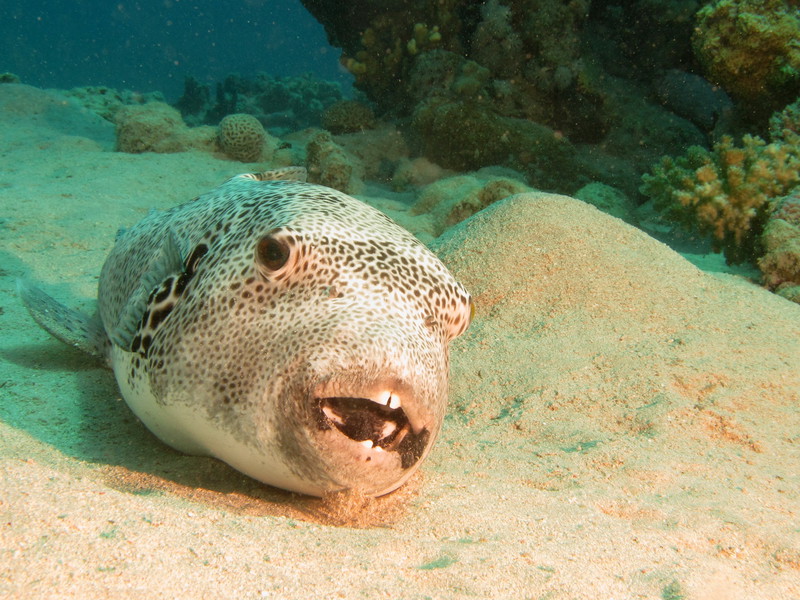
Anyone swimming off the coast of Greece this summer should keep an eye out for an unusual sea creature. Following a series of sightings and injuries, the Hellenic Center for Marine Research is issuing a warning about the rabbitfish. While there is no cause for panic, experts advise against getting too close to the animals and under no circumstances touching them.
The reason: The silver-cheeked toadfish (Lagocephalus sceleratus) is considered an invasive and extremely aggressive species. It is native to the Indo-Pacific and entered the Mediterranean via the Suez Canal. It has spread rapidly there in recent years and has now been recorded in numerous coastal regions—particularly around Crete, the Dodecanese, and Cyprus. The species is now also appearing in waters near Athens, including shallower waters.
A Problem for Fisheries and Ecosystems
The pufferfish has long been a serious problem for the fishing industry. The animals damage nets, eat the fish caught in them, and put pressure on native species. To curb the spread, several Mediterranean countries are already providing financial support for the targeted capture of these animals. According to media reports, Greece is also considering introducing a catch bonus; in some regions, fishermen and fisherwomen already receive money for every kilogram of pufferfish they catch.
Bite with a strong jaw
The pufferfish may contain tetrodotoxin, one of the most potent known neurotoxins. Eating even small amounts of this meat can cause poisoning, which is why pufferfish dishes are banned in the European Union.
For swimmers, however, the greatest danger comes not from the venom but from the animals' exceptionally strong teeth. With their beak-like jaws, pufferfish can crack open mussel shells and crustaceans. If contact with humans occurs, painful and sometimes deep bite wounds may result.
According to reports from Greece, there have been repeated attacks on swimmers recently. The fish mainly bite the legs, but occasionally also the buttocks or the genital area.
Here's how vacationers should behave
Authorities recommend not touching either live specimens or dead ones that have washed ashore. If you spot a pufferfish, you should take a photo of it if possible and report its location to the appropriate authorities. If you are bitten, the Red Cross advises you to immediately clean the wound with clean water and soap, stop any bleeding by applying pressure, and elevate the affected area. Medical assistance should then be sought. In the event of heavy bleeding, call emergency services immediately.