Skip to content
© Shutterstock

Swiss prawn farming: a sustainable alternative to overfishing?

Fish
Seafood
Sustainability
Switzerland

Fresh Swiss prawns sounds like a joke, but it is a reality. In Pratteln, giant river prawns are harvested in a high-tech facility – sustainably bred, without chemicals, but with an impressive price tag. Is it worth it?

The oceans are overfished, the environment is hurting – and yet, imported fish remains the standard in landlocked countries like Switzerland. However, modern, domestic aquaculture offers an environmentally-friendly alternative. So why don't we buy it?

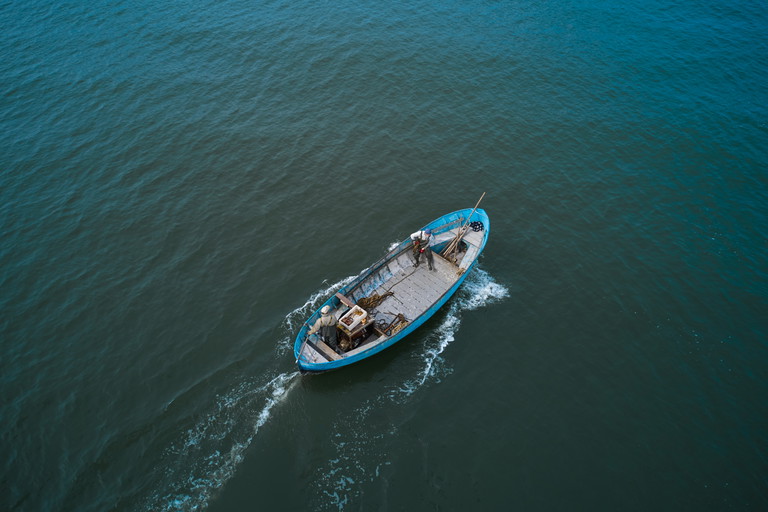
According to Mirjam Hauser, professor of consumer psychology at the University of Applied Sciences and Arts Northwestern Switzerland, this is partly due to deeply rooted values and consumer attitudes that are slow to change. The Swiss prefer products that are fresh, regional, healthy and responsibly-sourced – aspects that they intuitively associate with traditional images such as a farmer with his cow, or the fisherman on his boat. "High-tech production methods, such as those used in aquaculture, do not fit this romanticized image and can therefore be met with scepticism," Hauser explains.

To most, sustainable fishing invokes the image of a rugged fisherman, and not aquacultural farms.
© Shutterstock
To most, sustainable fishing invokes the image of a rugged fisherman, and not aquacultural farms.

In addition, general uncertainty about industrial food production and the complexity of labels and information on the market persists. "Consumers find it difficult to understand why organic prawns from Vietnam, for example, is cheaper than locally produced seafood." Without clear arguments for the latter many make their purchse based on price – especially if the added value of the Swiss product is not obvious.

According to Hauser, Swiss consumers are quality-conscious but want transparency and authenticity. New, innovative products therefore require targeted promotion and storytelling in order to build consumer trust. The catering industry also plays an important role: if well-known restaurants conspicuously use such products, this can generate a positive image  and help shape new trends.

Alpine Seafood

One of the main reasons for the low proportion of domestic aquaculture is the high production costs. Real estate and labor cost significantly more in Switzerland than in many other fish-producing countries. In addition, fish farming is subject to strict legal requirements, particularly regarding animal feed, which is subject to the Swiss Foodstuffs Act. This means that not only the fish themselves, but also their feed must meet the Switzerland's high food safety standards.

Despite these challenges, there has been modern aquaculture in Switzerland for around 20 years that use flow-through and recirculation systems, where water from streams, springs or groundwater is fed into basins or ponds. Afterwards, it is processed and returned to the natural water cycle. These closed systems minimize the influence of environmental factors and significantly reduce the risk of illness reducing the harvest.

A sustainable alternative

Many fishing methods have a serious impact on marine ecosystems. In addition, open aquacultures in the sea often require antibiotics to prevent diseases. Swiss recirculation systems, on the other hand, generally work without chemical additives or antibiotics. One example of innovative, sustainable aquaculture is the Eco Prawn Farm in Pratteln. It is the only commercial freshwater prawn farm in Switzerland.

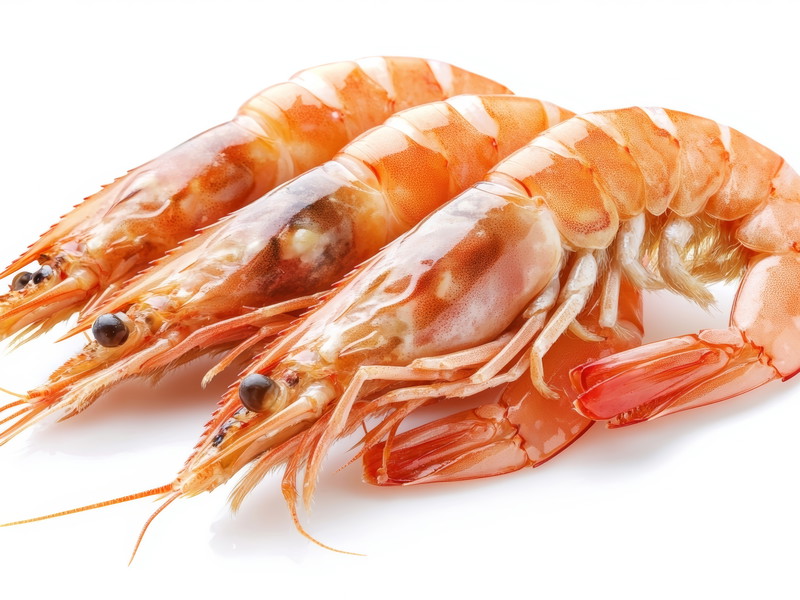
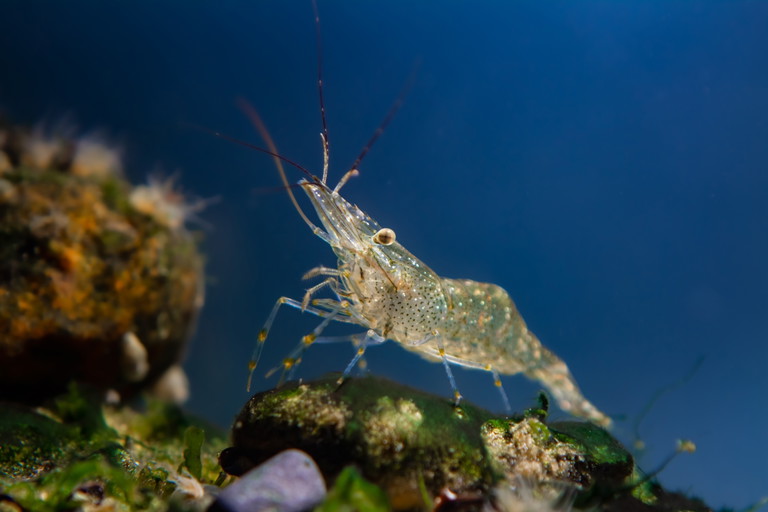
A prawn in its natural habitat.
© Shutterstock
A prawn in its natural habitat.

While interviewing André Werner from Eco Prawns, it quickly became clear that breeding giant river prawns is a challenge. "The prawns require very specific parameters. The hard tap water in the region is unsuitable, as the springs in the Jura mountains have too much calcium." Reproduction is also complex, as prawn larvae require a specific salt content and develop over a period of weeks in a controlled environment designed to simulate natural conditions.

But it's worth the effort: The prawns mature in a near-natural recirculation system without antibiotics and chemical additives, ensuring a natural balance as modern technologies reuse water and minimize waste products.

From egg to plate
In a natural environment, prawn larvae require four weeks to fully mature. During this time, the female carries the eggs while staying within a river or stream. Once they hatch, the larvae drift with the current to the sea, where they continue to grow for about 25 days. Once they reach adulthood, they move back to freshwater to repeat the cycle. "We need to simulate all that in aquaculture," Werner explains.

Quality costs

A kilo of freshwater prawns from the Eco Prawn Farm costs around 80 Swiss francs – in comparison,organic Black Tiger giant prawns  cost around 57.50 francs per kilo (frozen). Despite the higher price, the product is unique: the prawns are fresh, contain no antibioticcs or additives such as microplastics and are of excellent quality. "The taste of our prawns is more reminiscent of crayfish than sea prawns," explains Werner.

© Shutterstock

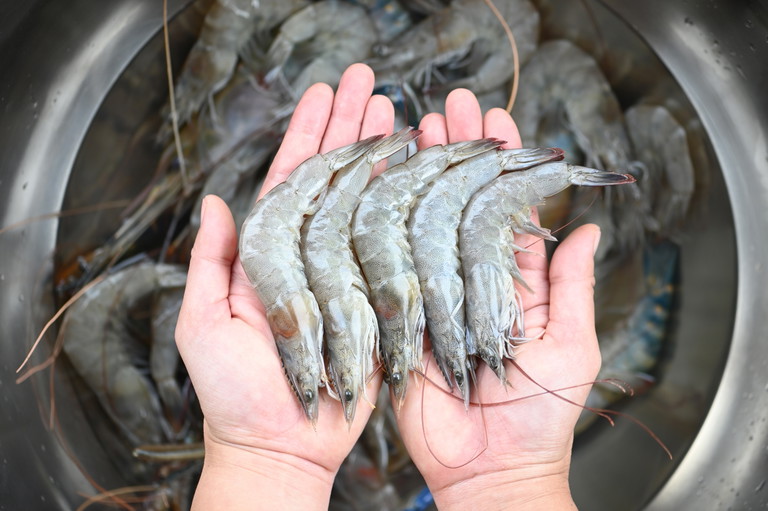
Unlike industrially farmed specimens, giant river prawns need  a comparatively low stocking density – around 100 animals per cubic meter. This guarantees species-appropriate husbandry and high quality. Harvesting is only carried out to order, so only fresh produce is delivered.

The future of Swiss aquaculture

Producing around 500 kilograms of prawns per year, the Eco Prawn Farm is still a comparatively small facility. However, the company plans to expand production to one ton annually. The market for sustainable seafood is growing, and many consumers are looking for environmentally friendly alternatives to imports. In addition to shrimp, a total of 18 fish species are bred in aquacultures in Switzerland, including rainbow trout, zander, sturgeon and whitefish. Rainbow trout dominates domestic production, with around 1,200 tons harvested per year.

Aquaculture offers a sustainable solution for meeting the demand for fish and seafood without further overfishing. However, the high costs and strict regulations make it difficult to increase Swiss production. But those who value quality, sustainability and fair production conditions will find Swiss aquaculture an attractive alternative to imported products.


Linda Carstensen
Linda Carstensen
Portalmanagerin Schweiz und Autorin
Find out more
1 / 12