Skip to content
© Maskot/Folio/imagebank.sweden

A Treat for the Longest Night: The Story of Sweden’s St. Lucia Buns

Lucia Bun

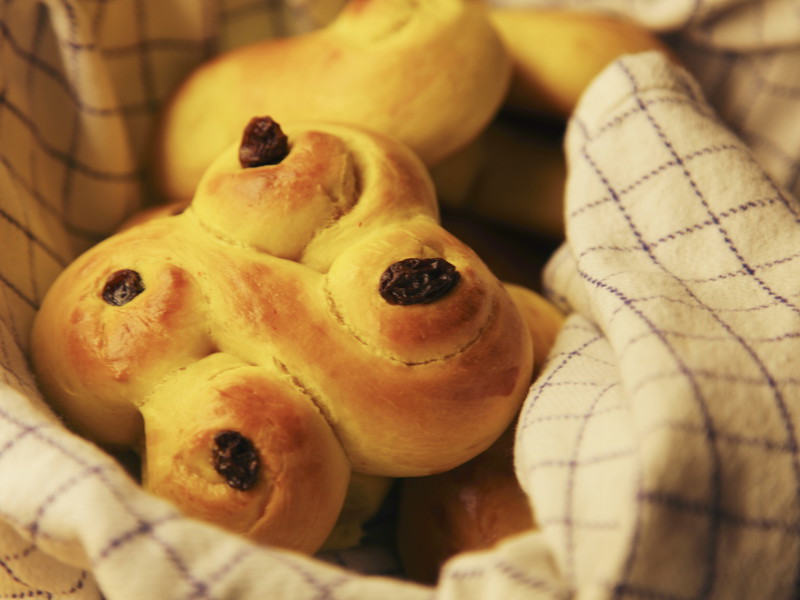
Around December 13, bakers across Sweden reach for saffron. It’s the season of the lussekatt—a pastry shaped by centuries of winter ritual and storytelling. This golden symbol of Saint Lucy’s Day glows with the color and aroma of the world’s most precious spice, brightening Nordic tables during the darkest days of the year.

Around December 13, bakers across Sweden reach for saffron. It’s the season of the lussekatt—a pastry shaped by centuries of winter ritual and storytelling. This glowing emblem of Saint Lucy’s Day (or Santa Lucia Day) takes its color and floral aroma from the world’s most precious spice, brightening the Nordic table during the year’s darkest days.

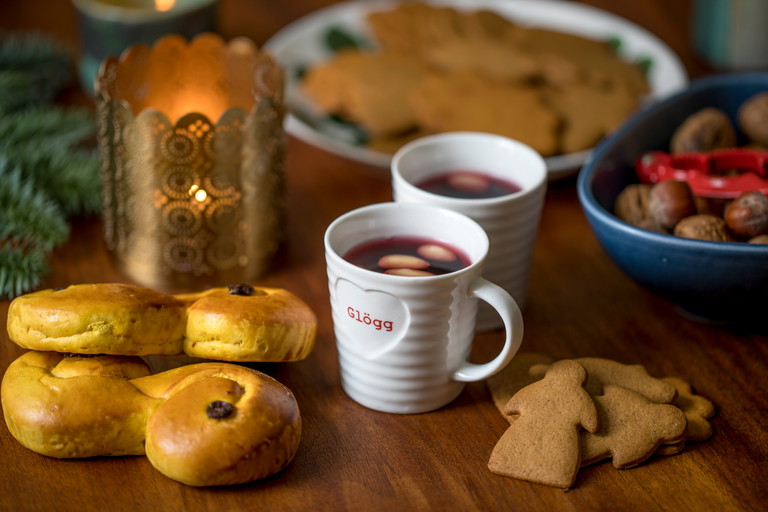
In the Stockholm suburb of Enskede, just beyond the riding school and allotment gardens, Enskedeparkens Bageri shines like a red cottage lantern in the December dusk. Inside, rows of S-shaped lussekatter line the counter, their amber-gold spirals dotted with raisins catching the warm light. The air smells of saffron, butter, and freshly brewed coffee—an unmistakable sign that the holidays have begun.

The Lucia bun (lussebulle or lussekatt, meaning “Lucia cat”) is made from enriched yeast dough—milk, butter, flour, and a hint of sugar. The recipe appears simple, but perfection requires finesse. Saffron must be gently bloomed in warm milk to release its full color and perfume, then folded evenly into the dough. Slow proofing gives the crumb its airy softness, while careful baking maintains moisture without compromising structure. Too much flour, and the bun turns dense; too little, and it loses its shape. When made just right, the lussekatt pulls apart in silky strands, releasing a fragrance that feels unmistakably festive.

Candles on a Crown: When Saint Lucy Brings the Light

© Emelie Asplund/imagebank.sweden.se

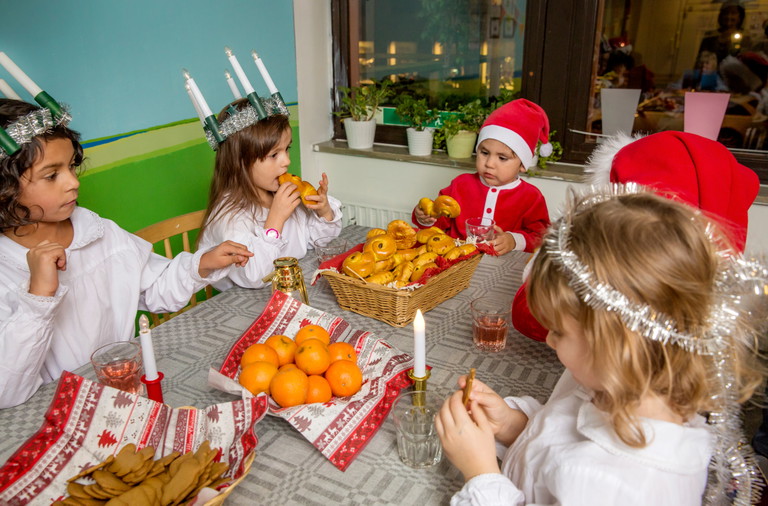
The lussekatt is inextricably linked to Saint Lucy’s Day, observed on December 13. Lucia of Syracuse, a Sicilian martyr whose name derives from the Latin lux (“light”), was said to wear a wreath of candles to free her hands while bringing food to persecuted Christians hiding in the catacombs. Before the Gregorian calendar reform of 1582, that date marked the winter solstice, the longest night of the year—explaining why Lucia came to embody light’s triumph over darkness.

Because Sweden retained the Julian calendar until the 18th century, the connection between Lucia and midwinter darkness became deeply rooted in Nordic consciousness. Today, the occasion is celebrated with Luciatåg, the beloved pre‑dawn processions where Lucia and her attendants move through schools, churches, and offices, singing traditional songs by candlelight. Choirs perform atmospheric Lucia concerts, and a televised national celebration marks the unofficial start of Sweden’s holiday season—always accompanied, of course, by the first lussekatt of the year.

Saffron’s role in this tradition can be traced along medieval trade routes. The precious spice made its way through Europe with Hanseatic merchants, prized above gold for its rich hue, scent, and preservative properties. One legend claims the buns originated in 17th‑century Germany, where the devil, appearing as a cat, punished misbehaving children while the Christ Child rewarded the good with golden bread. To keep evil at bay, bakers colored their dough with saffron, giving the buns a protective gleam. In western Sweden, they were nicknamed “devil cats.” By the late 19th century, saffron had become more accessible, and the pastry evolved into the familiar Lucia bun, merging imported luxury with local lore.

Twists and Turns: Modern Takes on a Swedish Classic

While the S‑shaped curl remains the most iconic form, Swedish baking also recognizes others—from the twisted “boy” (pojke) to the “Christmas wagon” (julvagn), adorned with looping spirals. Many of these patterns echo older Scandinavian decorative motifs, though their use in Lucia baking developed much later. Today, bakers frequently adapt the hand‑tied shapes familiar from cardamom and cinnamon buns, giving the lussekatt an artisanal, contemporary flair.

Modern pastry chefs have embraced the saffron bun as a canvas for creativity. Bröd & Salt in Stockholm is famed for its saffron semla, a hybrid bun filled with roasted almonds, vanilla cream, and whipped cream—a Lucia‑Lent crossover that feels indulgent yet refined. At Enskedeparkens Bageri, the team experiments with almond paste, lingonberries, and pistachio white chocolate, turning each golden twist into something new.

Even savory interpretations have appeared. In Karlstad, Kroppkärrs Pizzeria made headlines with a Lucia‑inspired kebab—a daring mix of sweet, spiced dough and hearty fillings. Such reinventions show how the Lucia bun, like Nordic cuisine itself, continues to evolve with imagination and humor.

© Emelie Asplund/imagebank.sweden.se

Saffron Stories: Lucia Traditions Across the Nordics—and Beyond

Throughout the Nordic region, Saint Lucy’s feast reflects a shared foundation but localized flavor. Finland’s luciapullat often include fragrant cardamom in the dough, bringing an extra note of warmth to the spice profile. In Denmark and Norway, Lucia celebrations took hold in the 20th century; today they’re often observed informally with school events or cozy baking sessions at home.

Copenhagen, however, adds a contemporary twist: each December, kayakers glide along the canals in candle‑lit boats garlanded with pine and ribbons, forming a luminous Lucia parade on water—a Nordic scene of light in motion.

The Lucia bun, too, has traveled far. At Aquavit in New York, two‑Michelin‑starred chef Emma Bengtsson ensures that the saffron bun appears on December 13 and remains on the buffet until Christmas, offering international diners a taste of Scandinavian tradition.

In the end, the lussekatt endures because it symbolizes more than sweetness. It’s a small, golden promise that light will return. Soft, fragrant, and luminous against the winter dark, these saffron “cats” curl quietly on December tables, inviting us to pause, reflect, and savor the turning of the year.


Lisa Arnold
Find out more
1 / 12