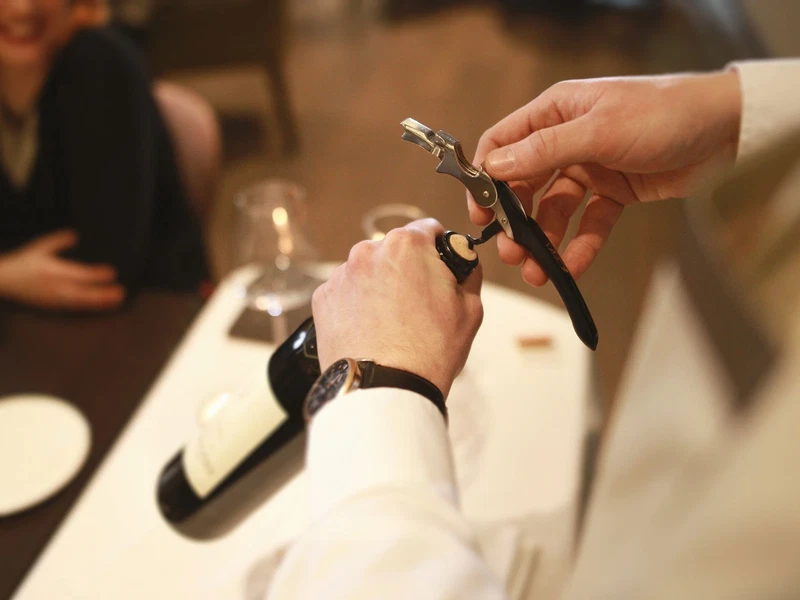
It almost sounds like a dystopia: guests photograph the wine list, type in a few questions, and then let artificial intelligence (AI) guide their choice. The sommelier’s advice becomes redundant. The New York Times describes how tools like ChatGPT, Claude, or Gemini are increasingly used in restaurants to assist with decisions.
For many, AI guidance offers a kind of mental relief. Take New Yorker Spencer Herbst, who describes the wine list in the New York Times as »a quiz you didn’t study for«. So he uploads photos and asks for recommendations—tailored to the meal and his budget. In restaurants without a sommelier, this helps him avoid poor choices; in those with one, it allows him to order more confidently and engage in more informed conversations.
A sommelier in your pocket
Herbst’s behavior aligns with broader observations in the industry. Restaurateurs report that guests are asking more precise and targeted questions about wine. Some restaurants are already training their teams to interact with AI-informed customers. It’s a development that many sommeliers view with calm acceptance. Claudia Rosellini, wine director at the restaurant Bavel in Los Angeles, describes AI as »a starting point«.
NYT wine critic Eric Asimov explains that AI can deliver solid answers—though rarely the most surprising ones. Its creativity is limited; its suggestions are logical but predictable. This is also being discussed within the industry. AI is described in newsletters such as Cellar Notes or by Bon Appétit as a useful tool—but not a replacement for a sommelier. It can help narrow down good options, but it lacks insight into vintage nuances, cellar conditions, or the unique character of small wineries.
How AI complements the sommelier
These changes can offer advantages for the hospitality industry. Guests who feel well prepared are more likely to order—and more willing to try something new. But what about sommeliers? While AI can calculate accurate matches, it cannot read between the lines. It doesn’t sense whether a table wants to celebrate or prefers a quiet evening. As restaurateur Chase Sinzer put it in the New York Times: AI is not a charismatic sommelier. It doesn’t make people smile.