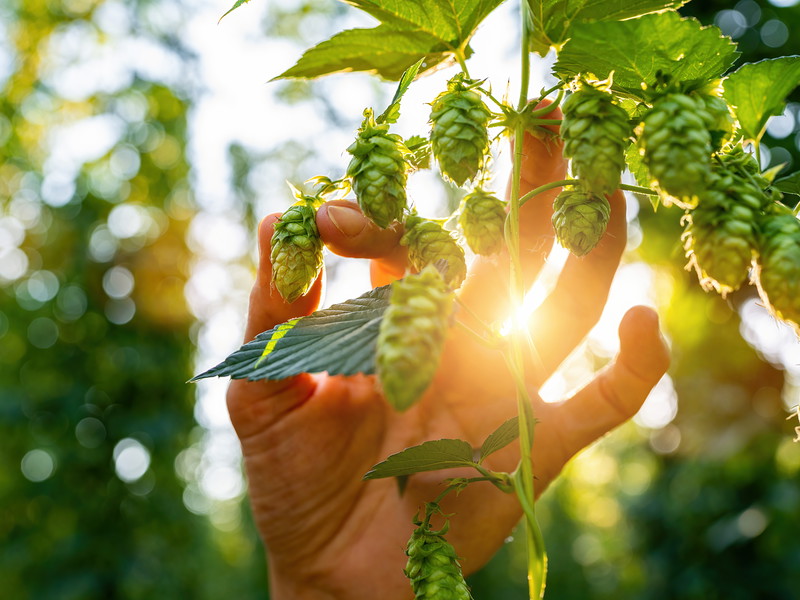
Germany's hop fields are currently shrinking dramatically: The reason is a massive oversupply, which has pushed prices for this key ingredient in beer to a historic low, putting many farmers in an economic bind. The aromatic varieties Perle and Hallertau Tradition are particularly affected, as Erich Lehmair, Managing Director of the German Hop Growers' Association, explained to the German Press Agency (dpa ). "One Euro per kilo is a tenth of what we got a year ago," he explains. This means that currently, the price of hops is significantly lower than its production cost.
As a result, the area under cultivation worldwide would have to be reduced by around 5,000 hectares to make hops profitable again – in Germany alone, around 2,000 hectares would be affected. Despite these massive cuts, Germany is likely to retain its title as the world's largest producer. In 2024, around 20,300 hectares were used to grow hops in Germany, mainly in the Hallertau region between Munich and Nuremberg. The USA is second with around 18,600 hectares.
Changing Tastes
One reason for the oversupply is changing formulas among large breweries. Many are replacing aromatic varieties with so-called bitter varieties with a higher alpha acid content, as the latter adds more bitterness to beer with less input. One hectare of the Herkules variety, for instance can replace up to three hectares of Perle.
However, smaller breweries in particular tend to stick to their tried-and-tested recipes – not least because hops only accounts for around one percent of the total price of beer production.
Tough choices ahead
How much hops will actually be harvested this year remains to be seen, as each farm must make their own choices. If you cut down on production too much, you might miss out on a future price surge. But overproduction leads to losses – especially when prices are actually below production costs. Pivoting also takes time: Newly planted vines only start yielding after two years at the earliest.
Nevertheless, beer lovers need not worry: There is ample stock of the currently overproduced types, and popular hops varieties are unaffected by cutbacks. The global hops supply remains secure.