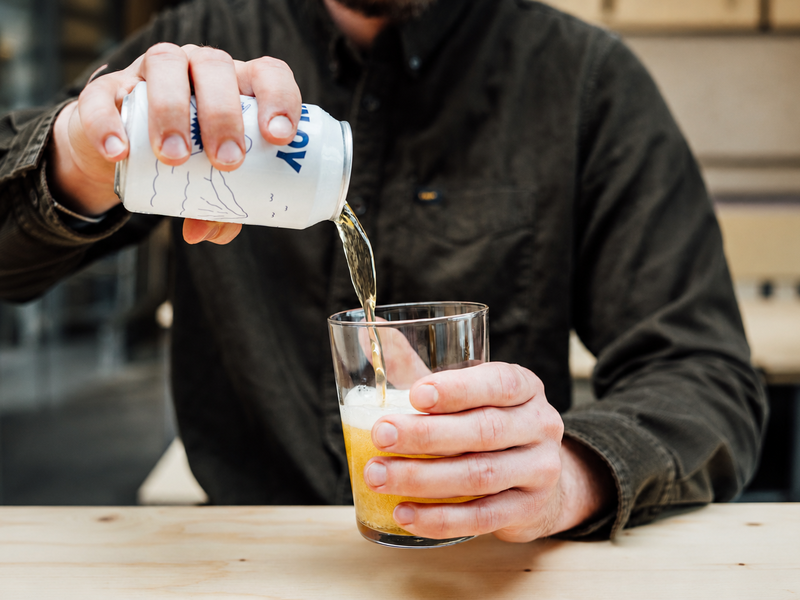
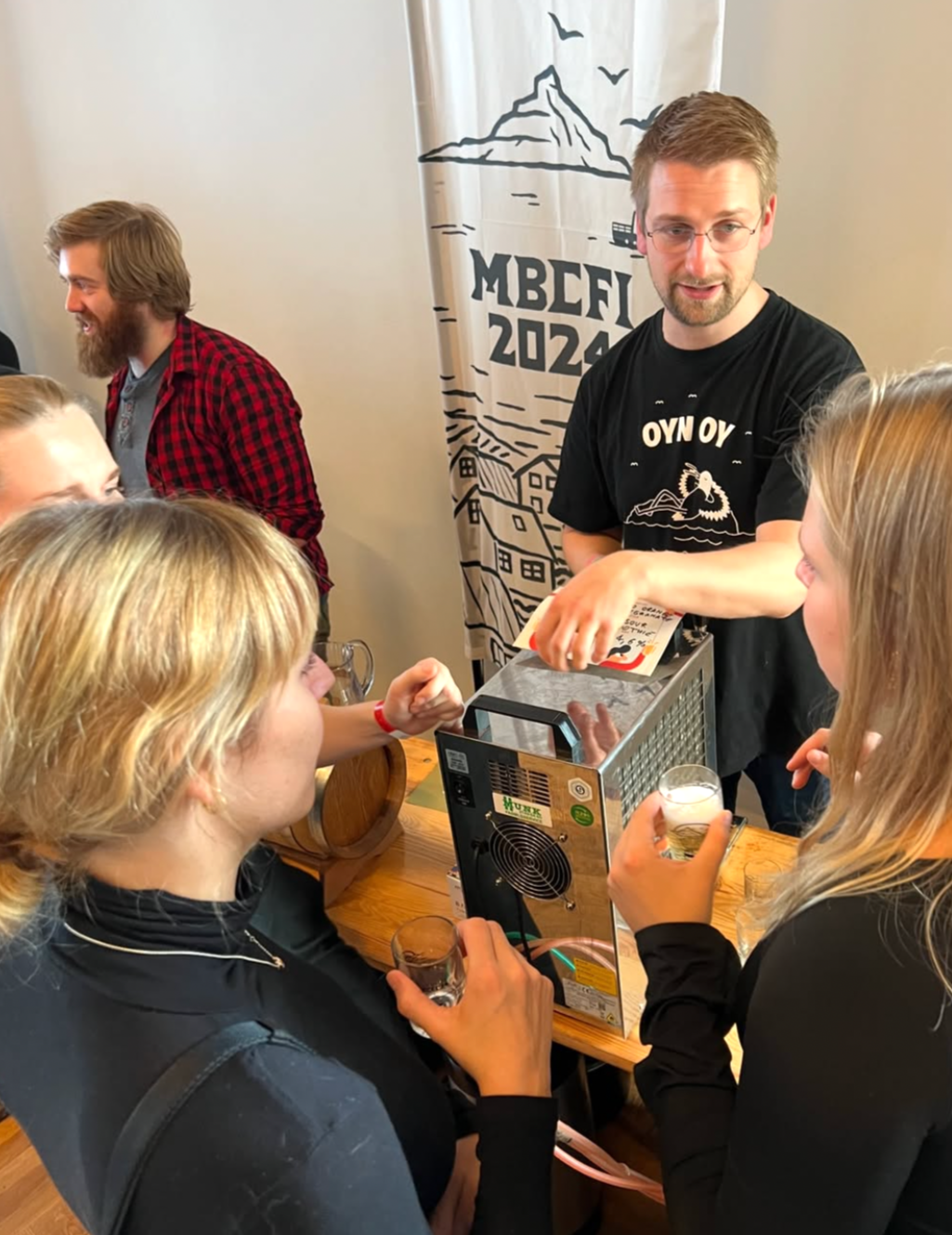
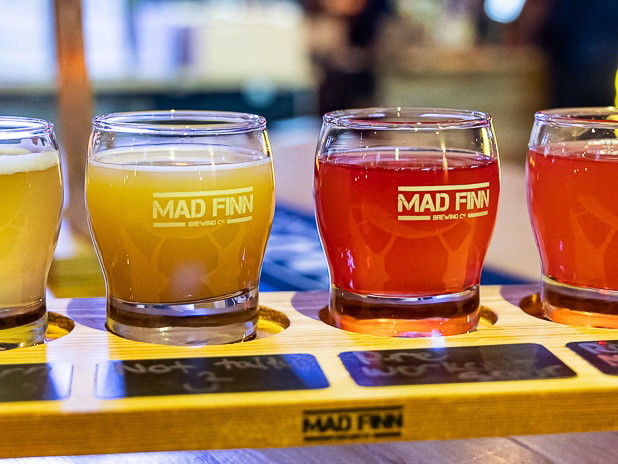
The approach comes with challenges. Hoppy beers have shorter shelf lives and fruit beers can vary considerably in how they taste. Yet for Restorff Hansen, those deviations are part of the appeal. “What we do is a bit higher risk,” he says. “There are a few more variables, but the brewing itself is much purer. We use resources that are natural, we brew and then we’re done.” One beer illustrates the philosophy particularly well. Himmber & Hveiti is made with raspberries and changes from year to year depending on the harvest. Restorff Hansen proudly shows us a can from different vintages for comparison. “This here is our fourth batch of raspberry beer and it’s never been this good.”
Building a brewery in the Faroe Islands presents other challenges too. “The Faroe Islands only has hills and mountains,” Restorff Hansen says. “We don’t have big empty spaces to grow malt.” Some barley is grown locally, but not in quantities large enough to support commercial brewing. Instead, OY imports malt from Belgium while sourcing other ingredients internationally; hops from the US for instance. Most of the beer is still sold locally, but the brewery exports in smaller volumes to countries including Latvia, Lithuania, Poland and Greenland. The latter became more significant in 2025, when Greenland changed its regulations to allow beer imports in cans. Until then, Restorff Hansen explains, beer could only be sold in a specific type of bottle. “But now, the market has completely opened up,” he says. OY responded with three beers developed in partnership with Kalaallit Nunaanni Brugseni and packaged with labels in Inuit language. The cans are illustrated by artist Cheeky, and feature cultural stories and Arctic animals.
Such collaborations run through much of OY's work. Fog Cleaner was created with Danish brewery Bad Seed Brewing after a visit to the Faroes. “They were here for 14 days and it was fog for 13 of those,” Restorff Hansen says. “Then, when we brewed this, the fog cleared. Hence, the label.” The beer itself is heavily hopped. Restorff Hansen grins while describing it. “I really like bitterness.”
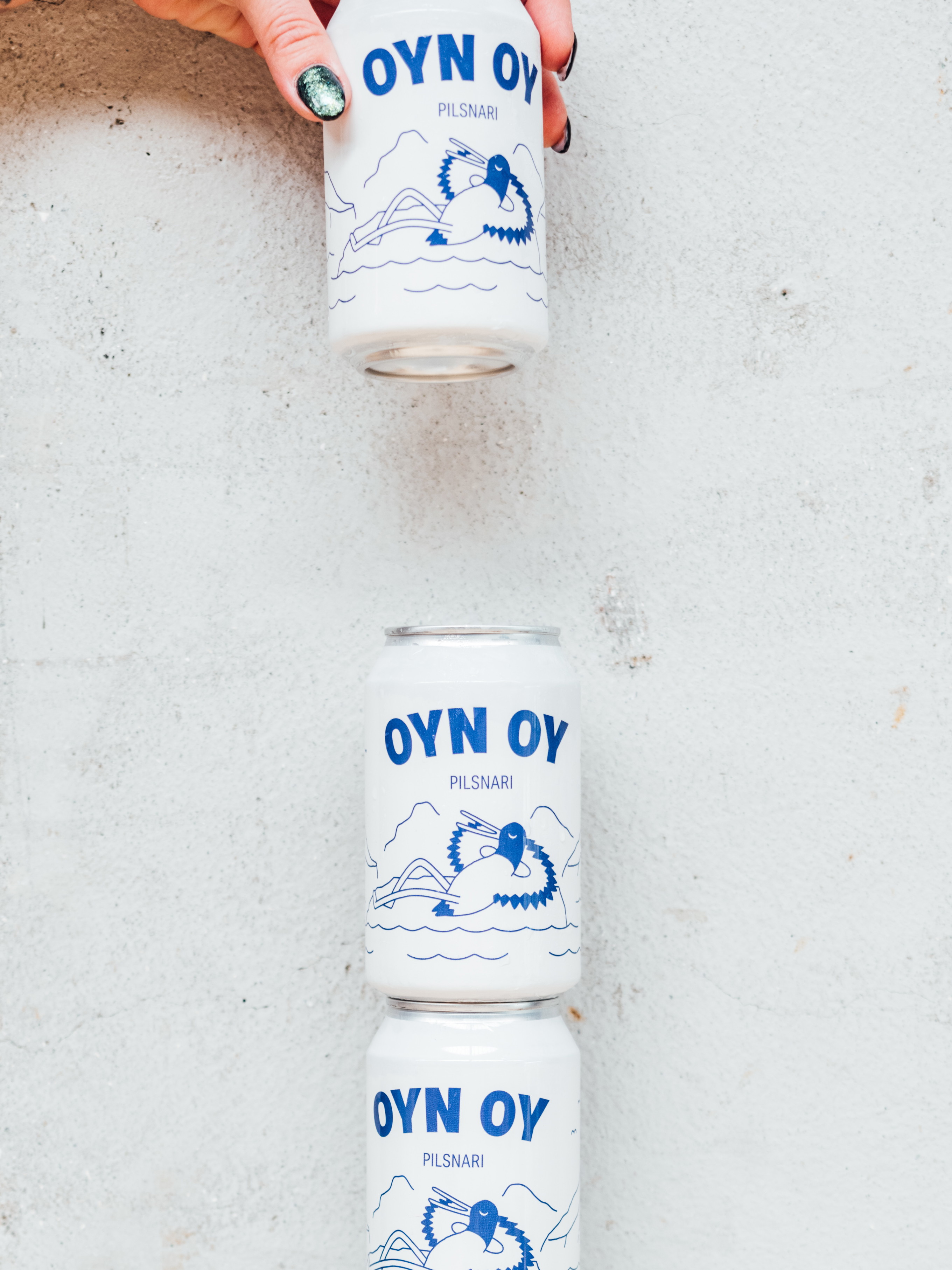
That enthusiasm is the common thread running through everything OY does; it still feels rooted in the curiosity and experimentation that inspired it in the first place. Even the name emerged after lengthy discussions; a “long, long debate” as Restorff Hansen calls it. There were talks of references to everything from wood and timber to drops of water. “But ‘oy’ means island in Faroese. It’s also a letter in the Faroese alphabet. And, you know, in English: ‘oi, drink up mate!’,” Restorff Hansen laughs. For a brewery created by people who wanted to bring something different to Faroese beer culture, the name feels fittingly direct.