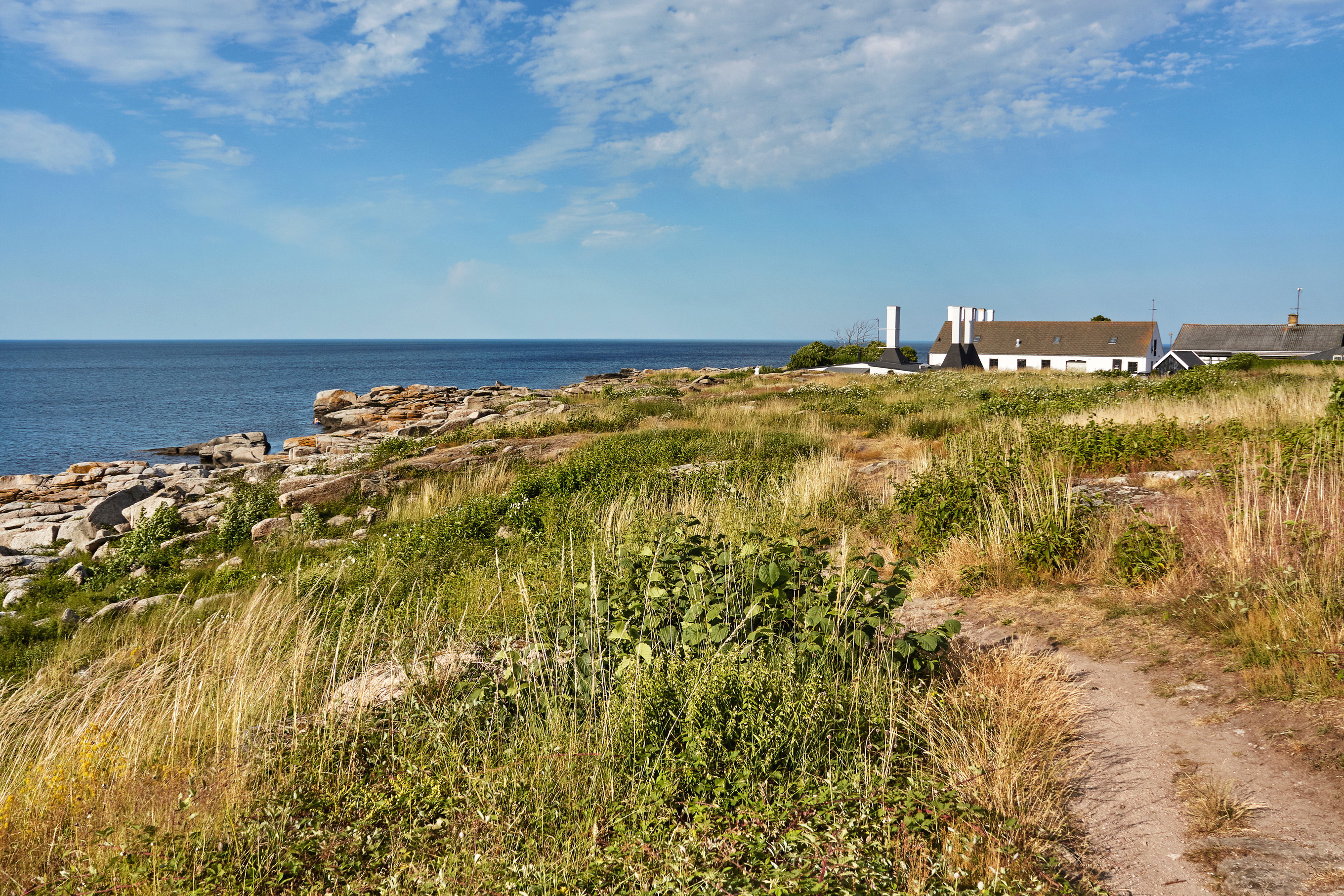
The tall, white chimneys rise like silent sentinels along Bornholm’s shores, their faint trails of smoke barely visible against the Baltic sky. They are the enduring symbols of an island shaped by fire and herring, where smokehouses once formed the backbone of both economy and culture.
The city of a hundred chimneys
The story begins in 1866, when the first smokehouse opened in Gudhjem. Within decades, the town had so many chimneys that it became known as “the city of a hundred chimneys”. At the height of the industry, smoked herring from Bornholm traveled far beyond Denmark, sustaining entire communities and defining the island’s identity.
The craft endures
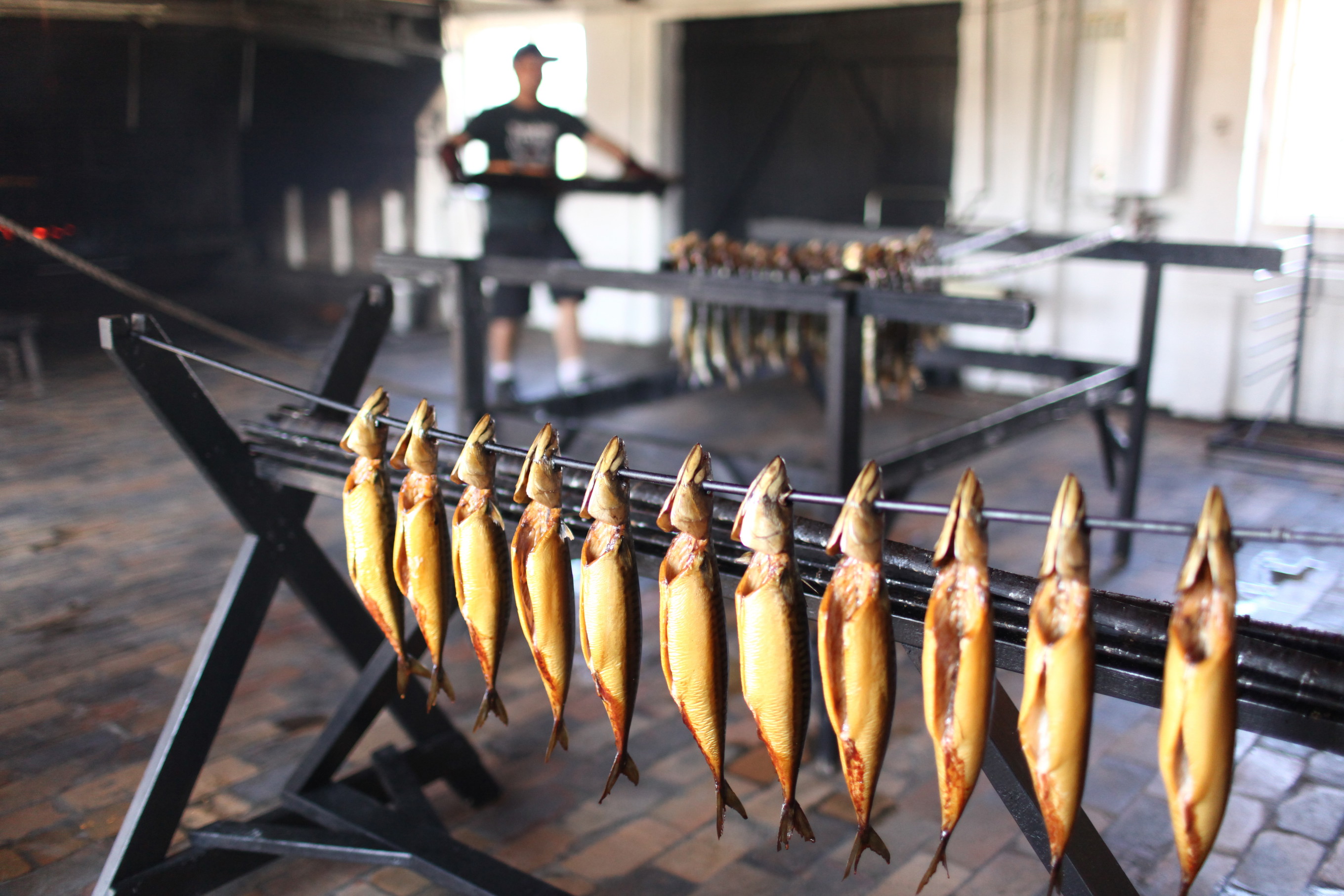
Today, only a handful of these smokehouses remain, yet the craft endures – most notably at Hasle Smokehouse, where traditional methods are still practiced. Here, Niels Kowsky, a third-generation smokehouse master, tends the fire much as his predecessors did. His day begins at dawn, carefully coaxing flames from fine wood shavings, ensuring the fish is kissed by smoke rather than consumed by flame. Beechwood, once dictated by geography, is now the preferred fuel, lending a delicate, rounded aroma.
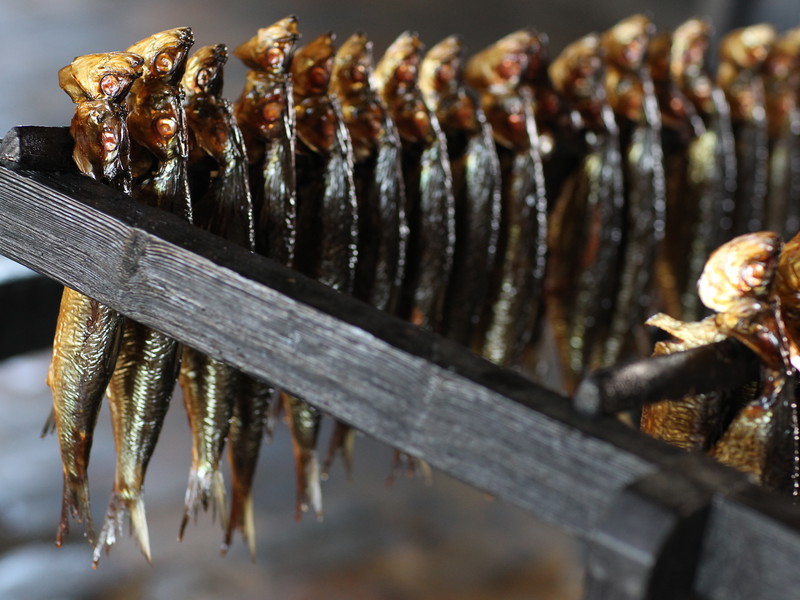
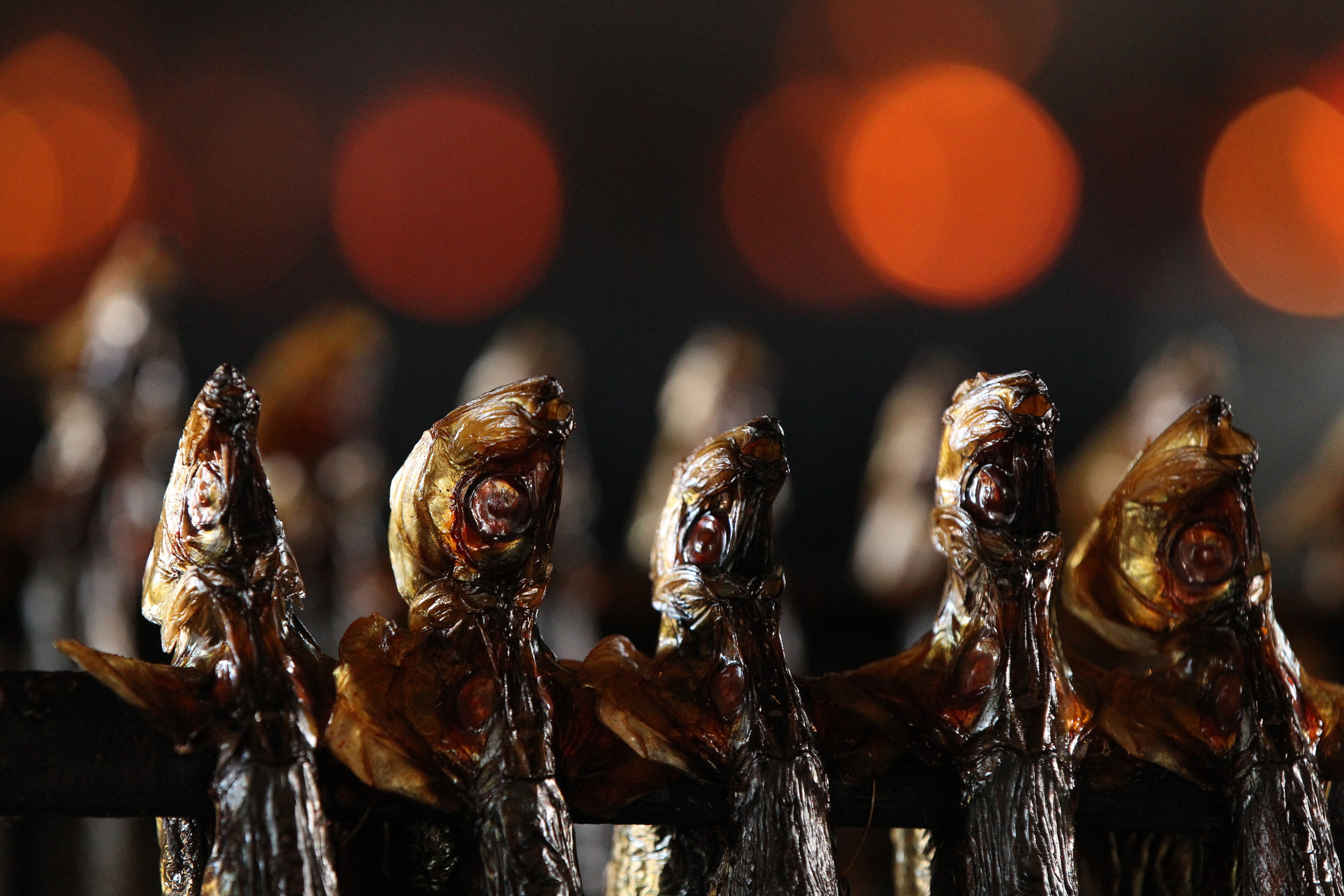
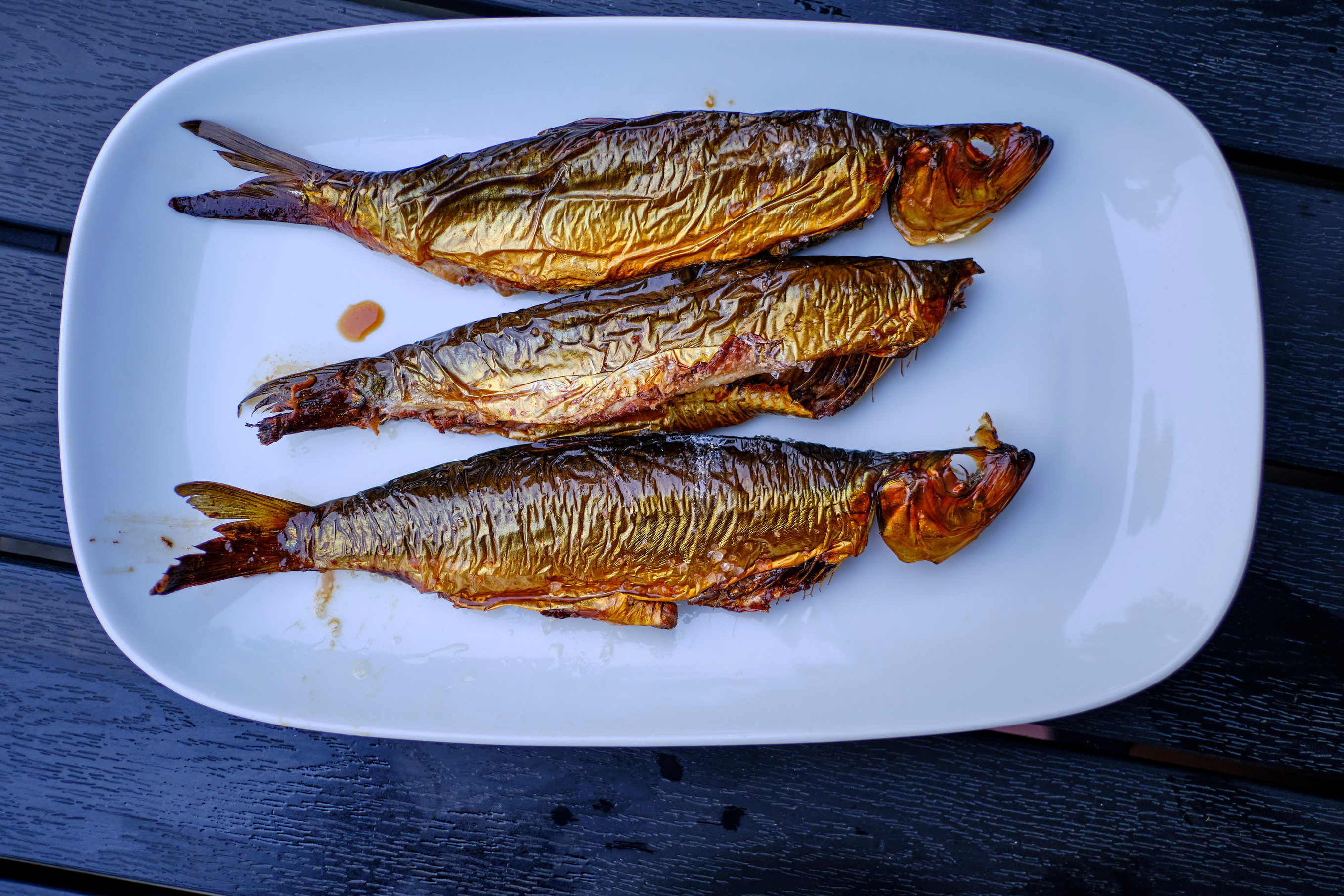
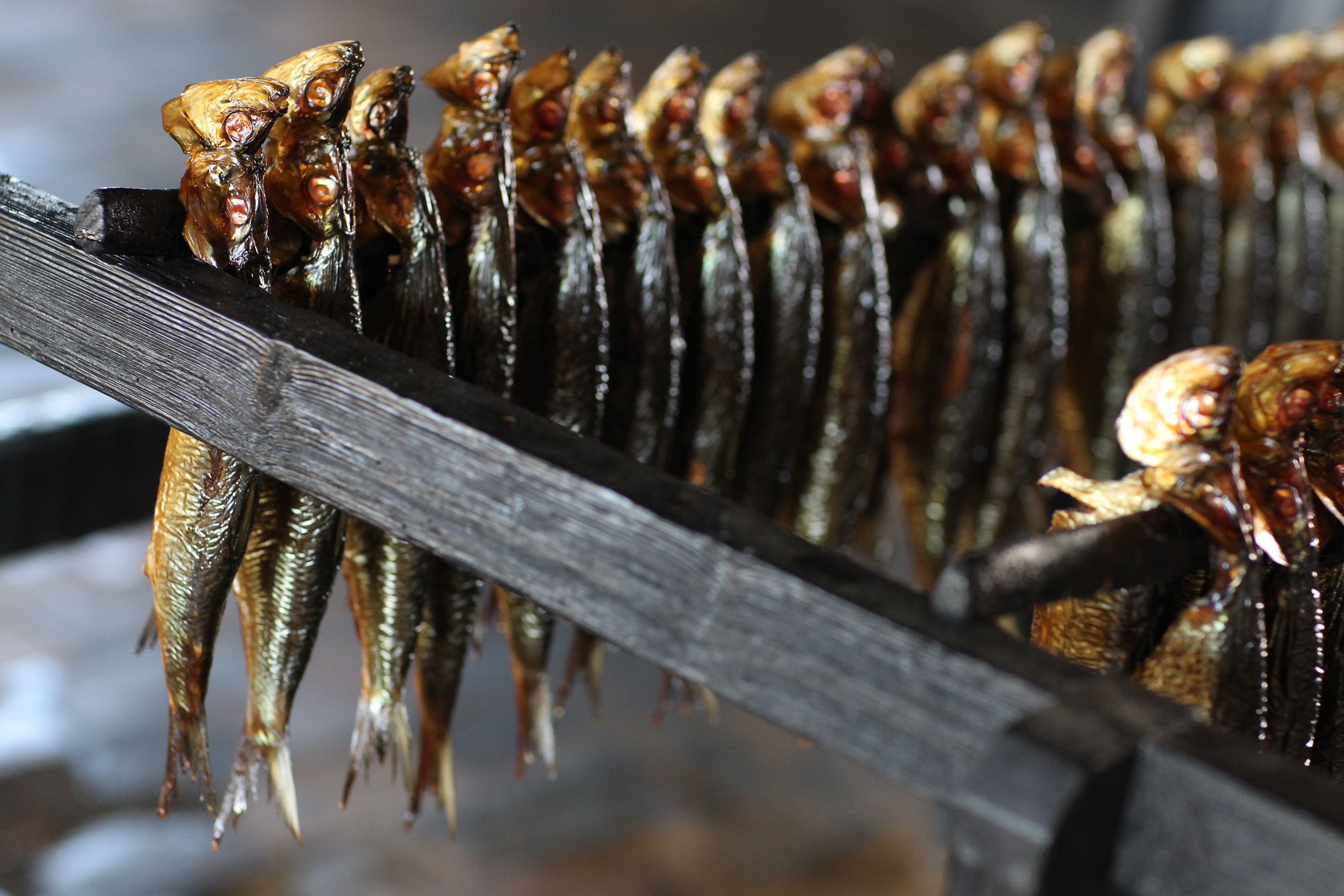
Inside, herring hang in neat rows on long rods, gently swaying in the rising heat, while salmon, mackerel and shrimp rest on steel grates below. A bucket of water stands ready, a simple but essential safeguard against flare-ups caused by dripping fat. The process demands patience and instinct, and in Kowsky’s hands, the result is meticulous: golden skin, tender flesh and a depth of flavor that speaks of both sea and smoke.
Smokehouses are social spaces
Yet the smokehouses are not merely production sites; they are social spaces, deeply woven into Bornholm’s cultural fabric. Locals and visitors gather at long wooden tables, where freshly smoked fish is served warm, often just moments after leaving the fire.
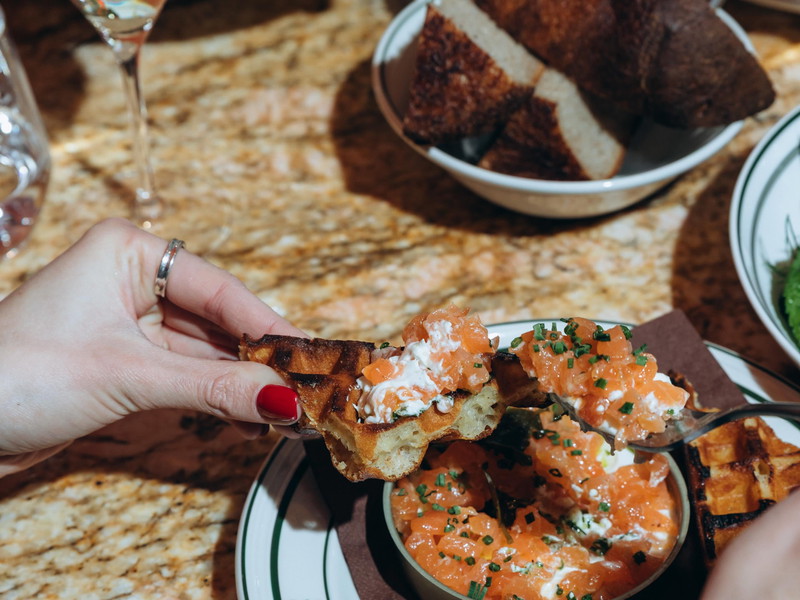
Nowhere is this tradition more vividly experienced than in Gudhjem, where the classic dish “Sun over Gudhjem” remains a ritual in itself. A fillet of hot-smoked herring is placed on rye bread and crowned with raw egg yolk, red onion and radishes, a composition that balances richness, salt and smoke with remarkable elegance. Equally rooted in tradition is salt herring, served with caramelized onions, beets and sharp Bornholm mustard.
Over time, the role of the smokehouses has shifted
Today, most rely on smoking cabinets rather than open fires. These tall, narrow chambers allow for precise control of airflow, temperature and smoke density. At the same time, declining herring stocks in the Baltic Sea have reshaped supply chains, with much of the fish now sourced from the Kattegat. What was once a vital export industry has gradually evolved into a cultural and gastronomic landmark, drawing visitors who come not only to taste, but to understand.
The smokehouses remain the foundation upon which Bornholm’s broader culinary scene is built. Around them, a network of producers, chefs and artisans has emerged, each contributing to a modern interpretation of the island’s terroir. Initiatives such as the Bornholm Food Culture House continue to strengthen this ecosystem, connecting tradition with innovation.
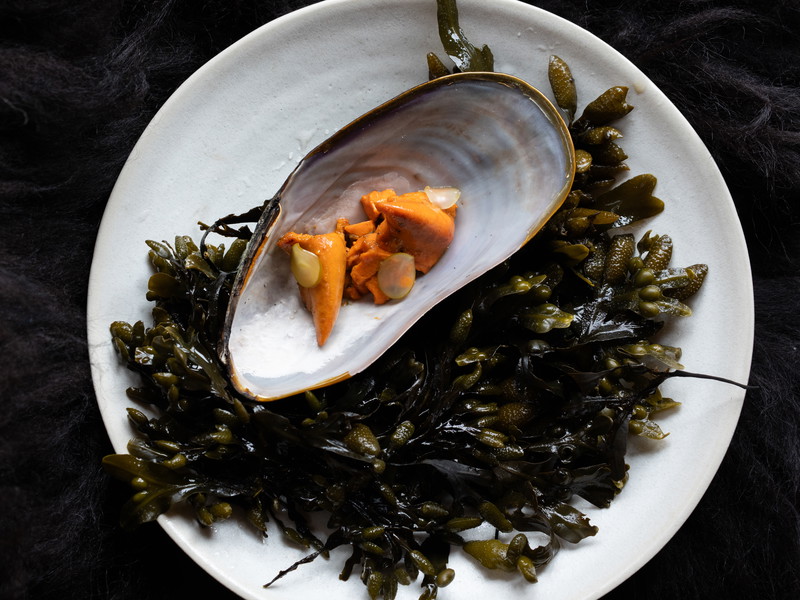
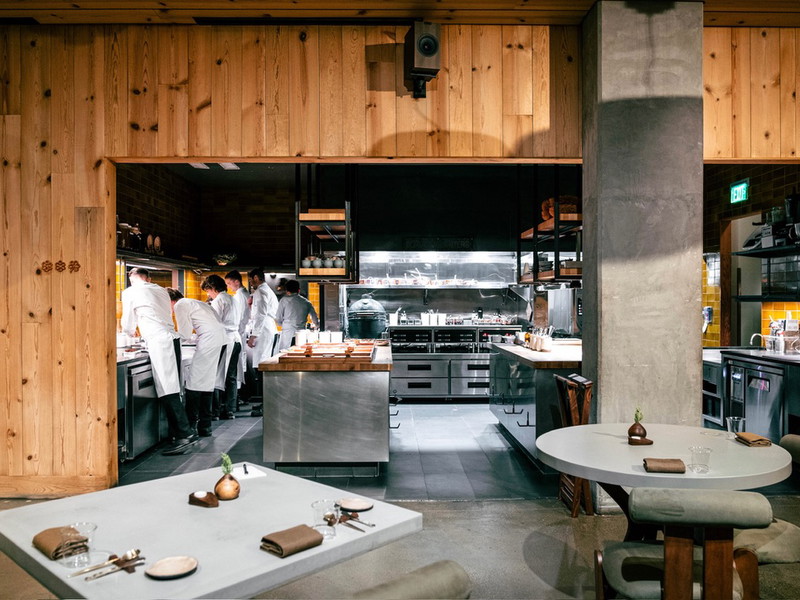
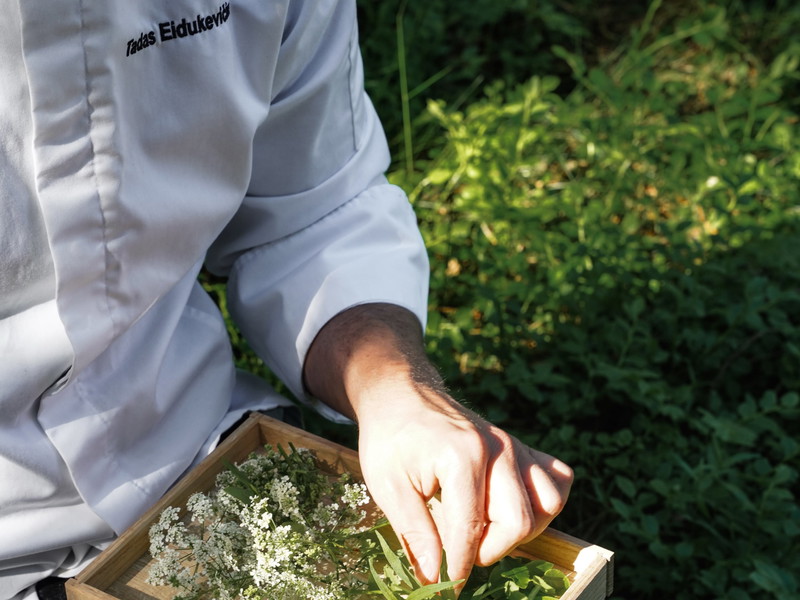
Beyond Gudhjem, the island unfolds in layers of taste and craftsmanship. In Svaneke, a historic brewery dating to 1750 produces organic, unfiltered beers, while chocolatiers and confectioners reinterpret Danish classics with flair. Further south, fine dining takes center stage at Kadeau, where Bornholm’s landscape – its herbs, seaweed and shoreline – becomes cuisine of international acclaim.
The smokehouses remain its most powerful symbol
Yet even as Bornholm evolves, the smokehouses remain its most powerful symbol. Their chimneys, still rising against the horizon, tell a story of resilience, adaptation and continuity. In the gentle curl of smoke lies the essence of the island itself – where history is not preserved behind glass, but lived, tasted and carried forward with every fire lit at dawn.