Reds to the north
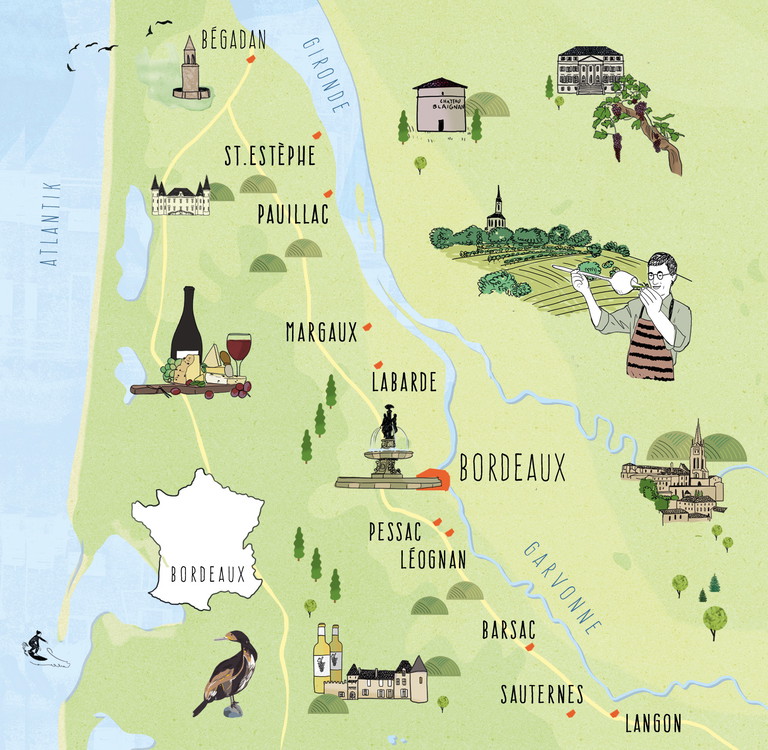
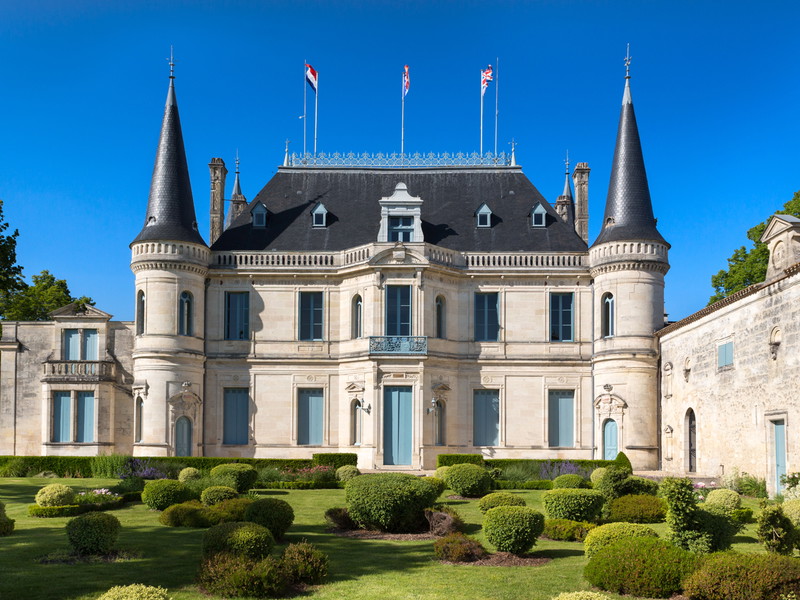
From Bordeaux city, follow the river and the Gironde on the left side to the north and take the famous château road towards Margaux. This southernmost appellation of the Médoc is home to 56 châteaux – including world stars of viticulture like Châteaux Margaux, Premier Grand Cru Classé since 1855 and a further 20 classified growers; with 21 in total over a vineyard area of 1500 hectares, it's the largest number of Grands Crus Classés in the Médoc. Architecturally, the châteaux range from medieval forts to neoclassical palaces, and their famous parks and gardens have long been recognized by UNESCO as a World Heritage Site. The red wines of Margaux are famous for their charm, silky tannins and profound finesse.
A few kilometers to the north is Saint-Julien, the smallest appellation with 910 hectares and eleven Grands Crus – including five Superseconds such as Durcu-Beaucaillou, Gruaud-Larose and the three Léovilles (Las Cases, Poyferré and Barton). The reds here are tighter, spicier and more complex than in Margaux, with a number of Merlot vines alongside the dominant Cabernet Sauvignon providing a certain suppleness.
Next stop is the Holy Grail for friends of Cabernet Sauvignon: Some of the world's most famous vineyards are located around the small port town of Pauillac. Pichon-Baron and Pichon-Comtesse form the entrance toward the south along the château road, and if you look to the right towards the Gironde, you can see the tower of Château Latour. The other two Premiers Grands Crus, Mouton-Rothschild and Lafite-Rothschild, are located to the north of town. A total of eighteen classified growers are based in the Cabernet stronghold. The wines here are full-bodied with firm tannins, have great ageing potential and are marked by hints of cassis and tobacco.
Châteaux and vineyards
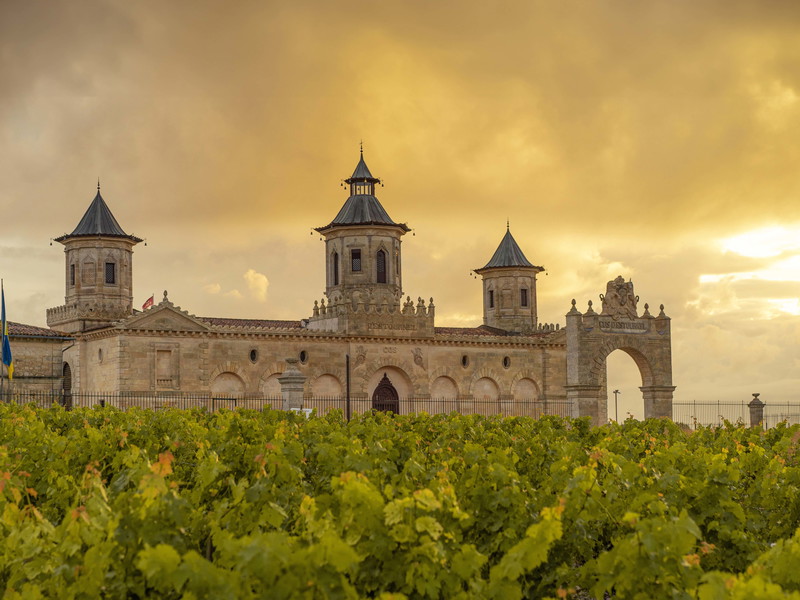
On a small hill opposite Lafite-Rothschild, you'll find perhaps the most visually exotic estate in the Médoc, Château Cos d'Estournel, a palace fit for an Indian maharajah. It is one of the most important wine estates in the Saint-Estèphe appellation and an essential stop on any tour. Further north, you'll see the impressive Château Montose on the banks of the Gironde and the classic Calon-Ségur. Their wines show good freshness, dark berry fruit, robust, pithy tannins and a salty minerality. The Pessac-Léognan region extends to the south of the city of Bordeaux. The top winery there is Château Haut-Brion, the only one to be classified as a Premier Grand Cru Classé in 1855. There are sixteen wines classified as Crus Classeés de Graves in this area, although a distinction is made between white and red wines. Six estates are classified for both, seven only for their reds and three only for white wine – the only place in the world to do so. In addition to the Haut-Brions, the Domaine de Chevalier, Château Smith Haut Lafitte, Malartic-Lagravière and Haut-Bailly are worthy of attention.
The sweet finale is half an hour's drive further south toward Sauternes. Here, autumn mists ensure the occurrence of noble rot, which enables the production of full-bodied sweet wines from the Sauvignon Blanc and Sémillon varieties. A total of 27 estates were classified here in 1855; Château d'Yquem is a Premier Cru Supérieur soloist, there are eleven Prémiers Crus and 16 Deuxième Crus found here. The "left bank" has everything to offer: great reds, mineral dry white wines and great sweet wines.
Don't miss out!
Sign up now for our .