Skip to content

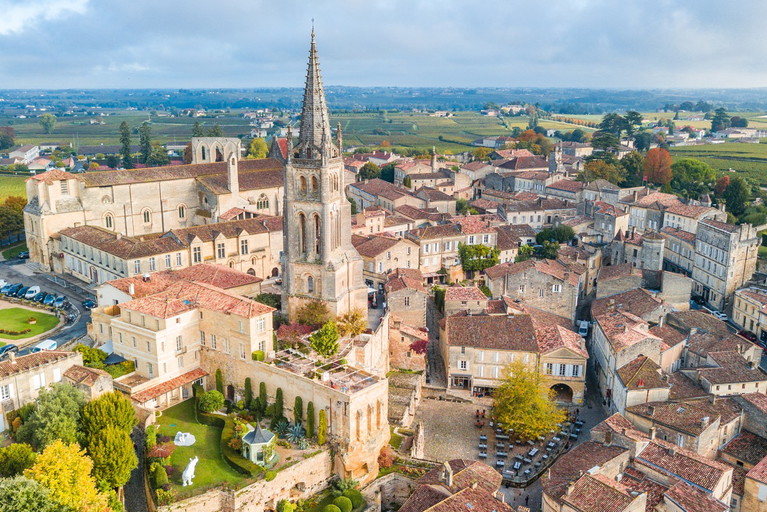
Saint-Émilion is famed for its ochre-colored limestone buildings.

Saint-Émilion is famed for its ochre-colored limestone buildings.
© Shutterstock

Bordeaux' Rive Droite - Merlot, limestone & Châteaux

Bordeaux
Wine
France

On the "Rive Droite" - the area to the right of the Dordogne and Gironde rivers - centuries of winegrowing tradition can be found on the limestone slopes, and a terroir that is perfect for Merlot. It's one of the most varied wine landscapes in France, nestled between venerable monastaries, cellars carved into the rock and family-run châteaux.

The cultural, gastronomic and oenological center of the right bank of the Bordeaux wine region is the village of Saint-Émilion: Located around 40 kilometers east of Bordeaux, it sits atop a limestone cliff around 65 meters above the Dordogne. It is a special place. The houses hewn out of the ochre-colored limestone rock (or built from it) are close together, and the village literally glows amid the lush green vineyards that surround it. Particularly noteworthy is their 11th century monolithic church carved out of the limestone, which is considered the largest underground church in Europe and, along with 200 kilometers of underground tunnels, is emblematic of the town's unique architecture.

Aerial shot of Saint-Émilion
© Shutterstock
Aerial shot of Saint-Émilion

Merlot paradise

The vineyards of the right bank cover around 5700 hectares and range from the prestigious Saint-Émilion appellations (including four satellite appellations) to Pomerol, Fronsac, and Canon-Fronsac as well as more northerly Côtes-de-Bordeaux areas like Blaye, Côtes de Bourg, Castillon and Francs. The one thing they all have in common is clay- and limestone-rich soils which produce mostly Merlot.

While the prestigious appellations around Saint-Émilion are dream destinations for wine lovers everywhere, the flipside is that lesser-known areas are overshadowed by them. However, adventurous wine travelers will get their money's worth in the lattter – especially regarding affordable everyday wines which ultimately make up a large part of the Bordeaux wine region.

But back to Saint-Émilion, which boasts around 1,000 wineries of various sizes and specializations, although the focus here is clearly on top tier varietals. First and foremost Château Cheval Blanc, Château Ausone, Château Angélus, Château Figeac and Château Pavie.

They are the ones who have made the limestone rock and its surroundings legendary among wine enthusiasts. As is usual with top wineries, visits to these living legends are usually by appointment only – but if you do get a coveted tour, it's always a particularly memorable experience.

A visit to Château Figeac, for example, is almost exemplary for a traditional Bordeaux château. The owners, the Manoncourt family, are still involved in the business today, and if you're lucky, you might even meet them. The tour includes the vineyards and the production facilities, which were completely renovated just a few years ago, and ends with a chance to taste their outstanding wines and enjoy the picturesque château and perfectly manicured grounds – an experience that will stay with you.
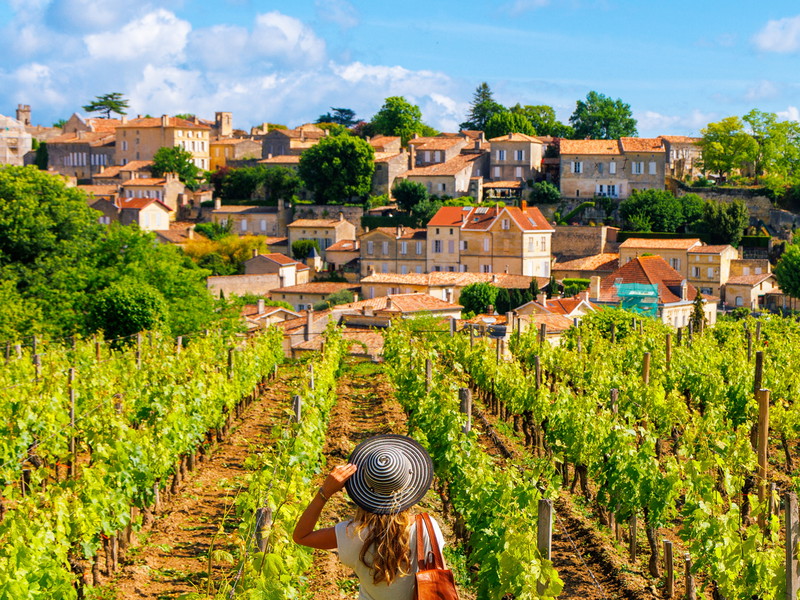
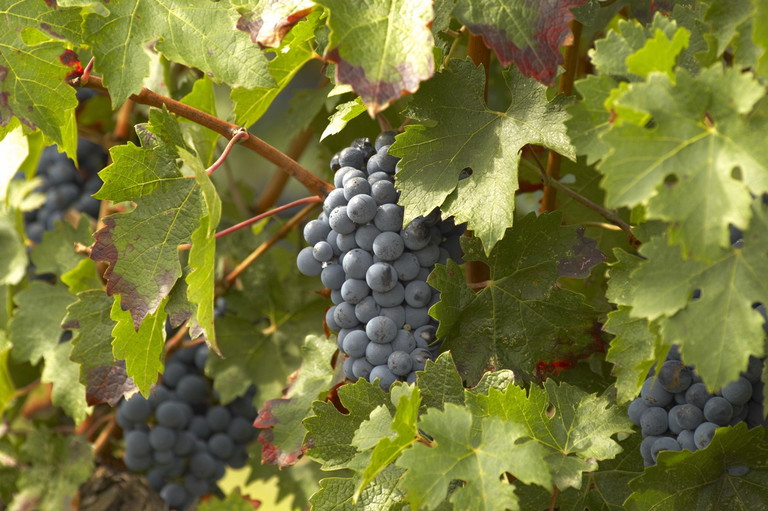
The clay- and limestone-rich soil is dominated by Merlot.
© Shutterstock
The clay- and limestone-rich soil is dominated by Merlot.

Château Life

Many of the top estates in the region no longer just produce wine, but have created entire experiences for visitors. Château Angélus, for instance, has also been running Logis de la Cadène  in Saint-Émilion since 2013, where Michelin-starred chef Thibaut Gamba serves delicate, subtle dishes focused on seasonal vegetables and fish.

In the same village you'll find the Hôtel de Pavie – part of Château de Pavie, French celebrity chef Yannick Alléno is responsible for the cuisine here. Another top spot is Les Belles Perdrix, which belongs to Château Troplong-Mondot and is just outside the village, along with its own bed & breakfast.

Despite the allure of Saint-Émilion, anyone staying on the right bank should also visit neighboring Pomerol – among its many charms, you find the most legendary château in the area, Pétrus. You'll find Pomerol between Saint-Émilion and the small town of Libourne, to which the entire right bank wine region, also known as Libournais, owes its name.

As in Saint-Émilion, Merlot is the main variety here, but the terroir differs significantly: Pomerol is located on an oval plateau of just three by four kilometers and is characterized by ferrous soils. The French call it crasse de fer (iron slag) - sandy soils containing iron oxide, which give wines a unique, truffle-like note.

It should come as no surprise that Château Pétrus – famed for the truffle notes in its wines – can only be seen from afar. Visitors are only welcomed in exceptional cases. If you plan to visit to a winery in Pomerol, you'll have to settle for less legendary estates.

One worthy alternative would be Château de Sales: the large estate offers everything a discerning wine lover could want – from exceptional wine to picturesque landscapes and memorable architecture.

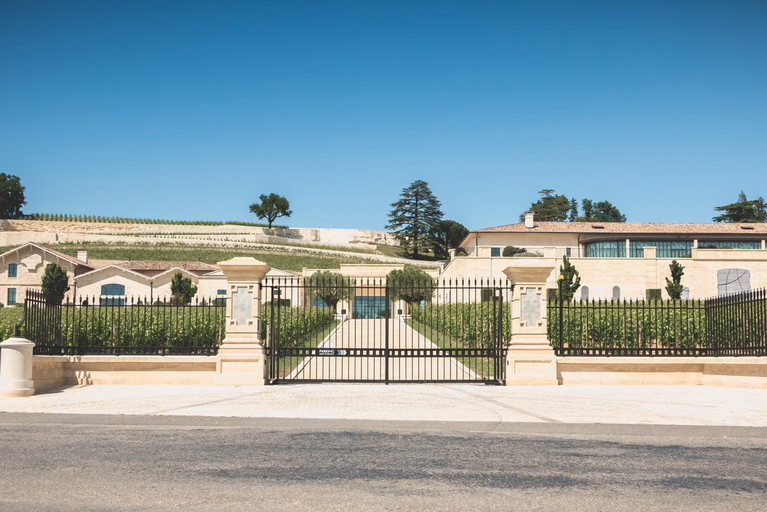
The famed Château de Pavie also operates the highly popularHôtel de Pavie.
© Pierre-Olivier / Shutterstock.com
The famed Château de Pavie also operates the highly popularHôtel de Pavie.

 Best of Rive Droite

Where to eat

Logis de la Cadène

Award-winning modern French gourmet cuisine by chef Thibaut Gamba in a historic inn dating back to 1848.
3 Place du Marché au Bois, 33330 Saint-Émilion, France
T: +33 557 247140
logisdelacadene.fr

Les Belles Perdrix

Michelin-starred restaurant at Château Troplong-Mondot with its own permaculture garden and views over the vineyards.
33330 Saint-Émilion, France
T: +33 557 553828
troplong-mondot.com

L'Envers du Décor

Legendary winegrower's hangout in the old town; market-fresh bistro cuisine, a huge wine list, and a cozy inner courtyard.
11 Rue du Clocher, 33330 Saint-Émilion, France
T: +33 557 247059
lenversdudecor.com

Where to stay

Hôtel de Pavie

Five-star hotel in a former monastery overlooking the rooftops of Saint-Émilion; its gourmet restaurant, La Table de Pavie, is overseen by Yannick Alléno.
5 Place du Clocher, 33330 Saint-Émilion, Francce
T: +33 557 550755
hoteldepavie.com

Château Grand Barrail

Fairytale castle hotel built in 1902 and surrounded by vineyards; also has a spa and pool.
3343 Route de Libourne, 33330 Saint-Émilion,France
T: +33 557 553700
grand-barrail.com

Château Bellefont-Belcier

A luxurious guest house in a grand cru vineyard; stylish rooms, pool and panoramic terrace.
33330 Saint-Laurent-des-Combes, France
T: +33 557 247715
bellefont-belcier.com

Wineries

Château Pavie

Legendary winery with spectacular views. Private cellar tours and tastings by appointment.
2 Pimpinelle, 33330 Saint-Émilion, France
T: +33 557 554343
vignoblesperse.com

Château Cheval Blanc

This storied vineyard is on the border to Pomerol. They are masters of Merlot-Cabernt-Franc.
1352 route de Pomerol, 33330 Saint-Émilion, France
T: +33 557 555555
chateau-cheval-blanc.com

Château Angélus

One of the most prestigious wine estates in Saint-Émilion. Their legendary bell logo is a reference to the striking bell tower of Saint-Émilion.
1 Mazerat Ouest, 33330 Saint-Émilion, France
T: +33 557 247139
angelus.com

Château Figeac

The Manoncourt family is famous for its hospitality –  visitors are welcome here.
Château Figeac, 33330 Saint-Émilion, France
T: +33 557 556455
chateau-figeac.com

Château Canon-La-Gaffelière

Certified organic winery right outside Saint-Émilion. Can be visited by appointment.
La Gaffelière-Canon, 33330 Saint-Émilion, France
T: +33 557 247265
neipperg.com


Benjamin Herzog
Benjamin Herzog
Chefredaktion Schweiz
Find out more
1 / 12