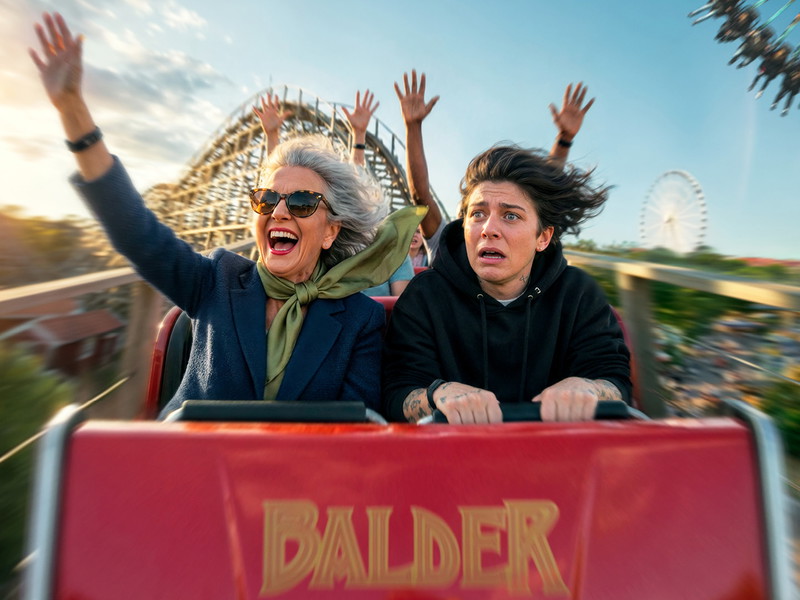
The rush before the first drop, the adrenaline and the laughter that follows – few experiences spark emotions quite like a roller coaster ride. But could these moments of shared excitement actually make us happier?
Beginning in summer 2026, Liseberg in Gothenburg will become the setting for an unusual scientific experiment. Together with researchers from the Stockholm School of Economics, the Karolinska Institute and the London School of Economics, Sweden's largest amusement park is launching The Liseberg Happiness Lab to explore how shared experiences influence wellbeing and social connection.
The Science of Positive Stress
At the heart of the study is eustress – a positive form of stress triggered by exciting experiences. Unlike harmful stress, it has been linked to increased motivation and enhanced wellbeing. Researchers now want to find out whether the thrill of a roller coaster can produce lasting positive effects.
More than 1,000 volunteers will participate as "Citizen Researchers", with scientists measuring emotional and physical responses before, during and after their park visit.
The Power of Shared Experiences
A key part of the project, called The Social Sync, will examine what happens when people experience intense emotions together. Can a shared adrenaline rush strengthen friendships and deepen relationships?
With around three million visitors every year, Liseberg offers the perfect setting to study the science of happiness in real life. The findings may reveal that some of our happiest moments come from experiences we share with others – perhaps even on a roller coaster.