

A Helping of Misfortune: What Not to Eat on Friday the 13th
Friday the 13th reminds us bad luck can be just a bite away.
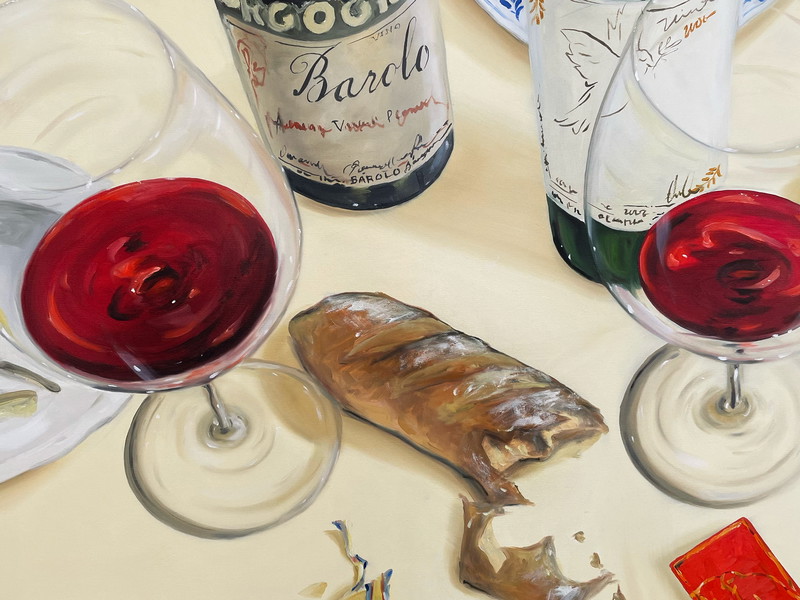
Food has always been a dependable subject for painters—intimate, tactile, instantly understandable. In contemporary hands it becomes a way to think about pleasure and restraint, the body and temptation, and the visual codes that shape how we look at what we want to eat.
Painting food is as old as art history itself. There is a clear throughline from ancient cave paintings of hunting scenes to Andy Warhol’s soup cans, via Paul Cézanne’s fruit and Giuseppe Arcimboldo’s vegetable-headed figures. In the summer of 2023, a fresco unearthed in Pompeii even appeared to show a 2,000-year-old precursor to pizza.
For Swedish artist Malin Molin, it started with a tofu salad. “While I was studying at the Royal Institute of Art in Stockholm, I had my first child. When I came back from parental leave, it felt a bit like starting from scratch. To get myself painting again, I picked a random image. It happened to be a tofu salad. I painted it and thought, ‘This is just wonderful.’ Everything I find pleasurable about painting; I get from painting food. It’s simply fun.”
Molin laughs, as if to underline the point. She is known for her lush still lifes: almost warped close-ups of ingredients and baked goods, dominated by pastel tones of purple, red and blue. Inspiration comes from a constant habit of collecting images, whether from adverts or her Instagram feed. “For a while I was completely obsessed with pink vintage cakes—those incredibly sensual pastries that were everywhere among influencers.”
At heart, Molin’s work is about the body’s relationship to images. But she also borrows from the logic of the food industry. One exhibition at Stockholm’s Wetterling Gallery, one of Scandinavia’s leading contemporary art galleries, was titled Bliss Point—a term used in the development of ultra-processed foods. “Their ambition is simple: food so satisfying it keeps you reaching for more. It’s manufactured desire. Advertising is also closely tied to artificial pleasure, and in many ways looking at images and consuming food are two related systems.”
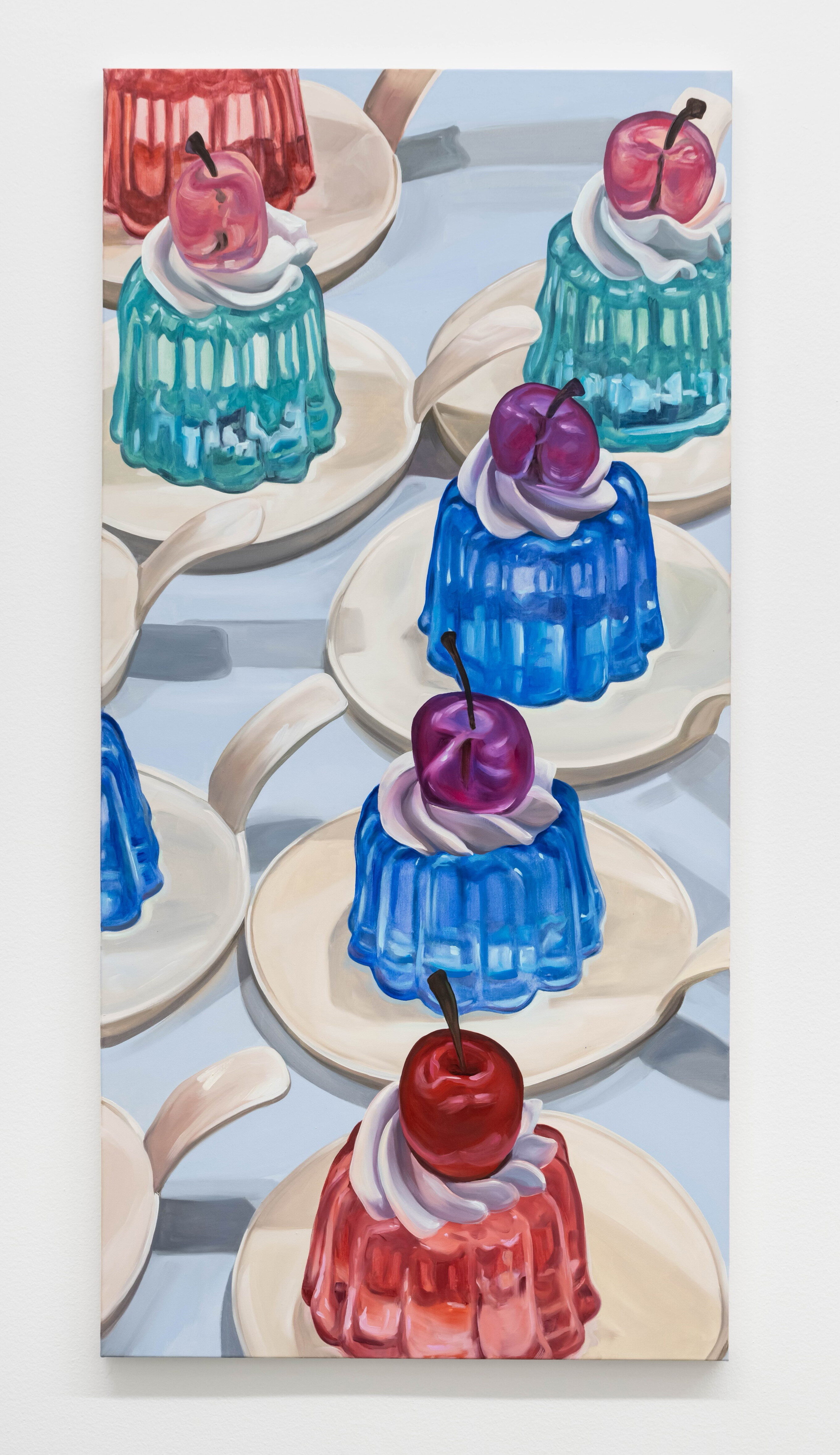
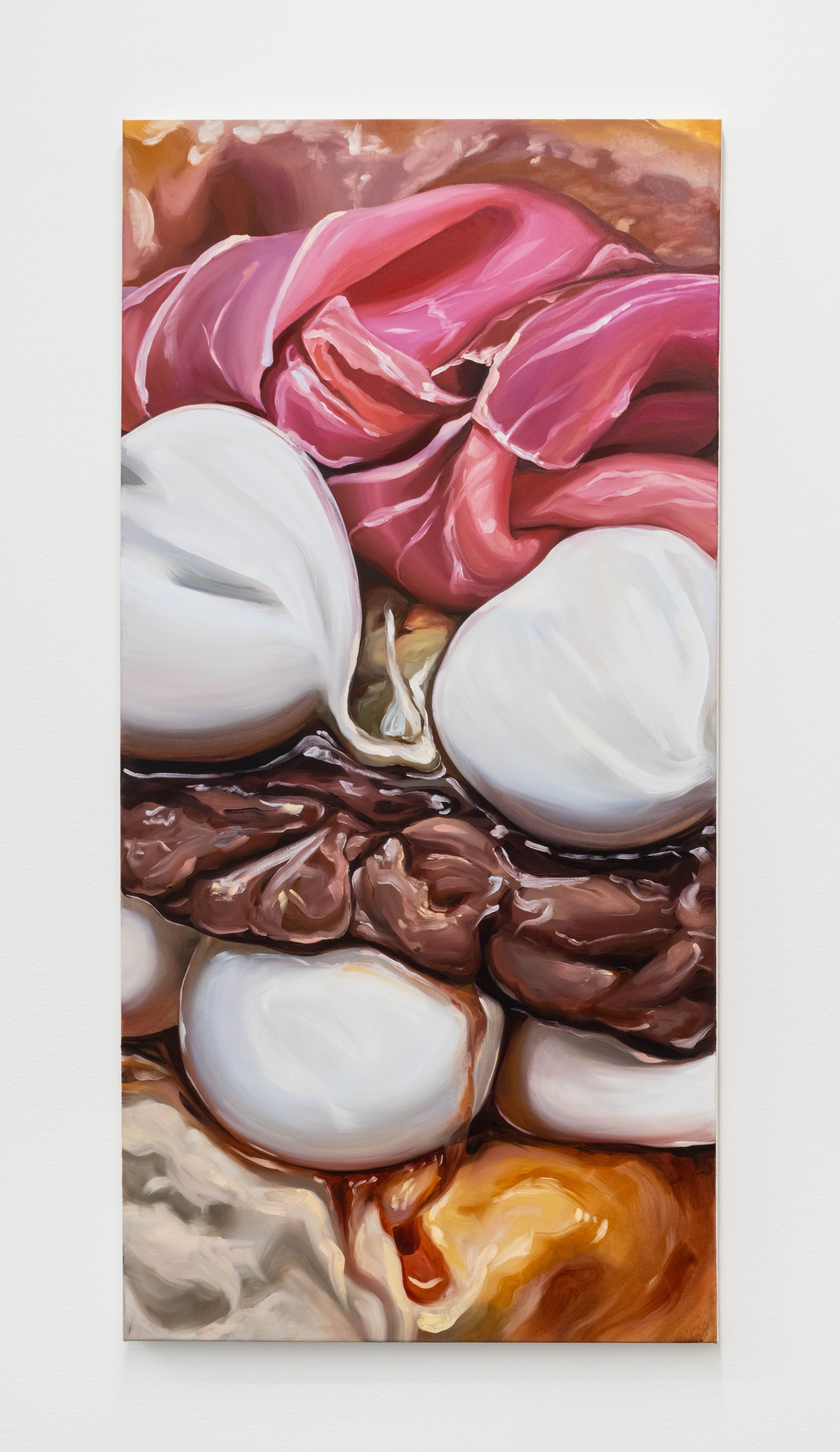
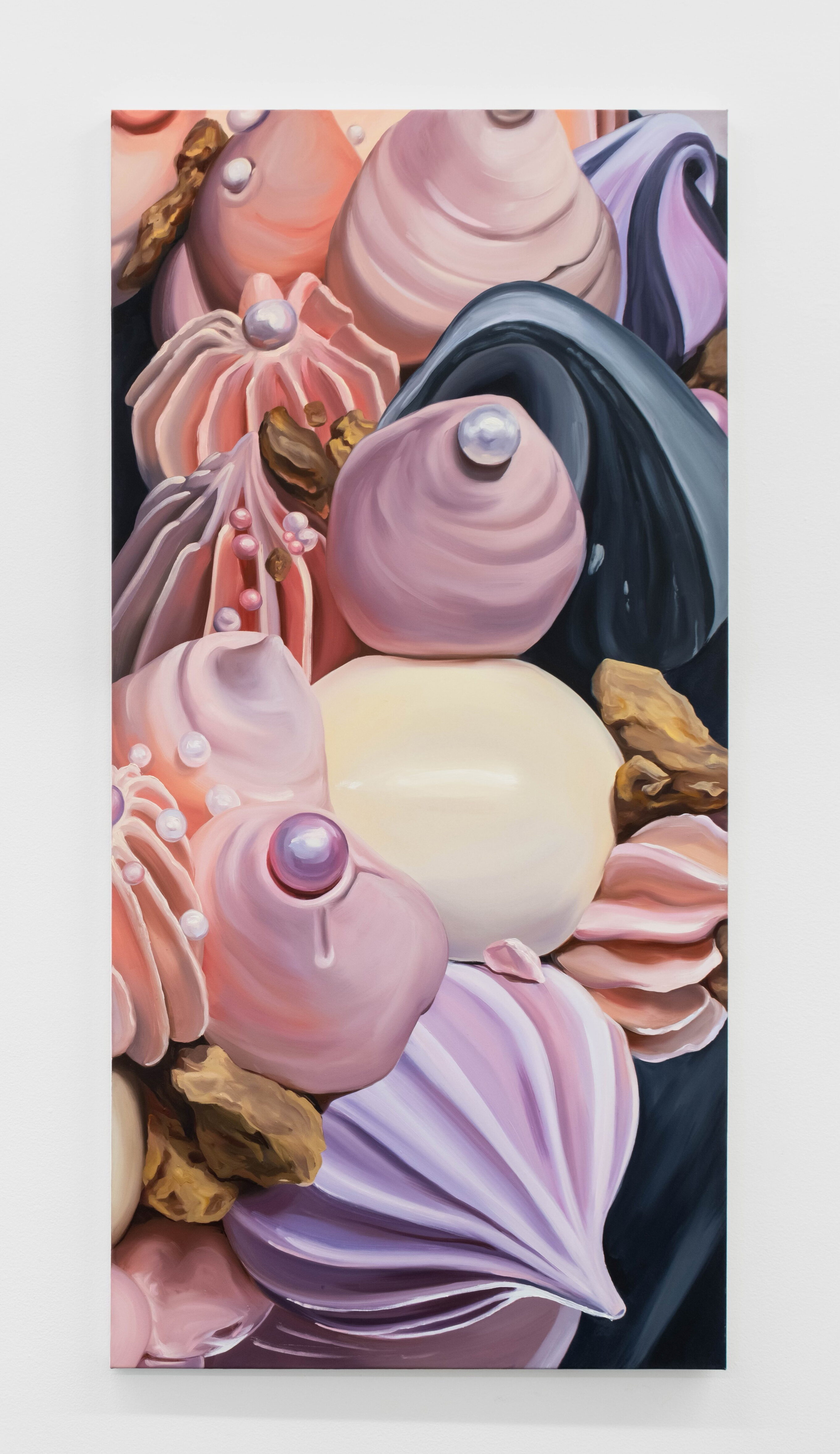
Earlier in her practice, Molin often painted bodies. “But we see images of bodies everywhere, all the time. The effect is distancing. It’s a kind of constant objectification that I want to get away from.” Food, by contrast, triggers an immediate physical response. It can draw us closer to our own bodies, precisely what Molin wants her art to do. “With food imagery, you can get away with a lot. Look at the fine-dining shots that Michelin-starred restaurants post on social media. They’re almost pornographic, and incredibly extravagant. It’s great fun, like a genre in its own right.”
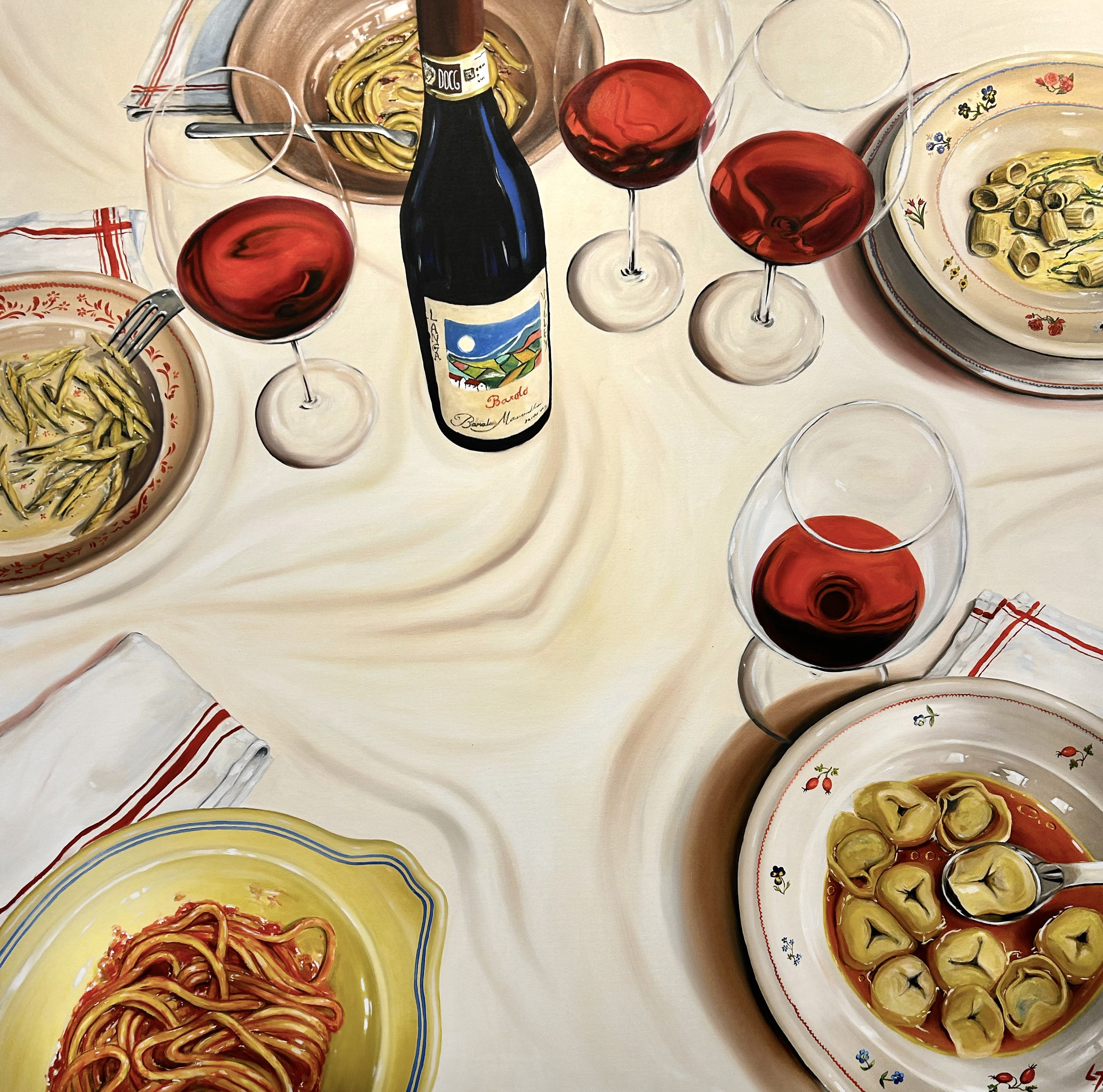
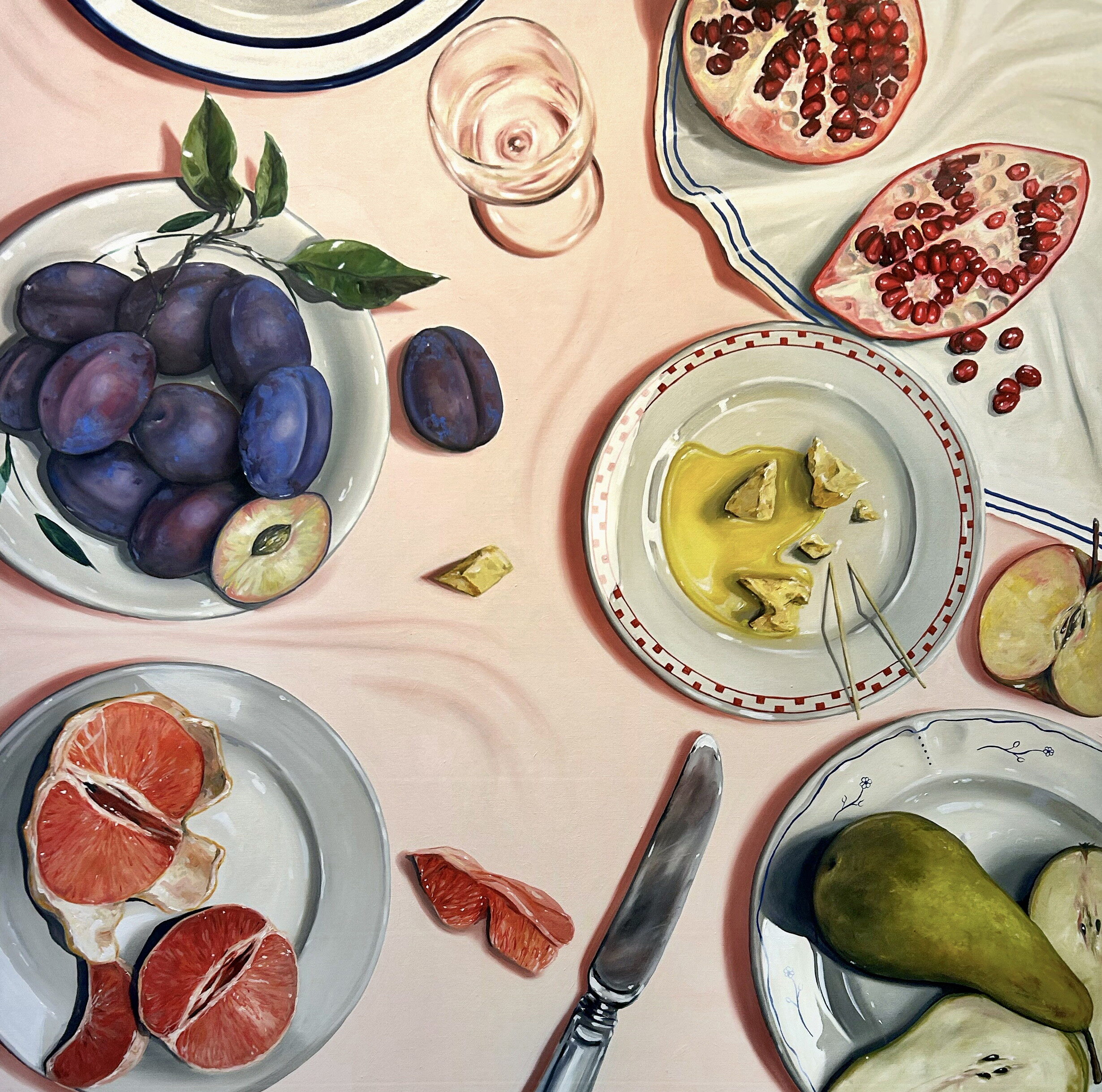
That same sense of pleasure runs through the work of Swedish artist Lisa Larsson, a contestant on Sweden’s MasterChef (competitive reality cooking show) in 2021. In recent years, she has illustrated signature dishes for Stockholm restaurant Bar Agrikultur and released a clothing collection with fashion brand A Day’s March, filled with life-affirming details: an ice cream here, a bottle of wine there. Bright and joyful. “For me, creating is a bit like self-preservation. I paint what makes me feel good. I choose strong colors because they give me joy,” she says.
Larsson lived in New York for many years, and while she was there, she briefly ran a restaurant concept from her Soho flat called AirDine. It was a twist on Airbnb: A home cook turns a private kitchen into a tiny restaurant. Culinary motifs, however, only entered her work once she moved back to Sweden. “Painting things that came easily to me was the perfect way to keep my hand moving and to give myself some calm. Even now, painting food is a form of self-care.”
American artist Jennifer Rubell has long explored the overlap between food and art. She holds a BA in Fine Arts from Harvard, trained at the Culinary Institute of America, and once interned with Mario Batali at the Food Network. Her best-known works—widely written about, and approaching legendary status—sit somewhere between installation and performance. A long-running thread is the free, open-to-the-public meals she has staged during Art Basel Miami Beach week. “I’ve had a passion for food from a very young age. It’s familiar, unpretentious, accessible: the antithesis of art,” Rubell explains. “I wanted to bring this everyday thing into the world of museums and galleries, which are in some ways anti-everyday.” In Rubell’s hands, the presence of something edible—and usually meant to be eaten—becomes an invitation to engage the senses in a way that is typically off-limits in an art context. “This transgression is at the center of my interests as an artist.”
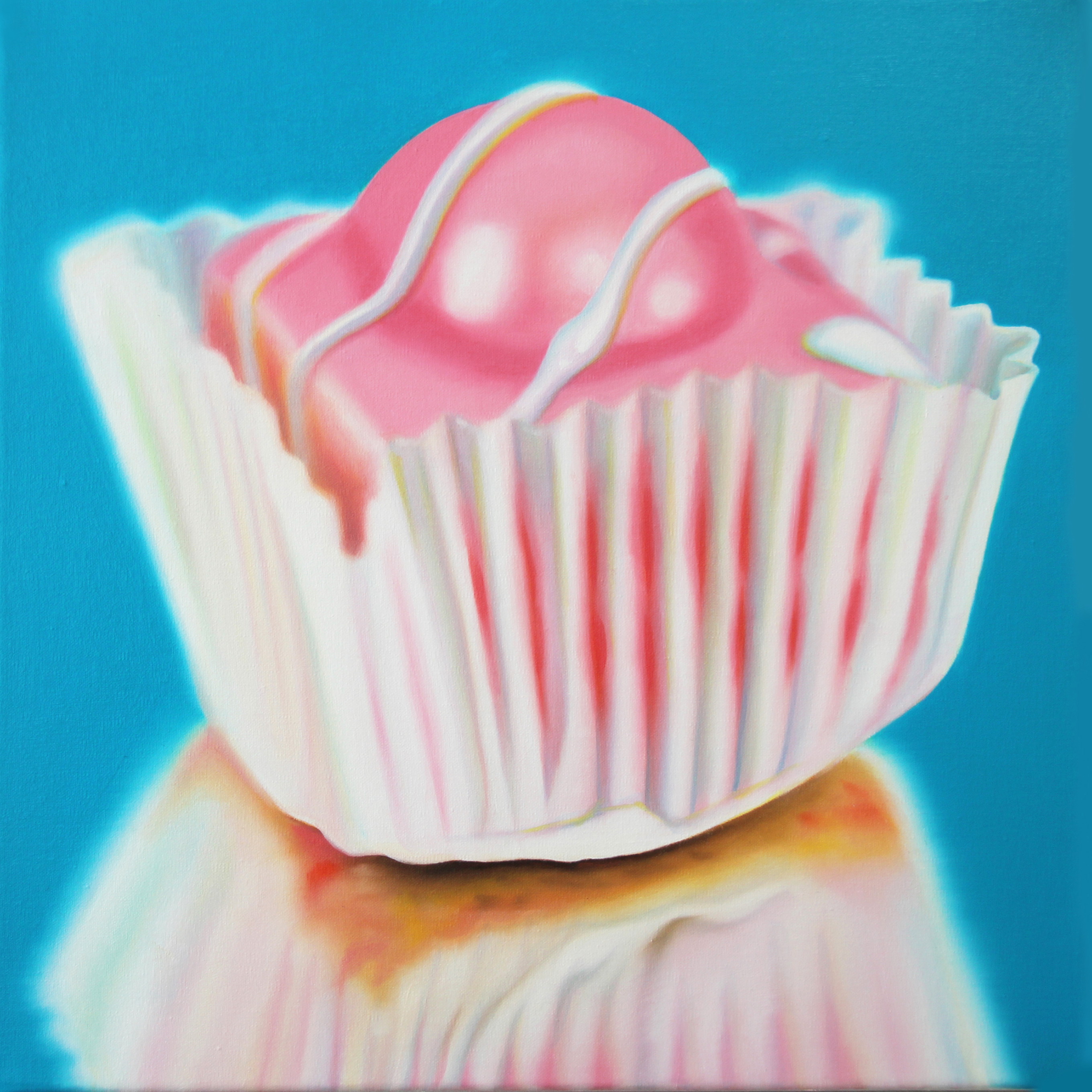
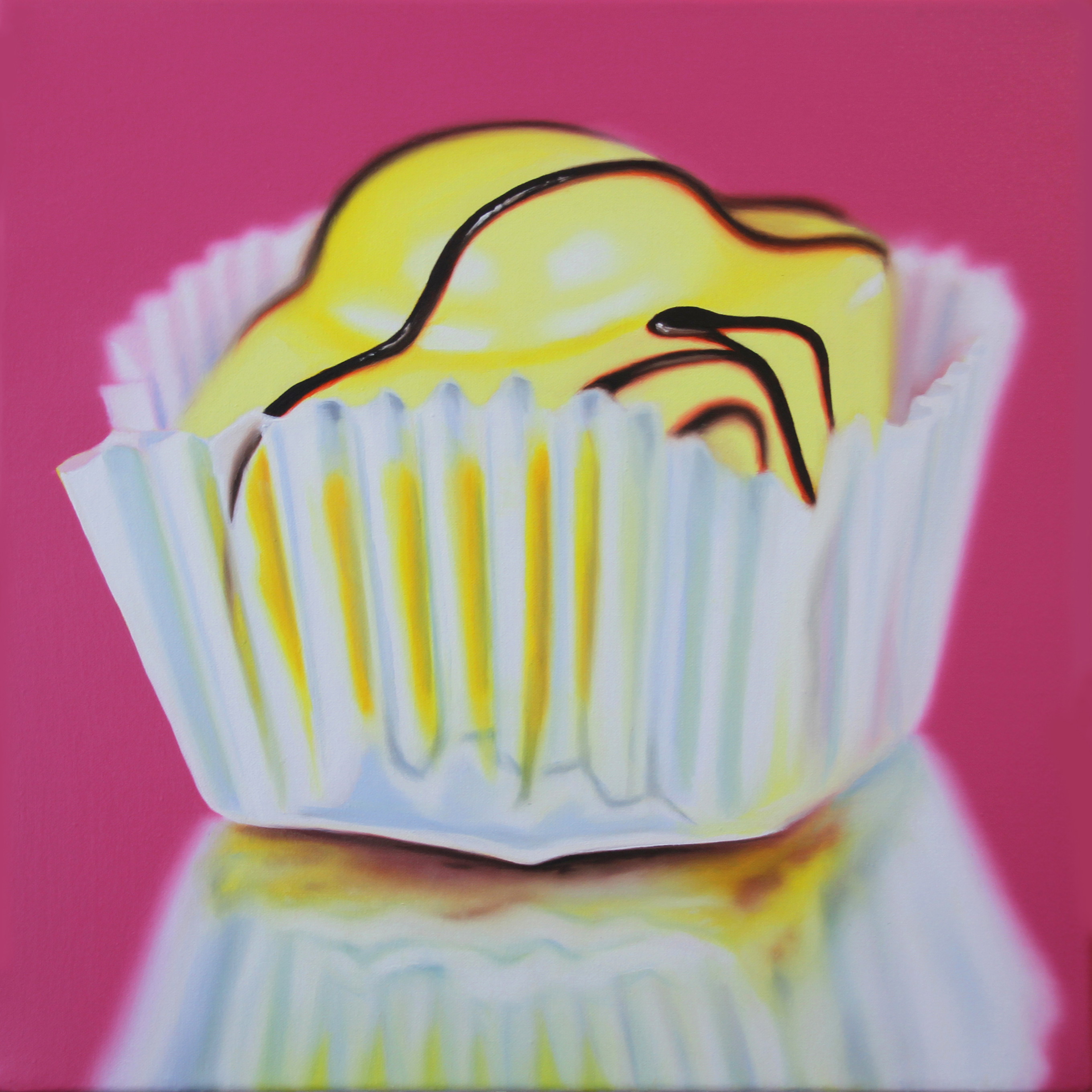
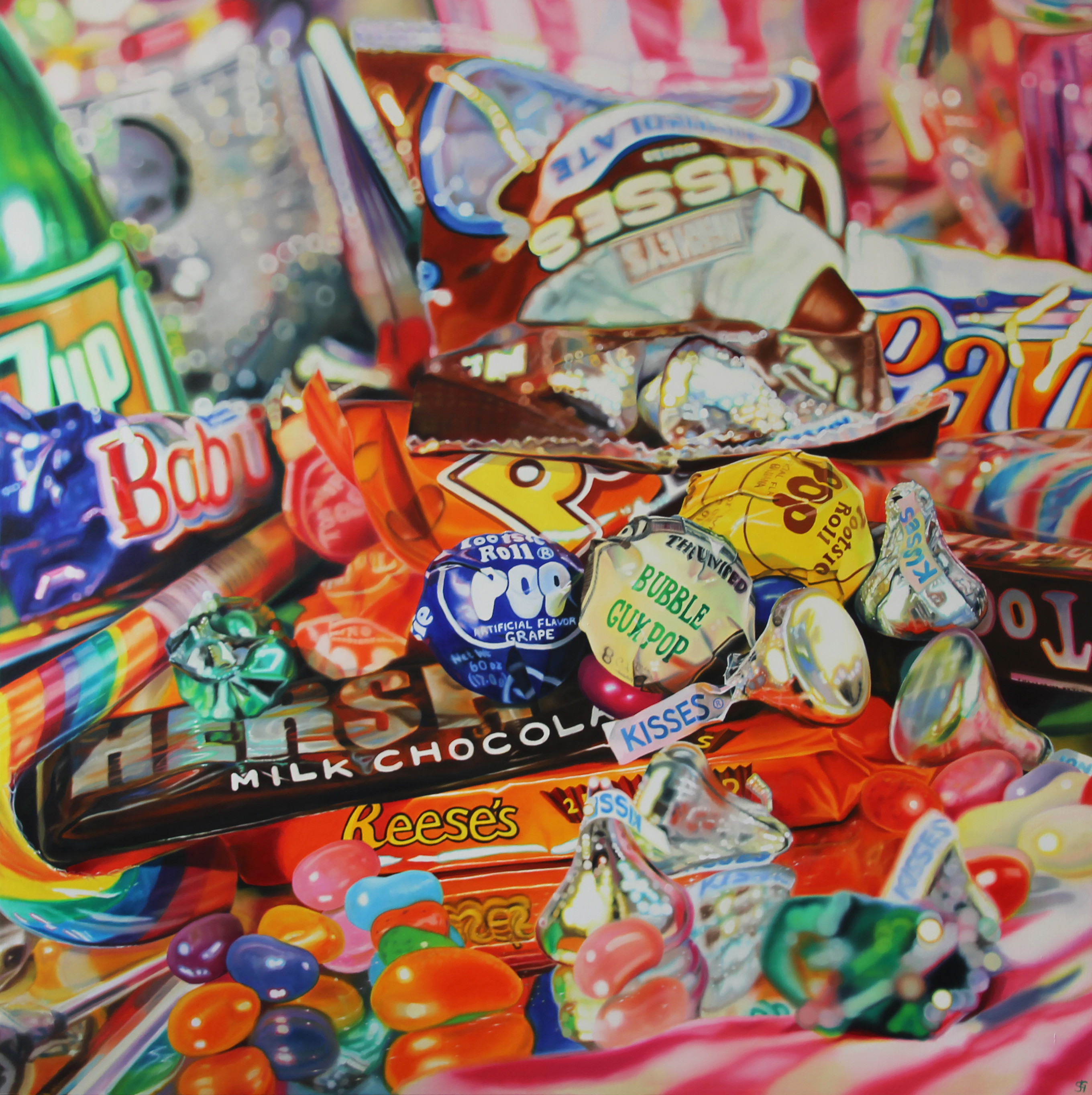
Where Rubell invites participation, British painter Sarah Graham's focus stays on the canvas, focusing on sweets—especially Chupa Chups lollipops, rendered with realistic precision in vivid color. “As a teenager, I was in charge of the pick ’n’ mix in a sweet shop, and from seeing the lollipops on the counter, in 2006 I just started painting sweets. The lollipops literally spoke to me: ‘Paint me!’” Graham says. She cites their iconic look, the range of flavors and their sheer visual appeal. “They conjure feelings of nostalgia in the viewer too, which is an important aspect of my work.”
Larsson takes a similar view: What we eat and drink is bound up with experience, shaped by setting and company. Later, those moments return as images in her head, and sometimes they end up as paintings: laid tables, glasses not quite emptied; forks twirled through the last of a spaghetti Bolognese; sliced fruit; a baguette broken in half. She describes these scenes as her own “madeleines for the people”—images meant to make you remember, or long for something—and as reminders of life’s small, beautiful moments, a brief break from everything that’s hard. Food has always had that role, she says, with a particular ability to make time stand still. “If nothing else, my art is a tribute to all the heroes who work in the food industry, from handling seeds to washing dishes.”


