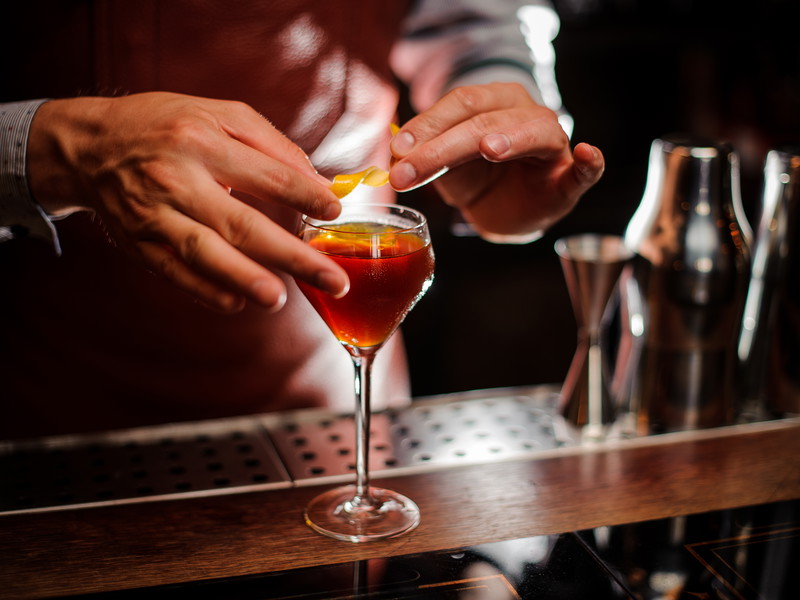
In many restaurants aperitifs are common courtesy. However, they also play a significant role in how we perceive the meals we are about to enjoy. Whether champagne, vermouth, or a light bitters, this opening note demonstrably impacts our perception of the entire menu—a finding that was confirmed by a recent study by Oxford University and Romania’s Alexandru Ioan Cuza University.
For the experiment, researchers observed 257 guests during an ordinary dinner at a Romanian restaurant—not in a lab, but in a real dining environment. Some guests had plum brandy before their meal, while others skipped the aperitif and began eating directly. Subsequently, all of them were served the same tomato soup. The findings were remarkable: Those who had enjoyed an aperitif beforehand described the soup as fresher, more balanced, and more harmonious overall. Their ratings were higher across every category, from sweetness to flavor intensity.
A “palate cleanser for body and mind”
The reasons for this phenomenon are multifaceted. Alcohol can slightly mute the taste of bitterness—those subtle background notes that often overshadow more delicate aromas. When bitterness retreats, fruity and sweet nuances step forward, creating a more rounded overall impression. There's also a psychological aspect to it: Aperitifs help reset our minds, gently shifting diners out of the rush of daily life and into a more focused, receptive state. Oxford psychologist Charles Spence calls this moment a “palate cleanser for body and mind”—a small ritual that refocuses attention before the meal begins.
What is striking is what an integral part of high-end dining culture this knowledge has long been. In France, drinking aperitifs is almost ceremonial; in Italy, they set the tone for the social rhythm of the evening to come; and in fine-dining establishments worldwide, that first sip is as essential a step as the espresso that concludes the meal. The study now confirms what chefs and restaurateurs have intuitively practiced for decades: Aperitifs meaningfully shape gustatory perception—and with it, the course of an entire evening.
More than common courtesy
Notably, this effect applies even to small amounts of alcohol. Lead researcher Dr. Georgiana Juravle emphasizes that this phenomenon is not about stimulating appetite but subtly modifying our sensory perception. Rather than changing your mood, aperitifs sharpen your focus—though both things can happen simultaneously.
Aperitifs are not trivial details—a validation and gentle reminder for the gastronomy industry. It is the overture to a culinary performance, a carefully placed opening chord that sets the tone for everything to come. And it proves that a remarkable evening can begin with the smallest of sips.