Skip to content
© Robertas Daskevičius

How Do You Create a Restaurant People Return To? — Gaspar Fernandes on Building Gaspar’s

Lithuania
Interview
Gourmet

Recently named Lithuania’s Best Chef by Falstaff, Gaspar Fernandes talks about Goan-Portuguese flavors, evolving dishes, and why true hospitality — not trends — keeps guests coming back.

A few weeks ago, a cocktail bar owner said to me: in this market, if you open a place people visit only for special occasions—you’re doomed. A restaurant survives only if people want to come both for a casual meal and for an important celebration.

That made me think of Gaspar’s.

Gaspar Fernandes, a chef with Goan-Portuguese roots who built his career in Lithuania, has created something many restaurants strive for: a place people return to.

Recently named Lithuania’s Best Chef by Falstaff, Gaspar now stands at an interesting point in his career—established, recognized, but still moving.

We sat down to talk about his views on creating new dishes, hospitality, building Gaspar’s, and what makes people come back.

Let’s move on to your cooking. How would you describe your cuisine today?

Flavor-wise, I want to represent Goa as much as possible—but through Portuguese influences. Goan–Portuguese influences.

At the same time—these aren’t traditional dishes. They’re our own interpretation. A modern take. My own vision of Goan–Portuguese-inspired food.

At the beginning we were more Indian-driven. And this is the biggest misconception people have about Gaspar’s. Some come expecting to see elephant decorations, and Indian cuisine. We are not about that.

If I had to define it— I’d say: We cook with the highest quality ingredients possible.

Whenever we can, we use local ingredients, especially during the summer.

Which of your recent dishes reflects this vision best?

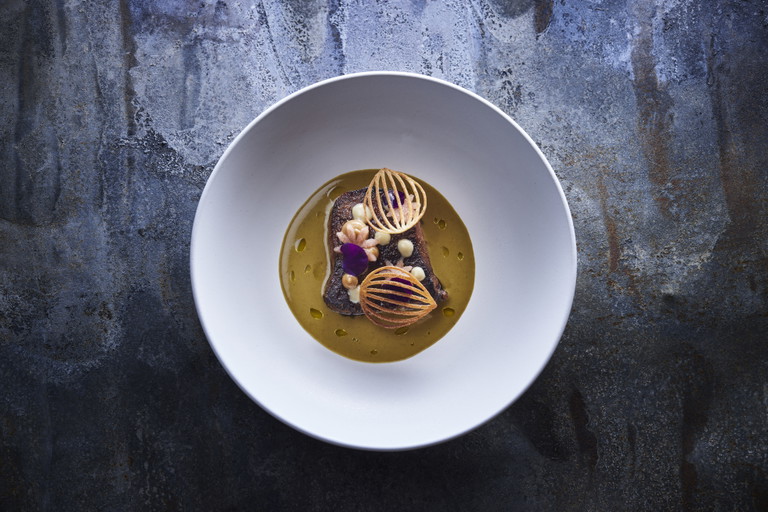
Right now we have one of our best-selling dishes - beef tongue.

I’ve always had this fascination with what Lithuanians love, I wanted to understand it and use it. One of these was beef tongue. Traditionally people eat it with horseradish here.

And at some point I thought: Why not make it the way I see it? So I make this Goan style grilled tongue with coconut curry, caramelized onion purée, onion crisp, some acidity, pickles, and, of course, smoked horseradish cream.

Ten years ago I would have been afraid to do that. Now— I trust myself. I don’t feel the need to test everything endlessly before putting it out.

Beef tongue
© Robertas Daskevičius
Beef tongue

When you create a dish — what drives you? Is it technique, ingredients, memory? How does it happen?

I’ll tell you directly.I’m not the type of person who wants to create a rabbit that looks like a monkey and tastes like a potato. That’s what I call a gimmick.

For me— number one is:

Deliciousness.
Deliciousness.
Deliciousness.

One hundred and twenty percent. That always comes first.

What excites me most is the product.

When you find a great ingredient—and if you can connect it with some memory— that’s where something interesting happens.

Like with the beef tongue dish. Part of it comes from my experience of living here and seeing what people love.

So: product, memory, deliciousness. That’s usually the process.

 Do you test a lot before putting a dish on the menu?

We create dishes. Then we keep improving them.

But I don’t believe in testing something twenty different times trying to reach perfection before releasing it.

I don’t really sit down with a drawing board and have huge creative sessions.

I think for a good chef—you need flavor memory.

You need to know in your head: How does a green apple taste compared to a Bramley apple? What happens if you cook it? What happens if you fry it in butter? How different is cooked apple compared to fresh apple?

If you don’t have that flavor bank in your head— then you need to constantly test everything.

We put something on the menu but we constantly keep changing and improving it.

 I think people notice that in your restaurant. You can come and order the same dish several times—and each time it feels slightly better or slightly different. It never feels frozen in time.

Exactly. I don’t like copy-paste cooking. Take our naan bread. We make it all the time— but it’s impossible for it to be identical every single time. And scientifically—it makes sense.

Because: flour changes, protein content changes, weather changes, humidity changes, yeast changes, temperature changes. So if we make naan one hundred times— it won’t be identical one hundred times. Maybe eighty. And I find that interesting.

If you paint the perfect painting— and then repeat exactly the same painting forever—wouldn’t that become boring?

For me— food is more like graffiti. You can add another layer. Then another. Then another. It’s a living organism.

 But what about consistency? Maybe people come back expecting the same thing they liked last time?

Consistency is always there. You yourself said that when people come back— they recognize dishes. But they also feel improvements. So for me— I believe in: 90% consistency and 10% room for improvement. Not 100%. Because if you lock yourself at 100%— you stop evolving. And that’s dangerous.

 What ingredient excites you at the moment?

And recently I’ve started going back to appreciating cuts that are not considered prime. For example— right now we have hanger steak. Which traditionally isn’t considered a premium cut. But honestly— guests absolutely love it. I haven’t really had anybody complain. I won’t cook it well done— because if you do, it becomes chewy and dry.

If somebody wants well done— we have other steaks for that. This one goes one way. Or no way. And it works. There’s hanger steak. There’s oxtail. Both are cuts people don’t usually expect. And I want people to experience things differently. Like our chicken curry.

You think: “Okay, chicken curry again.” But we make it with corn-fed chicken. The skin becomes super crispy. Then rice crisp - texture. You still recognise the dish— but it becomes more exciting. I even tasted it and thought: Damn, this is nice.

 You talked about local ingredients. How important is sustainability for you?

I’m probably one of those unusual people— because I don’t like greenwashing. I don’t want to constantly announce: This came from five kilometers away. This is organic. This is local. For me— shouldn’t that already be normal? Shouldn’t that be the default? What we try to do— without making a huge marketing story out of it— is work with small family farms.

They provide us with most of our vegetables and fruits. So if somebody eats here— most of those products are local. Most are grown organically. But I don’t need to stand next to the table and announce it. Another part of sustainability for us— because we’re a small family business— is supporting other small family businesses. That ecosystem matters.

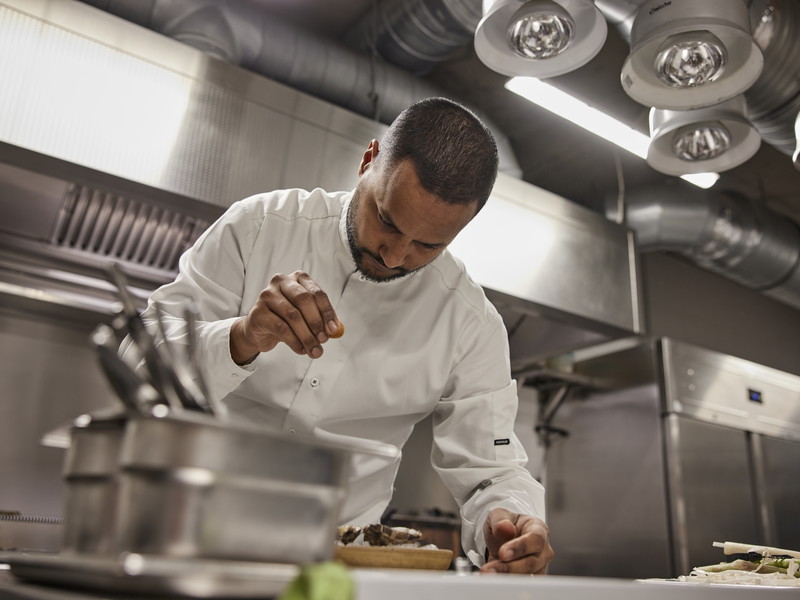
You travel quite a lot. You also visit restaurants yourself, although you’re not very public about it. What do you get from those trips?

Whenever we travel— we eat out a lot. And we go to very different places. From restaurants with extremely high accolades— to street food— to very simple places. What do we get from it? First— you get to see what is actually happening globally in gastronomy. Sometimes you get inspired by certain parts of a dinner. Not necessarily food.

Maybe: technique, service, hospitality, presentation, guest experience. You start seeing things differently. If you really enjoy a dining experience— you think: How can I implement this myself? How can I make it even better? And I want to highlight— it’s not copying. It's an inspiration. Nobody is reinventing the wheel every single time. You learn. You adapt. You make it your own.

And I’m pretty sure— we probably inspire other people too. Maybe. Maybe not.

You also have a huge community of regular guests. Restaurants are struggling, places are closing, but you seem to have many returning people. Was that intentional?

If I had to estimate— maybe: 60% every day are returning guests, and if you count everybody who returns at least several times a year—probably even more. But we have people who dine here several times a week. We were always building this place primarily for people who live here.

I think that also helped during COVID. Because we already had a community. And I still believe we are a neighborhood restaurant. We’ve been here for 10 years. We’ve watched the neighborhood change. And I’m proud of that.

Hospitality matters to you a lot, doesn’t it?

Yes, one thing that matters most — hospitality. We’ve opened for guests when we were technically closed. Stayed longer. Accepted late tables. Because at the end of the day— the guest pays your bills. They pay staff salaries. They put food on your table. So your responsibility— is making them happy.

If people leave happy— they tell other people. And then those people come. And they tell more people. And you slowly build your ecosystem. And I firmly believe— no matter how digital the world becomes— the strongest marketing in existence is still: Word of mouth. That will never change. Because it’s personal. And trusted. And something I think about a lot— it’s a privilege when people choose you for important moments.

Birthdays. Anniversaries. Graduations. Celebrations. You become part of those memories. That’s powerful.

 Do you consider yourself a successful business?

Sure. People in the restaurant industry sometimes act like profitability is a dirty word. Like it’s evil. Like you shouldn’t talk about it. I disagree. If this place isn’t profitable— what am I doing?

Then I’m running a charity. And I’m not running a charity. Profit matters. Profit means: development, better equipment, better glasses, better plates, staff, future projects. That money has to come from somewhere.

 How do you stay profitable in this business then?

That’s the million-euro question. You need to: know your numbers, react quickly, adapt, make decisions. One advantage for us—we’re small. It’s basically me and Krystsina. We sat down. We decide. The next day— a decision is implemented. No board meetings. No layers. That helps.

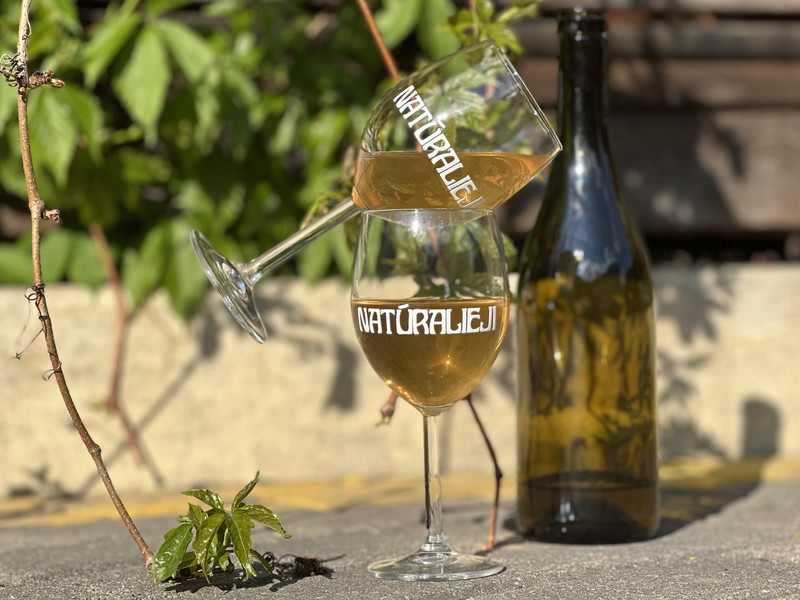
One of our examples is that we started importing our own wines recently and building something like a small wine distributing business now. It started as a cost-cutting measure. But then we realized—if we do this properly—it becomes another business.

Two hours later, we were still talking — about upcoming collaborations, ideas and what comes next for Gaspar’s. Gaspar talks about restaurants the same way he cooks: never quite finished, always evolving, always adding something new to the table. After twelve years in Lithuania, he still doesn’t sound like somebody who thinks he’s arrived. Because he keeps on moving. Always forward.  

Agnė Dovydaitytė
Author
Find out more
1 / 12