Tea Naturally Slows You Down: Giedrė Prievelytė, Owner of Yugen Tea
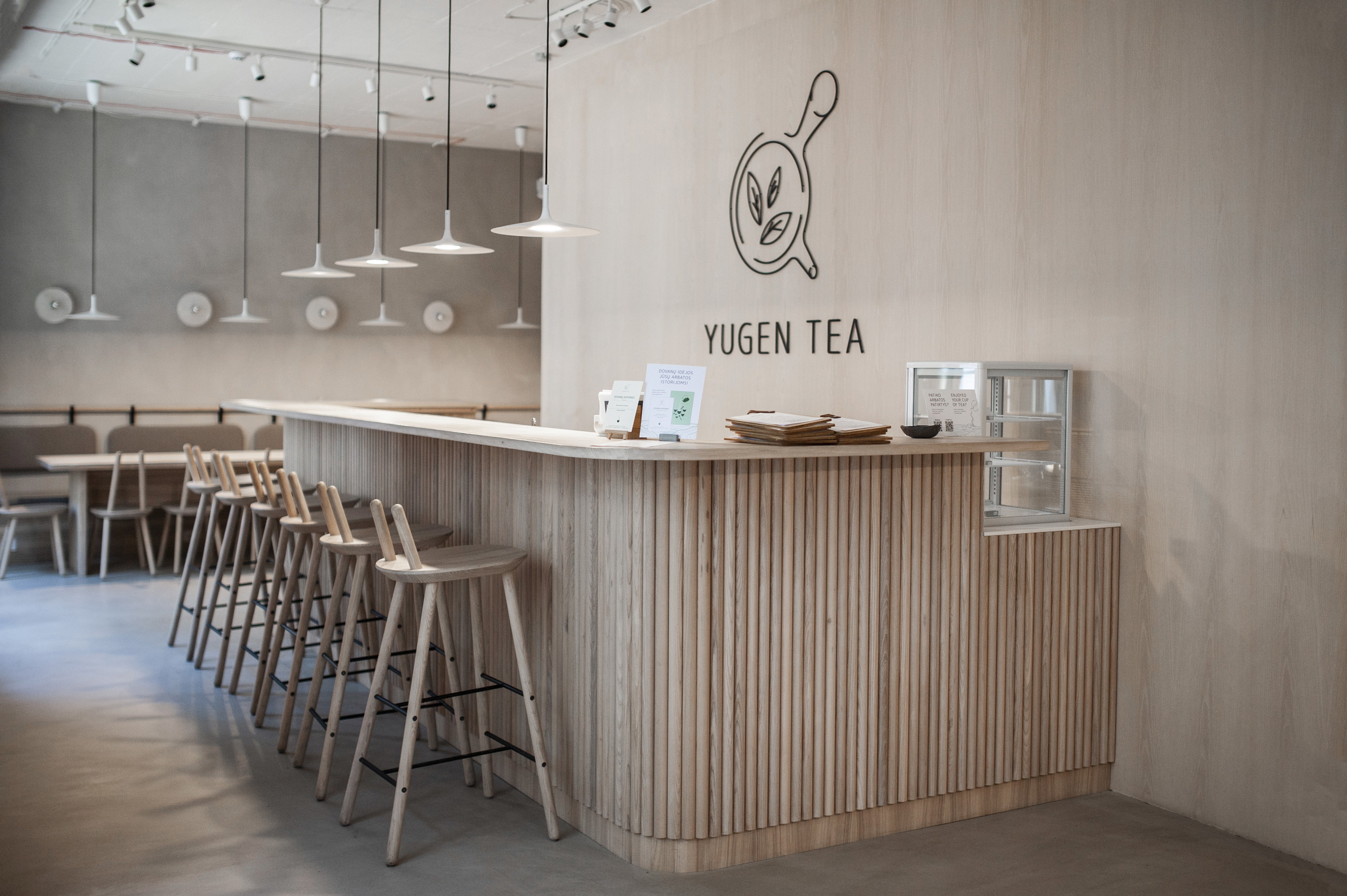
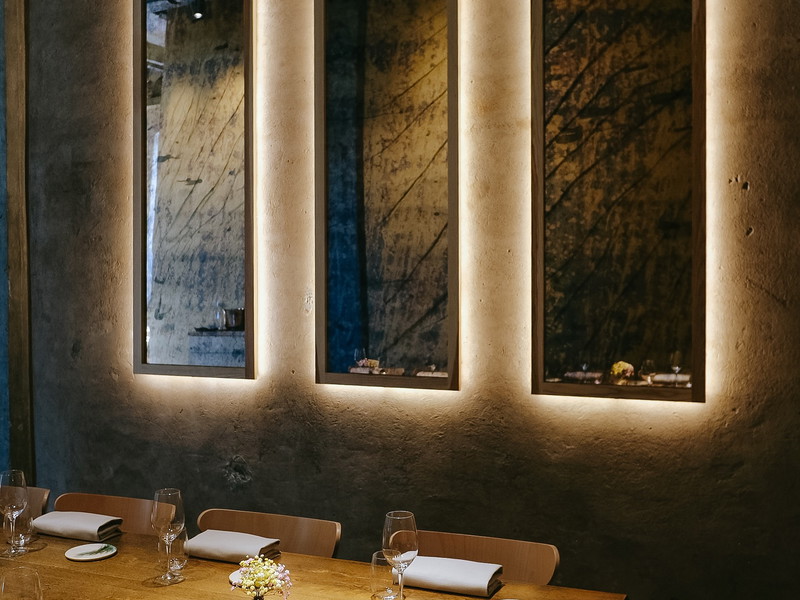
In a softly lit space in Vilnius, Yugen Tea approaches tea as something closer to a ritual than a beverage. Guided by Giedrė Prievelytė, the experience draws on Japanese philosophy while reflecting her own path through culture, travel, and taste — where tea becomes a way to slow down, observe, and connect.
In a softly lit corner of Vilnius, where time seems to loosen its grip, Giedrė Prievelytė invites guests into a world shaped not by urgency, but by attention. At Yugen Tea, tea unfolds as something far more intimate than a drink. Rooted in Japanese philosophy yet interpreted through her own lens, Prievelytė’s work bridges distant landscapes: mist-covered tea fields, the precision of ceremony, and the modern search for meaning in everyday rituals.
You’ve said that tea is “an addiction to taste and aroma” for you. When did you first realize that tea was more than just a drink?
There was never a single starting point. My interest in tea simply kept growing over time. My studies also contributed to that—I analyzed tea during that period. While studying, I spent some time in Japan, where I was introduced to tea ceremonies and their foundations. I studied Japanese culture, including the language, which helped me understand the broader context of Japan and East Asia—and later, tea itself. It allowed me to see things you simply can’t understand without knowing the culture.
As I kept learning, analyzing, completing courses, and traveling, my interest continued to grow. While working in a tea shop in Australia, I realized that sharing flavors and experiences fulfilled me and made me happy. I wanted to do that every day for the rest of my life. Tea allows me to share flavors, create experiences, and build community—and that’s very important to me.
The name “Yugen” reflects my mission. It’s not only about creating emotional experiences between people, but also about creating powerful gastronomic experiences—flavors that surprise you and stay with you. There’s also an aesthetic dimension. “Yugen” is a concept of subtle, profound beauty.
You lived in Japan for a year and studied tea ceremony as part of Japanese identity. What do Japanese people understand about tea that Europeans often don’t?
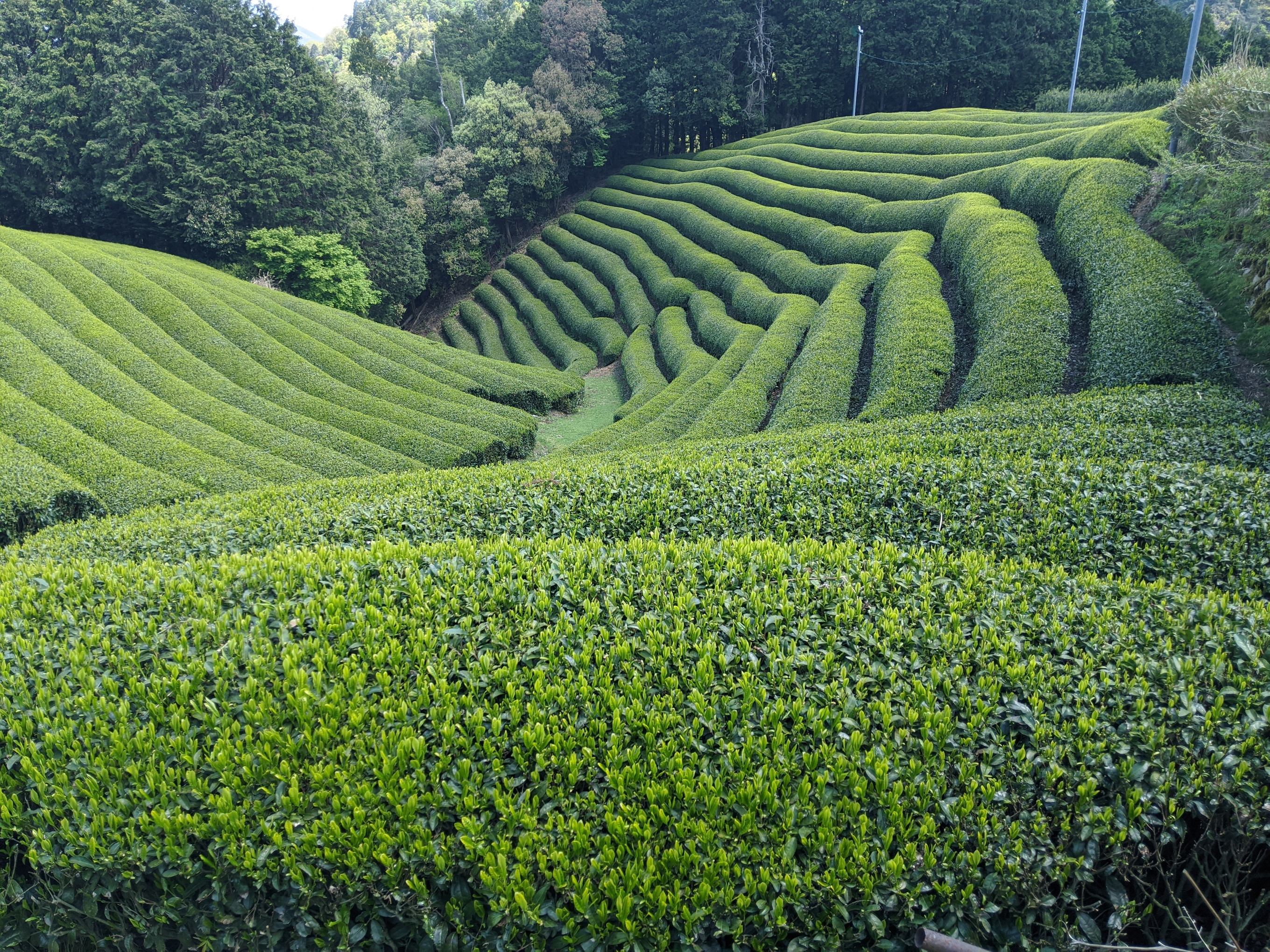
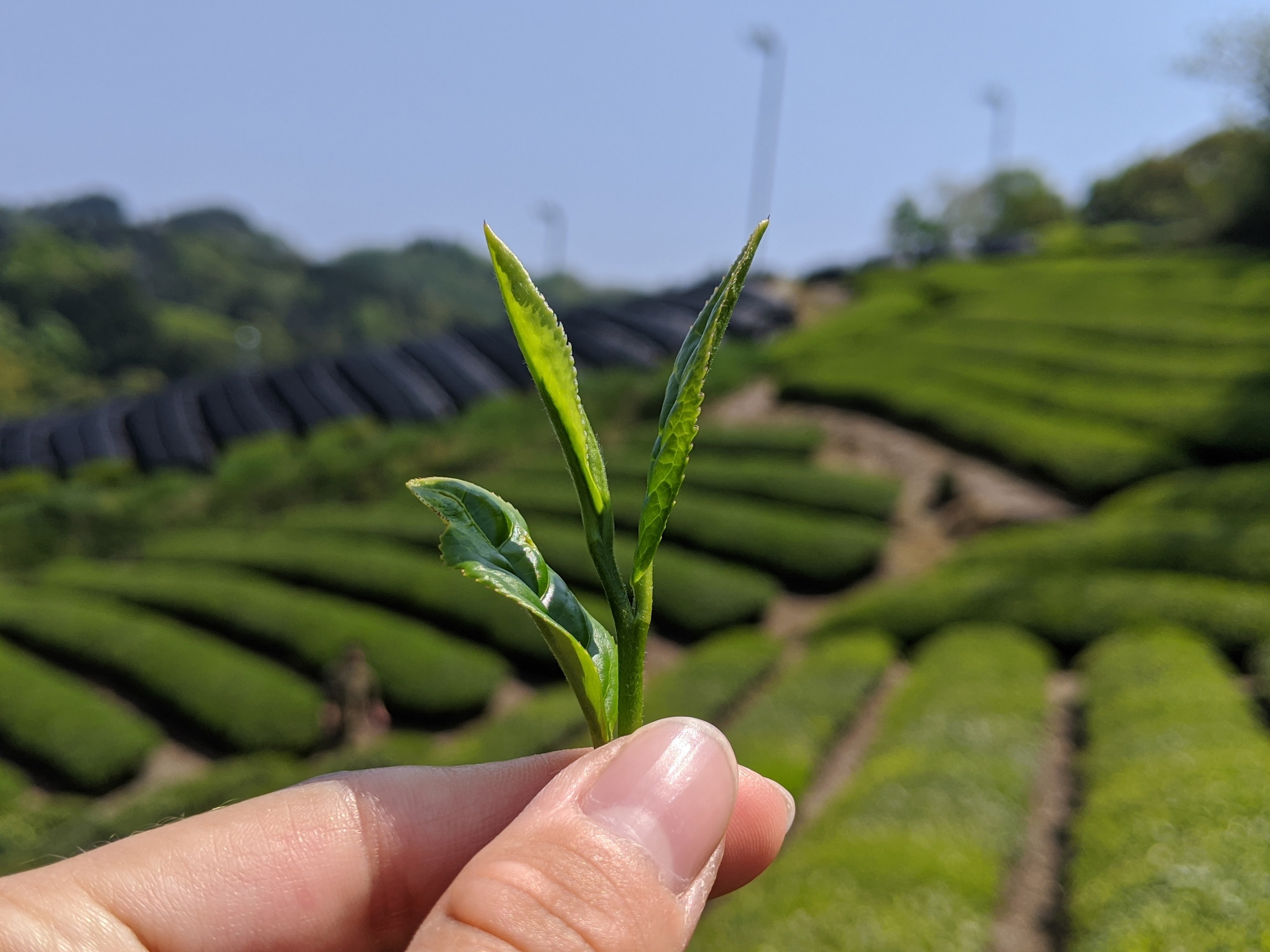
I travel to Japan every year. Early May, during the spring harvest, is a magical time when new tea is produced. Each year, you keep learning and discovering new things. Japan now feels like a comfortable place for me. I spend time in rural areas, on tea farms, observing how the plant grows, understanding the context, and getting to know the farmer’s philosophy. That’s where everything begins—where the tea comes from, the regional context, how flavors are created, and the cultural understanding behind it.
I feel that tea changes people. It naturally slows you down—you prepare it slowly, you enjoy it. At home, it grounds you. Over the years, tea has taught me to slow down. When you drink it, you’re forced to pause—to smell the leaves, to be present. You can bring that mindset into everyday life. That’s what fascinates me about Japanese philosophy.
Is tea ceremony still a living practice in Japan today, or more of a cultural tradition?
Today, not everyone in Japan practices tea rituals. In rural areas, life still follows nature’s rhythm. But in cities, it’s different—work culture is intense, even more than elsewhere.
For some people, tea ceremony is a way to escape that fast pace. Young people who practice it today often say it’s no longer just about tea—it’s about slowing down and being present. When you learn the tea ceremony, everything is clearly defined. There’s no room for interpretation, and you enter a flow state. It becomes a form of meditation—focusing entirely on the present moment.
Tea ceremony is not an everyday activity. People don’t wake up and make matcha like espresso. But it is still authentic—not a tourist performance. Those who practice it are a small group, and they do it sincerely, as a form of meditation and inner cleansing. In recent years, it has become more of a symbol of national identity. I find it beautiful that culture evolves. Modern interpretations—like flavored matcha drinks—exist alongside tradition without destroying it. Tradition remains, but culture transforms, and that process is fascinating.
There isn’t widespread resistance to these changes. Even though matcha has recently become extremely popular worldwide, which has impacted the Japanese tea industry, some growers may feel disappointed that such a labor-intensive product is not always consumed in the way they envisioned.
What do you think caused the huge rise in matcha’s popularity?
Partly, it’s linked to the growing interest in longevity. Matcha is often seen as one of the components of a healthy, long life. It’s also visually appealing—its bright green color attracts attention. Social media has played a big role. For some people, it’s simply a beautiful ritual and a tasty drink. With matcha, you consume the entire tea leaf, getting all its nutrients—something you don’t get with other types of tea.
We once hosted Japanese journalists who were writing a book about how matcha is consumed around the world. They weren’t interested in how perfectly I prepared it. They were interested in interpretation—how you see it. Quality and balance are very important to me, but I’m not Japanese and never will be. So what I create is my interpretation—a mix of knowledge and modern influences. Even if a place looks authentic, we are still in Lithuania, with our own context.
What is daily life like on a tea farm during the spring harvest? How does seeing the whole process change your relationship with tea?
I usually travel to Japan during the first harvest. For farmers, it’s the most intense time of the year—everything depends on the few weeks. They sleep very little and work extremely hard to achieve the best result. I see a lot of dedication and love for their work. Some people become tea farmers because they inherit it, others choose it—but without passion, you can’t achieve excellence.
Their day starts early, around 7–8 a.m., harvesting leaves in the fields. After lunch, they continue harvesting, and in the evening they begin processing the leaves in factories. This can continue until 4 a.m. Nature dictates everything. Farmers often say they are just managers—the plant itself shows when it’s ready.
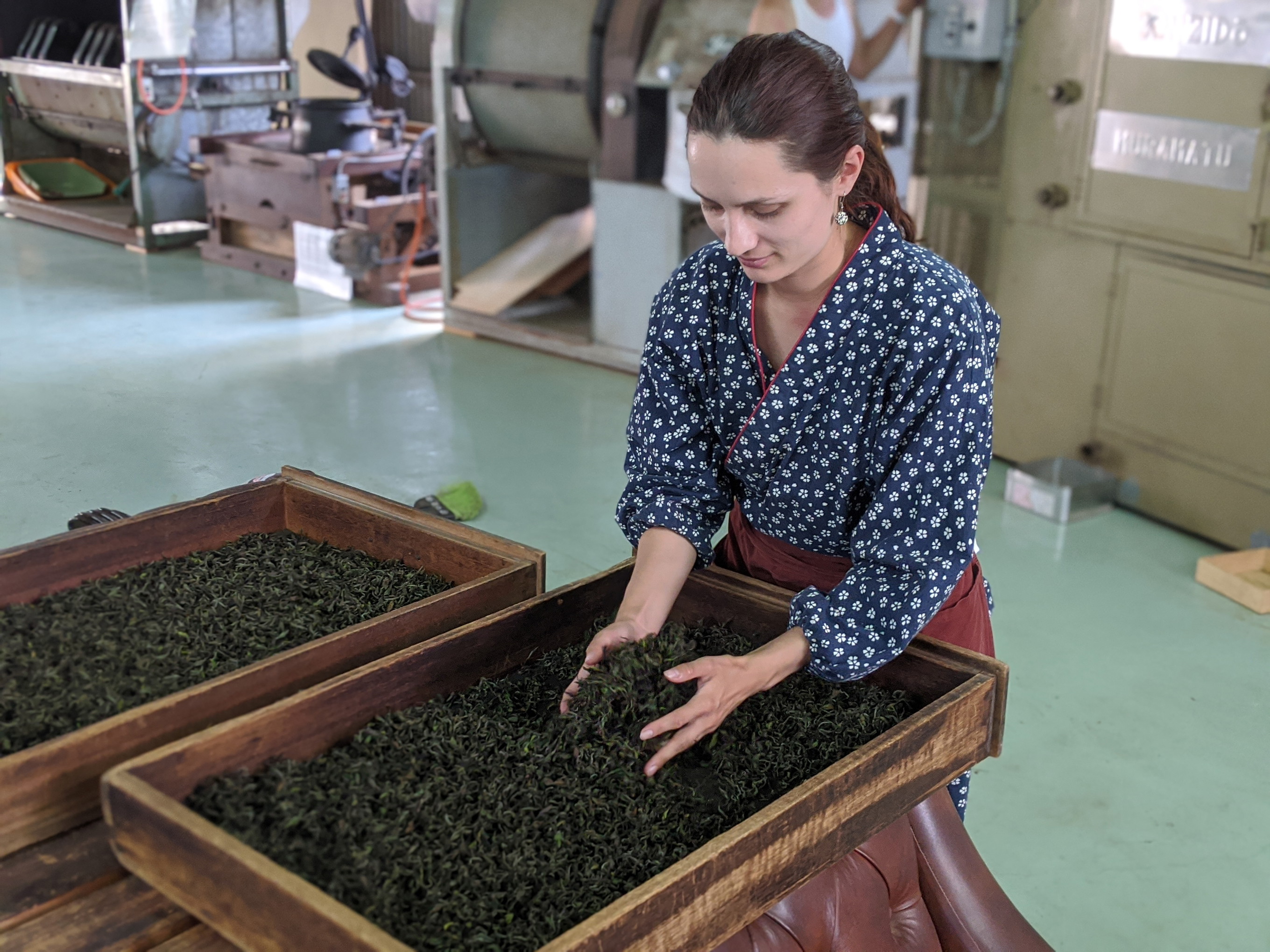
My desire to understand this process came before opening Yugen Tea. I had read and tasted a lot, but I wanted to experience it firsthand. You keep learning your whole life, and each farmer has a different perspective. This helps me understand flavors better when selecting teas. I often bring teas back and taste them first myself, because tea changes over time. I observe how flavor profiles evolve and adjust preparation methods accordingly. It’s very intuitive.
When creating tea blends, do you rely more on intuition or technical knowledge?
Flavor creation is based on experience. First comes accumulated knowledge, then intuition—how I want something to taste. You can follow recommendations, but I always adapt them based on my vision. Sometimes ideas come unexpectedly—like after visiting a modern art museum, where an unrelated thought leads to a new flavor.
I don’t set strict limits or follow rules. Of course, there are pairing principles—similar or contrasting flavors—but intuition can lead to surprising results. For example, pairing gyokuro tea, which has a strong umami flavor, with chocolate containing dried beef. It sounds strange, but during tastings it’s often the most surprising combination. Umami with umami may seem odd, but it works. Fresh flavors pair well with green tea, but I don’t see strict boundaries. I feel free to explore.
The most important thing is not to limit yourself. When I opened this place, many people said Vilnius wasn’t ready. But what truly moves you forward is staying true to your values. When you believe in your vision, others will see it too.

How do you select teas from small Japanese farms? What matters most?
There are always core teas I want in my collection. Of course, quality is essential—whether a tea matches its expected profile. But I also look at the farmer’s personality and creativity. Every farmer produces popular teas, but for one it may be truly special, while another may feel indifferent about it.
If a farmer says, “This is my favorite tea—I love it,” I know they put the most care into it. That matters a lot. If they produce something just because the market demands it, I’m more cautious.
Then comes diversity—different varieties, unique flavors, and processing methods. Last year in Taiwan, I met a wild tea master who harvests tea in the forest. The flavors are incredibly unique. There’s also a spiritual aspect—the work and intention behind the tea. And of course, market demand plays a role. Right now, everyone wants matcha, so I also look for interesting variations within that.
Is a specialty tea culture emerging in Lithuania, similar to specialty coffee?
Yes, tastes in Lithuania are evolving. People who come here are curious. Even if the flavor feels unusual, they’re willing to explore it. We grew up with black tea and thyme. Japanese flavor profiles are very different, which makes matcha’s popularity here quite surprising to me.
I encourage people not to ask whether they like a flavor, but what it reminds them of—what associations it creates. Try to go beyond personal preferences and look deeper. Specialty tea culture has already arrived here. It’s been growing for at least five years globally. Even in Japan, it’s evolving—new styles and presentations are emerging. It’s a fascinating process. Matcha’s popularity clearly shows that people are looking for alternatives.
What tea would you recommend to someone new to tea?
I suggest starting with more approachable flavors, like roasted tea—hojicha. It’s a green tea that has been roasted, giving it a warm, comforting taste and lower caffeine. Many people also enjoy sencha—it’s the most popular and versatile tea, and my personal favorite. It has a wide flavor range but remains classic.
For something more traditional, you should try gyokuro—it has a rich, umami flavor. And of course, there’s genmaicha—green tea with roasted rice, which many people already know. The best advice is to try many different teas. Don’t attach yourself to just one—stay curious and explore.