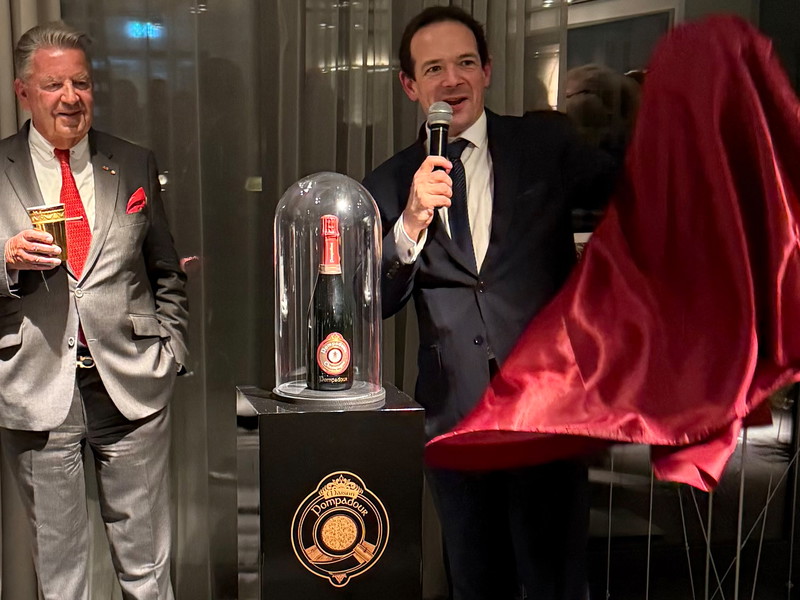
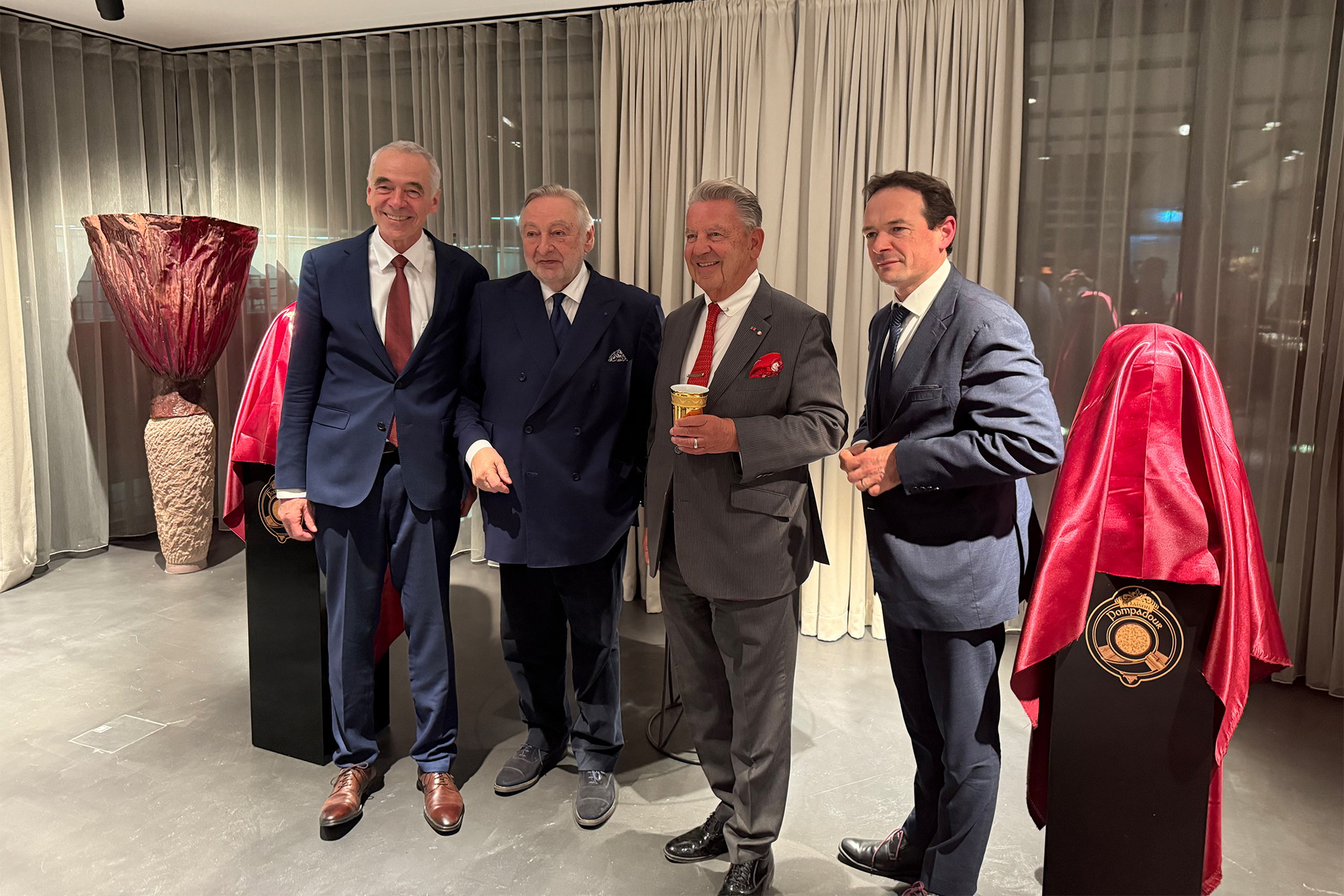
Paul-François Vranken, founder and majority shareholder of the Vranken-Pommery Monopole Group, traveled to Berlin to present the new brand in Germany—Pommery’s most important export market. He spoke with visible pride, recalling how it all began in the spring of 2003, when he first tasted the base wines from Clos Pompadour, the vineyard that stretches directly behind the Pommery winery in Reims across 25 hectares. Here, roughly 80 percent of what grows on the region’s distinctive chalky soil is Chardonnay alongside small amounts of Pinot Noir and Pinot Meunier.
In the past, the grapes from this vineyard were typically used in various Pommery cuvées. But the 2002 harvest proved so exceptional that Vranken asked then cellar master Thierry Gasco to vinify the wines separately and bottle-ferment them in magnums. Finally, on January 30, 2003, the champagne house named Pompadour was formally established.
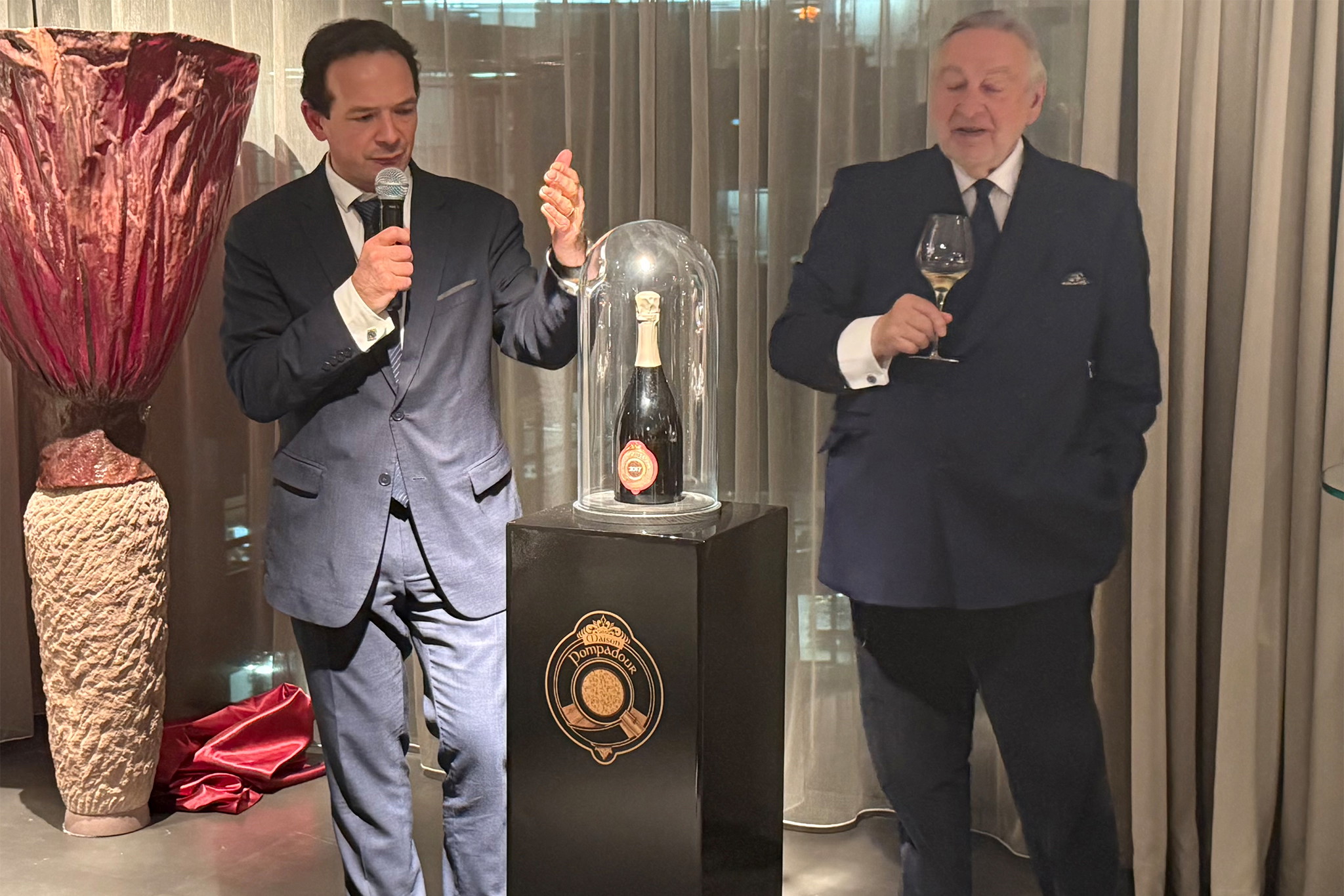
Twenty‑two years later, Vranken and current Chef de Cave Clément Pierlot presented two cuvées now available worldwide: a Réserve labeled non‑vintage, priced around €50 and made from the base wines of seven vintages; and a 2017 Blanc de Blancs Vintage, retailing around €150.
The results of over 20 years of development are evident in both wines. The Réserve displays classic champagne character, balancing freshness and maturity with refined depth that reflects the complexity of the blended vintages. The Blanc de Blancs Vintage, on the other hand, shows a profound sense of terroir, proof that Clos Pompadour—which, despite its name, has no direct link to the famous mistress of Louis XV—has been cultivated in recent years with a special focus on soil vitality and biodiversity.
“You can only make champagne like this within a great house,” Vranken told Falstaff, emphasizing the need for both the infrastructure and resources of a large maison. Chef de Cave Pierlot highlighted the site’s “micro‑diversity” and the use of small, egg‑shaped 450‑liter fermentation vats made of fired stone. These vessels allow for individual vinification of the smallest harvest batches while enabling maturation that preserves the wine’s natural aromas.
Many elements have come together to create this new house—a champagne maison born from patience, precision, and vision. And one, it seems, that we will undoubtedly hear much more about in the years to come.

 Route
Route


