Sharing Menus: Does Sharing Food Make Us Happier – or Just More Complicated?
Sharing is caring – but is it really? Sharing menus promise a communal dining experience with a wide variety of dishes on the table. For some, they resolve the agony of choice and create a sociable atmosphere; for others, they mean the loss of individual enjoyment and freedom of selection. A look at the pros and cons.
Before sharing concepts became en vogue in restaurants, tasting someone else’s food was simple. You ordered different dishes, everyone had their own plate, and after a few bites came the familiar question: “Can I try?” Plates were briefly exchanged, there was laughter, a quick taste—and then everyone returned to their own meal. Even a polite refusal felt relaxed. That was how dining together worked for a long time, before sharing concepts introduced a new way of eating together.
Pro by Hannah Speyer
More Variety Instead of Decision Stress
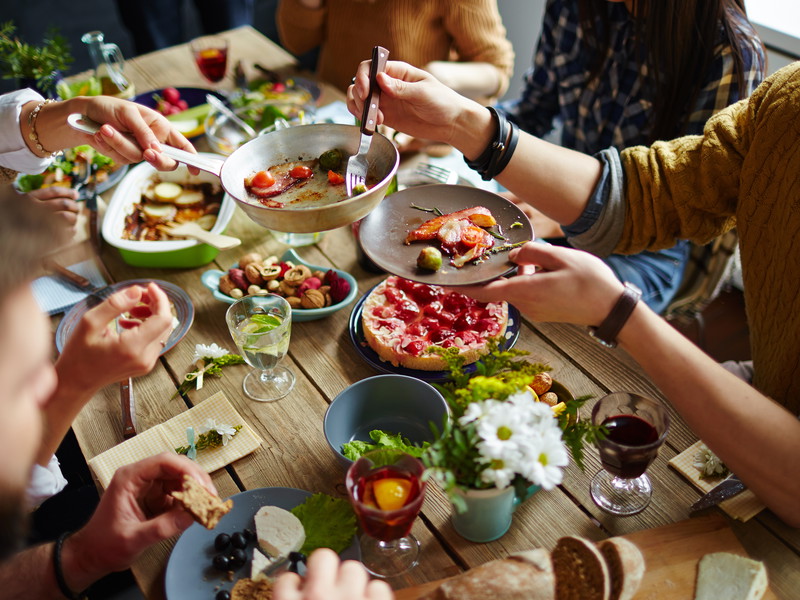
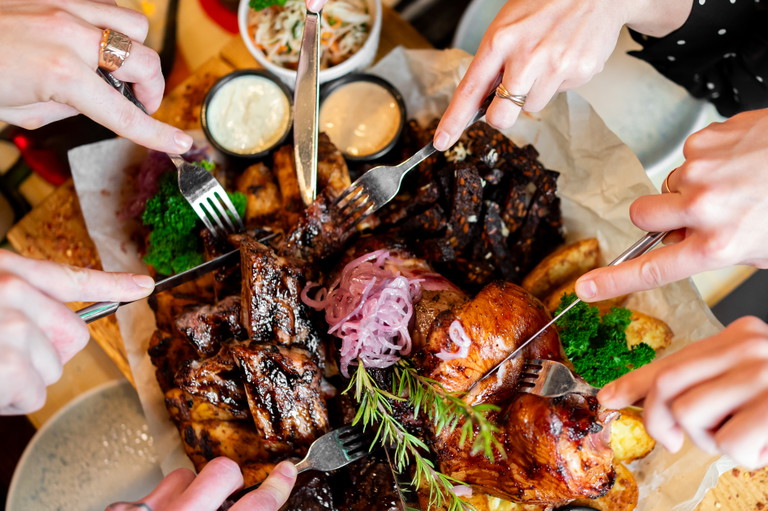
With sharing, several dishes arrive in the middle of the table—and suddenly nothing belongs entirely to one person. Plates are passed around, hands reach across the table, and before long it becomes clear: many individual orders turn into one shared culinary experience. The biggest advantage quickly emerges—you can finally enjoy more than just one dish. Instead of choosing a single option and facing the classic dilemma of too much choice, the menu becomes a collective field of discovery. It’s like ordering your way through the entire menu, trying whatever appeals in the moment—or even discovering flavors you didn’t know you would like.
Dining Together as an Experience
Sharing also changes the mood at the table. When everyone has access to the same dishes—just tasted in a different order—it naturally sparks conversation about the food itself. Phrases like “You have to try this” come up effortlessly. Food becomes something shared not only on the table, but in the moment. No one sits there wondering whether they made the right choice; instead, dishes move freely, are tasted, passed along, and compared. If something doesn’t impress, the next dish is already waiting.
In the end, for many people, sharing is the opposite of sacrifice. It’s a “more is more” principle: more variety, more impressions, more shared experience. You’re not giving up enjoyment—you’re trading a single plate for an entire table of possibilities.

Contra by Tamara Kalny
From Individual Plates to Collective Decisions
As appealing as sharing can be, it’s not without its downsides. The idea of sharing changes how decisions are made at the table. The casual “Can I try?” quickly turns into “Let’s just share everything.” This often leads to discussions, compromises, and the quiet question: Will I actually get enough of what I like? Individual choice gives way to group dynamics. Personal preferences fade into the background, and compromises take center stage. In the worst case, you end up with a wide variety of dishes—none of which truly satisfy your taste. You try a lot, but eat little of what you actually wanted.
When Sharing Means Sacrifice
Then there’s the subtle sense of food envy. What used to be a quick glance at someone else’s plate now becomes watching your favorite dish disappear faster than expected. Do you take another piece—or does that seem greedy? Wait too long, and it’s gone. A real-time culinary dilemma.
Even the question of fullness becomes complicated: Am I actually full, or just holding back? And even if the food is excellent, but portions feel limited, one thing remains constant—the bill. It’s split evenly, regardless of individual satisfaction. What is meant to be a convivial concept can turn into a balancing act between compromise, restraint, and quiet competition—making the simple pleasure of having your own untouched dish suddenly seem very appealing.
Between Individuality and Togetherness
Sharing menus take away a degree of individuality, but replace it with variety and a sense of community. Whether that feels like a gain or a loss depends on the situation—and the company. In the end, two approaches stand side by side: the individual plate with a clear choice, and the shared experience with endless possibilities. And that’s why one thing remains certain: everyone decides for themselves how much sharing enhances their enjoyment.