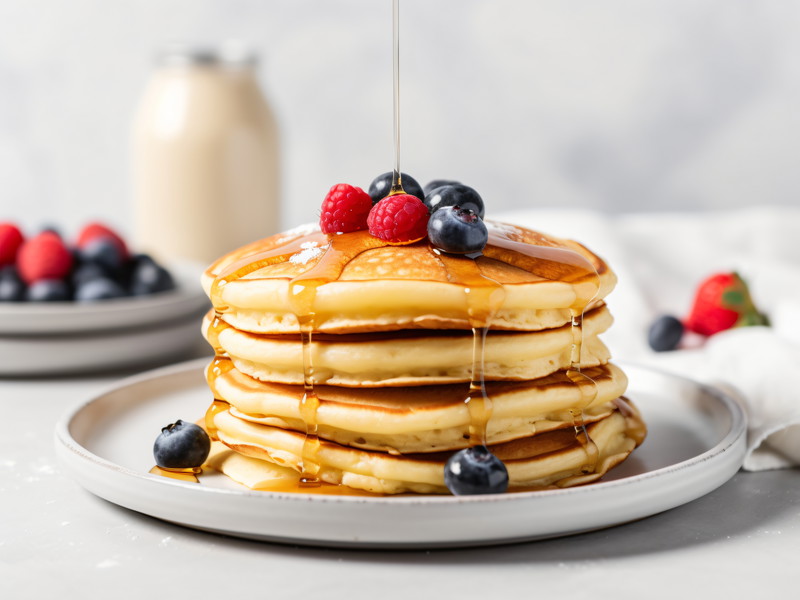
Pancakes are one of those dishes that seem uncomplicated and yet rarely turn out exactly like they do at your favourite café. The batter comes together quickly, the pan heats up, the first dollop lands in the centre – and usually spreads a little too enthusiastically. Too thin, too pale, sometimes slightly chewy. We all know the feeling.
Interestingly, it’s rarely the recipe that’s to blame. And it’s not really because you’re doing something fundamentally wrong, either.
By the second or third pancake, things often start to improve. The batter suddenly behaves differently, feels more stable, is easier to handle and gains more volume. Same conditions, different result.
In many kitchens, this gets attributed to the pan. Or the heat. Or simply to the infamous “first attempt” that never quite works out.
But something else is happening – something rather inconspicuous, somewhere between the mixing bowl and the pan. The batter really does change. Entirely on its own. It becomes slightly thicker, binds together better and reacts more calmly to the heat.
And it’s precisely this little pause – the kind we rarely allow ourselves in everyday life – that makes all the difference in the end. Usually, it’s simply a matter of minutes. Ten minutes, to be exact: ten minutes we almost always have, but seldom wait for. With this seemingly banal trick, your pancakes really do turn out just like the ones at your favourite café.