Skip to content
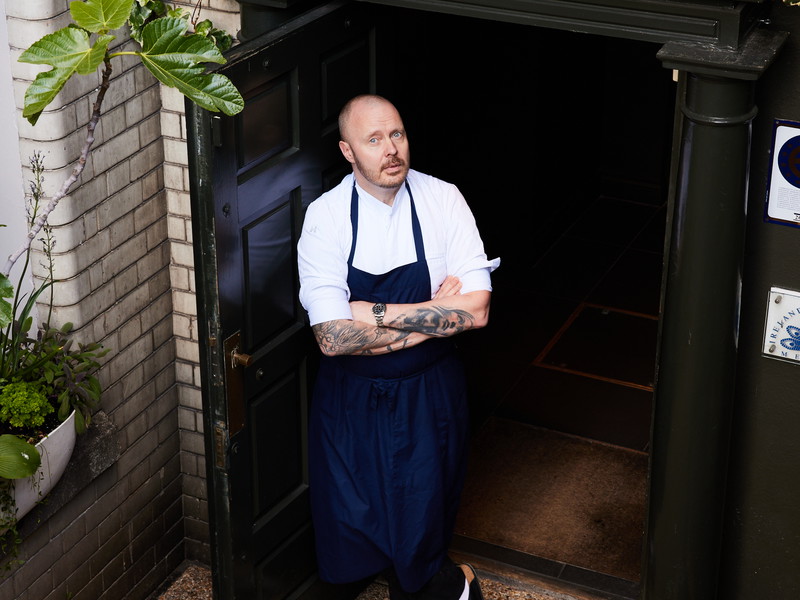
© Provided

Finnish born Chef Brings Nordic Pragmatism to Dublin’s Fine Dining Scene

Ireland
Restaurant
Finland

Inside the grand Georgian home once owned by the family behind Jameson whiskey, Finnish chef Mikael Viljanen has created one of Ireland’s most celebrated restaurants. Yet despite holding two Michelin stars and being regarded as one of the country’s leading chefs, he remains refreshingly pragmatic about fine dining.

Text by Simon Bajada

“There are no big tricks or secrets,” Viljanen says. “You work smarter, but better. The older I get, the more I refine what I do.”

That approach has served him well. In 2021, his Dublin restaurant was awarded two Michelin stars just six months after opening, making him the first Finnish chef working abroad to achieve the distinction. It was a remarkable milestone, but one built on years of experience rather than overnight success.

Born to a Swedish father and Finnish mother, Viljanen grew up surrounded by the ingredients and traditions of Nordic cooking. Wild salmon, berries and mushrooms were staples of family meals.

“I grew up eating wild foods” he says. “We hunted a lot, and food was always cooked well.”

Those early influences continue to shape his cooking today. He is drawn to flavours that balance sweetness, smoke, acidity and carefully balanced seasoning. Seasonal flowers often appear on his menus, partly because they remind him of the landscape of his childhood.

Although he left Finland after finishing college, the move that eventually brought him to Ireland came almost by chance. A conversation with an Irishman in a pub convinced him to look west, setting him on a path that would define his career.

When Viljanen first arrived in Dublin, he says the city offered little for ambitious chefs. “When I first came to Dublin, it was a culinary desert.”


When I first came to Dublin, it was a culinary desert.

Mikael Viljanen

Chef of Chapter One by Mickael Viljanen

Mikael Viljanen

Chef of Chapter One by Mickael Viljanen

That has changed dramatically. The growth of Ireland’s economy, fuelled by international technology companies such as Apple and Microsoft as well as major law firms and banks, helped create demand for a more sophisticated dining scene. Today Dublin is home to several Michelin-starred restaurants.

Before opening his own restaurant, he earned two Michelin stars at Dublin’s Greenhouse restaurant. Then came the pandemic. Rather than retreat, he used the disruption as an opportunity to start afresh, opening his own restaurant on his 40th birthday.

Despite his success, Viljanen is wary of some modern fine-dining trends. He dismisses the growing emphasis on elaborate narratives and lengthy explanations that often accompany tasting menus.

“I don’t like the storytelling,” he says. “It’s not a church, it’s a restaurant.”

He also believes the industry sometimes takes itself too seriously. “There’s a bit of ridiculousness in it,” he says, pointing to restaurants offering ever-increasing numbers of courses.

What matters most, he argues, is hospitality. “Front of house is 70 per cent of the experience. The kitchen is 30 per cent.”

That philosophy has helped build a loyal team, with several core staff members having worked alongside him for more than a decade. While he still works a solid work week, it is far removed from the 90-hour schedules of his earlier career.

As for a possible third Michelin star, Viljanen is content to let things develop naturally. After earning his first star he was hungry for a second, but today his content is evident.

“A few years ago, maybe I would have pushed harder,” he says. “Now I’m happy where I am”

A third star, he believes, must come organically, like a Nordic winter. Until then, his goal is much simpler: “I just want people to enjoy themselves and leave happy.”

Find out more
1 / 12