Skip to content
© Nacho Rivera

Meet the Swedish Designers Shaping Restaurant Interiors

Nordics
Restaurant
Lifestyle

As dining rooms grow ever more theatrical, Swedish studio Joyn is among those showing how interiors can turn a meal into a fully immersive experience.

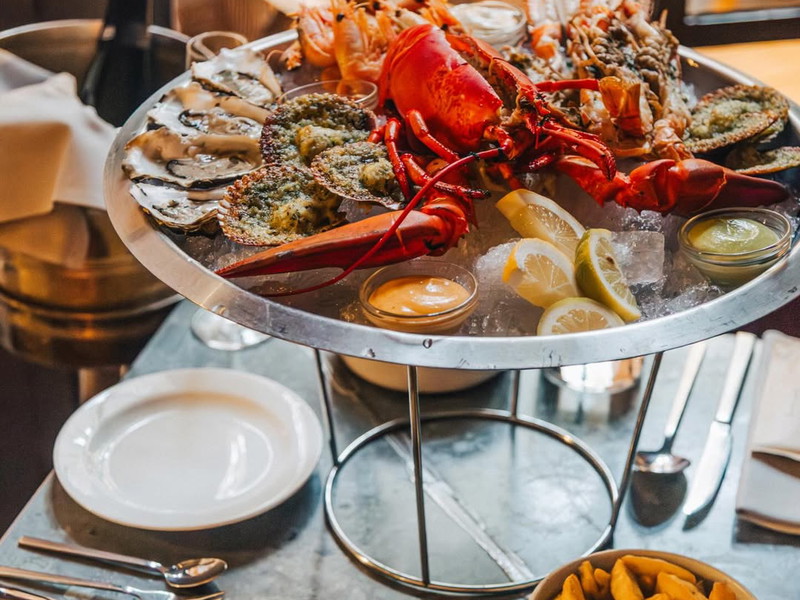
We are nowhere near Bob Bob Ricard’s famous “Press for Champagne” button, fitted at every table. Further still from tasting the oysters, the truffle-scented vareniki filled with mushroom and potato, or a perfectly cooked chateaubriand.

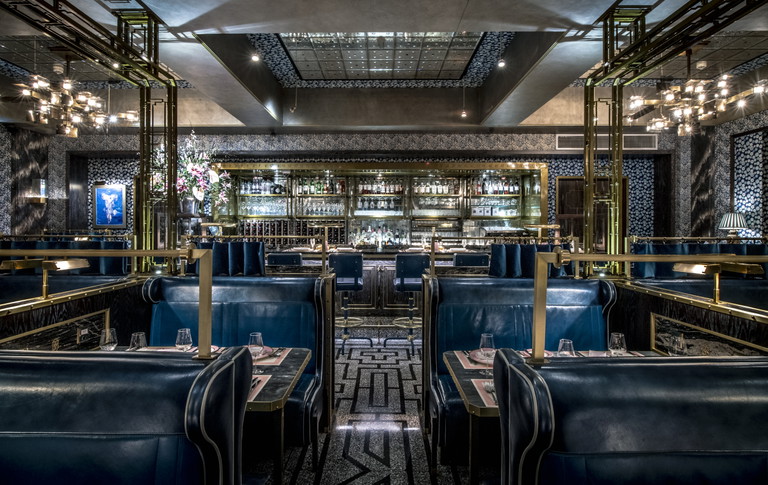
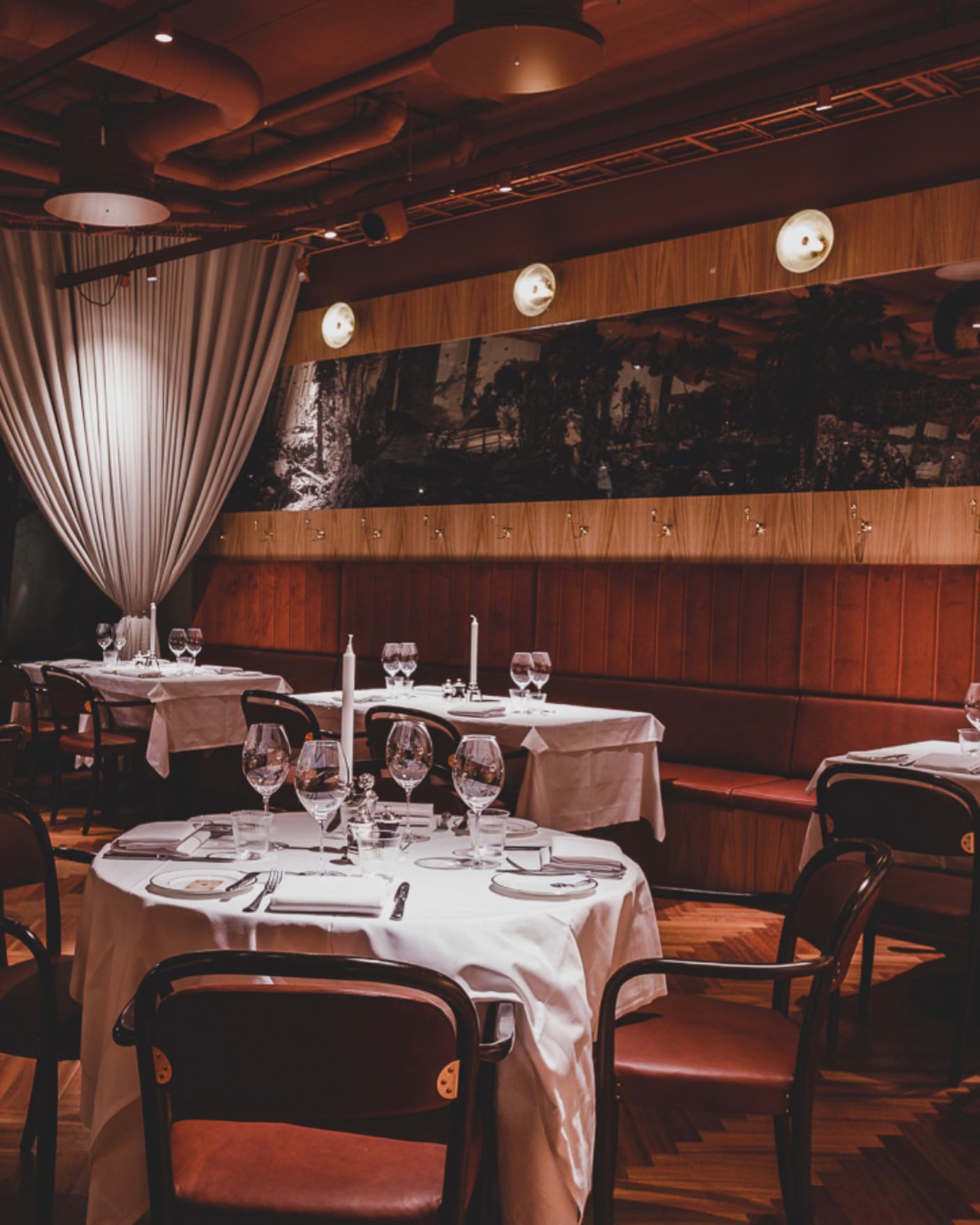
And yet several senses are already fully engaged. Any notion of time disappeared the moment we stepped through the doors on Upper James Street, tucked between the sensory overload of Carnaby Street and Piccadilly Circus in central London. The British-Russian restaurant, often referred to simply as BBR, feels like a cross between an Edwardian dining carriage and an Art Deco disco aboard a luxury yacht. Polished wood panelling meets a backgammon-patterned floor, while brass and gold-plated fixtures gleam throughout. Velvet curtains divide the booths, upholstered in either navy or oxblood leather. The room is dimly lit, though every so often a nightclub-like glow pulses through the space. It sounds gloriously kitsch — and it is — yet the average diner is well over 45. So, too, is the mood: sophisticated, relaxed, cheerfully buoyant and conducive to normal conversation all evening.

The BBR in London
© Sim Canetty-Clarke
The BBR in London

How Restaurant Interiors Became Part of the Dining Experience

With hindsight, BBR was ahead of the curve in anticipating the wave of lavishly designed restaurants that has swept the world in recent years. It opened in 2008. Four years later came the launch of Instagram. Five years after that, the cronut — dreamed up by New York-based French baker Dominique Ansel — became the first truly photogenic food craze to go viral. Food designed for the camera — think freakshakes and extravagant clouds of dry ice — often tastes less compelling than the attention it attracts. The experience of dining in a strikingly designed restaurant, however, can be something else entirely.

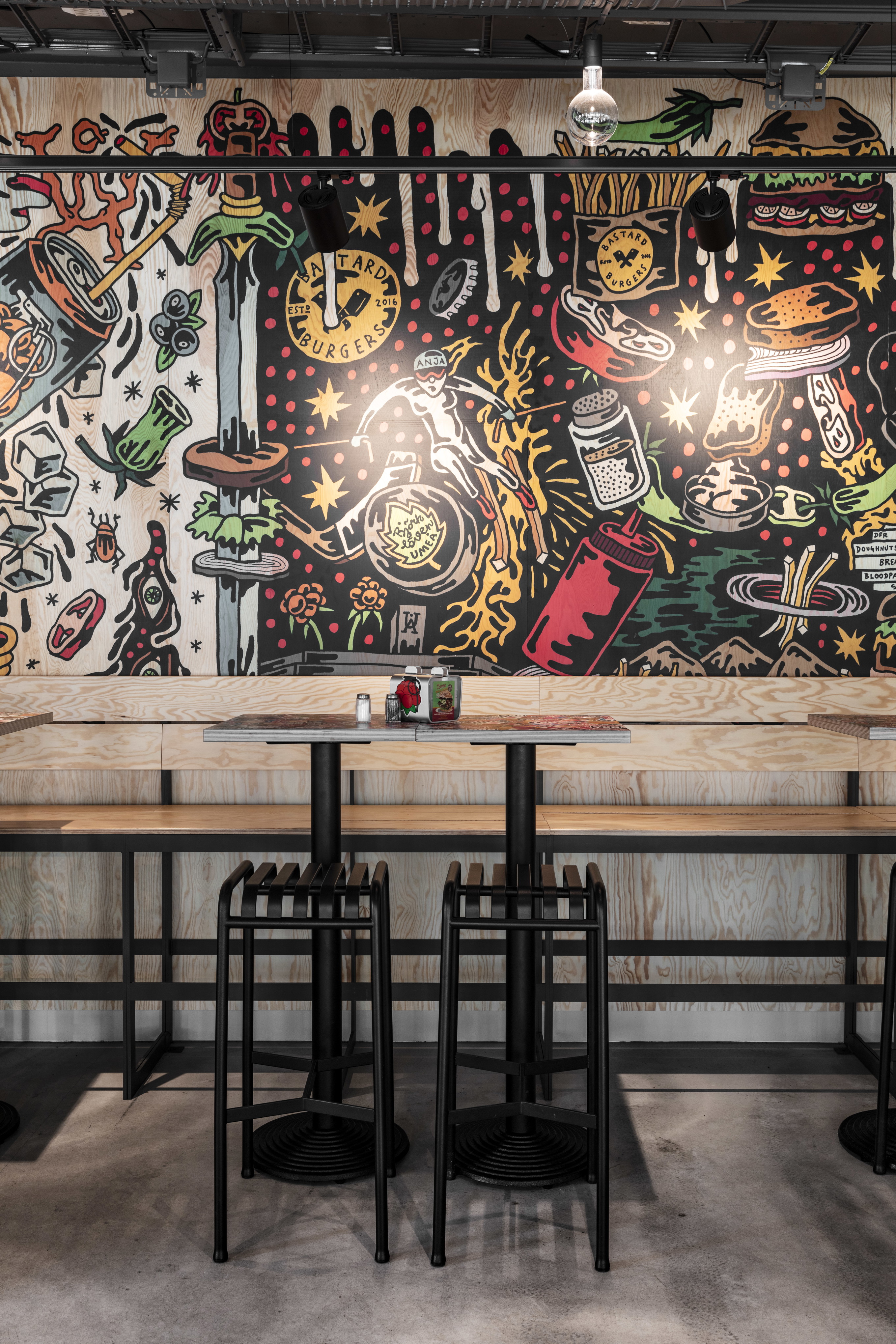
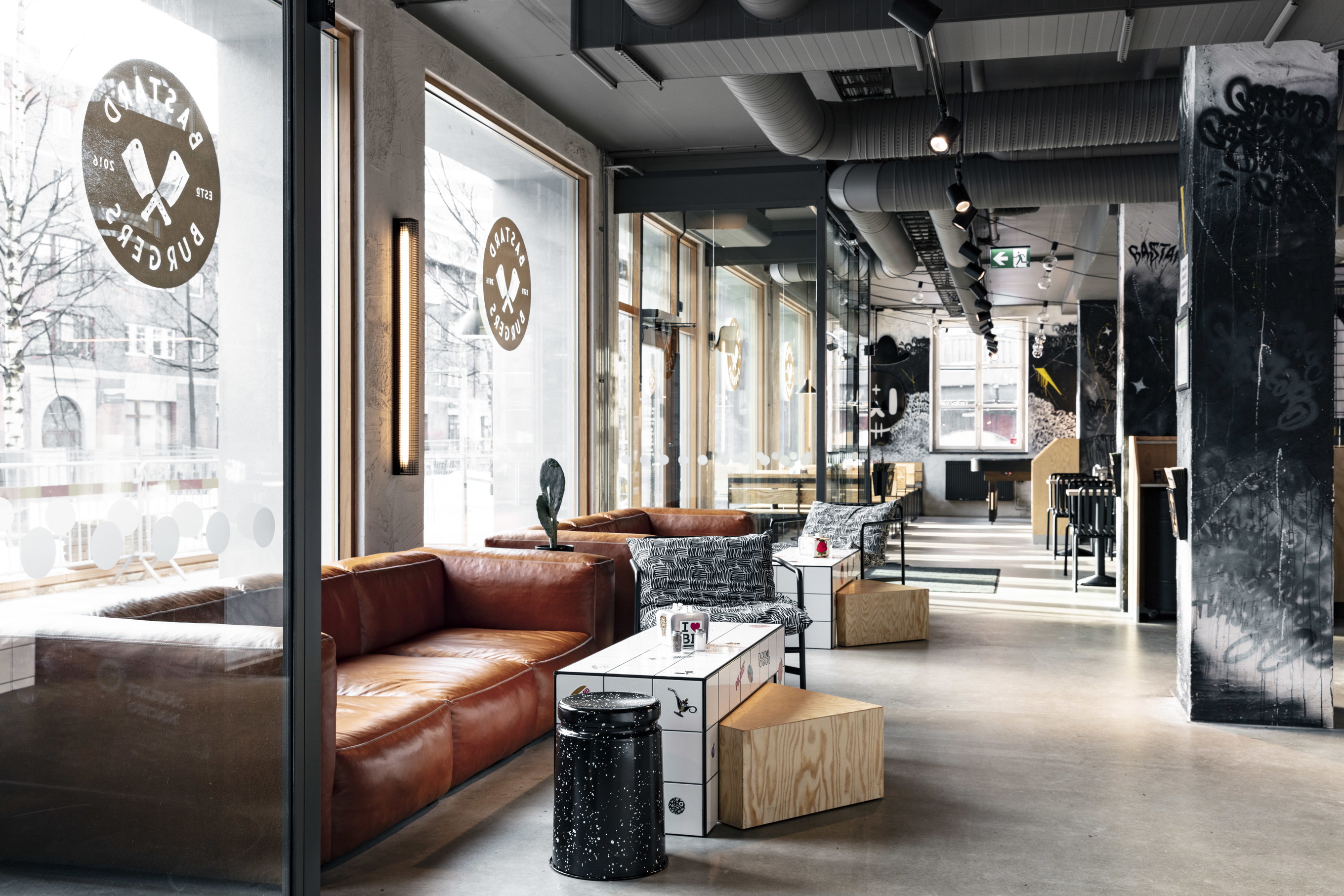
“We have talked about ‘Instagram moments’ — the spots in a restaurant where guests are most likely to take photos — ever since Joyn was founded in 2016. But gastronomy is always at the centre when we design a restaurant.” The words are those of Ida Wanler. As co-founder of the Swedish design studio, she has worked on everything from Swedish celebrity chef Björn Frantzén’s restaurants around the world to burger chain Bastard Burgers, which draws culinary inspiration from New York while retaining distinctly northern Swedish roots. “Today, restaurant guests expect an amplified experience that goes beyond the food itself and engages all the senses — and interior design is part of that. Eating out has become a form of cultural experience.”

"We have talked about ‘Instagram moments’ — the spots in a restaurant where guests are most likely to take photos — ever since Joyn was founded in 2016. But gastronomy is always at the centre when we design a restaurant.”

Ida Wanler

Co-founder of the Swedish design studio "Joyn"

Ida Wanler

Co-founder of the Swedish design studio "Joyn"

Inside the Rise of Restaurant Design

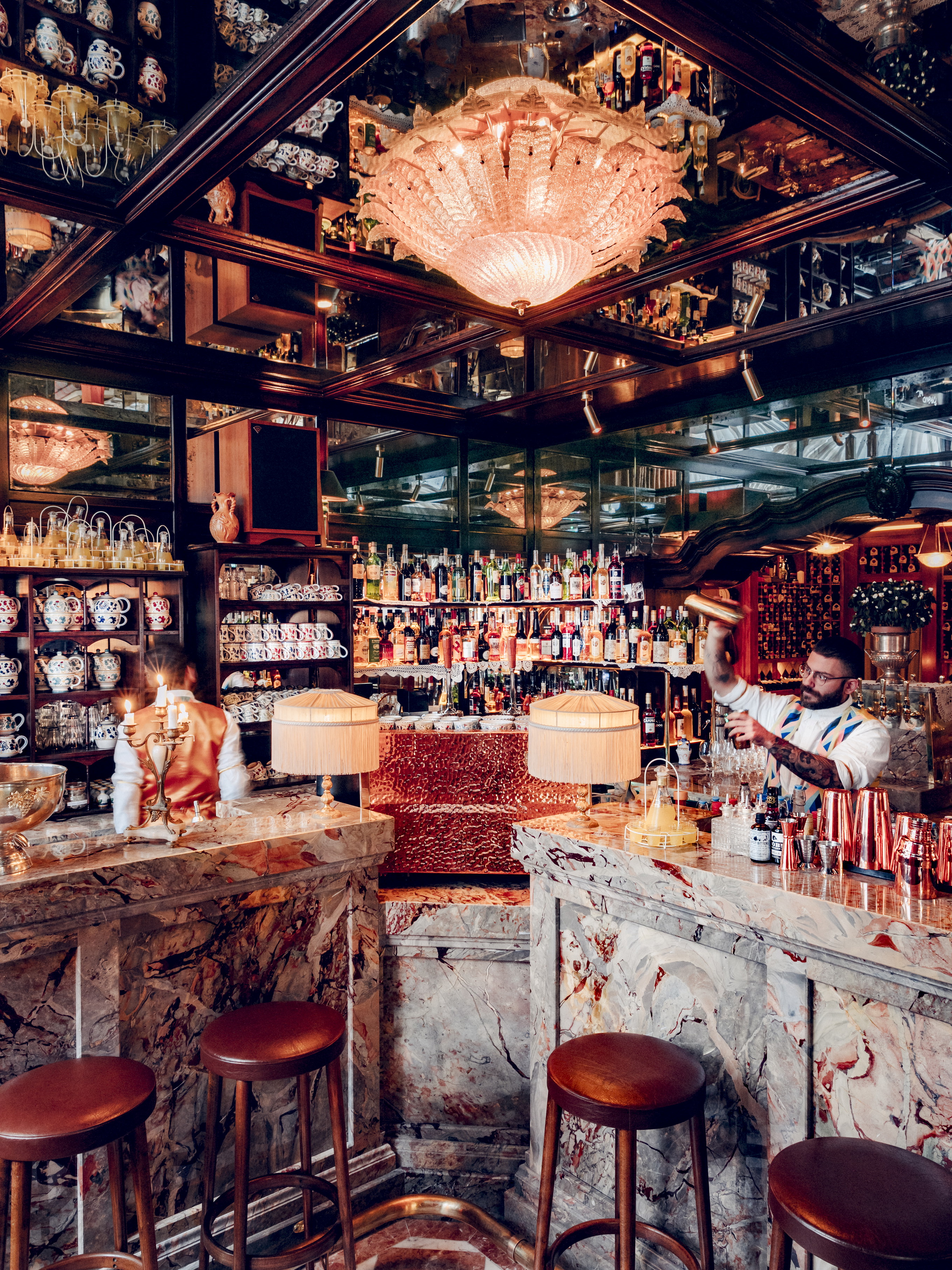
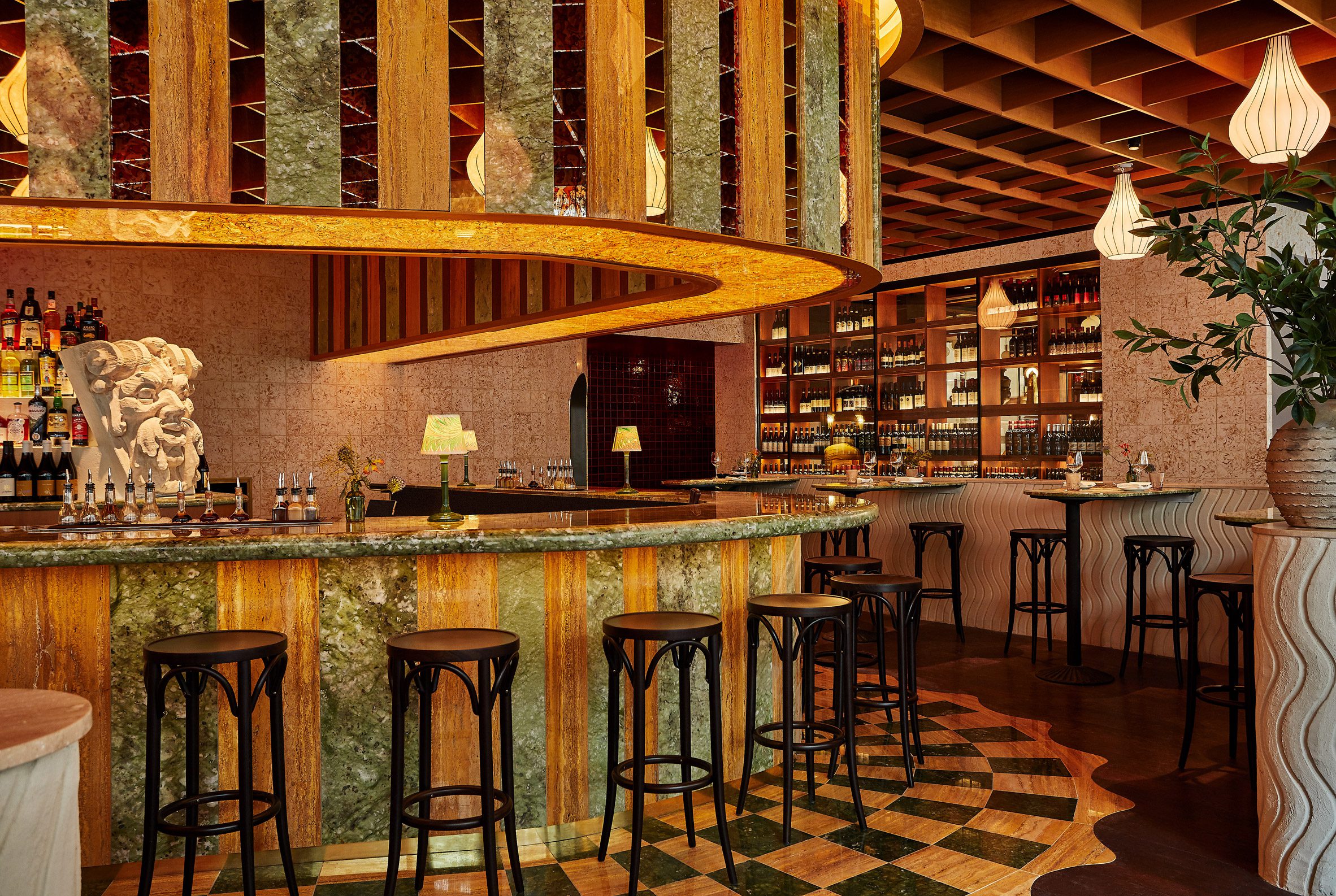
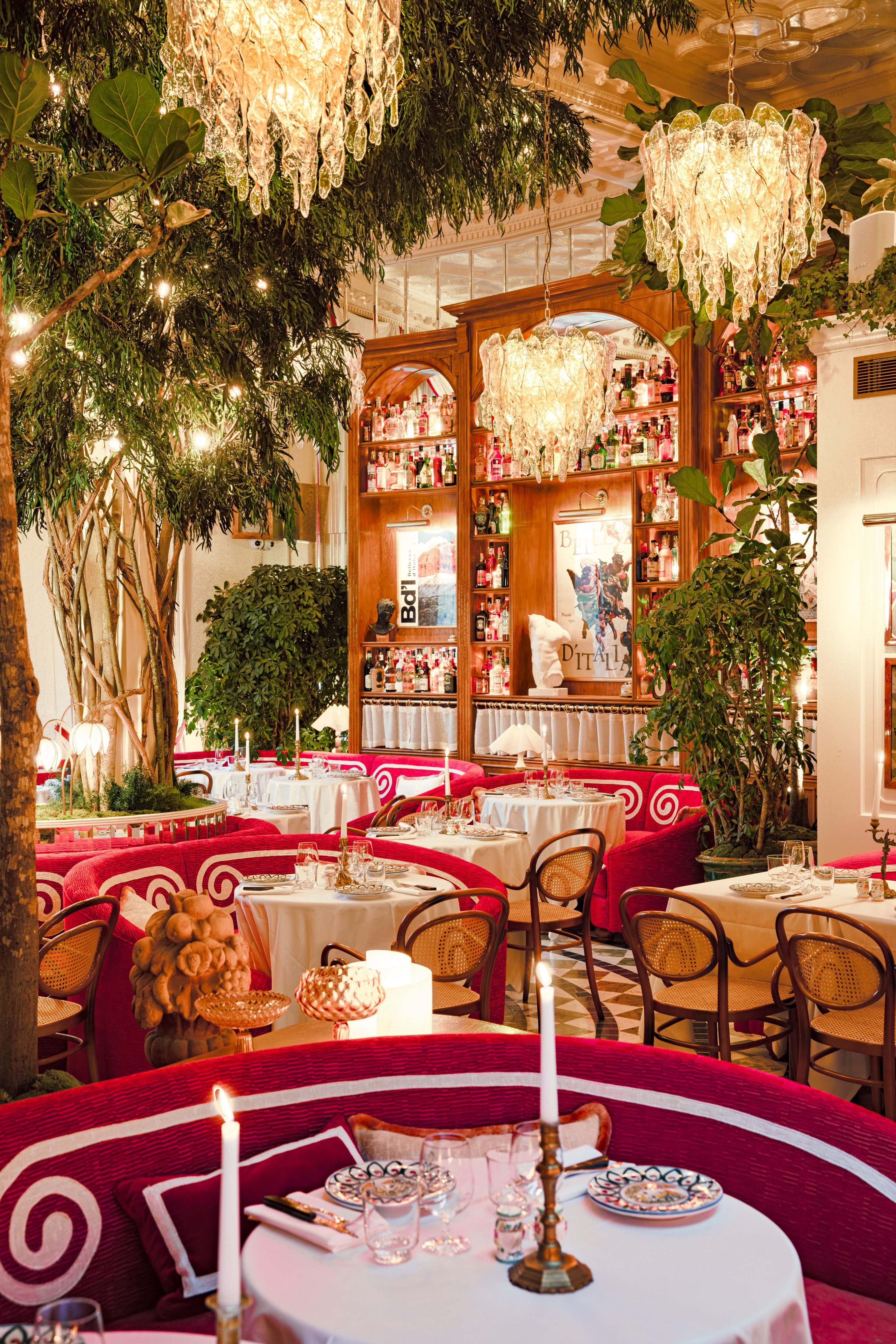
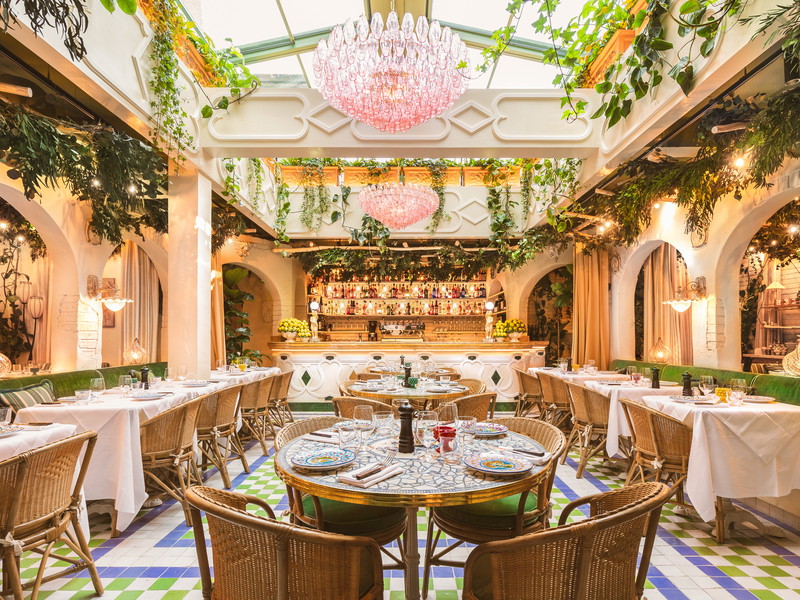
There is no shortage of global examples. Big Mamma Group’s European outposts — including Jacuzzi and Gloria in London, BigLove in Paris and Villa Capri in Madrid — are wildly beautiful, trattoria-inspired collages of decorative excess. In New York, Bad Roman has been described as utterly bonkers, thanks to onion-shaped ceiling lamps and shot glasses mounted on toy cars. “We do not always get them back from the guests, and we have accepted that,” one waiter admits.

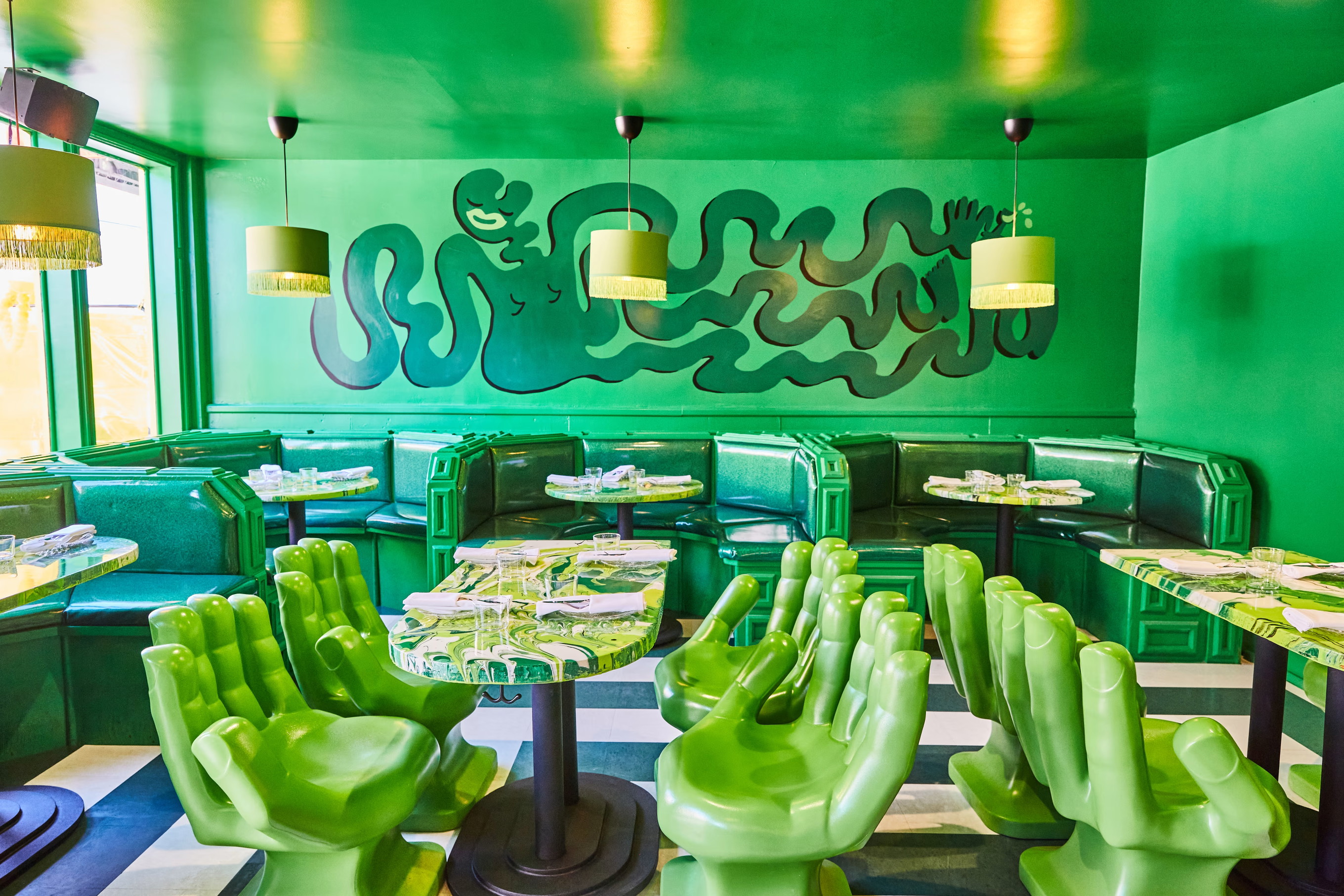
At the psychedelic Shuggie’s in San Francisco, owners Kayla Abe and David Murphy chose the murals, hand-shaped chairs, and neon-green-and-yellow palette themselves. In their view, maximalism has gathered pace partly in response to the pandemic. A meal out is no longer just part of an evening out — it is the evening out.

Swedish Studio Joyn and the Art of Immersive Dining Spaces

This is where distinctive collaborations come into play. Unlike photogenic food, whose appeal rests more or less entirely on visual absurdity, interior design has to feel authentic. One example is Joyn’s work with multidisciplinary artist Marc UÅ Strömberg and graffiti artist Anton Backe, both from Sweden. “For every Bastard restaurant, Marc UÅ has created a unique illustration printed on plywood, while Anton travels to each site and produces his graffiti on location,” says Ida Wanler.

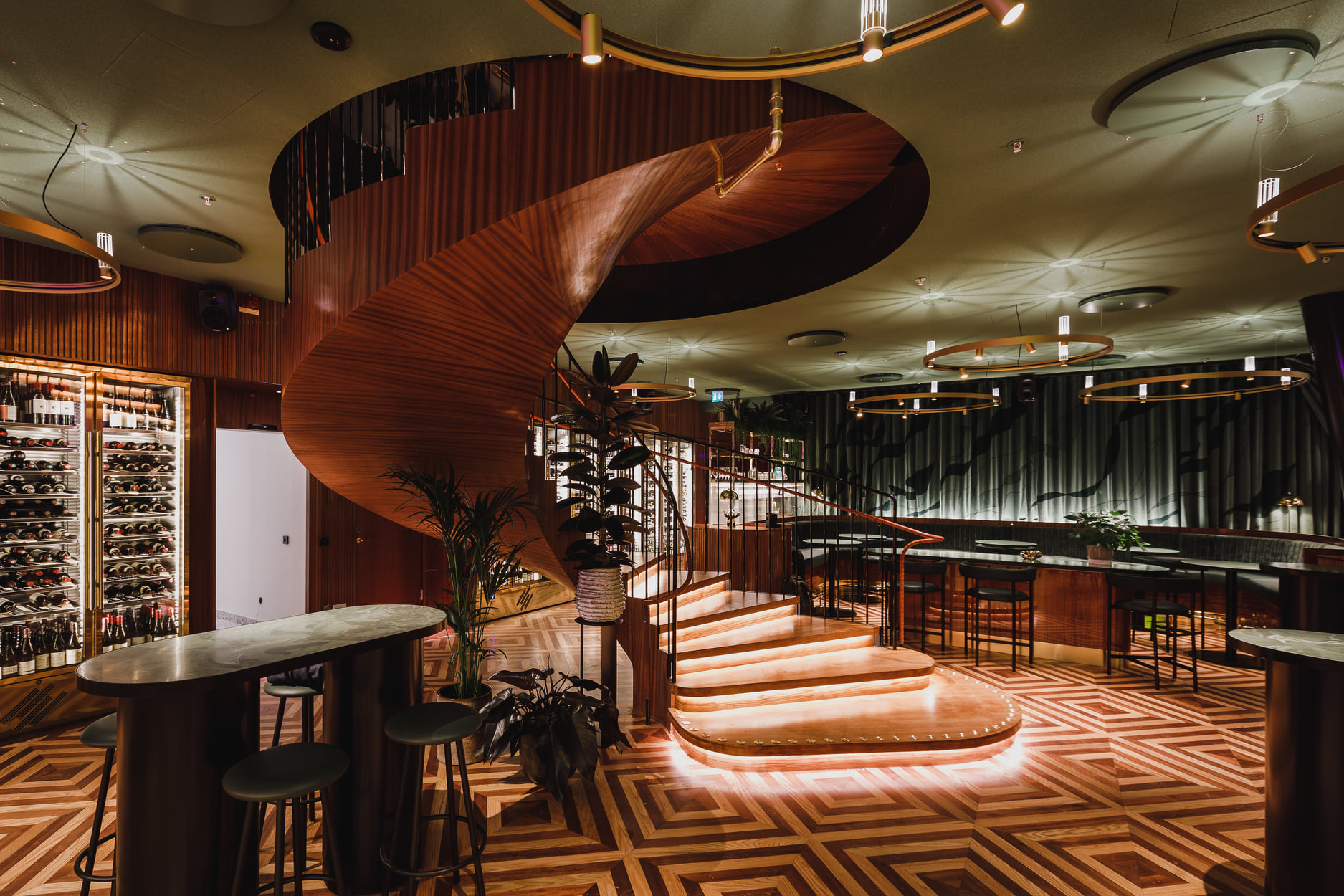
Another example is Frantzén Group’s Brasserie Astoria in Stockholm. The restaurant brings together the former Astoria cinema and newer spaces across two floors, so the challenge for Joyn was to make it feel lively from day to night — from business lunches to drinks, dancing and late-night energy. “That is why we made the staircase the centrepiece. Björn Frantzén called for a ‘Titanic staircase’, and it became the social heart of the restaurant. A handcrafted lamp by Italian designers Catellani & Smith hangs above it, drawing the eye upwards and then down to the basement bar.”

When Joyn worked on the now permanently closed Studio Frantzén at the historic London department store Harrods, the studio commissioned Swedish artist Ragnar Persson to hand-paint a cupola at the entrance. “It felt like a forest chapel, with a ceiling painting reimagined in a new, contemporary form,” says Ida, adding that the marquetry wall in the main dining room was created using illustrations by Emma Löfström. The vast chandelier was designed by Swedish studio Front, produced by Northern Lights, and inspired by the beauty of a traditional Swedish candle.

Why Restaurants Are Designing for All Five Senses

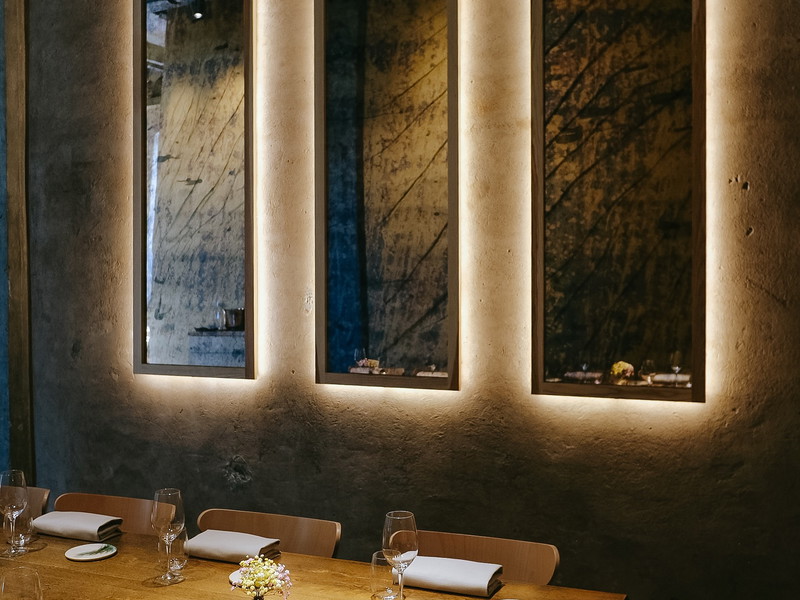
“Restaurant interiors must not feel like Disney-style stage sets. We call it ‘maximalist minimalism’: rich, detail-driven spaces with a clear vision that support what the restaurateur wants to express through the food,” says Ida Wanler, stressing that it is a complicated puzzle. “It is not just about décor, but about how the room functions — how staff move through it, how acoustics are managed, which materials absorb sound, and how the lighting works. Guests need to be able to talk comfortably while still feeling the energy of the room, and the lighting should be atmospheric without making the food hard to see.”

If the trend forecasters at New York design studio Format Architecture Office are to be believed, we have not yet reached peak maximalism. Blame the long tail of the pandemic, economic uncertainty and war: from a global perspective, what diners seem to crave above all is large-scale escapism. So how does Ida Wanler see the trend developing? First and foremost, towards even more colour and detail. There is also a growing openness to eclectic combinations. “For example, pairing something ultra-modern with carefully sourced vintage pieces. Say, a postmodern bookcase alongside a 1920s chiffonier.”

There is a sustainability aspect to this, of course, but Ida Wanler points out that, from a design perspective, it is also about making these maximalist restaurant environments feel unexpected and personal. “In general, I think we should dare to mix more freely. It is in that friction that something genuinely exciting happens.”

Find out more
1 / 12